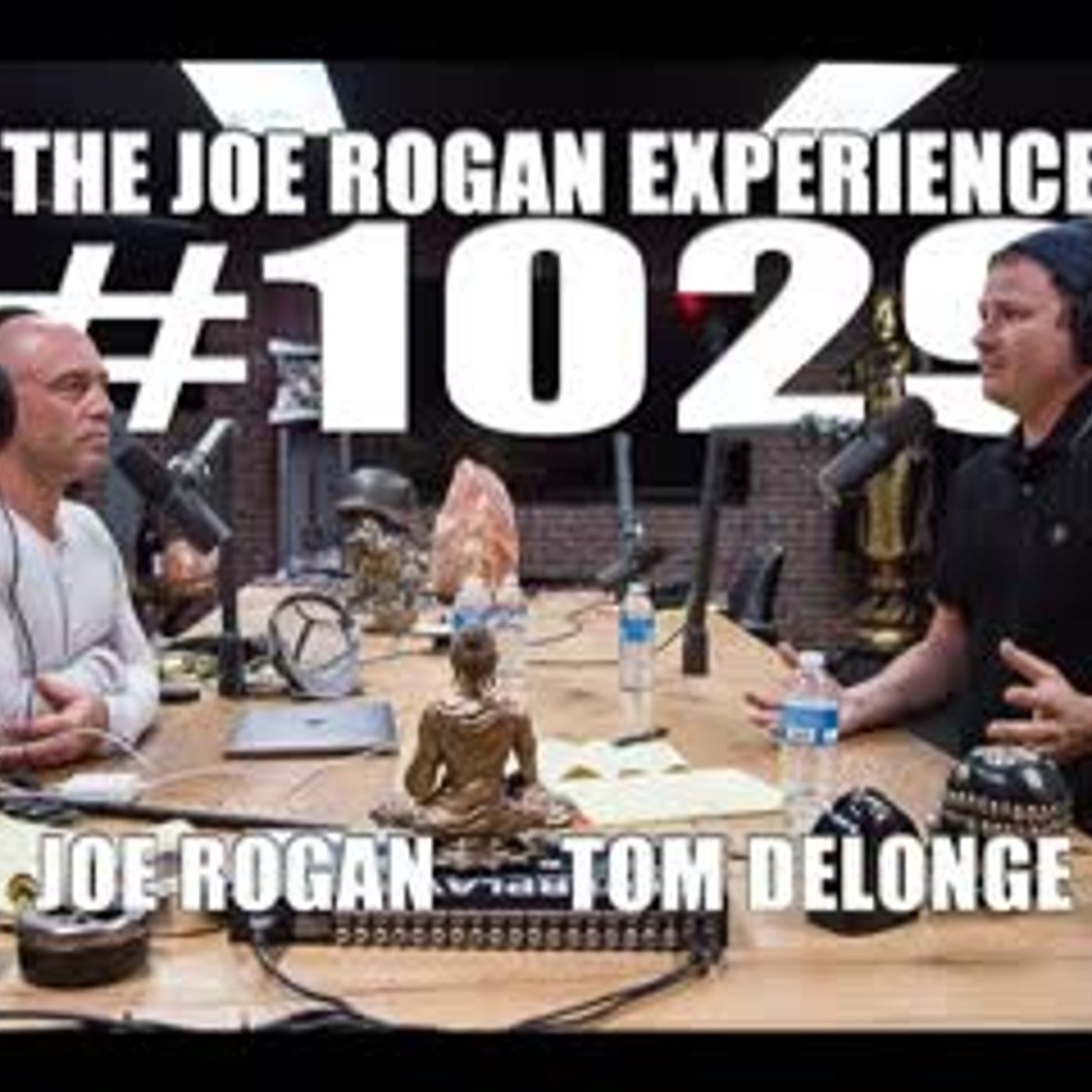
Joe Rogan and Tom DeLonge-What Could of Been...To The Stars.
VIA The JOE ROGAN EXPERIENCE: A Special Presentation
Become a supporter of this podcast: https://www.spreaker.com/podcast/total-disclosure-podcast--5975113/support.
CONTACT TDP DIRECTLY For Collaboration, Use of Segments/clips, or any other media produced by “TDP” —[email protected]
Special Thank you to all of our PODCAST/YouTube Channel Members for your continued support, and dedication to seeking the truth, together. We can’t do this WITHOUT YOU!
-COPYRIGHT-2020-
Copyright Disclaimer: Under Section 107 of the Copyright Act 1976, allowance is made for "fair use" for purposes such as criticism, commenting, news reporting, teaching, scholarship, and research. Fair use is a use permitted by copyright statute that might otherwise be infringing. Non-profit, educational or personal use tips the balance in favor of fair use. Total Disclosure Podcast Copyright 2020 and … segments, early access to interviews, and a yearly gift autographed by yours truly!thank you in advance now, Let's explore the unknown together!
Speaker 1: I like the art bell build up because so.
Speaker 2: Everybody likes the art belt build up, the art belt sound. You know what would he say from the Kingdom of Nye and Nyah right prompt Nevada.
Speaker 1: I used to always love art bell because someone would call in and say I'm a were wolf and.
Speaker 2: He would go, oh, my interesting, tell me more.
Speaker 1: Yeah, yea. He didn't care.
Speaker 2: He never he never called you out on it, just let you let your ramble. He had time traveler lines. Loved the people loved it.
Speaker 1: I never learned anything from it, though.
Speaker 2: So you're obsessed with UFOs, right?
Speaker 3: Uh?
Speaker 2: Is that safe to say?
Speaker 1: It's safe to say, But it's it's not so much just the UFO itself. I mean there, I don't call him that anymore. We call these advanced aial threats. They're different, but threats you were you honed in on a word we weren't supposed to really get into here in the first part of the of the show.
Speaker 2: Did you have a plan?
Speaker 1: I have a very I have a very long plan, detailed plan. We're gonna start with my body. We're just gonn talk about my body for a lot, and.
Speaker 2: Okay, what do you want to talk about?
Speaker 1: When terms of your body, Well, my body is interesting. It's unique. Okay, it's it, and it's changes shape. And what I've noticed is it's just changing. Yeah, it's getting larger, getting wider.
Speaker 2: Depending upon what you put in it.
Speaker 1: But you're all can I cuss?
Speaker 2: Yeah, yeah, for sure. We're on the internet.
Speaker 1: You're so fucking fit. You shook my hand out, They're gonna break my hand.
Speaker 2: I'm sorry.
Speaker 1: Yeah, Just don't be strong.
Speaker 2: I didn't mean to. Don't be so hard your hand. Just thought it was a handshake, I know.
Speaker 1: Well, it's one of those power means. You ever see when Trump shakes people's hands and he pulls them.
Speaker 2: In and he's like, yeah he does do weird ship, It does weird shit like that. Yeah, yeah, I didn't mean to do that, just meant to shake your hand like a man.
Speaker 1: Well I took it as like know your place, motherfucker. Oh this is my show.
Speaker 2: I didn't think that. No, I'm just interesting. So how when did you get obsessed with this aerial threat thing? And why why do you why do you call them threats?
Speaker 1: Uh, we'll get into that, I guess, but uh uh I got into when I was in junior high. But for some weird reason, I had like some time off and I went to the school library in like seventh grade, and I was like, damn, I gonna read some boring shit. What am I gonna read? And I saw this one book and it had a picture of the Lockness monster in like a ufo'mll that looks cool. And I read that and I was like, holy cow, these are like real. It wasn't all science fiction. I mean the way the book was laid out was like, these are like real events.
Speaker 1: There's no no way really. And then when the band started doing its thing in the back of the van, there were no like smartphones, so I was, we're buying books and I would just lay there. We'd have like twenty hour drives, and so I started buying books on the UFO phenomenon. And I was, once you do that, it's a black hole, You're done.
Speaker 2: Yeah, it's definitely a rabbit hole you get sucked into it. At my house, I have a frame poster that's the cover of the Roswell Daily News. Yeah, that shows the day after the Roswell crash where it says that the Air Force came and recovered the wreckage and you know, the whole I've been obsessed with this shit since I was a little kid.
Speaker 1: Yeah, I think I think that's uh. I think that's by design. I think that this generation is uh was meant to have this stuff come out. But you know, I can't prove that that's just my feeling.
Speaker 2: What what makes you feel that?
Speaker 1: Like? Because of exactly what you said, there's a lot of people. I don't believe that some of the I don't believe that some of the events happened on accident.
Speaker 2: You know.
Speaker 1: I think that there's been a lot of events that are on purpose. Some have been for show, some have been for you. There's a variety, variety of reasons. But I think a lot of it is a control system that's really pushing humanity in a very specific direction.
Speaker 2: And uh so, like they've got a time frame where they've had these events take place. Is that what you think? Yeah?
Speaker 1: And they also time travel, which is different than what people think in like a movie where they sit in a machine and you also you're in the nineteen thirties and you got to go save humanity. When you use the technology, you have a there's a time I'm a difference between where what they're doing inside of an artificially created bubble of gravity of sorts, and then what's on the outside. So if you're on the inside of one of those machines, everything would be skewed more black and white. There would be like a red shift, and everybody would look frozen.
Speaker 1: So you literally could fly around and grab a coke out of someone's hand and put it in someone else's hand.
Speaker 2: It's really where are you getting this from?
Speaker 1: Well take a while, guess look at the people I'm surrounded by, you know.
Speaker 2: So so the people you're surrounded by are telling you this is that? What it is? Uh?
Speaker 1: Well, I don't want to get into that. But the people I'm surrounded with and myself, you know, are very close to this stuff. But the physics, you know, the physicist that's a co founder of my company, to the Star, he's a Nobel nominee. He wrote the book on plasma physics. He what's his name, hal put Off? Doctor hal put Off, and he he created remote viewing. Do you know what remote viewing is? Yeah, he's the creator of the CIA spy program. But he also has done like really exotic advanced forefront propulsion work for the past decades and decades.
Speaker 1: Actually, I mean he's deep into the like quantum this and that. So he's the one that actually told me about the red shift.
Speaker 2: Yeah, and so they have experienced this physically or is this just theoretical or they know that it exists like the technology.
Speaker 1: Yes, I believe that the technology not only exists, We've figured out how to play with it. But I'm not going to really get into that here. That is what we're doing at my company though. That is the announcement. So Steve Justice was head of advanced programs at the skunk Works. And the skunk Works are who built you know the famous secret bases you hear about Skunk Works. Did you know the U two spy plane, the SR seventy one, Blackbirds one seventeen Stell five and it's all Groom Lake out there, all that kind of stuff.
Speaker 1: And and he literally was in charge of all the advanced programs. So you know, you got the boss, and you got him and he came, uh he just finished his career over there within the past two months, I think it is. And and he was on stage with me when we came out and and said, we're going to be building one of these things.
Speaker 2: So when when you say that this all this technology exists. Have they explained this to you or have you seen it physically? Oh?
Speaker 1: I haven't seen anything physically like that. I'm not I wouldn't be allowed to go anywhere if that does or doesn't exist.
Speaker 2: So they've just explained to you that this exists and that this is in the hands of the US government.
Speaker 1: This, I think, No, No, I see, I don't want to get into that kind of stuff. But if you don't mind.
Speaker 2: Well, why is it that you want to not get into certain things?
Speaker 1: Well, I don't want to speak. Actually, you know I represent more than myself these days, right, so I definitely have to watch what I say.
Speaker 2: Well, who do you represent when you represent yourself?
Speaker 1: The team that I'm with? So when you look at the people that are a part of my company, it's under Secretary of Defenses and Defense and Senior Intelligence Service.
Speaker 2: Is there at these people like that we could see?
Speaker 1: Oh yeah, I thought you guys would have had that.
Speaker 2: Yeah, But I mean, is there like a list where folks could see it online? Ah?
Speaker 1: Yeah, they can go to to the Stars Academy dot com and scroll down and you'll be able to see who they all are.
Speaker 2: So so how did you get linked up with all these people?
Speaker 1: That story might be a better way to start, because a lot of people don't know this part of the story, and I think you're going to find it pretty fuck odd as well. But uh, okay, so we'll back up a couple of years. So I had I was obviously, you know, I started the band Blink, and Blink went places and then, but we always had a weird band relationship like most bands, and we also thought that we would never be big, so we started companies on the side, and I had a company that incubated a lot of small startups like software and apparel and hardcore skate serve companies and stuff like that.
Speaker 1: Well, I learned a lot from that, and I pulled out an entertainment startup called to the Stars, and I knew I was going to be doing kind of like science fiction franchised stories, just like Disney, but science fiction for adults. And what that means is, you know, I make a story, I title it, I brand it, and I put out the book and I put up the merchandise, and I go make a movie, you know, and it's a vertically integrated kind of model. Well, one of the stories. I knew I wanted to put out with Secret Machines, which was kind of a historical fiction but based on real events about the UFO phenomenon.
Speaker 1: But I also knew that I knew shit that most people don't know because I've studied it for so long, and I happened to put some pieces together that most people don't put together. So before I came out with that book, and before I came out with the plan to take that make major motion pictures and all that kind of stuff, I knew I needed to ask permission. So I flew. I flew around to places I can't say who they were, but and they they listened to my pitch. And and then I got a I got an email out of nowhere that says, meet us next to the Pentagon at this day in time.
Speaker 1: And I did that, and from that an email from just no, no, no, I just can't tell you who it's from. And so then I go out.
Speaker 2: Uh, next to the Pentagons. You just Pagon.
Speaker 1: I flew out to Pentagon City.
Speaker 2: Yeah yeah, And so they dude, this is freaking out.
Speaker 1: I'll tell you. When I started freaking out, there's more shit. It gets way worse. This is nothing. So that started me out out near d C taking some other high level meetings, and there's somebody at a very high level that that closed the door looking me in and says, okay, I'm going to introduce you to somebody. And that person comes to San Diego, puts me on the phone with a general and the general is listening to my little stump speech about what I want to do with this franchise because it was I I definitely didn't want to you know, I wasn't looking to like force this disclosure and I wasn't looking to be rogue and break secrets.
Speaker 1: I was like, look, I know what's going on here, and you guys are doing a kick ass job. And I would have done the exact same thing. Should I have been the guy at the top that had to make some really hardcore decisions seventy years ago. So I want to support you. I think people are cynical because there's a vacuum. You guys can't say what you're doing, so all these people are just coming up with a bunch of bullshit to say, oh, you know, they don't want us to know, or we can't handle it, or it's all about oil and money and all this weird shit.
Speaker 2: You would put these pieces together independently. I did, and so based on books that you read.
Speaker 1: Yeah, people think, you know, people think that like places like the CIA and the DIA, all these intelligence organizations have you know, a monopoly on information. They don't. They get their information from the real world too. You know, they do have access to to you know, archives of information. They do have access to some amazing you know, satellite data and stuff like that. But if you're smart and you take your time, you know where to look and you find patterns, you can pretty much put together all the same shit they can kind of, you know.
Speaker 1: And that's what I did. And so when I pitched what I wanted to do, he said, come up and meet me tomorrow. And so I flew up to NASA actually NASA Ames and had a two hour meeting there. And after two hours, that person says, he looks me in the eyes, I'm going to introduce you to someone else, and he did. And so I got on the phone with this person, and this person, you know, I'm a skeptic. I'm a skeptic. And then at the end of the conversation he goes, he goes fly out and see me, and so I did, and that's when things really started happening.
Speaker 1: So I'm now, I fly out to this airport and I sit at a table in a restaurant at the airport. No one's in there, and this gentleman sits down and the waiter comes up. He waves off the waiter and he looks me in the eye and says, it was the Cold War and we found a life for him. And that's when I started shitting my pants because I know a lot about this stuff, but you always wait to talk to somebody that is one of the inside people you always want to help.
Speaker 2: He sits down at a restaurant with you at the airport and tells you that they found a life form.
Speaker 1: Yes, and during the Cold War, during the Cold War, and everything that they did and every decision they made at the time was because of the consciousness of the Cold War.
Speaker 2: Why has this guy decided to meet with you at an airport.
Speaker 1: Because the only way you meet with these people, the only way you ever would have anyone talk to you, is if you can provide a service that they need. And my service was pretty interesting to them because I said, look, you guys, you know you struggle with saying disclosure. You want to tell everybody everything, which I don't think everyone should know everything. And then you say they can't handle it, so don't tell them anything, you know. And I'm like, there's there's a middle road there, and here's the way I would do the middle road.
Speaker 1: And it resonated with them, you know, And so we had a pretty epic conversation for a two hours.
Speaker 2: Why you like, why what is it about what you a message was? Because what your idea was that made them something? Tell you some top secret shit that they've tried to keep away from the American people. When you take a guy who's like a big celebrity who's in a huge rock band like you, and you just say, hey, meet me in an airport. I'm going to tell you about a life form that we found during the Cold War because you're famous or because you know things.
Speaker 1: No, because I have a service. So it's not it sounds easy when you play it like that, but a service, a service, like what can you do for them, okay that they need help with and cam you do communication? They don't have a way to make a movie a book. They don't know how, they don't have a way to make documentaries. They don't have a way to go on on a big show like this and communicate with young people. They don't do that and nor should they. There they look at you got to look at what they're doing.
Speaker 2: So they look to you for a spokesperson role.
Speaker 1: I wouldn't say spokespersonal role, communication role, a communication role.
Speaker 2: It makes so they would give some information to you and you would get it out to people. And now why wouldn't they do it themselves because they wouldn't have the same platform. They don't have the access. They don't have.
Speaker 1: And the other reason is is people have tried to do movies and stuff like this, but none none of them know. I was fortunate enough to know the core story and most.
Speaker 2: How did you explain that? Then, if you don't mind going back, like you said, you were able to put things together that other people weren't. What are those things?
Speaker 1: Essentially, it's the book Secret Machines, where you have a lot of private finance, you have some world bankers, and you have a lot of people internationally working together to figure out a plan of how to how to push back again something that's been coming here for a very long time. But using off the books, finances and using mechanisms that that were not totally aware exist. And what people have to realize is, you know, the the UFO phenomenon isn't a phenomenon. There's the the universe is fucking gigantic, and there's life everywhere, every fucking where, and there's a lot of life that's way more advanced than we are.
Speaker 1: And just like we Voyager left our solar system, a little dinky satellite from the seventies there, and just like my company's going to be building, you know this this electromagnetic craft that really can do the same thing to time that I've been telling you about. Other civilizations have that too, which means you can traverse those distances of space. And what you have to think about is what happened when we first discovered that and what did we do about it? And there's no you know, you got to look at forty seven in a very peculiar way.
Speaker 1: Ninety days after the roswell event with CIA was created, the Air Force was separated from the army, the National Security Act was created, and all those things are mechanisms to start learning more and to start getting private industry off the ground.
Speaker 2: So that nothing to do with World War Two. You think it had to do with aliens?
Speaker 1: Oh, I absolutely think it well both, because what I believe crash at Roswell was well, I believe it was German from Argentina, but it had hallmarks and technology based on alien technology. So we put out a story saying it's alien, and then we put out a story saying it's a weather balloon, but the real thing it was. We didn't want anyone to guess, and that's why we put those two things out there. And that's that's kind of how they do it. I think they did that with the Moon. It's like, you know, we went to the moon, and then they put out this meme kind of thing like, can't we didn't go to the moon, But they didn't want people really going, well, what's on the moon?
Speaker 2: That?
Speaker 1: You know? So these things are managed until they can figure it out, because you've got a bunch of normal dudes in suits sitting at a big table like this, and it's their fucking responsibility to figure this thing out. And this shit is monumentally big.
Speaker 2: But back to how they managed this, then, how these regular dudes without access to communication like you have, how they managed to disseminate this information and and and sort of confuse everybody.
Speaker 1: I think, well, I can tell I don't know how they did it. I do know that they infiltrated UFO groups. That was the very first thing they did in the fifties, sort of like how FBI agents and undercover cops infiltrated Occupy Wall Street you pretended to be radical hippies and start fights. Yep, they did that. They get access to what the civilians are learning, how information transfers from one group to another. And then they start deflecting all their knowledge and putting in leaks and this and that and getting them off the main track, not because of disdain for citizens and not because of any other reason.
Speaker 1: Then picture isis we don't know what isis is they got a nuclear bomb and we caught a guy trying to sneak in this bomb. Are they going to stop and come sit on your couch and tell you all about it? No. And if you're like on the radio and there's all these people going, oh my god, we're going to die a bomb, Obama bomb, They'll hold up a second. You know you're not going to fucking die. But we need to learn more about this and we've got to figure it out before we sit down and talk to you about it.
Speaker 2: So what was the connection though, specifically that you had figured out that they knew that you had figured out that people hadn't put together.
Speaker 1: Well, let me just okay, so let me go back to my story. So I put out this book, and this book deals with it was a book called Secret Machines, and it deals with secret you know, international finance, private industry,
Speaker 1: a secret space program, and a bunch of other things that.
Speaker 2: Your research this book. What do you mean, how'd you get the information?
Speaker 1: It was just twenty five years of reading shit and watching videos and studying physics and studying you know, the secrecy acts and all that kind of weird shit. You know, you put it together, and a lot of it's bad information. But after a long time I realized, I just realized what was going on there. I just I studied enough of international finance, some mechanisms that happened after World War Two, what the Nazis were doing technologically that no one really talks about it this day. There were one hundred years ahead of us about what their guys did at the end of the war in South America, that's in the paper clip.
Speaker 1: Paper clip was like, there's two levels of paper clip. Paper clip is is the operation that brought over all these x Nazis into NASA and into all of our aerospace programs. Why did we do that? Well, because they knew some shit that was very important, and we said there might be a bigger issue out there to deal with, So why don't we side with the devil or side with someone bad because there might be a devil out there. It's that kind of thinking. So they come in.
Speaker 2: I thought it was about competing with Russia to try to advance rocketry.
Speaker 1: I believe that there was you know, I believe that there's a reason what the Cold War never got hot is because we're working with Russia on this specific issue.
Speaker 2: You think the reason why the Cold War never turned into an actual war? Is that what you're saying. Yeah, so it had nothing to do with the fact that Russia was a communist empire and essentially it did spent them and they really went under and collapsed.
Speaker 1: Yeah, but there's different there's different levels. It's like when someone goes, you know, the US government did this, well, what do you mean, what does that mean? Does that mean the CIA did it, or the DoD did it, or Homeland Security did it. You're dealing with It's a trillion dollar organization. It's like if somebody in Apple leaks an iPhone, you know, are you going to say, oh my god, Apple is doing apples? Like, well, shit, we're an eight hundred billion dollar company. We have so many things going on worldwide, it's impossible to say the entire organization believes one thing and the government's the same kind of the same kind of way.
Speaker 1: It's just like, that's just a word. The US government's two words, right, three year, three words? How do we want to.
Speaker 2: Count this in the United States government? Okay?
Speaker 1: Three essay, US has got a calculator. Figure the shit out. But and you have many, many layers of what's going on. And because you have some people worried on technology, some people worrying about what's happening happening to the civilian population, you have some people worrying about, you know, how to keep everything afloat, how to keep everything going. And you have a whole bunch of weird military excursions and they're bumping into each other, and all these people aren't red in to what's going on with the UFO thing, so as all that shit.
Speaker 2: So who gets red in?
Speaker 1: That's a good question if I had to guess, very very senior technical brass and rock stars, and I wasn't red in.
Speaker 2: Trust No they didn't tell you anything.
Speaker 1: No, they possibly did, but I wasn't red and red in. I wasn't brought into a skiff and they said, this is what's going on, even though I've been in a skiff a few times.
Speaker 2: Okay, do you want to? Skiff is a boat?
Speaker 1: A skiff is a special compartmentalized information facility. It's it's where top secret shit can be discussed.
Speaker 2: I thought maybe they talk on boats because nobody can hear you. They do that too, They do that. They do that, they.
Speaker 1: Actually do because you can sweep for bugs on boats a lot easier than you can on a building.
Speaker 2: Makes sense, Yeah, yeah, so they tell you what.
Speaker 1: Okay, So I'm sitting at that restaurant and he says.
Speaker 2: He found a life form, and they found a life form during the Cold War.
Speaker 1: Right, And I and I said, well do you find it?
Speaker 2: Oh?
Speaker 1: I didn't ask him that question. In many places. I did one time bring up I said, you know, I'm thinking about talking about the crash in the late forties, and they go, why just that one? That was the answer. So I had to figure out a language to talk to these guys.
Speaker 2: Did you ever think maybe this guy's bullshitting you or he's crazy?
Speaker 1: Fuck No, no, I'll tell you got it. That's why you got to hear the whole story. So okay, So I'm sitting with them. We talk about a lot of things. I bring up the incidents with our nuclear weapons. I bring up the incidences a few other things that I want to get into, and and he goes, what do you need to do your project? What are you what are you looking for? And I said, well, I need advisors. You know, I need people that are from different areas in the government, because everyone has their own own perspective.
Speaker 1: You know, you have people at the National Reconnaissance Office that have a perspective based on the satellite feeds they're getting and these things are coming in and out of the atmosphere. Then you'll so have people from the agency that are worried about in collecting information of what's going on with people in different countries and here. But then you also have you know, engineers that have a perspective on how the technology is made and what that might mean, because there's a lot of consciousness stuff that falls into.
Speaker 2: This capistry there. So there's satellites that track them coming in and out of the atmosphere. Absolutely, yeah, absolutely, What kind of satellites are these?
Speaker 1: The fuck? I don't know. Usually forward looking in for red, but I don't know what spectrum of the infrared they're looking at.
Speaker 2: So there's some sort of a camera or some sort of a detection device that they have in the atmosphere just to check for UFOs.
Speaker 1: I don't know if it's just for UFOs. They can pick up very very specific heat signatures, and they have algorithms because what you have is a satellite is a device that can pick up what you program it to pick up. Now, you know, you put a sensor on there, but you got to tell the sensor what to do. So if the sensor says, look, something traveling at this speed with this kind of heat, you know you got to record that. You got to focus on it, and that that's what we call an ICBM. But if something comes in and zigzag stops and turns left and it's traveling ten times faster than that, we need you to record that and focus in on that as well.
Speaker 1: But if something just is moving low and it's only going three hundred miles an hour and it has these big wings and a low whatever, they're just a plane, you know. So the what it captures is based on you know, how it's programmed in the first place.
Speaker 2: But so it can differentiate between meteor rites.
Speaker 1: And absolutely, yes, absolutely so.
Speaker 2: So how often are these things coming into our atmosphere?
Speaker 1: Oh shit, I don't know, but I've had quite a few discussions. One of the people I've been I've been in contact. One of my advisors was from the National Reconnaissance Office, High up, high high up. And they call it episodic visits.
Speaker 2: That's all I know, episodic. They have time periods where they like.
Speaker 1: There was I saw a paper where they say masters I figured out the Department Offense figured out a physicist there an algorithm of how to compute when the things fly in and collect smaller ships like motherships, small ships, what what at what longitude and latitude and uh and what essentially what orbit it would land at when it would collect these other machines. And so they tested that and all I know is it was successful.
Speaker 2: This is happening on a very frequent basis.
Speaker 1: Well, let me tell you the rest of the story. So I I, uh, and this is it's important because you'll see. So he goes, what.
Speaker 2: Do you need?
Speaker 1: I said, I need advisors and then so next thing you know, I leave, and two weeks later, bam, bam bam, my email starts. I have all these admirals, all these generals, no, no intelligence people other than other than brass that were connected with the National Reconnaissance Office. But National Connaissance Office is half Air Force and half CIA, but they're all they're all military, and so I start talking to them. I start meeting with them. I fly out to Colorado Springs and there's a general and a colonel and they look at me and they said, uh.
Speaker 1: They said, okay, do you need anything else? Are you good? And I said, well, I think you guys should talk to the Defense Intelligence Agency and they go why, Well, I just don't want to upset them. I want to make sure everyone's kosher with what I'm about to do. And the colonel looks at me and he goes, do you ask your dad for permission after your mom has already given it to you? And I go, no, and he's all, you've been given permission, shut the fuck up and get to work. And I was like, all right, So I did.
Speaker 1: So I go out and I put the book out there, and I start doing national radio like the artbel So Coast to Coast Ordinal, I do all that stuff. Next thing, you know, I get approached by somebody with a at a certain agency, and that guy comes to San Diego and puts me in a small room and I got what you would call interrogated for two days straight, saying we need to know who the fuck you are? You know shit you shouldn't.
Speaker 2: Know, and what like what specifically should you not have known? Though?
Speaker 1: What the book? What's in the book? Everything I've been telling you today. When you're dealing with there there is a there is a concerted international effort to deal with this stuff. And that was in my book. And that is it's not like Roswell crashed, and it's not like, you know, like all the typical UFO shit that people dwell on isn't the story. It's just that there's something crashed, or someone saw got abducted and saw this, or someone pulled a little piece of metal out of their body, But no one's put together what we're doing about it, because our countrymen since World War Two aren't stupid.
Speaker 2: What set them off? Though, Like, what was the thing that you said that you should not have known?
Speaker 1: The In my book, it is my belief that we have an incredible we've made incredible strides creating assets to deal with this stuff. That's that's my belief. And I'm not speaking for a company this just as that's.
Speaker 2: Yeah, I mean some sort of a government agency that's been designed or were now together international international, Okay, so some sort of an international collaboration to deal with the threat of alien life. And that was enough that they pulled you aside and wouldn't let you go for two days.
Speaker 1: And just yeah, so it was it was more it was an interrogation, but it was a pretty heavy debriefing of how I got to where I was. And it's not like they didn't let me go home. This took place at a hotel near my home, but.
Speaker 2: They made you sit down and talk to them.
Speaker 1: Oh fuck, yeah, I had.
Speaker 2: There was six of them, I think six, And so they let you leave and go to sleep and then come back get something.
Speaker 1: Yeah, and came back, spent another eight hours because I wasn't rogue. I wasn't like trying to hide anything. I was trying to explain to that how did.
Speaker 2: You have all this free time? Though?
Speaker 1: What do you mean?
Speaker 2: I mean you like, if somebody said, hey, we're gonna have you in a room, We're going to talk to you for two days, I'm like, dude, I don't have two days.
Speaker 1: That's that's well, that's maybe you don't, but if you do, I fuck. Yeah. When you have these people that want to get a hold of you, you don't run.
Speaker 2: I'm not saying run, I'm saying, like, what are you guys looking for? Like they're going to just sit you down and ask you questions for two days because you put together this idea that somehow or another, there's some sort of an international collaboration to deal with the threat of a million life.
Speaker 1: No, they they looked at it. They didn't know. They thought I was at Snowden. They thought I was They thought there was a group of people leaking me classified information.
Speaker 2: They didn't know that you're from Blink twenty two. They didn't know that you're like a huge They don't care about Rockstar.
Speaker 1: Yeah, that's what they don't understand. They don't care about who I am. They just care about the material, right.
Speaker 2: But but it should take them like three seconds to realize, like, you're not Edward Snowden, You're a rock star.
Speaker 1: But but I'm saying some pretty provocative shit. You got to realize no one else has gone up there and talked about you know. Once again, I'm in a tricky spot right now because a lot of what happened back then, you know, I can't really get into now because of the positions and the things I'm involved with. But read the book, and.
Speaker 2: So it's just because you printed this stuff in the book that they wanted to pull you aside and talk to you about this for two days.
Speaker 1: And I was all over radio and talking about it, and I was saying some other crazy shit that I can't repeat. So people listening, if they want to go back and look at those interviews, that's a better way too.
Speaker 2: Okay, So you had said something in those interviews that you can't say again because they told you to stop talking about it. Absolutely, they tell you to stop talking about the fact that you can't talk about it.
Speaker 1: No, I mean, I don't think that's the issue. They The more of the issue was what are you trying to achieve? And once they found out who I was working with, they were like, holy shit. And they only found that out when Wiki Leaks broke into John Podesta's emails and I was having video conferences in conference calls with He was Obama's senior adviser at the time. So the Wall Street Journal broke the story, like, what's this rock star talking about UFOs with Hillary Clinton's campaign manager. No, he was Obama's senior advisor, So I had nothing to do with Hillary, you know.
Speaker 1: So we were setting these up, and when that broke, I had to call up my partner from the CIA and I said, you know, and I gotta say, I know, I got Now I can talk to you a little bit more about who these people are and and that's where I gained a really large amount of credibility with them, but also where they realized that we've got to figure out a better way to do this. And what you see is me and some very important people coming together to do something that I think is really beneficial to society, but a lot we have a lot of work to do because a lot of people think they don't know what to think of it at first, they thought I was nuts when I was talking about book.
Speaker 1: I'm all, I got these advisors, you know. And then all of a sudden, the Wall Street Journal broke this story and there's all these multi star generals and head of some really big aerospace companies and people. Then then the big news organizations were like, holy shit, this is this might be real. A lot of kids still don't know, and they're having fun on the internet. And then I came out a couple of weeks ago on stage with all these people. Now it's like, now all the big, huge dealing with some crazy, big mainstream press that that we're trying to keep at bay for a variety of reasons.
Speaker 1: But yes, it's all true. And what to the stars is really after is how do we how do we bring the public in on this and work together to to communicate and educate this stuff. How do we bring the technology out of the shadows and build it for the world, And how do we uh, you know, tell the story in documentaries, nonfiction fictional works over a period of years. And if we do that, the public owns it. The public has to say they're a part of it, and then people will start to understand over time, why they did what they did.
Speaker 1: They didn't lie to people just out of like ego. It's it's they were like, Okay, there's this group called ISIS and they're here and we need to understand them, and we need to fucking figure it out quick. But the problem is these are extraordinarily advanced civilizations that have been coming here forever. That's why it's all in all the ancient fucking scripts and texts and carved into rocks and all that shit. But trying to figure it out, trying to connect the dots and trying to I mean, looking at debris that they probably still have in a warehouse, going we have no fucking clue how to make this or back engineer this stuff.
Speaker 1: I mean, there's a piece of metal from a crash that I've seen, and I've seen the science on it, and it's so it's atomically aligned, and it's layered and multiple like eighty layers within just a few microns of purities of metal that aren't even in our solar system. And they think it needs to be made in an area where there's no gravity. So number one has to be made in space. Number two, even if we were to create a machine that can potentially do some of this stuff three D printing layers of different metals of obscene purities.
Speaker 1: It would cost hundreds and hundreds of millions of dollars. We don't even have that.
Speaker 2: Why did I think it was made without gravity?
Speaker 1: Because I think it's the atomic structure. So what happens is is when you radiate it with terror hurts, it loses mass, something weird. It resonates some kind of harmonic and then it gets lighter, and if you hit it with enough tear hurts, it'll float. So we're gonna be showing people this stuff. We're gonna be bringing out the hardware, some of the hard We're gonna be bringing out implants. So we're gonna be bringing out videos, We're gonna be bringing.
Speaker 2: Out You going to be showing people this actual physical piece of metal that was constructed in a zero gravity environment in space, and if you hit it with enough energy, it becomes weightless.
Speaker 1: Now I wouldn't say weightless. I don't know if we can make enough energy to do that, but yes, that is our plan, and not only and show the experiment.
Speaker 2: Well, if you can't give it enough energy to make it weightless, can you give it enough energy to reduce the mass. Yes, so it weighs less. Yes, And you can prove this yes, And that's why you can have a scale and you can put this piece of meat. I'll do scale, I'll do you better.
Speaker 1: It's it's not even that it's warping the space time continuum on on the objects. So you shoot. What you can do is you can shoot an electron over it. Why it's not a electron, and you collect it and time that and how do you shoot a single electron? If I know, I'm not a physicist. They just do this shit, that's what they do. So and I was actually on a phone call today about it. I talked for about forty five minutes in the car on the way up here about some of some of the.
Speaker 2: How would they even be able to regulate whether or not they have a single electron?
Speaker 1: Well, fuck, they're doing crazier shit than that at CERN. At CERN, they're taking particles of atoms and they're speeding them up to light speed almost like yeah, and slamming them into each other. So I'm not too worried about electron electrons.
Speaker 2: And a photon normous building. That's I think it's what is it cerns like ten miles in the way.
Speaker 1: Yeah, but you've seen an electron microscope, right, it's like the size of half of this st.
Speaker 2: But I'm saying, they're launching a single electron at this thing.
Speaker 1: And I think that's what they do. Yeah, they do that with photons too. By the way I read, I read a really cool study about single photons, and consciousness was in an acting with it, just just by thinking it was changing the way the photon went. It's crazy. So what happens is is you shoot this electron and you know how fast it is to travel over this piece of metal. Then you then you radiate it with terror hurts, and then you radiated with ter You're you're you're electrifying and charging the piece of material.
Speaker 2: You know, it's a terror hurts.
Speaker 1: It's it's a it's a high frequency wave. I don't want to pretend I know that much about it. I just know that the earlier tests were with radio waves like RF and UH, and they need to do terror hurts. So I don't know much more than that. So and so by radio, by shooting terror hurts at it, the piece of metal can lose mass. And then when you shoot an electron over it, it'll be a different time than the other one when it's not turned on. Does that make sense? No, the time it takes for an electron to go over the piece of metal.
Speaker 2: What's that, Jamie?
Speaker 4: This is why I type in terror hurts imaging.
Speaker 2: Laser guided codes, advanced single pixel tele terror hurts imagery. And this uh be the imageesmpled upon instructions from a laser A the terror hertz light passes through the object and then see the information is collected to reconstruct the image. Look at that. So with this stuff's just an imaging technique.
Speaker 1: But you're timing how fast it takes an electronic to move over the surface of the metal. Then you charge the metal, and then you're timing the exact same thing, and there will be different times. And the positive result is that it lost mass, so it traveled faster or slower or whatever the hell is supposed to happen.
Speaker 2: And so I would imagine that this just this piece of metal, if it exists, would be kind of game over. If you brought this piece of metal to the most advanced scientists and metallurgy or whatever they would be that would understand this kind of shit. Yeah, And it's.
Speaker 1: Already been there. But the problem is, is there.
Speaker 2: Anywhere online where people can read about this?
Speaker 1: There actually is. There's some of this stuff, not this piece in particular, that came out as arts parts on arts bell a long time ago, and there are different layers business and magnesium. But this one came from a crash in forty eight, not the forty seven. And I know nothing more about it, but I don't think it's anything They're going to come in here with the chain of custody. You'd say this came from air Force or something like that. You know, I don't know who has this.
Speaker 2: So you're going to bring this and demonstrate this to people?
Speaker 1: Yeah, And the reason is is because we need to. We're also going to show videos that just got declassified from our most advanced systems. I think they call it the AEGIS system. It's a radar system and forward looking in for read of UFOs. I have those in possession actually already, and so we're going to show the videos that just I mean the first time in history by the way that videos of UFOs have been declassified. There's been leaks and there's been people catching shit on their phones, but I have all the chain of custody, all the documents and everything, and we just got those a few weeks ago, and there's a shitload more coming.
Speaker 1: And so we'll release the videos and we'll show the experiment as a proof of concept so everyone knows the shit's because right now they're just looking at a drawing and they're looking at this guy from the skunk Works, you know, and just going, how the fuck are they going to build a machine that plays with time and plays with the fabric of space time, And so we have to kind of educate people and say it's possible, it's possible. Interesting, Yeah, that's it.
Speaker 2: There advanced electro gravit gravitic propulsions that I say that electrogravitic gravitic.
Speaker 1: So what that does, what the machine does that we're building, is there's a there's an electromagnetic wave that is the foundation of everything, of all mass of everything. Like it's some people call it zero point energy, some people call it the vacuum energy, but like one inch of air could power the United States for like hundreds of years kind of thing, or maybe more so, what they got to do is isolate very specific atoms to where all the noise of all matter and cell phones and everything that's going on Earth can be can be separated from this one atom.
Speaker 1: And if you can do that with the right material, you can get access to that electromagnetic wave that's powering the atom, the the invisible wave pattern that that's under everything of all existence. And once you do that, it's not like splitting an atom. This is the power behind the atom. It's extraordinarily dangerous, but it's also what will turn that thing on and it'll turn into a ball of light and just disappear. And I could show you a video of of something doing that that's actually on YouTube, you know, Okay, Jim, I would I would have to.
Speaker 1: I could search it for a second. How about this, Well there's no commercial breaks, is there?
Speaker 2: No fuck se Just describe it, search it?
Speaker 1: You know what? If you type in astra uh the t R three b astra TR three B and I'll walk over there. I walk over there for a second, so much one of.
Speaker 2: So we can talk to each other.
Speaker 1: So what you wanted? It's coming down here, and do you do your your.
Speaker 2: People get to uh, they'll be able to see it. We'll put it up on the screen. So what what this is?
Speaker 1: Well? I don't really want to tell you what it is, but I want you to watch it. Is that that's not it's page. I'll find it for you. Just takes me a second. There's a bunch of the ship. This is the craft by the way, nuts, And did you spell it right? Astro? That's why.
Speaker 5: Sorry, Astra Astra not Astro, you're typing out.
Speaker 1: We just gotta get we gotta get make sure it's the right one.
Speaker 2: We're looking on YouTube, ladies and gentlemen, if you're in your car right now, going what the fuck is going on in the show? Most the vast majority of the people just listen to this show. So for the people that are just listening and you want to go, check it out, t R thirty eight Astra Aurora Project through this af oh three b.
Speaker 1: Sorry, this is the Craft and Secret Machines Book. That's all I'm gonna say.
Speaker 2: And this thing is floating in the air.
Speaker 1: It'll take a few seconds until they turn on the engine.
Speaker 2: That looks pretty bad ass.
Speaker 1: Wait, you can see a little lights dancing around on the bottom. But I think this was leaked on purpose because the guy's making it just hard enough to see moving the cameraund in and out of focus.
Speaker 2: Yeah, right, like it's got like he's barely focusing. Boy, that looks like a drone. Well it looks small too, it's not.
Speaker 1: That's pretty big. I would think that one's about forty feet. Really, look see the tail fins on the back. That's how you know it's not alien per se. It's built off I think technology that came from there. But you know they don't need vertical tail stabilize.
Speaker 2: What's that big?
Speaker 1: Like, okay, this is the engine. They turn it on. So right now they're accessing that energy I told you about. Now and watch what happens.
Speaker 2: It's gone. There's a pilot in that I was in a movie. I'd want my money back. Why this movie can suck my dick? Why? Why do I so fake?
Speaker 1: Oh you think that? Yeah?
Speaker 2: Look fake? What is that? Tr three b ors is real? The another ones.
Speaker 1: Is the same one, but these ones are stacked, And that's a drone that came out of one.
Speaker 2: That's a drone. The small one is the little thing that came out the side.
Speaker 1: Yeah. But if you you can look up Black Triangle ufhone and find hundreds of these videos.
Speaker 2: So these are people with civilians that are getting this from the ground by filming this.
Speaker 1: I don't know. I don't know where this one came one came from.
Speaker 2: This is not the same account as the last video.
Speaker 5: It's a different videot up next because it's probably a highly viewed TR three B videos.
Speaker 2: Right, how many views this out?
Speaker 4: Four and seventy four thousand?
Speaker 1: Damn, there's one hundreds that there's so many people know now there's hundreds of these out there, but no that separates from the other one. But everyone thinks. Everyone thinks it's alien, and that's not my belief.
Speaker 2: So you think this is something along the lines like when they had the stealth bomber program. They were experimenting with these things. What do you think of Robert Are Do you think that guy's real?
Speaker 1: I'm putting out his autobiography, so you do think he's legit and should read his book? Yeah?
Speaker 2: Oh yeah, absolutely, Yeah. He's a fascinating character, right he is.
Speaker 1: He is. His story is really interesting too where he really fucked up though, So for the people that don't know that are listening, he's a guy that came out. He's the reason we know about Area fifty one. He literally is the is the guy that broke the story of its existence. He got brought in for a job and during the interviews, they said, we have another idea for you, and they put him in a place he claims had all these discs and he was on a back engineering team as a physicist. But what happened was they rushed him in there because, per his story, they tried to cut into one of the propulsion devices and it exploded and killed a bunch of scientists.
Speaker 1: So the Nevada Test Site, which is the area where Area fifty one and all that stuff is, released a statement that they were just doing a small little nuke test, but it was really because of this thing, and so they rushed him in there with out doing all of his background checks because it takes six months to a year. And during those background checks he was already working on this stuff. They found that his wife was going a little haywire because he couldn't tell her what she was what he was doing, and he would leave in the middle of the night.
Speaker 1: He'd be gone for a week, and she was getting fed up, and so she started having an affair. And so they're listening in on all the phone calls and checking them out and they're kind of going. His home life is unstable, so they stopped calling him to come into work while they figure it out. He knows, I mean, he's working next to a guy with a machine gun. He knows that this is no fucking joke. No one knows what he's been doing. He thought he did something wrong. So, as the nervous individual he is, he runs to his friends and says, this is what I've been doing.
Speaker 1: This is what I've been working on. There's alien craft. It's over here at Groom Lake and the tests are every Wednesday night at eight o'clock. And his wife goes, holy shit, and his friend goes, holy shit, and he goes, come on, I'll show you. So they drive through hours North Vegas outside in public land and they videotape and watched these UFOs come up and be tested and dart around and disappear, and he goes, that's the one I'm working on. And it's almost like, well, how did you know what time? Because I'm working on it.
Speaker 1: Well, he does this three times, I think it was three times, and on the third time they got caught because there's I've been there. There's security that that travels those mountain joys here about those guys out there in the area fifty one And when they caught him, they were like, holy fuck. He's He's like, what the fuck is he doing?
Speaker 4: You know?
Speaker 1: Why is he telling everything? So he runs to the news station with George Knapp, who's another he's a host on Coast to Coast, and he tells him what he's doing, and he just goes live on Las Vegas News and it caught like wild fire across the world. And so then these guys grabbed him, put him in a room, put a gun to his head and said, when we told you not to say anything, we didn't mean say everything, you know, And he got really scared. They started fucking with him. I was actually in a meeting two nights ago talking about some of the things he did.
Speaker 1: One of the things he did he went to a gym. He used to he didn't have access to a lot of guns, but for some fucking reason, he had like an oozy. It was in his glove compartment. He goes to a gym and he comes out and his car doors are open, the glove compartment is open, and the oozy's just sitting on his chair. He got shot out on the freeway, and they erased a bunch of his records, and he's still to this day really nervous about it. He always claimed he for a while he claimed he had part of this is what I will say.
Speaker 1: He claimed the energy source was an element that was very heavy and it was like unopennium or something like that, one fifteen element, And twenty five years ago he talked all about it. He's and then literally three years ago, maybe four, they added it to the periodic table.
Speaker 2: What is this stuff called? Again?
Speaker 1: I think it's called unopinnium. It's one element one fifteen. It's on and that's the other thing it's People don't really holy shit. Twenty five years ago he says, this element comes from a binary star system and it's really heavy. There's a certain isotope that's stable. They'll find it and then all of a sudden. I remember one day I was driving my car and I heard it like on CNN, new element added to the periodic table. I was like, holy shit, you know, but it's pretty interesting, crazy story.
Speaker 2: Yeah, well, they erased his his story. What what is the claim that he they had erased his educational record.
Speaker 1: Well, I think he might have people I don't know if I think this because I don't even I don't know. I never researched it. But people that I know that have researched it think he might have kind of upgraded his resume, his resume a little bit, and maybe he didn't go to MI I t R.
Speaker 2: That was a claim. But they also said that he really did work for what's that lab in New Mexico.
Speaker 1: Oh, well, Lawrence Livermore and JPL, JPL JP Pasadena.
Speaker 2: Yeah, but but well, whatever it was, it was in New Mexico that they had found that he actually did work in the building, even though they tried to say that he didn't. Yah, maybe he did something with somebody. And however much of his store was true. Always gets fishy when you find one thing that's not true, like that he didn't go to MIT. You know Stanton Friedman, You know Stanton Fedman is Yeah, Stanton Friedman, who's a very famous UFO researcher. He's one of the main guys arguing that Bob Lazar is full of shit.
Speaker 1: Yeah. You know what's interesting is there is, uh, there is a I know the guy that did all the research on that, and I know the guy that studied it for decades and uh, he's actually writing a forward on the book. It's the journalist this one like eight Peabody Awards and Emmys and shit. But George Knap, who I told you about, and he's just got like he can speak for hours on that tire that was on the Coast to coast show r. Yeah, he does like a couple sundays each month.
Speaker 2: Did you find that element? What is it? Element one fifteen? Is that what it's called?
Speaker 4: Popular mechanics?
Speaker 1: Article about it?
Speaker 3: Right here?
Speaker 2: Welcome element one fifteen. Now what's your real name? Researchers create element one fifteen the lab for the second time, over the first time, oh overall, in the first time in a decade, paving the way for its official status as a member of the Periodic Table. And so google Bob Lazar element one to fifteen, because that would think that if he knew that like that long ago, like that alone would make people want to take him more seriously. Yeah, all the stuff that he said, Well, first of all, we know that there is a Groom Lake.
Speaker 2: We know that there is an area fifty one. We know they denied its existence, and so they wanted to expand the perimeter until they wanted to, because people would sit on a ledge and they would watch all these test flights of whatever the fuck they had, whatever it was they were doing, where they're working on stealth bombers, whatever it was. People would film this, and so they wanted to expand the perimeter a prohibited area, and so in doing so they had to admit the existence of the base itself.
Speaker 2: I believe that was in the nineties, right.
Speaker 1: It was in the nineties they expanded the perimeter. Something else that the government had to do is they had to admit UFOs are real because there was some military people look at it. Yeah, he talks about one fifteen all through this.
Speaker 2: And what year is this, Jamie does it say the video on the bottom? What it was this put out this video?
Speaker 1: Well, this one here's twenty fifteen. But the video is taken on eh old as fuck. This is right nineteen ninety.
Speaker 2: Maybe it's on the sci Fi channel back when it was spelled sci fi.
Speaker 1: Yeah, everyone uses a lot y f y.
Speaker 2: Yeah, that's old as fuck. Yeah, play some of that though, because that dude's a trip, because he's one of those weird guys where if you're even if you're a skeptical guy. You listen to Bob Wizar talking like this guy's obviously smart as fuck.
Speaker 3: Team who he is In the top of the reactor and the base of the reactor apparently is a small something similar to a cyclotron. It's a particle accelerator. A particle is accelerated to high speed and then deflected up a small tube and it's aimed at the one fifteen. This transmutes the one fifteen, similar to the way we we do that in a normal particle accelerator. This causes a reaction, a radiation emission that we really haven't seen before. It produces antimatter. This antimatter is guided down a tune tube and reacts with a gas.
Speaker 3: When matter and anti matter react, they convert to one hundred percent energy. This energy is converted heat energy is converted to electrical power in the reactor itself. This is done through a thermoelectric converting and this electrical power is used to power other subsystems on the craft, though there is no wiring you know, as we would know it. Uh. Also that's almost a byproduct of the reactor. The reactor also sets up a gravitational wave from the one point fifteen being bombarded. This gravitational wave is present at the top of the reactor and is essentially guided in the same way microwaves are guided through tuned tubes, and this goes to their amplifying cavities and through the projectors that are in the bottom of the craft.
Speaker 2: Got I wish I was smart enough to know one the ice full of shit.
Speaker 1: Well, so what he's saying is that there's a gravity wave that's accessible on a really large element that extends beyond the perimeter of the atom. And when you bombard that element with one particle kind of like what we were talking about before, it goes through a tune tube, like a very tiny miniature cern. It turns like a big magnet holds a particle in a very specific spot at hovers, it shoots, and it hits that it decays, it becomes this matter anti matter reaction. These generators can convert all that energy into power, and then they can amplify that wave that's coming off and emanating from that element, and they amplify it like you would amplify a radio wave.
Speaker 1: Now, there's no wires in the craft because most likely it was three D printed. We didn't know about three D printing back then. I've talked to Bob about this, but not just three three D printing, you know, just the materials, but atomically aligning the elements so consciousness and other types of things can move through those materials to operate the craft. It's really so.
Speaker 2: They're operating it without buttons, right, operating it. So that was one theoretically, he said. Theoretically right was that there was handprints and that you know, there were much different shaped hands than ours. Yeah, and this craft that he had found inside one of these bays in area fifty one, he realized very quickly that it wasn't something that we had created, and that it was somehow another powered through intention yep, that would go through like touch or feel or put their hands would be on this thing, and consciously you would somehow another control all the various aspects of this machine exactly exactly.
Speaker 2: Though it sounds good, doesn't it. God, I want to believe so hard.
Speaker 1: Well, I hope you do, because there's gonna be there's gonna be a lot of stuff on.
Speaker 2: But I want to know what you've seen though, So you've seen this piece of metal what else have you seen.
Speaker 1: I've seen many many documents on the studies of these things, and I've seen a lot of the science associated with what the technology is and what it does. Like I could show you if I fold up pieces of paper and stuff what's going on with it. But basically, you know these craft you know when when you they travel in a straight line, but they're folding space.
Speaker 2: Tip in Event Horizon where they explain it by folding a piece of paper and punching a pencil through it. Do you ever see that movie?
Speaker 1: Yeah, yeah, it's kind of like but it's more like, you know, here, I can draw it for you here, not that this is a It's kind of like when you have two points. You know, we're used to traveling in a direction like that, and so when we look up, we see a plane that goes straight right, But these these UFOs fold space time like this, uh, and so it looks like to them they're going in a straight line. So if you're in the ship, you see that, But if you're on the ground, you see that.
Speaker 2: Okay, that's why you see them blink off.
Speaker 1: And on a lot of those videos they're on, they it looks like they're jumping. It's just because of this.
Speaker 2: So they're holding space time some way of interfacing with space itself that's very different than our idea of traveling in a linear way from point A to point base space.
Speaker 1: The fabric. They call it the fabric of space time because it's like a fabric, it's malleable.
Speaker 2: Now, let me ask you this. How often into a conversation to people look at you and think you are fucking crazy when you start talking about this and how all the time?
Speaker 1: Yeah?
Speaker 2: All the time? Right, But do you ever get to the point where like, I don't.
Speaker 1: Want to talk about this, No, because it's it's you. I always tell you you don't know what I know. You know, and there's a lot.
Speaker 4: No.
Speaker 2: No, I mean like, do you ever get to the point where you're like, I can't do this anymore now people think I'm fucking crazy.
Speaker 1: No, because I'm involved on the most important shit I've ever been in my life.
Speaker 2: I think this is like the most important thing that you've ever done.
Speaker 1: Oh fuck yeah, Like I have meetings with senators coming up, Like fuck yeah what senators?
Speaker 2: I can't tell you Damn, it's all this. I can't tell you stuff I know because this is some trend shit. When is all this going to come out out? Like it seems like this is like emiment eminent rather disclosure type ship.
Speaker 1: Watch what my company does, That's what I'll say.
Speaker 2: So what is your company? What do you what are you trying to do? Well?
Speaker 1: We created so if you look at the people involved, uh, we have senior high When you get to the senior levels of government, you're either called an se S or si S Senior Intelligence Service, Senior Executive Service, or your brass. But either way, the civilians have the same kind of rinking charter that that the brass does. So s c S three SAS three three would be the same thing as a three star general. So that's that's who these people are around me. So I had the head of the skunk Works Engineering, I got, you know, SIS two star from the clandestine director at of Operations.
Speaker 1: I have a guy under Secretary of Intelligence for the Senate Intelligence Committee and was.
Speaker 2: These guys are retired, the quasi quasi requid. Well, they all they all left. They are our current life. They now are involved the way you're doing the way they.
Speaker 1: Are current consulting to the internet, the intelligence community. Okay, that's a probably.
Speaker 2: The main involved in this project with clearance.
Speaker 1: They all have their Top secret tssec I clearances. Yeah, I'm the only one that does it on my entire team, I'm the only one that does. Actually, Lou that just came out, I hired him away. So he was head of all He was in charge of all classified operations for Secretary of Defense Mattis. So he was what's called just fifteen right underneath the one, two and three stars. He ran the Advanced Aerial Threat Program and it's still continuing to this day and he's with US now.
Speaker 2: So the Advanced Aerial Threat Program under the United States government is essentially a UFO that's one of the minimation, gathering and assessment.
Speaker 1: Assessment of all of the of what those machines are doing that gives off all these types of effects that people are witnessing. But there's also a very large group of people that have had within government, that have had close contact, like hundreds and it's connected to my group, and there's just more coming in that way. So that program is trying to figure out what those technologies did to those people and how those technologies work. Even though and it's more sabatellite, it's more about tasking, you know, our assets like satellites and other things to be able to find these things better.
Speaker 1: But this is different than the Secret Machines book, which is more of another thing.
Speaker 2: Although so is there communication between the United States government and alien life forms?
Speaker 1: I personally, I mean, I don't know any of this stuff because I'm not invited to those types of meetings, But I personally wouldn't doubt it.
Speaker 2: Yeah, you wouldn't doubt it. But they have never alluded to it or discussed it with you in any way.
Speaker 1: Not this group of people know.
Speaker 2: Is there any speculation as to what they're doing?
Speaker 1: Resource extraction?
Speaker 2: Resource extraction like our like minerals.
Speaker 1: Empire buildings. Tell people, no, I think it's cheese. I think it's tacos. I think you know they're here for the same reason I am, but uh, I tell people like, A good way to look at this is like, look at Syria, and Syria is and chaos because the United States and Russia are having a proxy war there. Now look at the Earth. It's the exact same thing. Different races are coming here and uh and they're trying to win and there's more than one Yeah, yeah, different ones verse we're talking about it. I don't I don't know how many.
Speaker 2: I don't know, but there's a bunch of different creatures and they all have the same sort of technology, and.
Speaker 1: Some are very human, some are looked just like you, and I really absolutely yeah.
Speaker 2: Now, is there any sort of speculation as to why life forms from other planets, other galaxies of the Solar systems, different kind of gravity, different environments would create a life form that's exactly similar to us? Or are they imitating what we look like in order to infiltrate our world to hang with us?
Speaker 1: I think probably all. I think all the above. I mean, look, if you look at if you look at like Syria, are you just going to say it's only Russia in America? They're not China, It's probably there. France is probably there, you know. I personally think the little aliens with the big black eyes, those are androids. They're biological robots. They're just programmed. There's no different than us cloning sheep. They just clone a being that can travel through space because space or some sort.
Speaker 2: Of an artificial intelligence thing that doesn't have a life form, right. I've heard that idea before, and it kind of kind of makes sense a little bit, right. I mean, if if you're a living thing and you're traveling through space, obviously you have biological limitations in terms of the need for oxygen and gravitational interactions and all these different things.
Speaker 1: But one of the scariest hallmarks of those ones, the rumor, is it in the back of their head as a transmitter. So you got to wonder where it's sending shit. But at the same time, you know, I can tell you that when you look at the Bible, the angels and the demons of the Bible would be the humans and the androids that I just told you about.
Speaker 2: So you think the grays of the androids, right, and so you think they're like some sort of devil.
Speaker 1: No, I just think that that's how we characterized it because they come in control your thoughts, control your body, take because in the middle of the night, yeah, demons, you know.
Speaker 2: So do you think these things are traveling from? Where? Do we have any idea?
Speaker 1: There's things that have been put out there, but I've never asked Why would you not ask them? What the fuck you could tell me? Star System like four eight three and well.
Speaker 2: You know about element I would want to know about Starship Enterprise Coordinate one fifteen six five Polaris wherever the fuck it is.
Speaker 1: Yeah, I don't know, I don't know. I do know that there's there's connections to man, you won't even believe it. I'll tell you that you want to please Atlantis.
Speaker 2: Atlantis, the sunken city. Yeah, there's a connection.
Speaker 1: There's a connection. What's the connection that there is a very advanced group that left after a catastrophe and hung around in a small outpost here and throughout time would push civilization forward. And that's who the Greek gods were. Whoa yep. And that's why it's very interesting when the Roswell recage there's Greek writing is there.
Speaker 2: I've never seen any of the records from Roswell view.
Speaker 1: It's online. You see type in Roswell records. You can see it.
Speaker 2: And what I've ever seen is the dude standing in front of the bullshit the weather balloon and stuff, laughing, yucking it up.
Speaker 1: Roswell wreckage, Roswell Ibeam. You'll see it and uh, and it's got these Greek markings as far and the witnesses that were there did did what do you call it? Where they go on on oath and tell so that actual I beam showing the word l furia, which means freedom in ancient Greek.
Speaker 2: Soie, let me tell you want to hear from me, I don't know. I've popped up on it.
Speaker 1: Well, I'm going to tell you something else. So I went and met a former director of CIA and NSA. He was director of both I won't tell you his name. And right when I sat down and told him about my.
Speaker 2: Book, pull a picture of again little hands.
Speaker 1: And right when I sat down and told him about you gotta this is a big deal. So I'm sitting with this guy, he was like, not that long ago was director of CIA and he went on to be director of NSA.
Speaker 2: Okay, well I think we can find his name maybe, but.
Speaker 1: Uh, right when I sat down and told him about the book, you know what he says to me? What he goes. I didn't read much science fiction as a kid, but I read a lot about Greek mythology. And looked me in the eye. I said, well, you're going to love the last page of my book. Then he's am I And uh. When my book was about ready to go to pressing, I had a very important person call me up. He says, can you stop that pressing and maybe insert something about Greek mythology, And I said, I sure can so on. Something you got to realize is, for example, the sixth biggest defense contractor in the world, at least they used to be six, is a company called Science Applica As International Corporation SA.
Speaker 1: I see their headquarters are actually in San Diego, and in the front of the building you have a an oblisque coming out of a fake lake and two Atlantean on thrones, and they're both holding pyramids, and one says the past and one says the future. It's in they're eight foot tall statues. It's fucking nuts, by the way, and say, I see they just they went over Toledos.
Speaker 2: Michael Hayden, former director of NSA and the CIA.
Speaker 1: What about it? No, that's I am, but I'm not gonna I'm not gonna tell you. If you try and find out an you guys just fishing around.
Speaker 4: Over here, I'll say a name you blink, Yeah.
Speaker 2: I'll show you that was cute. I'll show you my dick like yeah, if you if you not sure what, yeah, whatever you.
Speaker 1: Get, I'm going to show you my dick.
Speaker 2: Right what do you think about all that Zechariah sitch and stuff.
Speaker 1: I think he was close. I don't think he was exact, but it's interpretive, you know, if I was to show you some symbols for people who don't know what that is. Zacharai As Sitchin is a Palestinian scholar that decoded a lot of ancient Sumerian texts that were written in Acadian. Sumer was like kind of the first civilization that was advanced that we even know of, just out of nowhere here, like thirty five hundred years before Christ. There's mathematics, astronomy and all this different shit. They knew all the planets.
Speaker 1: They said, there's an extra planet. But Zachariah Sitchin was the one that really spent a lot of time doing that, and there's a lot of other scholars that disagree. Now he can say, you know, in those texts is the story of the Garden of Eden, the Flood of Noah, like all that shit. But his take on it was those who from heaven to hearth came called the angels, but they were an advanced race. They fucked around with genetics.
Speaker 2: Well, that was his take on the definition of Nephilim theph yeah, which.
Speaker 1: You find you find that in Genesis the Nephilm, So you know, he was able to tell a really interesting story based on these techsxts. But some people don't agree with them. But at the end of the day, I think it's the closest thing we got. And in my early conversations when I was being given some interesting science fiction stuff for my book the Greek Mythology, part I brought up the Samerians and they showed me one particular king. They said this, we find this one very interesting, and I can't remember his name, but it fired so quick.
Speaker 1: When I asked the question, it came right back with this whole thing on this one Samerian king really interesting.
Speaker 2: Well, what's fascinating about them is that they really did know a lot about our solar system. And you think about the fact that they were around five thousand years ago. They had a detailed model of the Solar system with all of the planets, and they were all relatively close in size. This is a clay one of those clay cylinders that what you would do is you would put out a flat piece of clay and you would roll this cylinder over it, and that's how they would print things, yep, and this really sort of kind of primitive way of doing this.
Speaker 2: Somehow or another. They knew a lot about astronomy. I mean, they knew about the structure of our solar system. They knew where the planets were, right.
Speaker 1: Well, you got to remember Galileo was almost killed and confined to his house arrest because he said that the universe doesn't revolve around us. We revolve around the Sun. And that was way after that's four or five thousand years after the Sumerians that already knew that, you know, we weren't the center of the universe. So it's interesting. We were really smart and then we went kind of backwards, you know. And there's probably a bit more to that story too that hopefully one day we'll get into it.
Speaker 2: Well, it's just it's really interesting when you look at these ancient civilizations and their attempts to decipher the world around them, and you try to figure out what did they know, you know, how much did they know? The Sumerians are one of the more interesting cases to me because of the fact that they had this really bizarre map of the Solar system when you know, we didn't they found out about Pluto. They had an image of Pluto, and I don't think we found out about Pluto until like the early nineteen hundreds.
Speaker 1: Yeah, Pluto might have even been like fifteen.
Speaker 2: You see, if you can find that out.
Speaker 1: Pluto was found like like not even that long ago. I don't even know if it was as far back as the nightteen.
Speaker 2: See if you can find that out and then find the image of the Onanachi when they show the solar system, because the image is really fascinating because it is what it is. I mean, you look at it. There's a sun. I mean it's clearly a sun. It has like it's a large circle. It's in the sky and it has like those little sun sort of rays around it. Picture right, Yeah, Yeah, that's the picture.
Speaker 1: There you go. So you know they have an idea of where to look for this extra planet they thought. In the early nineties, JPL announced that they thought they found a companion to our son.
Speaker 2: Yeah. Look at that. I mean that's fucking radical right there. Yeah, it's crazy they have Pluto in there. Now go to the discovery of Pluto. When did Pluto get discovered? I think you're right, I think it was in the nineteen fifty I know it was sometime in the nineteen.
Speaker 1: Well, I'm talking about Disney's Pluto, which nineteen thirty, nineteen thirty, crazy crazy shit.
Speaker 2: Yeah, So these people somehow or another knew about Pluto fucking way before us. And this is not something you could see with the naked eye, so somehow or another, And nor were those other planets. I mean you could see a few of them. You could see Mars, and sometimes you could see Jupiter and maybe Saturn. Right, do you see Saturn? What are the ones you can see the naked eyes?
Speaker 1: You can see Saturn? Yeah?
Speaker 2: Bute? After that, like they had Uranus, You can't see Uranus.
Speaker 5: Just the other case, like the one time of I don't know, every twenty five years, you can barely see it with the naked eye. Urane last week or something like that. Uranople were at Griffith Observatory. It was like super crowded because of that.
Speaker 1: Are we not going to We're not gonna make jokes and about uranus?
Speaker 2: Right? No, because it's expected. Yeah, And were they looking at it with the naked eye with telescope? Mean, I feel like you could obviously to observed because.
Speaker 4: Everyone goes there. There's a bunch of telescopes already set up.
Speaker 2: Right, But that makes sense for telescopes, But why would the naked.
Speaker 4: Eye because it's one of the best place closest in La or I.
Speaker 2: Don't know, Okay, Yeah, La is weird because of the light pollution, right, No, it's so it's a big deal.
Speaker 1: Like that's why you know when you go to the desert and it's beautiful and whoa.
Speaker 5: Yeah, that's what you're It was last week October nineteenh you could see with your naked eye uranus.
Speaker 1: You can see you guys are talking about naked and uranus a lot here. And I don't want to make any jokes. I'm not, but I'm just turing you're talking.
Speaker 2: About see uranus with your naked eye this week. Giggle if you must. Nice What a goofy name too? Like what all the different sounds you can make with your face and they chose your butthole?
Speaker 1: What if they just call it butthole?
Speaker 2: Yeah, butthole planet butthole, it would be just as weird.
Speaker 1: I would go there fucking crazy fast, be the first place I go.
Speaker 2: That would be the first place you'd visit in the planet buttle. Yeah, do you think that there's life in our solar system? I do. Where do you think it is? Europa? Really? So you think there's some sort of a primitive life form that's under the ice.
Speaker 1: I think there's life on Mars, and I think it's uh, we'll start from I think there's life on Mars. I think it's small little animals and microbial or you know, insects. Shit, that's kind of learning how to live with its radioactive environment, which, by the way, a bunch of scientists from JPILL found that there was some atomic weapons that went off on Mars because the radioactive signature is can only happen if you explode a nuclear weapon that's artificially made, not like a like something that happens naturally, like a moon exploding on the surface.
Speaker 1: So it's interesting.
Speaker 2: So did you read that.
Speaker 1: Oh shit, that's that's been all over the place. I forgot the guy's name, the doctor's name. He's a He actually was one of the lead scientists on Clementine mission, which was mapping the moon with JPL. So he's a he's a big time dude.
Speaker 2: And he thinks there was nuclear war.
Speaker 1: Oh yeah, he did huge well. He doesn't say that. He just says that nuclear weapons. He just says, we have this signature. He all peer reviewed science that the signature of the radioactive activity from this very specific isotope that only comes from artificial nuclear explosion or something.
Speaker 2: Shit.
Speaker 1: I don't want to mess with.
Speaker 2: Some along those lines. Yeah, well, I'd heard before that they thought that somehow another Mars was impacted. Does something hit it like some sort of rasteroyal impact and it destroyed the environment.
Speaker 1: I think it's the if you type in nuclear weapon Mars or nukes on Mars or some shit, you'll find it.
Speaker 2: You go to Richard Hoagland's site.
Speaker 1: He kind of disappeared though.
Speaker 2: Yeah, that guy was wacky as fuck, Like he was one of the He's the one of the main proponents of the face on Mars and all the pyramids that they found on Mars. They would find these weird connections between one point to another point and somehow another. They made some arbitrary distinctions that those were indicative of intelligent design.
Speaker 4: Musk wanted to drop nukes up there too.
Speaker 2: Good move. Elon Musk elaborates on the proposal to nuke Mars.
Speaker 1: How's that picture?
Speaker 2: Why not he's probably bored. He put on his Instagram last night he was cooking the hot dogs and marshmallows and singing along with Johnny Cash drinking whiskey. That's what he should be. I bet a fucking scientist. Yeah, that's Elon Musk for president. I'll vote for you, buddy. Come on, let's do it. Whyn't you talk to him? Man, he's already got space X once. You guys.
Speaker 1: The second thing we're doing he might really actually be interested in. And so the two aerospace projects to the Stars is doing. One is we're building something that will in effect be anti gravity, but it's actually that's actually not the mechanism it does in building a spacecraft. But the second thing that we're doing is called beamed energy propulsion, which is something I think must will be very interested in. It's launching cube SATs with lasers. So the Air Force Research Lab kind of broke the science back in the nineties and a bunch of people associated with that program got it declassified and they're working for us on building it.
Speaker 1: So it'll take a handful of years to do. But what you do is you use very strong either microwaves or some other kind of wave and it ignites and explodes the air underneath a mechanism that carries a cube set. And so essentially what happens is is you don't use any fossil fuels and it bring the cost of launching a CubeSat from like fifty grand down to five grand. It's like crazy. So that means colleges and neighbors and anyone else can launch CubeSats quite easily.
Speaker 2: Now, have you had any debates with people about this stuff? Have you ever had someone who thinks that this is all nonsense and sat down with you, understands physics and understands rocket propulsion and space and elements and all that shit.
Speaker 1: No, I have. I wouldn't be able to debate a physicist, but they can read all the papers, you.
Speaker 2: Know, right, But I mean, has anybody been skeptical? Is anybody?
Speaker 1: Yeah? Everyone skeptical?
Speaker 2: Yeah? And what's your response to that?
Speaker 1: You don't know what I know?
Speaker 2: Right?
Speaker 4: Well?
Speaker 2: What do you know? Though? They don't know?
Speaker 1: I can't tell you some of the shit that I know, and I can't tell you, But what.
Speaker 2: Could it be? That's so crazy? If you know? I mean, what you've said, Well, think about what you've said you said that there's some ridiculous sort of propulsion system that allows you to move through time, that they visit this planet all the time and extract resources. Right that there's people in the government that are trying to disseminate this information, but they don't know how to do it. They don't know the right vehicle do it. They're doing it in these sort of controlled chunks. Think of all these things that you said, what could possibly be crazier than that?
Speaker 2: Well, you're asking me how do I know? And no, no, no, I'm asking you, what do you know that could possibly be crazier than that?
Speaker 1: Well, that's the shit. I can't tell you. It's not everything's hunky dory.
Speaker 2: Is it something where you worried about the fate of the human race?
Speaker 1: I think that's part of it.
Speaker 2: Where should I move? If I was gonna move, it's not existentially if you dick out if I should go to Australia.
Speaker 1: How about how about it in Australia?
Speaker 2: I mean, where's the spot.
Speaker 1: I don't think there is one unfortunate spot. This is what I will say. It's not existential in the sense of they're not gonna come here like Independence Day in nuke the place. But there, you know, there are things to worry about. And that's why I think.
Speaker 2: Do you think there's anybody that's famous it's an alien? Oh?
Speaker 1: I don't know.
Speaker 2: Do you think that there's any influential figure that has been sort of shaping culture that might not be one of us? Oprah? Oh?
Speaker 1: For sure, it has to be Oprah.
Speaker 2: Yeah, But if you go back to the early days when Oprah used to do that stupid show, we should have like KKK members on and everybody sat on white plastic seats. Remember those days?
Speaker 1: Is that her Aldo or is that Oprah?
Speaker 2: Oprah early days? Man? Me and Al Madrigal. I'll never forget this. It was like when I first met Al, probably like late nineties. I think we're in San Francisco doing bong hits, watching TV and Oprah was on, and it was old Oprah, Bong hig Hair, Oprah Big Hair. Oprah might not have been the nineties, might have been early two.
Speaker 4: Thousands of aliens from Men in Black they were watching at the beginning. Member, you know, I don't know.
Speaker 1: I mean, I again, there's elements of this subject that are disturbing, and you know, I don't think people need to know all that shit.
Speaker 2: So do you subscribe to the idea that human beings are the product of genetic engineering?
Speaker 1: I do you do?
Speaker 2: So you think that they took some lower hominids and that they did something to him to create human beings. That is a very popular theory among UFO fanatics, I should say fans.
Speaker 1: I I don't want to speak again for my company, but one of the people on our board scientific they call it a SAP Scientific Advisory Board, is a lead geneticist from Stanford who I think he was up for the Nobel this year. What's his name, Doctor Gary Nolan? And he would be the genet he would be the guy to ask about that.
Speaker 2: Get him in here, but he would.
Speaker 1: But he's he's only going to tell you what's what, what he can prove with science. He's not going to speculate, you know.
Speaker 2: So, what what makes people think that? Like, what's the science that makes people think that.
Speaker 1: Well, there's a lot of junk DNA, there's certain parts of our DNA that seems to have been turned off. There's there's a bunch of things in there that we don't understand, and we don't have the leaps of humanity over the past five thousand years to really show like, where did what happened in the past five thousand years that wasn't happening for the hundreds of millions of years before that. They just found a footprint that was like a hundred million years old or something like that, that was just a human footprint.
Speaker 1: What they did, Yeah, I just read that. I don't know, I can't remember, but it's it's like a fossil and now they're like, fuck, this totally throws everything upside down.
Speaker 2: I've been talking to Sarah Palin. That was something that Salea Palin said, Remember that, Like there was a librarian that said that she she didn't believe that she was a Young Earth creationist. She thought that, uh, there was a picture online that showed a human footprint inside a dinosaur footprint that approved that people walked with dinosaurs.
Speaker 1: I wouldn't doubt it.
Speaker 2: I think out that people walked with dinosaurs.
Speaker 1: Oh not at all. I think there's been cycles of civilizations, and I think the people on the inside know that. And that's why at that defense contractor multi multi, multi, multi billion dollar defense the ones that chose the government of Iraq after we took over Iraq and the ones that looked over after all of our nukes.
Speaker 2: Hey, look at there, footprint inside a dinosaur footprint. She's right, but they have.
Speaker 1: But they have at that place. Remember I told you they have the past and the future with big pyramids in their hands, tetrahedrons. You know that they're trying. It's like it's a spooky when you look at that.
Speaker 2: Do you believe that the asteroid hit the Yucatan caused a mass extinction that killed off most of the life on the planet.
Speaker 1: I don't know. I can't believe in it. I don't know. Fuck, I've never studied that shit and I wasn't there.
Speaker 2: But I mean there's like physical evidence for that.
Speaker 1: It's more like, well, yeah, but I haven't read anything about it. But sure, I mean I can believe in things. I can't prove a lot of things.
Speaker 2: You know, right, But that's like the whole reason why we're supposedly here, that it killed off the dinosaurs and allowed whatever they think there was some sort of a mole mole type creature that evolved over sixty five million years became bullshit.
Speaker 1: I think it's all bullshit.
Speaker 2: I think do you think evolutions bullshit.
Speaker 1: No, I think that at some point in history they came someone came here and tampered with existing creatures and made us and upgraded us at very specific orn.
Speaker 2: But who tampered with them? And what came first? And chicken in the egg? You know question? Yeah, I know, a single celled organism. We all kind of agree like that was like the beginning, right most scientists. Not we I'm too stupid for this. But obviously, somehow or another that became a bird, right, Why couldn't it become a monkey? Why couldn't that monkey become a person?
Speaker 1: I think it? Yeah, I don't know. I mean, look, evolution changes. I mean we know that people that like beat their kids, their kids DNA changes based on getting beat. You know, so when you were fighting, you were changing people's DNA and you were a geneticist. You know, you went after it for science. You know, that's why we were doing the fighting, right for sure.
Speaker 2: It's so if you think about it that way, if you think about that, that all life, somehow or another continues to evolve and advanced, and through natural selection, genetic mutation and random mutations, that things move from one stage of existence to what they are today, right that when you look at, you know, a condor or a hippopotamus, sure that it used to be something different and now it's that Sure. Why wouldn't that be the case of people too.
Speaker 1: I think that is the case with people. I just think that the quantum leaps in our evolution, our symptoms are effects of being genetically upgraded.
Speaker 2: We've heard it explained to me, though, is that those The only leap that's really confusing is the doubling of the human brain. That's the big leap, and it's over the period of two million years apparently. Obviously I'm too stupid to really understand this, but from what I've read when I've heard people talk about that's apparently one of the biggest miss mysteries, uh, when it comes to the human fossil record. But there's a pretty clear line apparently from Australiapithecus to you know, to.
Speaker 1: The homes on me.
Speaker 2: So straliopithecus is not a big word, you sound like it. What the fuck is that stuff again?
Speaker 1: Penis uranus?
Speaker 2: Yeah, whatever, that's called? That stuff? So what is your company aiming to do and when are you trying to do it?
Speaker 1: So the next steps so to the Stars Academy of Arts and Science.
Speaker 2: Why is it an academy because teaching people.
Speaker 1: Yeah, there's there's teaching, there's science, there's arts major you know, there's film franchises. So what this doesn't say musicals? No musicals, right, it's only musicals.
Speaker 2: Sorry, musicals. Everything's cool, but really stupid art form.
Speaker 1: Well yet it's it's a musical, but it's very salacious, very very sexual musicals. But okay, So what we did essentially is you have a senior engineer, chief engineer from the classified aerospace world building shit, and then you have a guy like me that's putting out some stories and making some movies about some things. And then you have my physicists.
Speaker 2: Can I stop you there, I'm sorry interrupt, But why stories? And why fiction?
Speaker 1: Like, why not just it's gonna be both, There's gonna be both.
Speaker 2: But why fiction?
Speaker 1: Why not just concentrate entirely on revealing the truth because it has to be managed in a certain way for people to understand. And I think that someone's sitting down and watching a debate play out and having an idea of what what went on over the past seventy years, they'll come out of that with an emotional response and more of an understanding, and then want to go watch the documentary and then want to buy some of the nonfiction works that we've done. I've already put out one of our nonfiction books with Secret Machines.
Speaker 2: Now that movie, what is it a rival? Is that the movie where there's like sort of weird time shit in that movie? Does that movie have any basis in reality? No secret people behind the scenes.
Speaker 1: No, I don't think so. But there's nothing in there that's familiar to me other than the fact that the dream sequences and the time stuff and her having flashes of that shit's absolutely on par and the idea of having an international group work together to figure something out that's absolutely on that.
Speaker 2: That that's happening right now, and everybody's keeping their mouths shut. Oh fuck, yeah, why are they doing that? Why aren't people spilling the beans?
Speaker 1: Well, it's not every I mean, look at lou Alizonda, the guy that works for me. They just came from the Pentagon, literally quit the Pentagon two weeks ago. I was I can't can tell you where I'm at, but I know I'm sorry, but but he's with me, and he was on stage with me on the live event we did on the eleven, saying I left the Pentagon days ago, I ran this particular UFO program and this is what we know and they are real and we're going to continue that program here at to the Stars.
Speaker 2: Now, what's your So your goal is to release this information through documentaries, through films and to educate people of the existence of this And is it to make a ship?
Speaker 1: Well no, so we're bringing so this is once again, look there by putting together. You can't attack this subject by just like if you make a movie that's a crazy movie, if you make a science paper on it and then no one's going to read it, and the technology will never see the light of day because it's been modified as weaponry or whatever it is. That the only way to get people to understand what the fuck is going on is by first present them the store so they have an understanding that it is real and it is happening, and lay it in a way that's grounded and practical but still moves you, and then follow up with the science and then show them that that thing you're watching in the movie can be engineered and created.
Speaker 1: So we are doing it all together. But there's a thing called a community of interest. So to the Stars is also building a portal with the Department of Defense to share information, to educate people, to put some declassified now declassified videos of UFOs, some science, some documents, and have open forms and have current military people talk to young adults.
Speaker 2: So you're going to expose people to this narrative and explain to them through stories what this could be. That sets the stage. Then you start to introduce the actual real elements that actually exist yep. And then eventually what's the endgame.
Speaker 1: Well, the endgame is to the technology itself. Is like, so when you make when you create this energy source that powers the spacecraft, it's called an over unity machine, so it puts out more power than what's put into it. You can desalinate ocean water with it, you can get rid of atomic power, so there's no radio, no more Fukushimas you know, it could do a lot of different things, but it also will rapidly, rapidly transform our entire transportation and communication network. So the end result with that is that'll get spun out into a company that's probably partners with major aerospace organizations, which with whom I'm already talking and we partner on that.
Speaker 2: Yes, you can't tell me who they are.
Speaker 1: No, fuck no, I can't tell you, and we bring that out to the world. But the only way that can be brought out to the world is if the public owns it and we build it from scratch.
Speaker 2: Why the public? Why does the public have to own it?
Speaker 1: Because well, I guess it could be in a way a private person, but the technology it probably has an l ament of what they call imminent domain. So we're going to get to a certain point where certain agencies will probably knock on our door and go, what the fuck are you doing? And we're going to say, the public owns this, you can't take it from them. They're going to say, fuck yeah, we can take it, and we're gonna say we're gonna work something out. Because it's like building a nuclear bomb in your basement kind of thing.
Speaker 2: So when you say the public owns it, like, how will that be possible? How will the public own it?
Speaker 1: You can go to our We've we reserved a small amount of shares of the company that people can buy stock in the company right now.
Speaker 2: So a year ago, the subs that's not the public, that's private it's not private ownership, right, if people buy the company can go public.
Speaker 1: But no, no, no, it is public. So a year and a half ago, maybe twenty four months ago, the SEC wanted to democratize going public with companies, just like an IPO, but not have to spend millions of dollars and do it. So they launched what's called a regulation, a direct public offering, and we had a file with the SEC. So we had to spend hundreds of thousands of dollars to do this, and we spent the last six months doing it, and our live event launched that.
Speaker 2: So you can go to to and you did this just so that you can tell the whoever the fuck it is that will come after you that, hey, the public owns this. You can't take this.
Speaker 1: That's one element of everything that we're doing. Yeah.
Speaker 2: That so you're anticipate, you're spending hundreds of thousands of dollars to anticipate someone coming in and closing the doors and that yet you're talking about it in advance. We're like, you're essentially telling strategizing that you know, but you're letting them know that you know that they're going to come and it's going.
Speaker 1: To be much harder to shut it down when the whole world has paid for it, invested in it, owns it.
Speaker 2: And uh so you're trying to get people to buy things.
Speaker 1: I'm trying.
Speaker 2: What do you mean you're trying to get people to buy stock?
Speaker 1: Well, yeah, right now we're public. You can buy shares of the company. You can only we only put up a very limited amount there. We only put it. I think we only put up five five million shares.
Speaker 2: So that seems like a lot of shares. How many shares are they're all others.
Speaker 1: Oh, there's like one hundred million probably or something like the hundred how's that?
Speaker 2: How's shares work?
Speaker 1: Shares like you just work?
Speaker 2: Like say, if we came up with Young Jamie Incorporated. Yeah, and we wanted to start selling shares.
Speaker 1: When you file as a corporation, you can issue shares and you can sell those shares to people, and those shares have a price based on, you know, how you want to value your company.
Speaker 3: You know.
Speaker 2: Okay, so you could have like one hundred million shares of Young Jamie Incorporated. Yep, you sure can, okay, And so then the government can't shut you down? Bro?
Speaker 1: Yeah, Well you guys maybe because you say a lot of bad words.
Speaker 2: No, no, no, Jamie doesn't. But I'm Morman.
Speaker 1: We do a lot at the company, right, So we're building essentially a science fiction version of Disney. Okay, so we have four film franchises, not all of them about UFOs. One is kind of this blade Runner night all about nightmares kind of thing. One is like an old ambulance Spielberg.
Speaker 2: Who's making these things? Oh?
Speaker 4: We are?
Speaker 2: I mean who's writing them?
Speaker 1: I wrote the first one. I'm directing that.
Speaker 2: Uh good directing too. I wrote this script and you multi talented motherfucker.
Speaker 1: Well look, I'm That's where I'm going with most of this stuff. But the company I had to get up and get going and set it up and we bring it CEO.
Speaker 2: And that's a bizarre formula, right, an entertainment company that's also gonna.
Speaker 1: Do aerospace and science and the well, the heart of it is when we do what's called confirmation, not disclosure, confirmation. The heart of it is is how do we tell stories that galvanize the human race and let them know a little bit more about what's going on, and how do we present them science so they understand that consciousness and a lot of other things are real, and how do we build a technology associated with those stories and with those science that can change the world. And that's why it's an academy.
Speaker 2: Do they have any pickled bodies anywhere?
Speaker 1: I believe they do.
Speaker 2: You believe they nobody's ever told you that. I believe. I believe they do. You believe they do. You can't say anymore.
Speaker 1: I'm not going to say any more in that you said so much.
Speaker 2: I can't say.
Speaker 1: Well, I could tell you other ship offline probably.
Speaker 2: Okay, offline. I can't wait to end this podcast. Kick me out, tell anybody play some weird shit. So now, what what's the timeline from moving forward with all this stuff?
Speaker 1: Okay, So in the next few weeks, we're going to be releasing the first declassified videos of these advanced aerial threat UFOs, and they are current videos that were just caught and with audio and everything of the people tracking them. And we're going to launch the beta version of the Community of Interest, which is the partnered website that's going to be hosting all this declassified information where we're gonna be having the hardcore conversations with people that want to understand this stuff.
Speaker 1: We're going to be also doing an experiment with that piece of metal to show the world that the technology is not only real, but it's demonstratable. And the videos are very much a proof of concept. You know, it's showing you look at works, you know, so we're gonna build it.
Speaker 2: And do you think it's going to be weird for people to take you seriously because you're a rock star, Like maybe if you're like some sort of a physicist avery scientist, they would listen to you more.
Speaker 1: Well, you know, I remember when Elon came out years ago and he started SpaceX and then he started test that. I'm like, here's this dude saying all this ambitious ship. I didn't buy any of it.
Speaker 2: I think guy's one hundred times smarter than the both of us combined.
Speaker 1: He's fucking gnarly, I know, but I'm just saying he maybe maybe I think he is. I mean, shit, he's badass. But look at the people. What's interesting to me is you haven't seen who are with? Have you looked at the bios on this ship?
Speaker 3: No?
Speaker 1: Yeah, you got to read the bios of the people.
Speaker 2: I wanted I didn't want to be tainted.
Speaker 1: I wanted to talk to you well, one of one of the the on my on my sat, the Scientific Board Advisory Board is you know, one of the guys at CIA that headed up the entire bio warfare program and the director to Operations of the Clandestine Division.
Speaker 2: So all these guys have found you how various ways. So they've come to you because you like the beacon. I I did something this is the way to go.
Speaker 1: I did something that no one thought was possible. What that was tying together a mechanism that can perpetually fund itself and can communicate and can innovate all with people that sit at a seat. I created a roundtable with engineers, scientists, intel, high ranking intelligence officials and some others I can't tell you about obviously. And this in the defense world it's called stove piping. So when they when they compartmentalize a secret, they put them into these vertical categories that can't talk to each other.
Speaker 1: I created a horizontal structure where all these people in these amazing accomplished positions and government were able to come together at the same table and they can discuss what we want to teach the world and how we want to do that. But the way to do that is including the public and making a public benefit corporation. And what that means is we're able to spend money and it's in our charter on things that can benefit the world and not just provide a return to the investors. But what we're doing happens to be extremely lucrative my engine lucrative for investors, for investors and the company.
Speaker 2: So how is it, like, say, if young Jamie wants to be a part of it, what does he have to do?
Speaker 1: You just go to the Stars Academy dot com and you buy shares whatever you want to buy.
Speaker 2: But how will it be lucrative for him?
Speaker 1: Because the first of all, the technology it sells like a trillion dollar thing. If we can figure that out over the next eight years, and they think we can, so they who's there the engineers that are building this thing. The guy so Steve Justice, that was head of advanced Programs at the skunk Works, we talked about that they build all of our They are the tip of the spear for the most advanced spacecraft and aircraft that the United States National Security opperatus has period period, hands down, and he was the big boy there and their model.
Speaker 1: We think we have a you know, this is a this is a guest, but I think there's a sixty percent chance within thirty six months or so we'll be able to demonstrate something pretty kick ass. And as long as there's no major obstacle there, we think within eight years we'll be able to have something. But it's expensive and we've got to work with the government, and we're gonna have to work with major aerospace For example, this one meeting I have coming up with with a big name aerospace company is offering their material sciences division.
Speaker 2: We need that.
Speaker 1: We need to be able to create certain metals that can resonate in certain certain frequencies. Shit like that. The other way that the company makes money is when we build this the satellite launching system. That's like exactly what Elon's doing now, putting satellites in orbit. But we don't have to build rockets. We can launch them with lasers.
Speaker 2: That's a big, big deal.
Speaker 1: You point lasers at the bottom of a cube SAT, which is like the size of a shoe box, and you could put it into lower th orbit and you can put it up even higher without using any fossil fuels with using light. That's a big deal. That's a multi billion dollar gimmick, right there.
Speaker 2: Has this been proven? Yeah, I told you the video.
Speaker 1: It's in our launch video. If you watch the video at the top of the Tooth the Stars Academy dot com page, you'll see shots of it where little thing's glowing and it's getting beamed up into the sky. That's the Air Force. Yeah, guys were on that project.
Speaker 2: Little things glowing like yeah, like a mass though, like a satellite.
Speaker 1: Yeah. Yeah, they're called cubes Do you know what a CubeSat is. No, A CubeSat is a modular box that you put together as modules based on what you need. Okay, I need a thrust, I need a sensor, and I need a fucking RF signal thing to send the data back home. So now you got three little boxes attached. That's a cubeset. They call them cubes So it's essentially it's probably eighty percent of the satellite business. But now they got to put all these CubeSats together on Musk's rocket that's also launching giant satellites for DoD or whatever.
Speaker 1: But it's super expensive because you have a rocket and you have all the fossil fuels and all this stuff. If you launch these cube SATs with lasers because they're not that heavy, and you can, like I said, it would take a cost of launching a cube set from fifty grand a pound down to five grand. That's a huge So.
Speaker 2: There's a video of this actually happening. That's on your what is the to the Star Academy dot com is what.
Speaker 1: It is, and you can watch the you can watch the video, and then you go to the entertainment division, which is my primary spot, you know, making movies and selling millions of books and licensing the stuff out is the is the reason why Disney's three hundred billion and Warner Brothers is five billion. Warner Brothers just makes movies. Disney's makes they make franchises, and they're vertically integrated. We put out the book, we put out the T shirts, we make the movie. So that's really where we're going.
Speaker 1: And we have we have three television series that are probably one of which will be announced probably in the next couple of weeks. The other two we're a little further out on that. The first film, our first film is first Quarter next year. I wrote that one and I'll be directing that one. It's called Strange Times, which is like a hard R version of the Goonies, but funny, but scary and fucked up, but with seventeen and eighteen year old kids. And then and then Secret Machines, the motion picture that's These are all franchises.
Speaker 1: So Strange Times has an animated series that's coming out. We have a wonderful writer from saraynt Live that's show running the thing. We have an unscripted show coming out on the entire company, just following us in a very national geographic way. As we do all these things, and as we build lasers, as we're on the movie sets, as we're in the lab, you know, pinging that those pieces of metal I told you about. So there's a lot of things like that going. So when you ask about how do we monetize all this shit, we have a full functioning entertainment division.
Speaker 1: It's been up for a few years. That's what I've been doing, and that's how I made the book, and we've put out seven novels already.
Speaker 2: But your end goal is ultimately to expose all this information. My end goal is not just that.
Speaker 1: My end goal is to build a company that changes the world. And by doing a traditional IPO in the next five to seven years. And to do that, I grabbed very very high ranking people from various areas in the government to achieve all this stuff. And they don't need to come in on the movies. I have that on lock. That's my thing. But it can it can function as a way to help people understand what the fuck is going on. So some of the movies, some of the TV series, some of the non fiction works that we do will all be about that subject, but the rest of it won't be.
Speaker 2: All Right, dude, well that's a very ambitious project, and let us know when you're ready to go to the Moon or Mars or wherever the fuck you're gonna go. Yeah, you can go to Uranus all those places. And uh, I hope it's all real. I'm excited. Thanks for having me. Oh thanks for coming on, brother, Yeah, appreciate so much. Thank you. Bye, everybody, all right, are we off?
 Apple Podcasts
 Castbox
 Castro
 Goodpods
 Moon FM
 Overcast
 Pocket Casts
 Podbean
 Podcast Addict
 Podcast Republic
 Spotify