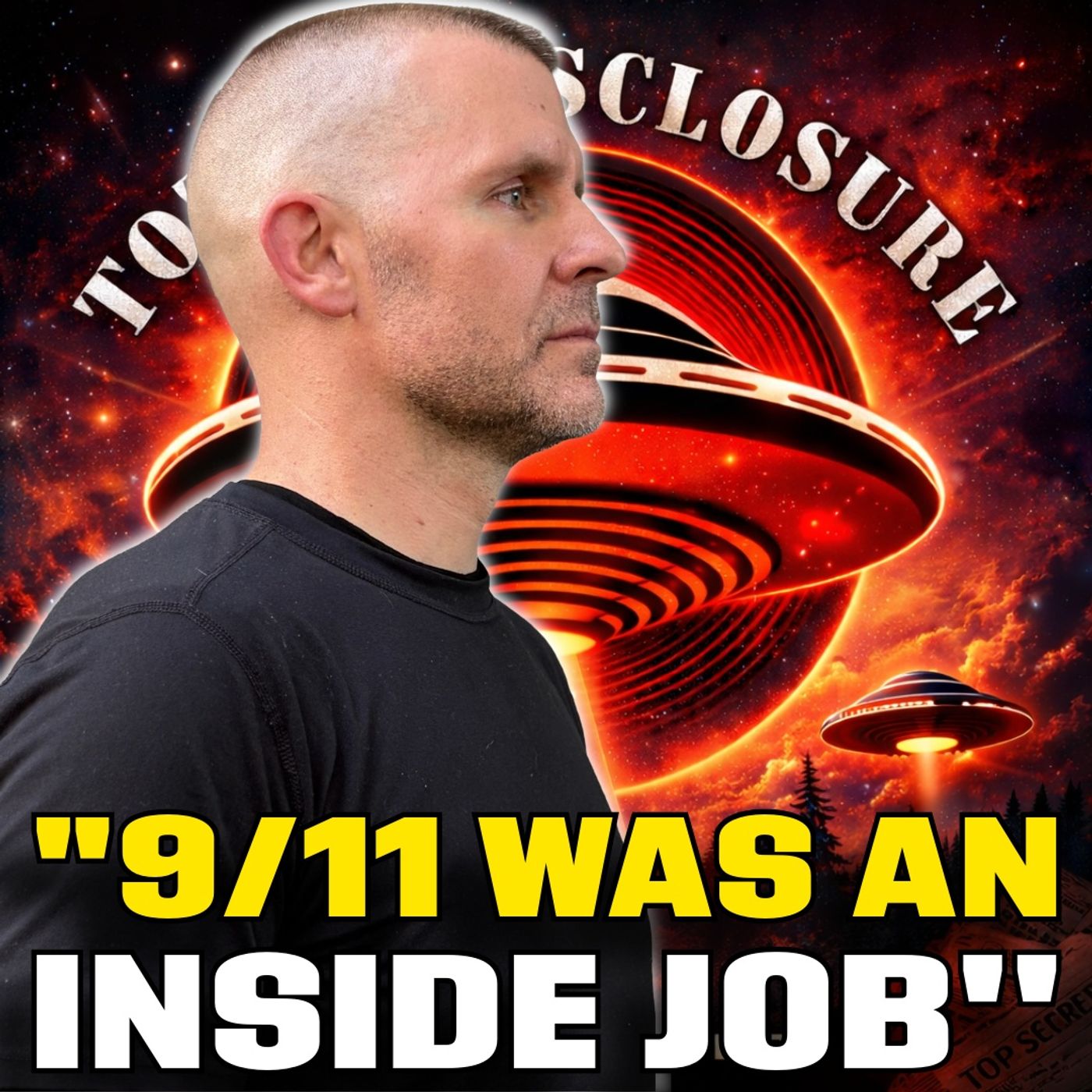
"A Plane DID not Hit the Pentagon. 9/11 WAS AN INSIDE JOB" -First Responder Turned Investigator Adam Eisenberg |PT.1
For nearly 25 years, the events of September 11th, 2001 have shaped modern America — but for many, critical questions still remain unanswered.In this explosive episode of Total Disclosure, Tyler sits down with Adam Eisenberg — firefighter, military serviceman, Pentagon first responder, and independent 9/11 investigator — for a deep dive into what he personally witnessed during the aftermath of the Pentagon attack on 9/11.
Adam spent nearly 240 hours on-site at the Pentagon following the attacks, participating directly in operational response efforts during one of the darkest moments in American history. But according to Adam, the deeper he investigated the events surrounding 9/11 over the years, the more disturbing the inconsistencies became.
From alleged non-disclosure agreements signed before deployment… to missing military records… unanswered FOIA requests… whistleblower suppression… and questions surrounding the Pentagon itself… Adam claims there are still critical aspects of the official narrative that demand further investigation.
Drawing from both firsthand experience and his professional background in the aeronautical parts industry, Adam discusses why he believes certain evidence surrounding 9/11 has never been properly examined — and why asking questions about that day became so culturally taboo.
🛒 Good Feels Cannabis Seltzer Get 20% OFF with code: DISCLOSURE https://shop.getgoodfeels.com/discount/DISCLOSURE
🛒 Strong Coffee Company - Protein Coffee 💰 Get 20% OFF | Promo Code: DISCLOSURE https://strongcoffeecompany.com/discount/DISCLOSURE
🔗 All Links & Platforms: https://allmylinks.com/total-disclosure
📺 Subscribe on YouTube: https://www.youtube.com/@totaldisclosure
🔻 SUPPORT THE SHOW 💰 Direct Support (No Fees – PayPal): https://www.paypal.me/TDPstudios767?locale.x=en_US
⭐ YouTube Membership: https://www.youtube.com/channel/UCy2Cra7aLAAMVxkA9rSYCxg/join
🔥 Patreon (Exclusive Content): https://www.patreon.com/Total_Disclosure
Become a supporter of this podcast: https://www.spreaker.com/podcast/total-disclosure-podcast--5975113/support.
CONTACT TDP DIRECTLY For Collaboration, Use of Segments/clips, or any other media produced by “TDP” —[email protected]
Special Thank you to all of our PODCAST/YouTube Channel Members for your continued support, and dedication to seeking the truth, together. We can’t do this WITHOUT YOU!
-COPYRIGHT-2020-
Copyright Disclaimer: Under Section 107 of the Copyright Act 1976, allowance is made for "fair use" for purposes such as criticism, commenting, news reporting, teaching, scholarship, and research. Fair use is a use permitted by copyright statute that...
Speaker 1: There's lunchtime in London, five am in Los Angeles and eight am here in New York live from the CNN Financial News headquarters.
Speaker 2: And then that it's kind of quiet around the country.
Speaker 3: We like quiet. It's quiet.
Speaker 4: It's too quiet.
Speaker 3: Oh, would you look at Washington.
Speaker 4: Huh?
Speaker 3: It is beautiful outside, perfect September day with lots of sunshine.
Speaker 5: This justin you were looking at obviously a very disturbing live shot there.
Speaker 3: That is the World Trade Center.
Speaker 4: Bit of the majoris in.
Speaker 5: Apparently a plane has crashed into the World Trades Center, New York.
Speaker 4: It does not appear that there's any kind of an effort up there yet.
Speaker 6: And now remember, oh my god.
Speaker 1: That looks like a second plane.
Speaker 4: Does a plane go in that that just exploded?
Speaker 1: I just saw another plane coming in from the.
Speaker 4: Side you did that was out of So that's.
Speaker 1: The second explosion. You could see the plane come in just from the right hand side of the screen. So this looks like it is some sort of a concerted effort to attack the World Trade Center that is underway.
Speaker 4: Very very quickly.
Speaker 3: There are more explosions put it down the building. This is so shocking, of course to everybody watching.
Speaker 5: I've never seen anything like it.
Speaker 3: It literally blew itself into a World Trade Center.
Speaker 7: Today, we've had a national tragedy. Two airplanes have crashed into the World Trade Center in an apparent terrorist attack on our country.
Speaker 2: And the Pentagon is being evacuated. There is a large fire there and that is the smoke you see in the shot that you were looking at now piers that an aircraft of some sort did hit the side of the Pentagon, and some people were shamie, I need you to stop for a second. There has just been a huge explosion. We can see a billowing smoke rising and I can't I'll tell you that I can't see that second tower.
Speaker 3: There's a haze everywhere. It's very, very difficult to see that. There has been a whole area has been covered by foot an act, a.
Speaker 5: Big bang, and then we saw smoke coming out, and everybody started running out, and we saw the plane on the other side of the building, and there was smoke everywhere, and people are jumping out the windows over there and jumping out the windows I guess because they're trying to see themselves.
Speaker 2: In the United Airlines flight I believe it is one seventy six went.
Speaker 7: Down freedom itself was attacked this morning by a faceless coward, and freedom will be defended.
Speaker 8: September eleventh, two thousand and one is one of the most documented events in modern history, and yet for many Americans, it remains one of the most questioned. Today's guest is not a politician, a pndon, not someone who's speaking from distance, or simply you know, conspiratorial angles out of sm Eisinberg was there that day, a firefighter and military servicemen deployed to the Pentagon in the direct aftermath of the attacks on September eleventh. Adam spent nearly two hundred and forty hours on site during one of the most chaotic and traumatic moments in American history.
Speaker 8: But it began as a service eventually became an investigation. Over the last two decades, Adam has pursued records, filed FOI requests, analyzed missing documentation, and connected what he believes are deeply troubling inconsistencies surrounding the official narrative of the nine to eleven attacks, from non disclosure agreement signed before deployment to missing military records, missing money trillions of dollars to unanswer questions surrounding the Pentagon itself. Adam claims, the deeper he has looked, the stranger the story has become.
Speaker 8: So Tonight's section will not be sensationalized, as it does not have to be. It's about a first hand experience institutional secrecy and press testimony, the uncomfortable possibility that some truth surrounding September eleventh may still remain buried beneath layers of buocracy, fear, and silence.
Speaker 3: This is total disclosure.
Speaker 6: M Adam, love him, nice to be here.
Speaker 4: Thank you for having me.
Speaker 8: Super happy that I was able to fly you, fly you into the Boston area today for this conversation. As you know, I just spoke to Patricia how to do it remotely. It's not that I don't enjoy those episodes. It's just when someone's right here, I can feel it. I can feel that electricity.
Speaker 3: So I just want to say thank you for for you know, coming into the area for the.
Speaker 6: Episode today, Thank you for everything, and.
Speaker 8: Thank you for service, you know, from talking just the little that we have. I was in third grade when nine to eleven occurred, so I was a young man, young boy, I should say. And again I just want to say thank you for the service that you've done. Can you give me a little bit about introduction of who you are and what led to the events of nine to eleven and you being there?
Speaker 4: Sure how that happened. Yeah, So, like a lot of you, I'm just a you know, middle class American raised in a public school environment, you know, very similar upbringing to most Americans. I decided after a year of college that I was going to pursue some time in the military. You know, College really just wasn't working out for me at that time. I did it, but I wasn't the greatest at it, and I really didn't know where I wanted to go with my life. And so I thought that the four years I could spend serving the country would be a good use of time to kind of, you know, sharpen my skills in a lot of ways.
Speaker 4: And so I went in as a as an infantryman, and I thought, you know, this is going to be a great opportunity to serve to do things I like to do. You know, I was nineteen at the time. You know, you couldn't really convince me to go any other route as far as my military direction was concerned. And did just that was was at Fort Benning doing a very good job, got my airborne wings, and originally I thought I was going to go to the seventy fifth Ranger Regiment, and that that point in our history, that unit was overstaffed with infantrymen.
Speaker 4: They didn't need them. If you were a intelligence specialist, a cook, if you were a medic, if you were any one of these other types of skill sets, you're probably going to make it through their course. But you know, they basically were letting infantrymen go, and so rather than going to needs of the army status, which they were sending people at that point in time to some of the worst places on earth that I just didn't want to go to. My buddy from the region said, you know, there's a there's a unit that's elite in Washington, d C. It's the third US Infantry, it's the Old Guard, And he had spoken with a recruiter that was on base about how they were taking people in and I thought, well, that sounds fantastic.
Speaker 4: Go to the nation's capital. And you know, I went and spoke to the recruiter and he talked about all the different things that made that unit elite, and he, of course sold me he said, there's a lot more women than there are men in that town. So at nineteen years old, that seemed like a really you know, twenty years old, that seemed like a very appealing thing. And so I got to Washington, d C. In August and that was a brand new you know, we called him new Dick. You know, I was a new Dick in the in the unit.
Speaker 4: And not even a month later, we were faced with this completely unexpected event. And you know, from that moment on, my life was never the same.
Speaker 3: Where were you when you first learned that America was attacked?
Speaker 4: So I was at Fort Meyer, Virginia. It was specifically con Mee Hall. We were spending our day engaged in preparation for a public outreach event that we had participated in every single year called the Spirit of America. And I was part of that effort. And you know, all of a sudden, we were on the outskirts of the base and we started to hear all these first response vehicles just flying by, one by one heading to the Pentagon. And then not long after that, the Fort and Meyer Fire Department, which was right across the road from Conmee Hall on Fort Meyer, Virginia, they too as well took off and you know, slowly but surely, you know, we you know, we started to hear the scuttle on our first Starteant you know, received a phone call called the Formation and said guys were under attack.
Speaker 4: And so that was that was where we were that day when it all went down.
Speaker 3: So was there any any question it was we are under attack? By that time it wasn't.
Speaker 8: There was no like this might have been an accident. This was hey, guys, where it's game time.
Speaker 4: We're under attack. I'll never forget that when he called the Formation, those were some of the first words he said, we are under attack. You know, we really didn't have the ability at that point in time at conne Hall to watch the TVs to see what was happening. We just knew that we had to get back to our installation. We were the one and only company that was in the regiment that was not stationed at Fort Meyer, Virginia. We were actually at Fort McNair, Washington, d C. Across the river, and so the very first thing we had to do was kind of get back to our base and you know, presumably wait for some second order.
Speaker 4: You know, people were saying a lot of things. We thought we were going to go out on a mission to patrol d C. There was a whole bunch of different I guess you could say, things that were happening at that point in time and until we finally were able to get back to our base, and you know, that's when, that's when I came across some anomalies, even before we ever went on site.
Speaker 8: I want to talk about those first because I kind of want to keep this as linear as possible in that sense, before you even know that the World Trade Center has been hit the way it has, what what anomalies? Because you had mentioned this what seemed odd about the days and weeks leading up? Was there anything that's stuck out in hindsight looking back, like, wait a second, why did that happen?
Speaker 4: Not anytime the day of, like before we ever went on site at on the Pentagon, like on the day of on September eleventh, That's when I guess you could say, I had my first very real couple of head scratching moments. And I can jump into those now if you'd like.
Speaker 3: Yeah, yeah, so, I mean, so, yeah, what do you remember most about?
Speaker 4: So we had a difficult time getting back to the base we were over in Virginia. We had to get into DC and the gridlock that was occurring that day was terrible, and so, you know, I envision eventually the scene that a lot of pedestrians saw when we basically had to exit our buses once we made it to the DC and run by company through these traffic patterns and everything. So that that always kind of cracks me up. I'm reminded of like this herd of buffalo just flying through the streets of DC. But so we got back to my base and we started to get out all of our riot gear, you know, my unit, we we did a lot of preparations in the riot control department, Like the World Bank protests that happen in DC every year.
Speaker 4: We were part of those securing those, making sure nothing crazy happens so we are able to be deployed into the DC region at a moment's notice. Well, I was a private at that time. I was full of piss and vinegar. And they you know, everybody that's been in an infantry company knows if they ask for volunteers, they better get a hundred sum hot hands immediately going up and they said we are going to supplement the MP's forces. We're going to provide some people that day.
Speaker 8: So for anyone doesn't know MPs Military Police, So you're gonna you guys are going to go into aid the military police.
Speaker 4: Yeah, ok, the region and and you know, on the base. And so they said, who wants to be a part of this? And I was like, yeah, that's why I came. You know, I was twenty at the time. It's like, okay, infantry stuff. Now we're talking. So they said, okay, good deal. You guys are going to help in a variety of ways around the base. Go downstairs, check out your M sixteen, get all your gear, and report outside on the curb in front of the company. Ready to go. And can I pausey sure?
Speaker 3: Do you know the severity yet of what happens has happened, So you don't know the actual true severity. You just know that people are scrambling, like literally like like units are scrambling, but you don't know how severe it is yet.
Speaker 4: Don't know how severe. Obviously, at this point, once we were back to the company, we knew what had happened with the towers. We knew that both towers had allegedly been hit. They and again we just we didn't know any of the possibilities, you know, and there's a lot of scuttle at the time, people were talking about how they heard about more attacks coming in. You know, this is all before the tech Now.
Speaker 8: I was gonna say listed before because I remember even you know, people forget how early it was in the day where it just yet you kind of started your day. You got about a half hour into your day and Bengo, it was popping and I was in school, so they had us under our debt.
Speaker 3: Well we'll go into this, but no one knew what was going on.
Speaker 8: I only have that kind of point of view of like, and we're close. We're four hours from New York and we're four hours from DC, so you know, it's a major city in between where everything's happening, so you don't really understand if you're next, Like there's always that possibility.
Speaker 3: I would assume.
Speaker 4: Yep.
Speaker 8: I think I was too young to feel that, but I think that's what the adults are probably feeling because military jets are scrambling every four and a half minutes.
Speaker 3: They have us under our desks as kids like like like we're being nuclear like like a nuclear attack is about to happen. Yeah, no one knew.
Speaker 8: There wasn't TVs that just popped on in every classroom and you know nine to eleven is happening. No one really understood the severity. And I think that is important to capture because you're just getting ready to go protect, You're getting ready to go do your job. You don't really understand what actually happened yet. So I'm sorry, continue.
Speaker 4: Oh you're fine. So yeah, we went down to the arms room, and I'll never forget what was said to me. I was handed on m sixteen and I was handed a blank magazine with no ammunition in it, and I said, excuse me, specialist, I need ammunition, and he said, you guys have not been authorized the use of live rounds. And so I said, you know, in those moments to myself, I'll never forget. I went out of my barracks. You know, there was a formation that took place right out in the front. I can look across the river from DC and I can see where this smoke.
Speaker 3: Is billowy billing.
Speaker 4: And I'm one of the people that is supposed to be performing some type of a guard detail on this base. And I don't have live rounds. I don't have any rounds. And so this is where it gets even more interesting. I ended up going to the front the front gate. I was linked up with another female MP that day. I asked her, you know, as soon as I got there, did you, first off, do you have live rounds? And she said, yeah, I've got a pistol. I've got about I think she said like three rounds that she was authorized.
Speaker 4: I said, have you been given anything else? She said no. I said, oh that's great, and so yeah, there were people that were posted up on the two gates going into McNair. I was on one of those gates. So there was also a roaming guard that took place along the sea wall of our base and just kind of throughout the base in general. But not a single person was given live rounds. And I was able to because I try to use other people's testimony when I tell my story, because there's a lot of people out there in the nine to eleven accountability community that are trying their best to disqual everything I say.
Speaker 4: So now I say, look, okay, great, this is my story and I'm using now other people's testimony. But I was able to uncover through research a quote by a guy by the name of Benjamin Yellett. He was a sergeant and even he said, you know, when he was doing the roaming detail that day before we were ever deployed to the site, they had blank magazines. They had empty magazines.
Speaker 3: What are you going to do?
Speaker 4: Well? It reminds me of the movie The Boondock Saints. Have you ever seen that movie? What am I supposed to do? Laugh them the death? Like the funny Man.
Speaker 8: You literally just have a blunt force object. At that point, it's nothing but that.
Speaker 4: I told the MP. I said, I if it goes down, I'm gone. I'm running And I don't know what to tell you. I'm running.
Speaker 3: You can't, you can't. I'm no good to you right now.
Speaker 4: I very and this is not I'm not trying to get negative, but I very clearly remember that day when I was on the front gate for about ten minutes being furious, and I said, I'm not doing this. I'm not going to take part for the next twenty years of my life where these type of incompetent decisions are being made. And I've been saying since day one. Everybody was getting very patriotic on September eleventh. Oh, I was pissed off because I felt like I was being used as a pawn. It's like, you know, if this is a legitimate, legitimate attack on our country, every single military installation should consider themselves a target.
Speaker 3: And you're you are the target.
Speaker 4: And you're ordering me not you know, you're giving me orders to go out on this bas you know, to protect the people that are here, and I can't do that job.
Speaker 8: I think the obvious question becomes number one. If the United States government and military didn't know what was happening on nine to eleven, they would not have issued blank magazines. If this was spontaneu and we did just get attacked, you think they'd be like, literally, like take take our like take.
Speaker 3: Three full magazines. We don't know what's going on. We need to be ready for anything, anything, period.
Speaker 8: That's the answer if this is spontaneous. But if this is something that's cooked up and they know that it's not going to require live ammunition because the job's done, that's when I start issuing blank magazines.
Speaker 3: Well, when I know you're not going to need them.
Speaker 4: To your very point, here's where it gets a little crazier. So we spent aggravates me. Oh just wait, but wait, there's more. So we went on site that day around sixteen hundred hours, that's four o'clock PM in the afternoon, and prior to us going on site as a company, we were forced to sign non disclosure agreements about what we were you know, how we were going to engage if you know, while we were on site, you know that we wouldn't speak to the media. It was known that that part of the building was housing a lot of top secret documents, and so you know, naturally our mission became heavy and light labor, recovery efforts of all things.
Speaker 4: And so I personally believe and this is I haven't been able to get a copy of that NDA, but my book is going to show other people in my unit testifying that we were forced to sign these things.
Speaker 8: So I'm sorry, How is this so after everything happens, or because this had to be prior?
Speaker 4: This is so, this is prior to us going on site. I went out and did the guard detail. You know, we had received orders. I guess orders is the wrong word. We received instruction because we came down on formal orders to go on site and do what we did on the twelfth, and I've been able to uncover that information as well through research. But we on the eleventh, and again I use my first sergeant's words. I use another book where my company commander spoke to show that we were on site, you know, on September eleventh in the afternoon, but prior to us going on site, you know, they gave us these pieces of paper and I very vaguely remember it.
Speaker 4: It was just one sheet and it only had like a couple paragraphs, and it just said that we're not going to talk to the media, that we're not going to take pictures, we're not going to speak about any of the things that we saw. And and why I find that interesting is that there are people in my unit that remember signing that. There are people in my unit that don't remember signing it. But I haven't been able to get a copy of that. And again, to your point, you know, we're here to respond to a tragedy.
Speaker 4: We're not. You know, why are we wasting our time with legal documents and NDAs and people have tried to play Devil's advocate with me.
Speaker 3: You know, and cover your basis. It's like, no, get the fucking job done.
Speaker 4: Get there, there's people that are in need. Let's go. We just got attacked. Let's go. So yeah, that was a head scratcher. But you know, so no ammunition forced to sign.
Speaker 8: NDA's why So when you arrive at the Pentagon A, you know, can you can you tell me what you saw?
Speaker 3: Sure?
Speaker 4: So the very first thing that I remember when we got there is the lack of response. We got there, We jumped out of the deuce in a hass. You know, everybody was looking at this hole and this portion of the building that collapsed. And I use a testimony from a guy by the name of specialist Matt Colton. He was also in my unit. And this can all be found in the in a variety of ways. It's going to be included in my book. But in his testimony he basically said that everybody expected to see more. We we got there in the earlier part, in mid afternoon whatever you want to call it, you know, around sixteen hundred hours, and we that point in time saw no debris whatsoever that was on the field.
Speaker 4: Right outside in the lawn, we saw, you know, nothing that looked like a plane had struck the building. You know, the lawn wasn't damaged in any way, shape or form. And if you if you look at any commercial aircraft, or anytime there's an aircraft, you can just see this pile that just goes, you know, for a long period of time. You can see scraping on the ground. You can see all different types of aeronautical components.
Speaker 8: We can we can even use another example, the plane that went down in Pennsylvania. Look what that looked like. But then there's and so okay, so you.
Speaker 4: Don't see, don't see anything. And and that's wild. Yeah it was wild, and and and again there's there's no picture that does the size of the whole any justice. There really isn't. It was extremely small. Even that that portion of the collapse building was so small, it just it didn't make any sense. And of course, you know, I'm reminded of the nineteen eighty four quote, you know, big brothers most necessary command is to ignore the evidence of your eyes and your ears. So all of us were kind of looking at that point in time.
Speaker 4: You know, people have been watching the TV all day. You know that people that weren't on the detail, they stayed inside of the barracks. Basically everybody in the company was on lockdown. So we'd watched these towers fall repeatedly, repeatedly, repeatedly, and so it's easy, I guess you could say to at that point in time, if you don't know just how corrupt the federal institution is. Now, we can look at twenty five years and beyond and point to a lot of things, But we didn't have that ability back then, and so it would be I guess you could say, easy to utilize a unit like my own and a first response effort where they think that they're actually legitimately responding to an aeronautical crash.
Speaker 4: The majority of the people that I talk to now, because I've been reconnecting with a lot of peop people on the subject, they fall into three categories. The vast majority of people that were in my unit that responded the way I did, they don't remember seeing really anything that looked like an aeronautical part. They don't remember seeing personal effects that look like luggage. They don't remember seeing people that were in, you know, side the building that looked like they had been deceased as a result of an airline accident.
Speaker 4: Everybody that we encountered looked like they were in the building and that's the position that I take. I've sworn up and down on it. You know, I've been saying these things since very early on after.
Speaker 8: So honestly, like it's just not gruesome, like you think, what you're what what I would expect to arrive on scene is a building that has a giant hole with a half a plane of it sticking out, burning people screaming, right, jet fuel like bursting every once in a while.
Speaker 3: I don't even know, Like I'm thinking like like a hot like a very chaotic mess.
Speaker 8: Because even no matter how much, even if you even if you've calmed the situation down, there's still gonna be be people crying. There's gonna be people watching with terror with you know, there's gonna be a leg over here, like unless they just swept everything super quick before you got there, well.
Speaker 4: Before I got there. Let's bring up a very known witness, April Gallop. Yes, no, she was one of the people that was specifically inside of that portion of the building where Flight seventy seven allegedly hit, and she got back from Eternity Leave that day she pushed a button on her computer and she thought that her computer had actually activated some type of a bomb because it exploded immediately after that, suddenly she was you know, concussed, she was knocked down, She was there with her child.
Speaker 4: She had no idea where her child was. If you can imagine, you know, having to go through this. But even she, and she's been very outspoken about this for a long time, she mentioned the same things that I just said to you. No aeronautical components, no, you know, nothing that looked like your plane had hit the building. And I also did want to say too, I've kind of mentioned the three different types people, so they most people fall into the category with me. The second biggest group or people that have compartmentalized it, they've just for whatever reason they've responded.
Speaker 4: It's kind of a trauma response. They've forgotten a lot about what they went through. And then there's the third group, which is a really small group of people. There's two people specifically that are part of this group. They said that they thought they saw aeronautical components, and I say, first off, do you have access with these? No, because I do. I actually down the line, I worked for a company called Pratt and Whitney that's very well known. Oh wow, they do aeronautical engineer. You know, yes, defensive and commercial capabilities.
Speaker 4: So I didn't have that experience at the time, but I certainly overlay that experience down the road. But you know, so nobody has that type of knowledge. And I asked them, you know, what did you think you saw? When somebody said, well, I saw a chair. It's like, did you see any other chairs? There's a lot of chairs on an airplane.
Speaker 3: There's three hundred of them.
Speaker 4: A lot of chairs on an airplane. What about And this other person said, well, I thought that I saw a door. And I said, great, you know where is it? You know, because if you really get into studying this anomaly, you can look to so many different areas where there isn't a chain of custody with these alleged parts. You can't find these parts anymore, good luck finding them. And there's these things on parts that are called serial numbers. Yes, and they're designed to withstand an incident. And I used to work for Pratt and Whitney, and I used to tell my coworkers I was a leader there.
Speaker 4: I said, listen, do your job, because if God forbids something happens, the FAA and a number of other institutions are going to investigate.
Speaker 3: Them, come down on you.
Speaker 4: It's going to come back to you the very people that were moving the parts, specifically the parts that were you know, used in fabrication of these engines. So I kind of use that as a motivating vector.
Speaker 3: And it's like no black box was ever produced.
Speaker 4: It was, but nothing ever came from it. And furthermore, you know, no information came from it. But it was the way that it was found. It wasn't you can't find it anymore.
Speaker 3: It was I was gonna say, because I don't even recall.
Speaker 4: It was allegedly found by two firefighters and it's not even technically it wasn't even a black box. But yeah, they they did away with it. And and you know where is that piece of evidence right now?
Speaker 8: Should be in some you know memorials that people can go access, right.
Speaker 4: Yeah, thousand percent. And and you know, I I there's a lot of different ways to break down the anomalies with chain of custody. I can prove in my work that the FBI did not have chain of custody of those parts which were supposed to be handled in a specialized manner because they were encountering, you know, human remains, they were encounter asbestos, you know, water that had been dirtied, and so you can't find any of these things who.
Speaker 3: Had ultimate authority on scene.
Speaker 4: There were two entities James Schwartz, he was the incident commander of Arlington Fire, and then there was Chris Combs, he was the head of the FBI, and so they kind of worked in tandem. But this is another area where my work also gets really into the weeds. There were so many different institutions that were local, there were state, there were federal. There there's so many places that got involved with the response that it's it's been really hard to pinpoint every single thing down. And then when I go even deeper and I do Foier requests, and I asked these institutions to provide a bare minimum of an after action report, a post incident report, you know, a lessons learned report.
Speaker 4: Most of them, and I'm saying most, I'm talking about ninety percent come back with they have no documents responsive to the request, which makes it even worse because the two documents we do have, first and foremost is Arlington Fire. They did an after action report using a company called Titan Systems Corporation. This you know company is now now known to be notoriously corrupted. You can even throw that into AI and ask them to explain the corruption with that company. But can you say that the name Titan Systems Corporation.
Speaker 4: They they did the after action report for Arlington Fire, and I even went so far. In the first couple of pages of Arlington's AAR it says, you know, this document was produced by a grant that came from the Department of Justice Office of Justice Programs, and I specifically went to that institution. I'm like, give me all the information you can possibly give on the grant. And I even spoke to the FOUA officer. He's like, yeah, you stumped us. There's nothing. So that's one document that's heavily problematic.
Speaker 4: The other one is the actual nine to eleven Commission Mission report. David Ray Griffin wrote a book on that and and my unit in its entirety was whitewash from that that entire report. So we had between you know, anywhere from six hundred to seven hundred people on site. According to Major General James Jackson, he was the commander of the Military District of Washington. If you weren't doing Arlington detail in that time you were at the Pentagon, My unit, the Old Guard, and our entire response efforts were basically just wiped.
Speaker 4: And even in Arlington's aar you can't really look and see how were we deployed. There's several mentions that talk about how the Arlington firefighters and the agencies drew great motivation, you know, watching.
Speaker 3: Us and party should have been here ofs well.
Speaker 4: That's a day. It's like we're there to do a job. We weren't even believe it or not doing anything. The first couple of days we were kind of sitting back and like nothing was happening. So that was you know, not trying to jump around. But you know, that was another issue that I saw. But then when we actually started to do things and we were going in, I mean we we worked side by side with all the federal agencies taking everything out of that building. This is documented. Everything in that building came out, and it came out due to the efforts that we were made.
Speaker 4: We were hauling bodies, we were even I've been able to find research showing that we were partaking in conversations. Half there were bodies, but they were they were bodies. And and again I'm speaking from my experience, but you know, I'll get.
Speaker 3: To these are all people that worked inside.
Speaker 4: The inside the office, one hundred percent. And if you if you look at documents that show.
Speaker 3: Where that's so fucking crazy. Man.
Speaker 4: The vast majority of the bodies that were recovered allegedly happened in A and E drive right outside of the Defense Intelligence Agencies portion of the building. And I've got pictures that were taken of that very spot, and you know, stuff is still smoking and smoldering. The water from the fire relief efforts is still you know, ankle deep, you know, knee deep all over the place. And so I say, you know, these people said that tons of people's DNA was retrieved from this pile of nothing, and it's like, well, how do you do that?
Speaker 4: Things submerged in water, it's still smoldering. Like I can physically look here and see all this stuff.
Speaker 8: It's mixed together with dust and sut from the building and concrete. It's like, you're not pulling individual DNA tracks off of that any of that stuff.
Speaker 3: I don't. It just doesn't make sense. And plus you can't even show me the report where it does make sense.
Speaker 4: Yeah, well absolutely, and where it gets even crazier. I was able to find. This was one of the little gifts I was going to bring to Showton just to read to you the testimony Arlington Library. The Arlington Library about five years after the incident did a historical recollection kind of collection and they brought a number of people that were involved with that day to come and speak on it. And there was one specific firefighter by the name of Charles Gibbs. And this guy was head of the training wing of Arlington Fire and Arlington's one of the elite units in the country because of their responsibilities, the fact that they.
Speaker 3: Such a large area, such a large.
Speaker 4: Area right outside of the National Capital region, and so there's there's you know a lot of ways to show how this unit was elite. And in this testimony, Charles Gibbs said, point blank, He's like, we were finding people like they were asleep. Yeah, I mean, like if you can imagine, And I'm going to kind of tell you a little bit about the scene that I found that really stuck out the most. But there was a conference room, a boardroom where there was six people and they were sitting around this huge table.
Speaker 4: It was off the alleged flight path. It was in the Naval Operations Center, and so if the plane came in just like this, it was kind of over here, you know nothing, And when you know, a few days into the operation, we started to go into the building and assist federal agents. I'll never forget that scene. I walked in and everybody was still sitting around this conference room. And what made it even more fascinating. You would think that if a if a commercial airliner hit the building, there would be an explosion which would impact that conference room because it was so close proximity wise.
Speaker 4: But then blast out word yeah, push everybody, No, it didn't do that. Some of these individuals inside of this room, and I can point to where this room was on a map, half of their face would be burned, melted, in fact, literally melted. The other half of their face was totally fine. And you know what I'm telling you right now is also the opinion of my former company commander. There was a book called Then Came the Fire, and his name is William Besterman. He talked about this, how the bodies were half burned, and like you know, some of the things that were inside of the room.
Speaker 4: He talked about a computer, how it looked like a melted piece of cheese on a cheeseburger. Yeah, And so some of the things had been burned, some weren't. There were, you know, elements of that boardroom that you could tell something obviously very high temperature came through there. But then there was also parts that looked like it wasn't touched. But that scene stuck out to me the most. And you know, one of the guys looked like my dad, which really made it kind of impion. Yeah, and that's what really drove my work.
Speaker 4: But again, going back.
Speaker 3: To Jesus, it must have been so hard to look at.
Speaker 4: Yeah, Charles, Charles Gibbs' testimony, you can still find this. It's he just said that a lot of people were found looking like they were just asleep. And furthermore, he talked about how explosives experts were DD explosives experts were running around the scene basically telling the firefighters that that's how it happens when an emergency or an emergency, but when an aircraft hits the.
Speaker 3: Building, it's everyone falls asleep.
Speaker 4: It sucks the auction out of the room in such a way. Yeah. Yeah, Well, which is also funny because you bring up Shanksville, and I once saw an interview with one of the FBI agents that responded there, and he talked about how he's like, where is everything? And that's when lo and behold. One of these other people within the FBI kind of jumped in and said, well, that's what happens when you know, aircraft like this hit the ground at such a speed, and this that and the other. Yeah, so you know there.
Speaker 4: I don't try to throw every single agent under the bus.
Speaker 8: Right, nothing, not everything's a conspiracy. Not everyone's not everyone's like part of like the cabal. However, something's odds happening no matter where I look. I talked to the one of the Jersey girls got the commissioned the nine to eleven commission report. Her husband died on one hundred and fifth floor. There was an insurance policy taken out. I know you don't like to talk too much about the towers you weren't there, but can we agree that it doesn't the official narrative does not line up with what the outcome became.
Speaker 4: Yeah, and tell me an event in history where localized fires brought down, you know, not just two buildings, but a lot of other buildings fell that day. Look at buildings seven. Yeah, you know that that fell in the afternoon, and yeah, thankfully nobody died, but that just all of a sudden fell, and the excuse that they gave was that, oh, it was from the debris and everything else. And there was other buildings that fell that that day as well. Yeah, you know, and so yeah, there's there's a lot of inconsistencies on that day, especially if you look at how he responded.
Speaker 4: We talked a little bit about how the air response was ineffective.
Speaker 3: Right right, and that was off cameras. I don't want to get to that.
Speaker 8: Even in Boston, I lived next to Hanscom Air Force Base, and again I told you, we clocked, like my teacher was, we were so locked down for the hour hour two hours because I believe what time does the.
Speaker 3: First plane hit?
Speaker 4: It's like nine seventeen, right fire timeline. Yeah, I couldn't tell you the time, so it's like nine.
Speaker 3: It's it's like, yeah, the.
Speaker 4: DC timeline and then the New York timeline in Shanksville yeats.
Speaker 3: Yeah, so the first I find just find out what when the first plane hits the North Tower.
Speaker 8: I believe it was like nine something. So again, your day is just starting. I want people to kind of bring themselves back to or bring themselves.
Speaker 3: Back to any kind of work day.
Speaker 8: Right, you get up, you clock your nine to five, it's like they had thirty minutes. And imagine thirty minutes into your shift, the plane hits the fucking North Tower.
Speaker 3: The first god hit at nine.
Speaker 8: Wasn't even it wasn't even close to ten. So your day even gets your day was it didn't even. I would have if it was my workplace, like what the job I do right now, I would have been there for thirteen minutes, seventeen minutes before the first plane takes impact. So imagine thirteen minutes into your day, a fucking plane comes through the building, and then twenty two minutes later you find out this can't be random because second tower just gets hit with a second plane, and then a third plane hits the Pentagon, a fourth plane goes down in Pennsylvania, and this all happens within two three hours of each other.
Speaker 8: So if we're believe, if we're to be believed that this was a spawn taneous attack and there was simply failed intelligence, the CIA, the NSA, they failed to act on intelligence, and the FBI Tech and the FBI. If they weren't sharing there were being dickheads to each other. However, they had I don't know how many the hijackers they were they were following already.
Speaker 4: Yeah, well they talk about that in the Canistri files, I believe.
Speaker 3: Yeah.
Speaker 4: And again that's a geopolitical element of all this that that makes you kind of scratch your head a little bit. You know, why were these Israeli intelligence folks following, you know, these hijackers and monitoring them.
Speaker 3: It's kind of like and who let them start getting plane license to fly?
Speaker 4: Well? Yeah, and specifically when you hone in on the Pentagon element. You know, the individual Hani Hanjour that allegedly flew Flight seventy seven. If you break him down, no, you're good. That's where it really falls apart. He couldn't really even pilot assessaent Sessna. Yeah, and so you want to tell me that he could pilot a Boeing seven fifty seven series aircraft, which, by the way, the aircraft in question isn't even designed to fly at the speeds and at the altitude that it allegedly flew at hitting the Pentagon.
Speaker 4: That is a physical impossibility when it allegedly hits the building going over five hundred miles per hour. It can't fly at that speed. But that's a whole other part of the of the question.
Speaker 3: But you're also flying at So what he would have had to do? What? And you see where I'm going with this right? Oh?
Speaker 4: Yeah, the quarkscrew maneuver the.
Speaker 8: What he would have had to be enable to pull off flying that plane into the Pentagon where it hits and the little clip that they show us, it skims right across the ground, almost running parallel with the ground. That guy would have had to have been flying for fifty some odd years, yeah, to have been able to pull off.
Speaker 3: Because he goes cork, screws down, perfectly, lines himself up with that portion of the Pentagon, and flies consistently, doesn't hit anything else right, and just flies perfectly into the Pentagon, is what they say.
Speaker 4: Well, they say that he hit a couple of telephone poles, like pulls a generator and then.
Speaker 3: God, he must have been the worst best pilot ever.
Speaker 4: Well, there's so many ways that you can kind of break this down, so you can get the honey hanjour, You can get into his past and even his brother. There's a mainstream media article out there that exists and this will be my book where his brother said, there's no way that my brother did this, and you know, I find it hard to believe. I guess you could say, so, I say, are we going to trust, you know, trust the intelligence apparatuses that failed us and continue to fail us, or we're gonna trust this man's brother.
Speaker 4: You know, we can look at trade craft. Well maybe that's tradecraft at play. He's saying this because he's trying to dodge. It's like, well, no, let's go even deeper with honey. You can go to the Buoi flight school in Maryland where people saw this man's capabilities and.
Speaker 3: They flew with the guy.
Speaker 4: They've refused to do it.
Speaker 3: Yeah, oh in some case, Yeah.
Speaker 4: His attitude was so bad that they refused. So he was trying to get ASSESSMA allegedly before that event in the DC region, and they wanted to take him up to kind of test his skills and he was very, you know, not proficient. His English capabilities weren't great enough to get a license through the FAA. So how did that happen?
Speaker 8: Can you explain why you would need I just because I don't want anyone to think that sounds a certain way. Why do you need to be able to speak English if you're flying in the United States?
Speaker 4: That's a great question.
Speaker 8: I think it's to I do you need to be able to communicate with flight control? Yeah, like clear and effective communication. You can't not speak English and be flying into land a plane, God forbid, something goes wrong and someone has to walk you through, literally talk you through flying because so you need to be able to It's funny because that's like the one area where we allow racism, like not maybe not racism, maybe that's not the right word, but you see what I'm saying, Like you have to be proficient in English to fly a plane like and because you need to be able to communicate with flight control and they need to be able to communicate with you.
Speaker 8: And it makes perfect sense when you start breaking it down.
Speaker 3: And this guy did not speak very good English, very very good English.
Speaker 4: Well, and not only that, it gets even worse. So we can't even prove that he was at Doulas Airport the day in question. And so you know this is where it gets even harrier. There are over there were known to be over three hundred cameras in that that day and Doulas Airport that day. The one and only piece of footage that we got was a video of him traveling through airport security. But we can't even verify it was that day because there's no time stamps. There's problems with the speed of that. And furthermore, you know what I mean, the speed, the speed of the actual footage.
Speaker 4: You know, the members of the nine to eleven accountability community, they kind of agree that there's a certain level of problems that exist there. Just like I said, there was three hundred cameras, we only got one. There's no time stamps, there's speed issues. It came to us, It didn't even come to us by way of the federal government. It came through us through a different group that was trying to lobby on behalf of the victim's family. So it's like, you know, it's just it's very questionable. It's puzzling.
Speaker 4: It all came years down the road, and there was allegedly five hijackers on this plane. You know, why do we only get three of them walking.
Speaker 3: Through this terminal security?
Speaker 4: And here's where it gets even fishier. The woman that was checking in all the passengers on that plane. A woman by the name of Brenda Brown said on you know, she very clearly remembered after after the incident, on what she called a light travel day, not seeing any muslim men in that line that day.
Speaker 3: Holy shit.
Speaker 4: Yeah, that's a that's a fact.
Speaker 8: Think about this, that flight takes off, that's the last flight she works that day. That is because they they shut that ship down, the airspace gets locked down. I would say by by you said the second plane hit when,
Speaker 8: so I would say by ten ten am, that airspace is locked down. Every plane is is ordered to ground and to be on the ground, and then the remaining So this is how they suss out at the time. This is how they suss out who's hijacked and who's not. Is everyone's ordered to ground themselves, and then anyone who didn't or is not communicating with the center command centers across the United States. You have to assume that those planes are hijacked at that time if they're still in the air. And that's how you get Shanksville, right, because they tried radio and into them, and I mean that's a little sketchy too.
Speaker 8: They've made this heroic story out of that, that plane, and you never you don't want to challenge.
Speaker 3: That because you honestly, that's how.
Speaker 8: I think, that's how I want to think that we would handle it, that Americans would handle something like that happening, say.
Speaker 3: Another run down North Tower.
Speaker 4: Tower.
Speaker 3: So it all happens within an hour, a little over an hour, this is so it's a little over an hour time time frame. So that's that last that's that's the last flight she works that day. So that's gonna stick out like a sore thumb, and she's gonna know exactly who was on.
Speaker 4: That plane with a very obvious different group of people. And she said, yeah, on a light travel day, I don't remember that.
Speaker 3: And that's that's exactly right.
Speaker 8: That's so that you gotta it seems that everywhere I look, since I've grown the balls quite and someone comes from the community that I do, it's quite weird that I didn't want to touch this for a long time, didn't just didn't want to talk about it because it's felt dirty, because real people lost their lives, Real Americans lost their lives.
Speaker 3: It's sucks some souls were taken.
Speaker 4: From Boston and the East Coast. You have a different kind of I think feel for that day.
Speaker 8: Yeah, we hate New York like sport wise, right, it's like it's kind of weird. But you spoke about the camaraderie that came after nine to eleven. People were just a little kinder.
Speaker 9: You know.
Speaker 8: I was talking to someone about this, just just this topic at my job, you know, in preparation for these couple interviews that I was doing, just getting back in the mindset of like what I felt like that day and what they felt like that day. And they do remember like the same thing as I do. It is like everyone just surrendered their freedom.
Speaker 3: Were not and they didn't even have to ask. We were just like kill them.
Speaker 4: All's who?
Speaker 8: And and and the first person to utter that this is potentially connected to Osama bin Laden and terror terrorism in general is a Fox News anchor who says it that, oh, this seems like it would be something from you know, like Osama bin Laden and that Fox News. Then it just gets repeated, repeated, repeated, and you just.
Speaker 3: Watch the towers fall fall, fall over and.
Speaker 8: Again, like you said, and it was just this narrative began to be built that it was Osama bin Laden, it was terrorism, and that we had been attacked, attacked by the attacked for our freedom, and people were generally came together on the East Coast. There was no more Red Sox Yankees rivalry for that year. It was I got your back, you got mine, Like, let's go fucking let's go do what.
Speaker 3: We need to do.
Speaker 8: But it shames me to say that I think this might have been done to us by our own people.
Speaker 4: Yeah. Well, and if anybody has a difficult time getting over that, and several people that have been looking into nine to eleven for a while already know what I'm probably gonna say, but look into Operation north Woods.
Speaker 3: So tell me.
Speaker 4: This was a document that was created back in the sixties by a gentleman by the name of General Lyman Leminster, And this was a plan to get us militarily involved in Cuba because at the time, in the Cold War era, they were concerned that Russia staging could use Cuba as a staging area. And so what they said is, okay, you know, let's create this series of incidents that make it look like Cuba attack the United States. And it was so far deeper than just Americans killing Americans like they were talking about.
Speaker 3: This is the Golf Gulf of Tonkin.
Speaker 4: That's the Vietnam No. No, no, this is this is this is the cold word, this is Operation Northwoods.
Speaker 3: Yeah no, but what was the false flag for Cuba?
Speaker 4: You're talking about the Bay of Pigs.
Speaker 3: Sorry, Golf of Tonkin, Bay of Pigs.
Speaker 4: Sorry.
Speaker 3: There's been so many times that the US government has fucking done itself in to go.
Speaker 4: To war, especially the CIA and the d D. But so back in the sixth they needed a reason to do the things they wanted to do. And in this document, if you break it down, it talks about how they were ready to make it look like Cubans were killing Americans. They were going to use psychological operations. They were going to basically mess with aircrafts. They were going to change aircrafts, make it look like they were Cuban aircrafts. They were going to be stage funerals. The media was going to corroborate all this.
Speaker 4: And they never went that route. They never did it, but they green lighted it and General Alignman Leminster literally green lighted it all the way up to I think the President looked at it, and they didn't do it. This was you know, Kennedy at the time, so people think you have to understand that to think that your federal apparatus is not capable of doing something like this. They were capable in the sixties. They were capable then.
Speaker 8: Yeah, And if you don't think they are, you're sadly your naive.
Speaker 4: Yeah, I would agree with you on that one.
Speaker 8: You're just naive and you can keep your head in the sand. It's not going to change the reality of the situation, though, is that there are too many problems with the official narrative of nine September eleventh attacks that once you start looking and you start seeing, right, not looking at the black and white narrative that they fed you, but seeing and letting people talk to you like yourself, people that were there.
Speaker 3: I wasn't there.
Speaker 8: I remember what I felt, and what I felt was the propaganda, the machine that told me to feel this way because I was a kid. I was adaptable, right.
Speaker 4: And my mom.
Speaker 8: I remember my mom picking us up from school that day because it was a short walk to the school. The look on her face I'll never forget because it was something like I'd never seen her like.
Speaker 3: It was a look like she we look.
Speaker 8: At our parents and people like of authority when we're younger, and we kind of do this with the US government like now, even as adults, it's like we think they have all the answers.
Speaker 3: Authority by us, Yeah, they well, they have all the answers.
Speaker 8: And when we're younger, we look at our parents that way, they have all the answers, and when they don't, and you see that for the first time, you go, what the.
Speaker 3: Hell is happening?
Speaker 4: Sometimes your parents don't have to be saying anything. You can just tell. Kids can tell when the energy is off, and.
Speaker 8: The energy was all the energy was off that day. All of it nothing made sense. I couldn't understand why what was happening was happening. But the days came and they went by, and I remember the slower it eased in that someone hurt us and now we're going to go punish them, and that they needed to be punished.
Speaker 3: That was the sentiment as.
Speaker 8: A kid that I understood that was brainwashed. I was a paper boy. I saw the headlines every single day and they were all nine to eleven headlines for one year straight. Rubble processes, different journalistic and you know, takes into what happened, and you know al Qaeda investigative reporting, but everything was centered on that nine to eleven attack, and it was like we were brainwashed into thinking one way, there was nothing if you went against what they were saying, you weren't just unpatriotic.
Speaker 3: Terrorists, you are a terrorist.
Speaker 4: Was George Bush saying that you were either with us or you were with the terrorists?
Speaker 3: Yeah?
Speaker 4: And yeah, yeah, So were you with the terrorists that day? I gotta ask was I with the terrorists? No? I was not with the terrorists. And I have to go to such an extent in my book to show.
Speaker 8: So it's not that you're saying the terrorists didn't do anything wrong. You're saying what we've been told and who did this to.
Speaker 3: Us is not correct.
Speaker 4: That is correct.
Speaker 3: You're not a sympathizer of terrorism, not controlled opposition.
Speaker 4: Controlled opposition. And I can't even begin to tell you why I have to go into these extensive lengths in my book. It's because, in my humble opinion, the nine to eleven accountability community, the truth movement, is actually the spook movement. And there's a handful of people that would probably agree with me, although they might differentiate on who is and who is not opposition, but I thought not trying to jump along the subject because there's so much to still cover. But later on down the road, when I got into my activism, let's just say I thought I was going to be received a certain way as a credible parts specialist, having spent extensive amount of time on site in a very proven way.
Speaker 3: Two and forty hours on site.
Speaker 4: Yeah, the from the eleventh to the thirtieth, this is all without question. You know, you can find photos of me retiring the flag in the National Archives.
Speaker 8: Yeah, and you've given me all your records to look at. I can independently verify.
Speaker 4: It one hundred percent, you can, And.
Speaker 8: So I receive you that. But you're saying that the larger community is not.
Speaker 4: I would say that the pillars. Why is that, the pillars of leadership in the nine to eleven accountability community need to control the narrative. And so they say, it's the same game, it's the same exact game, and they kind of do what they've been doing since day one. They focus on the towers. They do everything they can to draw attention away from the Pentagon. They've made the Pentagon an incredibly contentious issue within the movement. They've they've pretty much made discussions on it, you know, the irrelevant or they try to get infighting going.
Speaker 4: There's there's twenty five and I point people to this if they want to google it. It's called the twenty five Rules of disinformation and it's basically the strategies that one can produce if they're trying to cause problems. You can also see it in like the political realm if you want.
Speaker 3: To attack them anymore.
Speaker 4: So, yeah, they employ those types of things, and what they've really tried to do, in my humble opinion, is keep talk about the towers, keep talk away from suspects, try as much as they can to get victims' families to align with what they're saying, so that they can kind of covet these relationships and parade them around like there's something you know, like, oh, we've got their support, so you should support us too. But you know, keep any real efforts away from the courtroom. You know, so anytime anybody can be pulled into an actual courtroom and individual.
Speaker 3: And indicted and punished.
Speaker 4: Yes, keep it away from that. Let's just focus on generality. Yeah, how the buildings fell, the potentials. You know, there's there's multiple camps the nanothermite camp with the towers, or the directed energy weapons camp. There's also other beliefs out there.
Speaker 8: I didn't realize how sectored this thing was until I met the Richard Gages and then the doctor Judy Woods and Norman and Patricia, and it's like I'm meeting all these people and there's like there's one person says, don't talk to this person. It's like, guys, I'm going to do I'm gonna talk to everybody.
Speaker 3: I'll tell you what I find.
Speaker 8: After, right, you have to approach it that way, So like, stop asking me, stop telling me who I'm going to talk to. I'm going to do this the way I see fit and the way I need to do it to discern what I what. I to gather as much evidence, uncircumstantially and unbiased as possible and then start drawing lines right and inferencing. But I'm not going to I'm not gonna fall into those traps like I'm just I'm just not.
Speaker 4: The Only what I can say to you is I I encourage that I tell everybody go to all those places, you know, get to know the information where you're going to start to eventually run into problems is when these people have the ability to promote other evidence and they don't, or they use ad hominem attacks instead of attacking the evidence.
Speaker 3: They go after your character. They go after you.
Speaker 4: What they do pretty much with me is it speak no evil, see no evil here, and no evil. They act like I don't exist, and I've been excluded from a lot of the difference. I guess you could say bigger events. The last one that happened was in last September. It was a kind of a Washington fly in where they brought all these alleged experts in and some of them were legit, most of them weren't, and they had a three day event that was hosted by Clayton Morris and redacted, and they presented a bunch of evidence.
Speaker 4: So I, you know, was kind of excluded from that event, and it really pissed a lot of people off because there's a lot of people who are in the knowing my research and my book and I and I can also you know, give viewers a link. You can include it in the description of this. There's a seven and a half hour presentation I did with Norman Swanpole, the nine to eleven revisionist and It shows exactly how I stumbled upon subjects that should answer questions in front of a you know, congress or a judge.
Speaker 4: It shows all the anomalies that I can academically prove free and clear of me. And it also shows some of my very mystifying behaviors with members of the nine to eleven Truth community, who at the top pray, you know, preach this message of unity and if you're a witness to this event, come forward. But then if you actually come forward, and if they can't control you, and if they can't keep the limelight, and if they they see that you actually have the ability to make some kind of positive effort or some change, that's when they start to play their little games.
Speaker 8: And no, it's no different in like the UFO community, the the paranormal community. It's gatekeeping, it's it's it's the monetization of.
Speaker 3: The truth is and it's so crooked.
Speaker 4: Yeah, and people have already to your point, I haven't even released my book yet and people are already start attacking to me, You're just trying to do this for money purposes. I'm like, really, okay, well that's funny, because I already have an agreement with everybody that's participating in the book that we're going to donate the majority of the proceeds to victims, and not to victims, but to veterans suicide causes. Like amazing, of course, it's like you know, ultimately, I think you know veterans and service memory I can get Yeah, they paid the biggest price.
Speaker 4: So it's like, even if you think I'm trying to sensationalize it and you want to ignore all my evidence that has yet to be debunked, that's first to market. You can at least sit behind the fact that you just donated a nice chunk of change to a number of causes. But yeah, they attack it in a number of ways, and that's one of them.
Speaker 3: You know, it's sad, but it's unfortunate, but that's it's the For me though, If that stuff's not happening, then I know I'm not over the target yet, right. You know you're over the target when that stuff starts happening. And that's where you got to start drilling down. So keep going and don't stop because I need.
Speaker 8: To know where this I need to know what happened, sure, and I want to know in my lifetime. I think we owed that you are owed that specifically. So going back,
Speaker 8: what was it like to sift through the rubble of the Pentagon? And again, how tight was security? Like did you grab a piece of the Pentagon? Do you have something in it?
Speaker 4: So it's funny you mentioned that. I do remember them saying to us every single day, like especially when we started to go into other parts of the building that were like a little bit off of the alleged point of impact. We were going up into other floors. You know, you would see kind of like your coin display right there. You know, I'll never forget I saw a coin display like that, and then I saw a uniform like part that holds all the metals. Yeah, and this was you know, it was a really interesting thing to say.
Speaker 4: I was about to use the word cool, but I thought it was kind of like reflective of what was happening. But you could see this solid bar as they called it, Yeah, and it was all melted, and I thought to myself, like, that'd be cool to keep as like a But of course I didn't do that. Nobody kept anything because they they made every effort to get people's belongings to them. But security around that facility was very tight. There was a lot of different units. First we were part of the Guard detail. Then they brought in the National Guard.
Speaker 4: There were federal agencies that were keeping everything contained, which is why it's you know, not to jump around too much. We'll stay on this point, but that you know, the people I later stumbled upon that need to answer some questions that I've been investigating for five years. They had access, and so it begs the question how did they get access? Because it was a closed off crime scene and it was closed off quickly, so you know, it certainly was you know, in my humble opinion, it was conducted by Americans.
Speaker 4: Unfortunately, God damn.
Speaker 3: All right, well, and we'll I know how to get there.
Speaker 3: So just so, what exactly was your role during your.
Speaker 8: Two hundred and forty hours at the Pentagon? While you're there, what what is your official role?
Speaker 4: We were heavy and light labor. Okay, we we basically And I can give you my I think I've already given you my my Army achieve in medal. Yea, yeah, they have the bullets there, but we worked it side by side with federal.
Speaker 8: I show that, please, okay, yeah, yeah, so I can. I'll show everything.
Speaker 3: I'll redact certain person already pre redacted.
Speaker 4: The only thing that was removed was my social so you're you can use that.
Speaker 8: Oh yeah, that's right, okay, because I do want to show people that like can be verified, like you were there, you are who you say you are, so okay.
Speaker 4: You to your point, though, we did any kind of heavy and light labor that was needed that meant moving things. We sifted through Rebel looking for what we thought were alleged parts. And I can get into that in a second after I answer this question about what those parts were. But we talked with the victims families, offering any kind of support where we could. I've been able to find in my research where they were actually bringing people from the Old Guard to talk to victims family members, which I never got to do that, but I thought that was fascinating.
Speaker 4: We worked in the sifting operation that was in the North Parking lot, so we basically we the Old Guard and these agents pulled everything out of that building, and I mean desks, office, furniture, every single thing that was in that portion of the building came out. We took it then over to the North Parking Lot and they sifted through it trying to find additional evidence, and wouldn't you know that's when all the additional evidence was found. I think it's kind of funny. You remove stuff out of a building, you don't find it, and then all of a sudden, over here where there's a multi agency entity going on, that's when all of a sudden.
Speaker 3: Oh, passports, here's.
Speaker 4: Passports, here's ID cards, here's It's like, no, how did you carry stuff out of the building not see it, and then all of a sudden you find it over here? How does that work?
Speaker 3: I think they want to rely on that.
Speaker 8: The whole idea is like, well, we took it out to find it, That's how we found it, exactly right. It's like, okay, I get that part. I get that part, but like you're telling me a paper passport survives where human bodies are melted and incinerated, it just it doesn't compute for me. And like what their evidence became was, like you said, it's all like this little stuff that they say add up, adds up to tell that story of what happened that day, and it's just like I don't I'm not seeing what you're seeing.
Speaker 8: How is this so what was found that you would say that they think is the biggest supporter of the official narrative.
Speaker 4: So it's funny you say that the only pictures that we have of allegedly Flight seventy seven are the small scraps that were left outside of the building. There's a couple of pieces that would lead try to lead somebody to think that it was American Airlines Flight seventy seven. There's a couple of things you can see a couple of these alleged parts where you can see kind of a small piece of what appears to be an American Airlines logo. That's one the most I guess you could say critical piece. It's hysterical because if you actually work in the aeronautical parts industry, you're gonna know that it's bullshit.
Speaker 4: It's a part and it's got an American Airlines logo on it, and then it has a serial number that's written into it with magic marker. And as a former parts specialist and just say, that's not how it's done. It's not. It's just not you you keep serial numbers etched into everything. In the event that you know there's a major fire, you know it doesn't the if.
Speaker 8: The yeah, so you essentially do it so that if the part survives, the serial numbers survives.
Speaker 4: Yes, it's there, and it's I'm talking the nuts, the bolts, the screws. Every single thing has a serial number. There's there's a wide range of things that have mass, like the screws and the bolts and stuff mass numbers, but like very specific engine components, all these other things which can be tracked can be tracked. And that's where I think if you really want to break the riddle apart. You know, engines weigh eight thousand pounds dry. They're massive, huge, huge things. And let's just assume that that built, you know, that plane could fly at that speed, that low and do things that it's not even designed to do.
Speaker 4: Where are these two gargantuans sized holes where two engines should be? Where are they? They're nowhere to be found.
Speaker 8: You describe what the what the before we go to take the first to take the break, can you describe to me the first day you're there, because this would be when the wound is freshest. Can you describe what you see as the impact site? I know you did a little bit, but did it look like a plane hit this place or did it look like.
Speaker 3: A missile, hitten, I don't think. I don't want to put words in your mouth. I apologize, No, no, no.
Speaker 4: It's I'm glad you're saying this. I don't think it was a missile. I've said this for a long time because even a missile, and I'm not an expert on missiles, but look what is being done with missiles in this day and age, especially with like Gaza. I think that the missile, any type of missile, is going to leave a different explosion profile than what I physically saw, because you know, even if you you know, if you we get there, we see this, you know, fully, you know, manicure in this lawn that looked like it wasn't you know, touch touched at all, you know, and then you know, one would think that the plane would just drill out this hole, you know, and that we'd see wingspan scratches and everything.
Speaker 4: It's just there was none of it, none of it. And you would think that you smelled jet fuel. I didn't smell jet fuel, not at all. Nothing. It smelled like you know, when an area is extremely wet, you can kind of smell like the water, the moisture, it smoldering, you know, like like if you ever been by a house fire.
Speaker 3: Even like yeah, yeah, yeah right, it's.
Speaker 4: That kind of like wet, kind of smoldering smell. And not only that, you know, human remains have a very distinct smell. You could kind of smell that as well.
Speaker 3: But the no jet fuel, No.
Speaker 4: I never smelled jet fuel. There's no way. There's just no way.
Speaker 3: In a in a double engine commercial airline, how much jet fuel do they hold a full capacity? Can you look that up?
Speaker 4: Well, here's the interesting thing some of these is this sort of just taken off. Yeah, some of the firefighters were burned by what they thought was jet fuel. And you know, I believe personally, based off you know, everything, that what actually happened was planted inside the building.
Speaker 3: There are so you think it was an internal Yeah.
Speaker 4: There. There are multiple testimonies that are open source that can be heard discussing multiple explosions. There are multiple testimonies that can be heard or read excuse me talking about fireballs. But this is also a fantastic time to say there are no witnesses that even talk for one second about missiles. There are, however, thanks to the efforts of Aldo Marquis and Craig RANKI of Citizen Investigation Team. Their material can be owned at national Security Alert dot com or Citizen Investigation dot Team dot com.
Speaker 4: Uh. They have conducted pretty much, you know, all the groundwork and have given testimony starting from the Navy an X to Arlington Cemetery, to Pentagon employees right outside the building, to Pentagon employees that saw a flyover, and then they even were able to capture pretty much a virtual confession by a guy by the name of Lloyd England. He's the one that was in the taxicab that allegedly, you know, the plane flew over and it hit the light pole and the light pole came down and fractured his taxicab.
Speaker 3: So there's a lot of did he admit that he was lying?
Speaker 4: Well, I don't want to put his words. You know, anybody can go watch the videos. They're they're there right now. But but he basically admitted that he was a part of it, and it's it's I'm gonna let his talking.
Speaker 3: Yeah, future future Tyler put that video right here.
Speaker 4: How long is it citizen to get I can get you in touch with them.
Speaker 3: Yeah, okay.
Speaker 4: National Security Alert is their video. They also have a bunch of other supplemental videos where they they talk about multiple witnesses that talk about a north of the Citgo approach, and the documents that were released years after the road basically states that flight seventy seven came through south of the Citgo gas station. You know, it hit some light poles, it hit the construction generator, and then it went into the building. Multiple you know, evidence, not evidence, multiple testimonies show that the plane.
Speaker 4: You know, this is considered evidence.
Speaker 3: It's it's technically its witness evidence.
Speaker 4: Yeah, evidence that people you know said, hey, you know, and they're giving these interviews like literally right on the Sitgo gas station lawn, right at the Navy Annex. They're like, Nope, the plane came north of the Citgo gas station. And you know, they're they describe a completely different situation, a plane going at completely different speed. There's also witnesses talk about a prop plane that was following that one that day. But but they've got it all pretty much wrapped up. And I've become friends with Aldo Marquis.
Speaker 4: He would pretty much step up and assist me if I ever needed him with any questions. But he he can even speak to great lengths at the amount of I guess you could say turbulence and flack that he has received and that his team is received over the years in this issue with people trying to delegitimize his efforts in a similar fashion of the way they did me. The only thing is that I'm a witness, so they can't. They've got to go about me a completely.
Speaker 8: Completely way because they it's like, how much does it hold? How much jet fueld is a commercial airline hold at full?
Speaker 8: It's like, yeah, there's no way you're not smelling jet fuel if it's burning.
Speaker 3: Yeah, yeah, and it doesn't what the hell?
Speaker 4: Man flight was supposed to go to California, So.
Speaker 8: What I was gonna say, you're you're It was about not even an hour into its flight.
Speaker 4: Allegedly turned around in over Ohio, started to come back this way, And everybody doesn't take this into consideration as well. If you hijack a plane and you want to fly it into the Pentagon, one would think that you would get to your target as quickly as you.
Speaker 3: Can direct line.
Speaker 4: Got mother down right to it. That's not how it happened. Honey. Hanjor took a nice leisurely flight. I say that jokingly around you know DC.
Speaker 3: You know he wanted he did, did the sight seeing, did the sight seeing tour. They want to see everything before he destroyed it.
Speaker 4: He performed a diving corkscrew maneuver. Where you've got multiple people that have come forward, people like Dan Hanley, who's nine to eleven pilot whistleblowers dot org.
Speaker 3: I want to talk to all these people.
Speaker 4: Yeah, people like well Rob Balsamo, he's no longer with us, but he had a group called Pilots for nine to eleven. Truth you need These are pilots with tens of thousands of hours, ones that have flown combat missions. Aces.
Speaker 3: Couldn't do this, could not do this, could not not with.
Speaker 8: A commercial airline. No, it's just it's it's almost laughable in hindsight to think that that's the official narrative.
Speaker 4: Well, look at and I don't try to jump around, but look, I mean what COVID showed us. You know, if anybody had any questions about the ability for the for the government forces to manipulate the masses, look what happened there for five and what's still happening. They're still talking about how Fauci you know, we're still yeah, should never get held accountable and.
Speaker 8: And and he can't be No, we've we've we've now passed the time where we can do anything about it.
Speaker 3: But we talked about it on Twitter a lot, a lot, a lot a lot.
Speaker 8: We talk about everything, but we we just don't act on it.
Speaker 3: You know.
Speaker 8: You know what throws me off. And this is a little side danger before we got on the break is when we come back. So again again, I want to go back to this. So bring me back to the first time you lay eyes on the Pentagon destruction. Just you've told us what it smelled like, wet, What is your what are your eyes? Bring me back, what are you seeing?
Speaker 3: What size hole?
Speaker 8: Approximately it's you said, it doesn't look like a plane. Yeah, just bring me back as the best you can.
Speaker 4: I envisioned seeing this massive effort with first responders coming in and out of the building at a frantic rate, even hours after the incident took place. I envisioned seeing, you know, some type of even hours after the event happening, remnants of aeronautical parts something. It was. It was eerily chill, it was it was spooky. That's the only thing that I can say. I remember getting there and I was looking over at that portion of the building, and I'm just like, this doesn't make any sense, This doesn't add this doesn't add up.
Speaker 4: And later on down the road, not trying to go away from what you're saying, but it matters. A guy that I served with that got to our company shortly after that event, he reached out to me. He's like, dude, I saw you on a podcast. He's like, I think it's great what you're doing. He's like, you know, I'll never ever forget one of our first encounters, he said, you know, when I, you know, started to get to know people at the company. You know, He's like, I remember asking you kind of like you asked me today, you know, tell me about what it was like to be there, because he he got there after everything, and it was like he didn't get to see it, but he knew that our company just went through all this, and I without even batting and eye, I was like, a plane didn't hit that building.
Speaker 4: A plane did not hit that building. And he reached out to me later because I've been saying these types of things and in small circles, so.
Speaker 3: You are certain that very even from early on, a plane did not hit this building.
Speaker 4: And he's going to come forward.
Speaker 3: You know, hey, you got a platform if you want it.
Speaker 4: He's going to do a little affid that just talks about this because people, you know, they tried to attack me in a number of ways, and it's like, no, I'm not trying to grift here. I'm not trying to sensationalize this to set up some type of a monetary gain. I'm trying to force accountability. And his testimony, Kevin Jones is going to prove that I've been saying this shit for a long time. The plane wasn't there. It didn't make sense, it didn't add up. And that's that's from the moment we got there.
Speaker 4: And again going back to Matt Colton's statement, he's just like we expected more damage. It's just like we're watching the towers fall all day, these gigantic buildings, and now you're telling me the same type of aircraft, a commercial jet, did that little you know, ignore the evidence of your eyes and ears. It just did not make a bit of sense. And no emergency response even that day I was able to.
Speaker 8: Keep doesn't say you still have a real job to do. There's still real shit happening. There is there is an impact. Yeah, so like what is that impact really look like?
Speaker 5: It was?
Speaker 4: Well, that day it was hurry up and wait we got to there. And that goes back to my initial.
Speaker 3: Mad like how many windows like long, like how big was the hole? And it was it was just one hole.
Speaker 4: I mean, well, no, we got there, the portion of the building had already collapsed, and so you could kind of see even in pictures after that collapse took place where there was kind of holes in the wall. But we were still using service doors to get in and out of there. It's not like we could just walk right in. Yeah. Ok, we and even then, I've said it before, I'll say it, we didn't even start to engage in a real hands on go in you know, makeuh yeah. From like there are some people I've been able to find testimonies from people in my unit that were doing that, but as a massive hole we were not.
Speaker 4: And I even was able to gather a picture from my research down the road where the Naval Historical Society basically captured a picture of a bunch of people in my unit on September twelfth, you know, this was the day after the event where a whole group of people are just sleeping, and I was like, yes, that that perfectly kind of reflects. You know, we got brought on site in mass and then we just kind of sat there and it's like, what the hell are we doing? The first moments, the first day, the first couple of days, it's it's just not what you would expected to see if even if you weren't a firefighter, you weren't part of normal first response.
Speaker 4: Nobody was doing anything. Really, it was just kind of a lot.
Speaker 8: Of Death's so weird, you realize because like even like the like you see when earthquakes happen, they have people in there right away doing things, doing like search and rescue operations like get anyone alive out? Is there anyone alive? Assessing whether anyone survived? That would you think that would.
Speaker 3: Be their first priority, right.
Speaker 4: You would think. Now now that I have a much deeper understanding, and I've been investigating it for five years, I have a reason to believe that what they were doing is the agents that were responsible for what took place on the ground that day were clearing out any bit of traces of what they use.
Speaker 3: Cleaning the scene. Yes, they were cleansing themselves.
Speaker 4: And I can Jesus Christ. I can prove this in a lot of different ways, and suffice.
Speaker 3: To say, so are these people that are doing this? Who?
Speaker 8: Do we have names of the individuals responsible for sanitizing that scene.
Speaker 4: I've got a name, and if you go to my Instagram account, you're going.
Speaker 3: To put I'll put this picture right here.
Speaker 4: You're going to see this individual. I'm just going to say this to protect myself legally. All I've been I've been investigating this for five years. I stumbled into this gentleman when I had a podcast similar to what you and I are doing right now. I talked, I went on this podcast, and then all of a sudden, a lot of people that follow this other gentleman that I've been able to uncut, they started to show up in the comments section of this podcast that I was on, and they started to basically say this guy's name, and they started to try to direct anybody to this gentleman's content, and they said, you know, this guy was a first responder to you know, you should go talk to him, and he, you know, espoused a completely different belief system than I did.
Speaker 4: And so then when you know, this is April of twenty twenty one I stumbled under this guy. He started to basically shoot himself in the foot, trying to prove the accusations that he basically was making surrounding that incident, which fell completely and totally in line with the official narrative. He started to come out and talk and he was saying things that were so easily disproven that it begged further investigation because he was saying that he was like the head of logistics, which the Arlington after Action port was like, No, Chief White was the head of logistics.
Speaker 4: He was saying that he was removing specific parts of the of the plane, you know, parts that you know, he said, he was handling the different types of procedures that he was doing, the different types of access that he had. He was showing pictures and videos. He was helping with the shoring up of the building. So he was there, he was doing things. He was He was at one point in time stopping and starting the entire operation while usaar teams were like holding back and he was working with an excavator digging stuff out of the ground, with a member of DA, the Defensive Intelligence Agency, you know, talking to him.
Speaker 4: So this guy what he came out in twenty twenty one and I started to investigate him. His name is Lee Wheelberger. If you go to my Instagram, which is Awakened Adam, and you go back to twenty twenty one, you're going to see that I spent a lot of time showing kind of the first encounters that I had with this man and kind of giving people a glimpse into the way that I was, you know, approaching what he was saying and then using it against him. And since then, in the last five years, I've been able to prove a heck of a lot more on this guy on his team, which allegedly James Schwartz said that this guy was.
Speaker 3: So this guy's coming forward. What is he saying? Is he saying like? Is he going along with the official narrative? He's just a YouTube? Like? Is he podcasting and doing this?
Speaker 4: Or is he he provides a private paid.
Speaker 3: News Oh Jesus, it gets worse.
Speaker 4: Well, and so the angle that is it from is this angle.
Speaker 3: Of kind pay for the truth?
Speaker 4: Now, Well, you're basically getting information from a person that worked in the intelligence sectors and the Joint Terrorism Task Force sectors, you know, did it for over thirty years and you're getting his expertise.
Speaker 8: And his kind of John Karaoke does a free radio show for the Russian government.
Speaker 3: I don't get it.
Speaker 8: He did all that stuff too, like like I'm just that that blows my mind that they do that kind of stuff.
Speaker 4: Well, yeah, And so what he started to do from early twenty twenty one May April and May of twenty twenty one, he started to speak on me during his live broadcasts, Oh geez. And he would basically paint this perception to his audience that he wanted to engage in a civilized discussion, and then you know, he would make it seem like that in the YouTube comment sections, and then you know, if anybody following him, and then when he was in like the middle of his broadcast, he would just go in on me and he would try to hit me from every which possible angle.
Speaker 4: I would take his response, I would transcribe it, I would debunk it. I would put it through all the research filters, and then I would go back to him and basically say, you're lying, this doesn't make sense. Look, this is what the research and then his response would be even more desperate. And We've been playing this game now for about five years. I've guiden him to admit without saying it a number of things. I believe, based on what he said, that he was Central Intelligence Agency. And I believe that because he started to show pictures of what he was doing in Ukraine in twenty fifteen when that effort first got kicked off.
Speaker 4: He's been serving and continues to serve for a long time. Yeah, he even admitted in a news broadcast as recently as last year that he was assisting in Ukraine's war efforts against Russia.
Speaker 3: Who is this guy?
Speaker 4: That's right, who is this guy? I can tell you that he is attached to It.
Speaker 8: Sounds like CIA, Well, it sounds like CIA.
Speaker 4: There was a this is open source information. There's a variety of institutions and agencies that were getting involved in Ukraine in twenty fifteen when that effort was really ramping up. There was the Department of State, There was USAID, There was the I believe, Department of Treasury. They were kind of getting involved a little bit doing treasury thing. But there were two institutions that he could have fell into, the Department of Defense and the CIA. Well, there's a series of pictures that I can show you that Lee used to brag about and show all the time.
Speaker 4: He doesn't do it very much anymore, but it was a picture of him training Specops guys in January of twenty fifteen over in Ukraine. And there's a couple people in this photograph that are very important, one of which is a guy by the name of Valerie Kondratuk. He was the head of Ukraine's intelligence wing at the time, and so it begs the question, Okay, why was this guy Lee specifically over there in Ukraine doing this at this time. And if you get to know Lee's levels of expertise, he's brilliant when it comes to drones, drone warfare.
Speaker 4: But you know they were getting into all that stuff too. He later showed pictures of him working with like the first drone team that Ukraine had to offer. But what makes it even more fascinating. ABC News did an article on Valerie Condra Trip down the Road and talked about, you know, this initial wave of relationship that came to be between Ukraine and the United States. Originally, Valerie Kondratouk wanted to speak to people in the DA so he thought, you know, I'm a military guy. I specialized in military intelligence.
Speaker 4: I should go to the military intelligence for you know, the department.
Speaker 3: My brethren, Yeah, like brother in arms d.
Speaker 4: D or excuse me, the DA wanted nothing to do with them, And you can look this up. It's in an ABC article. Still it's active. But then he decided to turn his attention to the CIA, and that's when things just took off. And then all of a sudden, my subject at the Pentagon is smack dab right there next to him training on the battlefield. So yeah, my subject was removed. According to James Schwartz, the incident commander, he was removed literally on I believe September twelfth, and Lee's story is that he stuck around for seven days and that he basically was engaged in a whole series of different tasks that he could and his team could basically do anything they want, but over the last.
Speaker 8: So they had an open access badge to this entire crime scene that was the Pentagon.
Speaker 4: Well, and he was not even anywhere near the Pentagon allegedly when this whole incident took place where he really shot himself in the foot the most metaphorically speaking, I forced him to basically give up his timeline in September of two thousand and one, he decided to do a twentieth anniversary special where he produced an eight hour long documentary on the subject, which specifically hours oh Yeah, oh Yeah, where he specifically talked about how he came to arrive at the Pentagon and in that where he was in Harrisonburg, Virginia that day that morning doing what he was doing, you know, and doing everything that he was doing in two thousand and one, from being in New York City to fighting wildfires out west, to coming back to Virginia the day of, you know, to checking into this hotel even though he just got home to his hometown.
Speaker 4: You know, you go on a log road trip, you go across the country, then you come back. What's the first thing you're gonna do? Get home, take a shower, and yeah, no, he went and checked into a hotel. And yeah, his timeline from Harrisonburg, Virginia to the Pentagon is physically impossible. And the questions that I've been able to ask him and the responses I've received over the last five years, they beg so many other questions. But ultimately, what do you what's.
Speaker 3: The endgame here?
Speaker 8: What do you think his do you think he is just controlled opposition. Do you think he had ultimately knows more about what really went.
Speaker 3: Down and is playing cover? Well, what is the importance of Lee?
Speaker 4: He was the senior technologist of the United States.
Speaker 3: Does he need to be like subpoenaed?
Speaker 4: I would say, yes, yeah, I've got one hundred and eighty thousand words. Now probably I've got a I had my latest round with him where he attempted to use fake AI to make me look like a fool, which it didn't work. He basically took like an off screen chat prompt and just kept asking it questions and saying that it was AI, answering it when he wasn't actually showing what was on the screen. And then Norman the nine to eleven revisionist took what he said, which was his alleged AI. And then he took a recent presentation that I did with him, you know that was seven and a half hours long, and a recent talk that I did with Norman and this other old Guard soldier, and he plugged them all into AI and he basically said, okay, AI, Grock, you know who is more believable here?
Speaker 4: And it just you know, roasted Wheelbarger and was like, yeah, yeah, but this guy.
Speaker 7: No.
Speaker 4: Ultimately, if we were going to have an inside uh, we would need individuals that had access, that had the knowledge with all these types of potential tools, with these weapons systems, and and you know, ultimately no business being on site. They would they would not be able to corroborate their story with any type of evidence. They would be working with individuals that can't explain why they got on site. And and you know, I can also prove that his closest teammates and the individuals that were given to him there's no record of them.
Speaker 8: So he's one of these people that you think point to this being some sort of.
Speaker 4: Inside inside job. If nine to eleven was truly an inside job, that we would need individuals. And I believe with all my heart that I've been able to uncover these individuals and also god like evidence on them that that shows why they should be brought into serious questions my book.
Speaker 8: They should be pointed in front of Congress to at the least I have some contacts in Congress.
Speaker 4: So I would love that, because here's the deal. The nine to eleven truth movement.
Speaker 3: Luna like really wants like nine eleven was included in her like, uh, the Secrets task Force, so nine to eleven, like she wants to get just as much as they want the UFO files to classified.
Speaker 8: Like Luna burliston Burchet, the Secret Task Force isn't just about UFOs, it's about you know, nine to eleven MLK. It's all the conspiracies. Yet it's funny because the CIA is the one who coined that term conspiracy theory. It's like, so it's not a conspiracy when like they they're to classified in UFO files right now.
Speaker 3: It's like they I mean, just to look at it as like a.
Speaker 8: Uh not a not a mirror because I don't think the UFO topic is a mirror to nine to eleven or even any I don't even think that two are even close.
Speaker 3: To tide together. A lot of people try to say.
Speaker 8: Like UFOs are They try to tie UFOs to everything, right, like jfk assassination. They're like, well, I had to do with UFOs because he knew something about UFOs. So the UFO thing, it always gets like interjected into every conspiracy where it can be they try to talk about it. The thing I find interesting about nine to eleven is the people the collective conscious around the city and around the East Coast. People remember having dreams the weeks leading up to and the day before nine to eleven of planes hitting the towers, this sense of dread that was looming over them.
Speaker 3: But in the.
Speaker 8: Days leading up to nine to eleven, this this wave of like this it's like like we talked about nodes in a bigger machine, like taking notice of It's like when you're in the woods and there's no birds chirping, you know that there's a predator coming through. What you're saying, right, your brain picks up on those things and the.
Speaker 4: Energy shifts when you're about to go through something. I've been robbed at gunpoint twice in my life. I've both circumstances. I was like, you can literally you can feel it, feel a difference, and I knew it, like, and that's the way I kind of compare to what you're saying.
Speaker 8: So that's where I'll draw the comparison, because I think the UFO topic does reach out into that field of consciousness, and I do think that there's a there was a probably a tangible change in the collective consciousness that day.
Speaker 3: I can't which could most certainly be.
Speaker 8: Measured, I would assume and through the random number generation. And there there are many people have already talked about it, but I want to I don't want to go too off on a tangent. I just want to say that I think there was this sense of dread in people. And I think people anytime there's a massive loss of life, I think that whatever happens to us when we die, I don't know, like when there's that massive loss of life and there is dirty tactics involved, I think it stains the very fabric of reality and causes some some like cursed echo like.
Speaker 3: You see it.
Speaker 8: We've seen it in other places and it seems like that happened on nine to eleven. There's energy, right, And I want to go too into the wu, but I do want to say that, like, I do think there is something there to that that because we know that so many people lost their lives, over three thousand people lost their lives on nine to eleven.
Speaker 4: And then the effects from the VOLI they're still being filmed. Yeah, and the conflicts that we're all failures in the long term, you know, and we look at, you know, how we responded in Afghanistan, the region became totally displaced. Yeah so, and even Iraq as well. No weapon in maths instruction anywhere.
Speaker 8: It was under a false pretense. We got brought I think, and that's what you know. In the second half the last hour, we'll get into some of the stuff. I do want to now that we've talked about the day of nine to eleven, I want to get into some of the the why, the why and the the components of what came after and why nine to eleven and was potentially a false flag type of event.
Speaker 3: We'll do that when we come back.
Speaker 8: So far, this has been so super super great, I do. We're just gonna pay. We gotta pay the bills. Take five and we'll be right back.
Speaker 3: Thank you so much.
Speaker 5: It's going to make the statement.
Speaker 9: Good afternoon. First of all, I'd like to just offer up the fact that the support that in the working relationships that been established between all agencies and all support organizations continues to impress all of us. And this is certainly a team effort, and everybody's responding in absolutely superb manner. The military continues to support all the agencies, primarily in several functions. First of all, I'm providing a command and control cell that dovetails into all the other command and control structures so that we can understand each other and make sure that where the support is needed.
Speaker 4: We can meet that requirement.
Speaker 9: We're doing some limited security inside and outside of the Pentagon in addition to what is normally here, I'm also providing light labor organizations so that they can do the hefting and toating that has to be done, and that encludes debris from inside building and some remains. We also have a technical engineer company here that is working alongside there. We search some rescues day to day. My numbers range anywhere from five hundred to seven hundred, depending on what's going on. Bottom line, soldiers are doing a great job, and they're meeting and exceeding all the requirements that we're placing on them, and they continue to support everything that we ask them to do and they're doing a great job.
Speaker 9: Thank you.
 Apple Podcasts
 Castbox
 Castro
 Goodpods
 Moon FM
 Overcast
 Pocket Casts
 Podbean
 Podcast Addict
 Podcast Republic
 Spotify