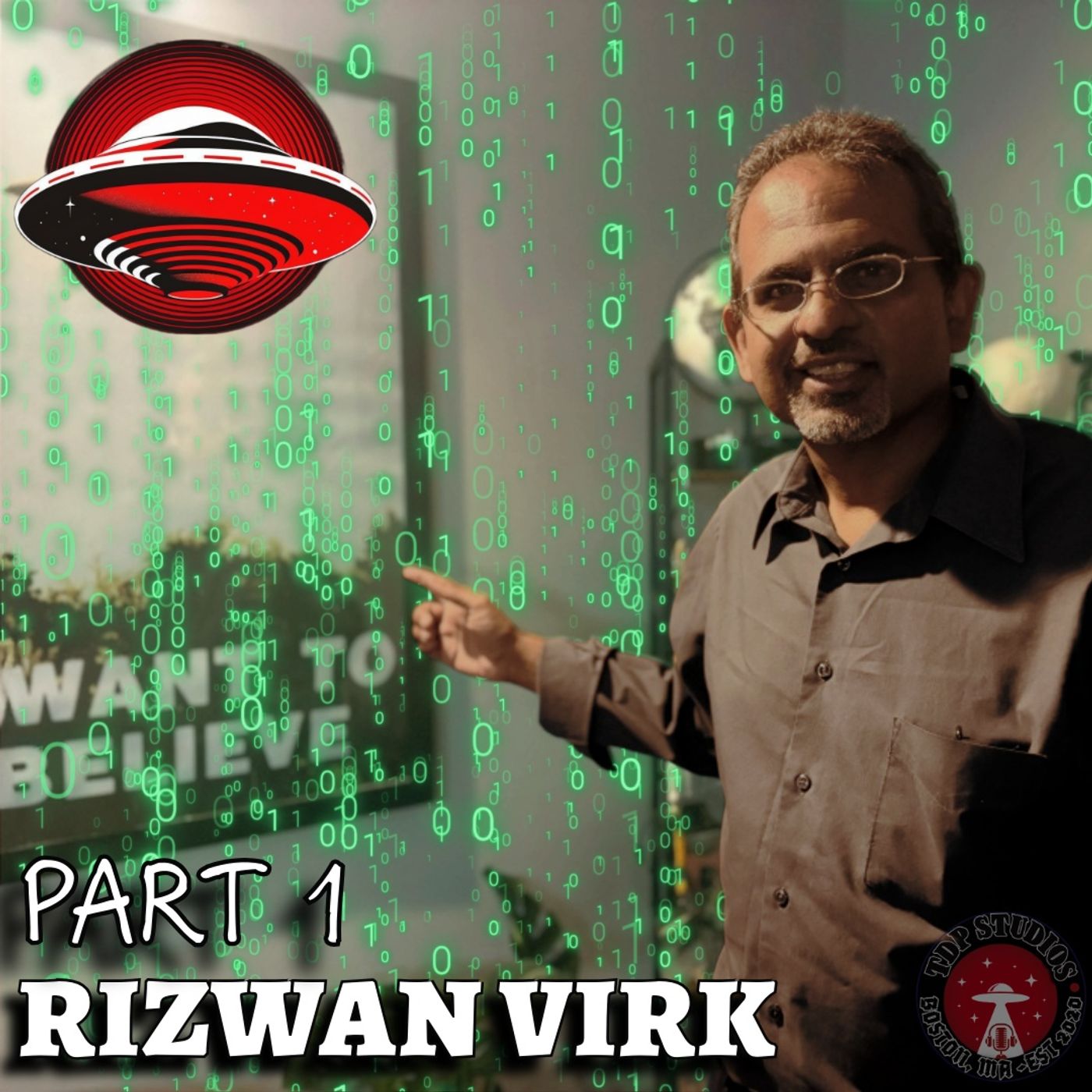
Are UFOs Glitches in the Simulation? | Reality, Mandela Effect & The Nature of God (Ft. Rizwan Virk) PT.1
The Mandela Effect and Déjà Vu as potential proof of simulation resets.
UFOs and what they represent in a simulated reality.
The role of a higher power—is there truly a God, or simply a cosmic coder?
What this means for humanity, free will, and the disclosure movement.
This episode goes beyond traditional UFO conversations, fusing science, philosophy, and spirituality into a groundbreaking discussion about the true nature of reality.
📌 If you’ve ever questioned whether UFOs, reality shifts, or déjà vu are signs of something bigger, this episode is for you.
Chapters;
Subscribe to the channel on YouTube: www.youtube.com/@totaldisclosure
Support TDP directly: https://www.paypal.me/TDPstudios767?locale.x=en_US
Become A Member On The Audio Feed (Limited Perks: Early Access/Ad Free Content) https://www.spreaker.com/podcast/total-disclosure-ufos-coverups-conspiracy--5975113/support
YOUTUBE MEMBER; https://www.youtube.com/channel/UCy2Cra7aLAAMVxkA9rSYCxg/join
PATREON MEMBER; https://www.patreon.com/Total_Disclosure?fan_landing=true&view_as=public
GET YOUR TOTAL DISCLOSURE: UFO/ALIEN INSPIRED MERCH, OR A GIFT FOR YOUR FAMILY MEMBER, FRIEND, OR TREAT YOURSELF! : https://pop-culture-corner-store.creator-spring.com/?
Follow Us On Twitter: Www.Twitter.com/DisclosurePod
Follow Us On Instagram: www.Instagram.com/Disclosurepod
CONTACT TDP DIRECTLY For Collaboration, Use of Segments/clips, or any other media produced by “TDP” —[email protected]
Special Thank you to all of our PODCAST/YouTube Channel Members for your continued support, and dedication to seeking the truth, together. We can’t do this WITHOUT YOU!
-COPYRIGHT-2020-
Copyright Disclaimer: Under Section 107 of the Copyright Act 1976, allowance is made for "fair use" for purposes such as criticism, commenting, news reporting, teaching, scholarship, and research. Fair use is a use permitted by copyright statute that might otherwise be infringing. Non-profit, educational or personal use tips the balance in favor of fair use. Total Disclosure Podcast Copyright 2020 and … segments, early access to interviews, and a yearly gift autographed by yours truly!thank you in advance now, Let's explore the unknown together!
Setting the Stage for a Mind Bending Discussion
Speaker 1: Hey, everybody, before we get into this episode, I just wanted to make a quick PSA if you will. Now in this episode, Riswan and I have an amazing, amazing conversation. He was one of the first guests that was in studio and I am still obviously working out some kinks. As you'll see in the episode, I needed to have him correct his mic positioning, and unlike Joe Rogan, who will tell you right up, you know, move up on the microphone, I didn't do it. And we weren't wearing headphones. Another rookie mistake.
Speaker 1: This is an audio podcast. Most of my audience is on audio platforms. I definitely need to work on that. It's something that it's obviously imperative to get right and to be better. So just know that I am listening, I am we are working on it. I am very very sorry for any inconvenience. The episode is a I highly recommend that you watch this episode on YouTube, as it is filmed in the new studio and it's amazingly shot, amazingly edited by our new editor Corie Lindsay. Also, I noticed by the analytics that most people that are watching are not following the show.
Speaker 1: If you can do me a favor, rate now and just smash that like button like it owes you money. Share this with your friends, your family, your enemies, the grays, I don't care. We don't discriminate here at TDP, and we really really appreciate anyone who can support the channel monetarily. You'll get access to early and add free versions of the show no matter what classification you come in on. It's pay what you think the show is worth you. With that being said, I hope you enjoyed today's conversation with risban Verk.
Speaker 2: Yeah, yeah, yeah, yeah, all.
Speaker 1: Right, it's start. So I mean again if you want to say thank you to start as you want to say that you're for doing this because you know, for me, it's like I said, it's it's a really full circle moment. You're the first guest. Guest. I had a couple other people in here, but they're locals, uh Gene and Nat Sticko. So I just want to say again, thank Youriz for being is okay? All right, all right, let's get into it.
Speaker 1: Yeah all right, welcome back to Total Disclosure. My name is Ty Roberts, and today we're diving head first into a mind bending theory that challenges the very nature of the world around us, or what socially we describe as reality, The Simulation Hypothesis. Our guest is someone uniquely qualified to help us navigate this digital rabbit hole. I was very happy to meet him at a recent conference Contact in the Desert, and now we're sitting here in the studio. Riswan Wrk is a graduate of MIT and a successful tech entrepreneur, investor, and best selling author.
Speaker 1: His books including coming out next week or this week whenever we're watching a brand new second edition of The Simulation Hypothesis and The Simulated Multiverse, Having will capture the imagination of millions by blending quantum physics, computer science, philosophy, and ancient wisdom. He's founded multiple tech companies, helped launch startups through play Labs via MIT, and even dip his toes in Hollywood as a film producer. I'm so sorry about that, making him a rare bridge between science, storytelling and speculative thought.
Speaker 1: Could our reality be nothing more than a sophisticated simulation? Could you have fos, the paranormal, synchronicities, and even disclosure all be features or bugs in the program? And more importantly, who or what is running it? Riz, thank you for being air. Let's log in, let's log, let's log into the simulation to find out.
How VR Sparked Rizwan's interest in SIMULATION THEORY
Speaker 1: Yeah, Riz, thank you for being air. On total disclosure, I'm going to start because I know I kind of want to go headfirst in what first led you to explore the simulation hypothesis in the depths that you've done, and how did your background at MIT influence your approach on this?
Speaker 3: Sure, well, you.
Speaker 4: Know, my background is as a computer scientist, an engineer, and then as a tech entrepreneur, and not surprisingly, those are the disciplines or paths that really led me into this rabbit hole that we now referred to as simulation theory. And so what happened was when I sold my last startup back in like twenty sixteen or so, I was visiting another game company in San Francisco, actually across San Francisco Bay in Marin County, and they had developed a virtual reality ping pong game, and so I had this VR headset on and they said, you got to try this, you got to try that.
Speaker 3: Okay, let's try it.
Speaker 4: Put it on and it was a room about this size, and it was a big bulky headset and there were wires coming from the ceiling. I mean, VR headsets improved quite a bit. I think it was the HTC Vibe.
Speaker 3: And I started playing this Ping Pong table tennis game.
Speaker 4: And what happened was during this game, the graphics weren't that great.
Speaker 3: And so I was in the video game industry for quite a few years.
Speaker 4: And of course I'm familiar with the evolution of video games all, you know, throughout my lifetime.
Speaker 3: When I was a kid, I played the Atari.
Speaker 1: Like the original Pong, right it was originals.
Speaker 4: And original well the original because it was original home version right right. And then arcades we had Space Invaders, which you know, for pretty much the game that most people have heard of.
Speaker 3: This is kicking off the industry.
Speaker 4: The industry actually kicked off with Pong in like the early nineteen seventies, so that.
Speaker 3: Was even before Wow.
Speaker 4: I think it was seventy two or seventy four when they released the physical arcade.
Speaker 1: Right right, Wow, it's and you can kind of see the evolution to like Space Invaders, like how how the Leap went, Like it's it's kind of similar and like it's very basic in its nature. It's but it's just repetitive it's fun. It's just a side note. But yeah, that's so. So that's how So how did that derive into you thinking about this on a deeper level.
Speaker 4: Well, it's usially Pong because the game keeps coming up when you're talking about this subject. But you know, I saw the eight big games from Atari and Nintendo back in the eighties, and then you saw, you know, the.
Speaker 3: Sixteen bit games.
Speaker 4: And there's a slide that I show sometimes like a contact in the desert and elsewhere that shows the evolution of racing games. And so if go back to one of the original games, I think it was called Pole Position, and I used to watch this game on my Atari and you'd be going around the racetrack and there would be these.
Speaker 3: Characters in the bleachers. I mean they were really basic, two D blurry. As a kid, I would start to.
Speaker 4: Wonder, Okay, what happens to these characters when I'm not around? Or there would be a scene of Mount Fuji in the distance, and I'd wonder, okay, what's beyond the race track? Is there really a virtual world out there? So video games and science fiction kind of played a role.
Speaker 3: But then you see the sixteen bit racing games, and they look better.
Speaker 4: Then you see the thirty two bit and sixty four and you see that they're so realistic now that they look like the real cities there. And so going back to the VR ping Pong experience, so I was playing table tennis in virtual reality, and for a moment, my mind or my body.
Speaker 3: Forgot that I was in a VR headset, and I thought I.
Speaker 4: Was playing a real game of table tennis, so much so that I tried to put the paddle down on the table, and I tried to lean against the table, but.
Speaker 3: Of course there was no there was no tables.
Speaker 4: Fell to the floor and I almost fell over, so I had to do a double ta. So I said to myself, Okay, based on that really bad graphics, really bulky headset with wires, there was no mistaking that I was not playing a real game.
Speaker 3: But the responsiveness the physics engine was so good.
Speaker 4: That it fooled my brain and my body just for an instant into thinking it was real. So I began to wonder how long would it take us to build something like the Matrix that was so immersive and so realistic that you would basically forget there's a world outside, right, and you know. At the time, I was in Silicon Valley and I was building video games. So it became a technology discussion initially, and I laid out these ten stages of technology to get to what I called the simulation point. And I defined the simulation point as a theoretical point where we can build virtual realities that are indistinguishable from physical realities with AI characters that are indistinguishable from characters controlled by humans, right, or avatars or biological beings as well.
Speaker 4: And so that's how I started going down the rabbit hole. But of course after I looked into that, and I had other VR experiences as well we can talk about, but that was the one that only stuck.
Speaker 3: In my memory.
Speaker 4: But then I started to look at quantum physics, and I realized there were so many strange things going on with quantum physics that it just wouldn't make sense for us to be in a physical world. Why would you do these things. On the other hand, if we were in a virtual world, these things which are pretty much, you know, very so confusing, that can't be understood. I mean, Richard Feinman, nobody understands quantum acts.
Speaker 3: Right. On the other hand, I think I can safely say that nobody understands quantum mechanics.
Speaker 4: And then I started looking at the spiritual traditions and the religious scriptures and what the mystics of these traditions.
Speaker 3: Have been telling us.
Speaker 4: And the mystics have basically been telling us that the world is some kind of a hoax, and they were able to peek outside the simulation.
Speaker 1: And come back and go, and at least that's.
Speaker 3: The terminology I like to use.
Speaker 4: So given the combination of these three things, the technology, the science, the religion, the spiritual side of religions, if you will, and philosophy, you know, it turned out all of these were pointing to something very interesting. And I had explored different aspects of consciousness as well. I was kind of living a double life where during the day I was running my startup, dealing with engineering things, dealing with VCS and finance, but in the evenings and the weekends, I would fly off to you know, the Monroe Institute to try to do an auto body experience, or I would do really So I had been living this double life for a while, but it was interesting for me because it pulled together the simulation hypothesis.
Speaker 3: That's why I wrote this book is.
Speaker 4: That it pulled together all the threads of my life and that's how I got into.
Speaker 2: All of this.
Unpacking The Simulation Hypothesis' Origin
Speaker 1: Wow, I remember, I've only done it once. I put on a VR headset. It was it was the PlayStation one, like the one of the first ones. So it wasn't like tied to the It wasn't like that. But you're right it after about an hour, it fooled me like it fooled my senses and my my my brain, or the way you explained it, it tricked to my consciousness into thinking that it was base reality. And I start, like you said, start, you start thinking things are there because I was ducking. It was one of those shooter games you run around and it's like it was like stick figures.
Speaker 1: So the graphics again are terrible, so I can relate to that experience. And again, these are where these questions start coming from.
Speaker 4: You have you tried some of the latest V heads Now if you try.
Speaker 3: The Apple Vision Pro.
Speaker 4: Now that it wasn't successful as a commercial product because it was like three thousand.
Speaker 1: Four thousand dollars not feasible.
Speaker 4: It wasn't that comfortable, but the graphics level is amazing to the point where I would look up and I would see my hands, But.
Speaker 3: Turns out they were reproducing my hands.
Speaker 4: So they were able to take the room and digitally add things into the room that looked very real even though they're not really there.
Speaker 3: So that's called.
Speaker 1: Augment augmented reality right right, And.
Speaker 4: It's like you have a little control where you can set the transparency so that it actually can reproduce the room, or it can just produce like a movie theater that you're not actually in that looks.
Speaker 1: Like why you're on the moon. I saw one that like someone was watching a movie on the moon like that they put themselves on the moon and then you know, put the movie up. I'm like, what the So then this is all leading me too well, I guess for you kind of explained what it is, but in simple terms, what is the what is what the simulation hypothesis is, and how it's different from just science fiction concepts like the matrix from the movie, because there's there's a difference.
Speaker 4: Yeah, So first of all, I would say that simulation hypothesis has its origins in philosophy and in science fiction, right, and I think in the West, the best expressions of this idea do come from science fiction, so it becomes the easiest way to explain the concept. But if I were to define it, I would say it's basically the idea that what we see around us this table, you know, anything on the table is not really a physical reality, but in fact is a virtual reality.
Speaker 3: So it's been generated based on information.
Speaker 4: And so you know, there's a couple of assumptions that go behind that, right, which is that the universe is based on information, and the second one is that that information is rendered for us.
Speaker 3: In a real time to make it look real, right, right.
Speaker 4: So we think and then the implications of that are that this is some kind of a hoax, that all of this.
Speaker 3: Now there's different flavors.
Speaker 4: Of the simulation hypothesis what we can go into a little bit later, which I in PC versus RPG version, but that's the basic idea.
Speaker 3: Now you can go back to science fiction writers like Philip K. Dick.
Speaker 4: He gave a speech in Mets, France in nineteen seven, So I think about that nineteen seventy seven. I mean, this is before you know the IBM PC, right, I think the Apple one or Apple two maybe was just coming out, and he gave a speech and people can see it on YouTube where he said, we are living in a computer programmed reality, and the only clue we have to it has when some variable has changed, some alteration hers in our reality.
Speaker 1: We are living in a computer program reality. So that could explain deja vu or the Medela effect.
Speaker 4: Yeah, so his next line is, we would have a sense of deja vu. We would think that we were repeating the same experiences or we were saying the same things again and again. And so he had to be a clue that there was something weird about reality and that reality was being run like a computer program and it can run multiple times.
Speaker 3: But so that was you know, Philip k Did was a science fiction writer.
Speaker 4: Some people might say, okay, he took too many drugs back then. If you watch that video, people are in the audience, including his friends.
Speaker 3: One of his friends, Joan Simpson I think was her name. She was sitting there and they're just like, what are you talking about?
Speaker 1: Right? Right?
Speaker 3: Lost it right.
Speaker 4: But it turns out that in the same year as the Matrix, there was another blockbuster or such a movie called The Thirteenth Floor.
Speaker 1: Yes, I'm so so glad you brought that up.
Speaker 3: Yeah, And so that turns out was based on a.
Speaker 4: Science fiction novel was based on a TV show, a German TV show, but that was based on a science fiction novel from the nineteen sixties by a guy named Daniel Gluye, which was called Some Mela chron three. So you can see this concept bubbling up in science fiction for a long time. Of course, the Matrix is the best known representation of it, and the Wachowski's who made the Matrix were said they were inspired by Philip K.
Speaker 3: Dick. As an aside, I interviewed Philip K. Dick's wife when.
Speaker 4: I was writing the first version of this book, and Tessa, she's you know, she's still around.
Speaker 3: You can interview her. Actually, she's she's pretty old now, I guess. I don't know how exactly in the area. No, she's not. She's not here. She's in California.
Speaker 1: Okay, well, so, yeah.
Speaker 3: Is where she lives, somewhere around there.
Speaker 1: I'd love to talk to her, Yeah, I was.
Speaker 4: Anyway, I asked her, so, what would you know Philip think about the Matrix? And she said, well, his first thought would be that he would love it, you know, the ideas or ideas he's been playing with. But his second thought would be to call his agent and say, can I sue these guys?
Speaker 3: We're still with my ideas.
Speaker 1: Ipte that I love it, but so.
Speaker 4: So the idea has been around in science fiction for a while, but it's really as computer technology and video games and AI technology popular and better at representing things, that this idea has caught on, and mostly thanks to a guy named Nick Bostrom who's a philosopher at Oxford, Okay, And he wrote a paper in two thousand and three, So we're talking just a couple of years.
Speaker 1: After The Matrix comes out ninety nine, right.
Speaker 3: Yeah, ninety nine. It was in March thirty first, nineteen ninety nine.
Speaker 4: And a couple of years later Nick Boston released his paper say that was titled are You Living in a Computer Simulation? And he came at it from a philosophical perspective but also from the perspective of AI.
Speaker 3: And his basic argument, which you call the simulation argument, was.
Speaker 4: If somebody can build AI characters that have all of the memories that we have and all of the processing, uh you know powers that we have, right that it wouldn't take that much computing power Therefore that much meaning in cosmic yet not so.
Speaker 1: Not completely out of the realm of possibility, like yeah, like.
Speaker 3: Give it, give it, you know, a thousand years. I mean, he was saying that if there was.
Speaker 4: A technological civilization, I mean, he didn't give a time frame, but uh, that was able to get to the stage. He estimated that the number of operations you know that we have brains, the amount of memories we have stored, and he said, even a computer the size of the moon would be able to represent all of human history and every single you know, every single interaction that h and memory that has ever gone on. And that's you know, using today's estimates and technology. So but basically, you know, he said, if if a civilization ever get to that point, then they're gonna want to create simulations of the past.
Speaker 4: And he called those ancestors simulations and so you know, but his point, what he called the what he called the simulation argument, was that if any civilization ever gets there, he said, there's a couple of possibilities.
Speaker 3: One is they can't do it.
Speaker 1: And they never get there, maybe before long before then.
Speaker 2: Yeah.
Speaker 4: The second is they get there, but they decide not to make any simulations, okay, which I think is little unlikely, So let's just.
Speaker 3: Group those two together.
Speaker 4: Okay, there's no similations, there's no such civilization that ever makes such simulations.
Speaker 3: And then the third possibility he said was that we are most definitely in the simulation.
Speaker 4: And why he said, because if they can create one simulation, they can create another one just by adding more server power. And inside each of these simulations there could be a billion simulated beings or how many you have on Earth's.
Speaker 1: Seventy seven billion? Right, right and right, So at that.
Speaker 3: Point we're just talking more computing power.
Speaker 1: Right.
Speaker 3: His argument was.
Speaker 4: A statistical one, and that's where the terminology the simulation I thought this came from, which is that are you more likely to be in a simulated world or are you.
Speaker 3: More likely to be in a physical world?
Speaker 4: He actually said are you more likely to be a simulated mind versus being.
Speaker 3: A biological mind?
Speaker 1: Right?
Speaker 3: But then Elon Musk came around a few years later.
Speaker 1: And said, the chances that we are in base reality or what zero one in billions.
Speaker 4: Yeah, the chances that we're not in base reality I either we're in a simulation, would be billions to one, and that he said that in twenty sixteen, which was the same year that I was playing you know this Big what to think about it?
Speaker 3: So that was the argument.
Speaker 4: That caught on and this terminology became popular.
Quests. Avatars, & The Meaning of Existence
Speaker 4: That said, there's an alternative version of that, which is the matrix version, where in the matrix you actually had Neo and Morpheus, right, they existed outside the video game or outside simulation, and then they had.
Speaker 1: Characters avatars inside.
Speaker 4: And so those are the two different flavors that I was talking about, which is more AI n PCs or actual players of the game who exist outside of the simulation.
Speaker 3: And that's an interesting access and a rabbit hole to.
Speaker 4: Go down in it because it raises all kinds of issues around free will.
Speaker 1: Religions, right, the big the big ones, and and that's kind of you know, uh where I want to build on that because honestly, if tomorrow, I mean, we talk about UFO disclosure a lot, but if tomorrow we confirmed, beyond the shadow of a doubt, we are in fact in a simulation that reality as we experience it is in fact simulated, what would it really change. I mean, the table would still be a table, the microphone would still be a microphone. You know, it's more or less the more philosophical implications that I see being a cause for concern people's motivations, their will to live, and what keeps society in check if you will.
Speaker 1: So, I mean, what does it really change if we if we confirm it.
Speaker 3: Well, that's an interesting question.
Speaker 1: The bills are still due tomorrow.
Speaker 4: Yeah, so we're still in the simulation, right, so right, we have to treat it as if it's real while we're here.
Speaker 2: Uh.
Speaker 4: But at the same time, just because it may not be the ultimate reality doesn't mean the experiences that we're having aren't real.
Speaker 1: And that's what I meant. And this is what I mean because I feel like people are and my sorry about the tangent here, and I don't mean to cut you off, but I feel like people look at this, they look at this the wrong way because they say, if it's a simulation, then we must not mean anything and nothing matters, and nothing matters, right, And I would say that it's the exact opposite. I think that we matter even more. And then it kind of confirms that if it's a simulation, there is a simulator, a ka god, whatever you want to call it, and there exists outside of the simulation.
Speaker 1: So it would confirm a lot of the religious you know, religious philosophy, if you will. So I'm just not I feel like people are looking at it the wrong way.
Speaker 4: Yeah, I think you're correct in that, and I think that's why I tend to be one of the few people talking about simulation theory who focuses on this idea of the NPC versus RPG flavors of simulation theory. And I say, it's more of an axis, if you will, because it's a continuum. You can start off with a simular computer simulation that has one hundred percent AI and that's you know, we're watching it run, and it's running a whole civilization, like we might want to stimulate the spread of a virus or you know, economic stock markets.
Speaker 1: See how it plays out right.
Speaker 4: At the other end, we're all players of the game, and we all have characters, and we all have quests and achievements, and we're all have certain experiences together. Now, in a video game like say World of Warcraft, you have both.
Speaker 3: You have both, yes, NBCs and PCs or player characters or avatars.
Speaker 1: Right.
Speaker 4: The term avatar itself comes from Sanskrit, and not many people know where it came from.
Speaker 3: Because really what it originally meant was you.
Speaker 4: Had a divine entity that squeezes itself into a physical body. So it was an incarnation of a divine entities. And so what happened was that the guys who were building one of the first mmrpgs, although it wasn't a massively multiplayer online role playing game, it was just a multiplayer online role playing game. It was using Commodore sixty four's back in the eighties with the modems and the dim I don't know if you remember that.
Speaker 3: I do.
Speaker 4: And it was at Lucasfilm, which is George Lucas, you know, special effects company, after he had built he had really Star Wars, and so they built a game called Habitat and they had these little two D characters on the screen and you would maybe have like five or ten people in a room. But they were looking for a term to describe their character, and he said, it felt like I was taking myself a physical body, squeezing into the telephone lines, you know, the coverenter of sixty four, right into this tiny.
Speaker 3: Little character on the screen. And so they chose the term avatar.
Speaker 4: So even that hints at the spiritual elements of this idea, and so that's why I think if you think of it more as a continuum, some people say, well, if I'm in a simulation, then nothing matters, and that's kind of equivalent to kind of nihilistic you know philosophy, like if the number of players is zero, there's also sollipsism, and you know, nothing matters but me, which would mean an.
Speaker 3: Equals one right. Then on the other end, you know you're up to an equals one hundred percent source players.
Speaker 4: And so I think, for example, if you and I are interacting with each other in a video game, does that mean we're not really interacting? I mean, we happen to be in the same studio right now. But the other day I was doing a zoom call with somebody about this, and I said, are we actually having a conversation? Well, technically no, I was talking to my computer and the bits were sent to his computer, and his computer was, you know, replaying my words, and then he was talking to his computer, and yet we had a real conversation.
Speaker 3: So if you were in a video game and you learned.
Speaker 4: A language, do you still know that language that you learned from interacting with people in the game outside you absolutely do.
Speaker 1: Right, So in that sense, wow.
Speaker 4: I think you know, these can be thought of as very real experiences that really do matter. So I think that's a different perspective on this idea. But it can also help us when we're dealing with challenges in life.
Speaker 3: So for example, we.
Speaker 4: All have physical challenges, sometimes illnesses, we have financial challenges, relationship challenge, oh yeah, you name it.
Speaker 3: Life is a series of challenges. And if we view.
Speaker 4: Life as a series of challenges or quests, I think it can bring a different perspective to our lives and it makes it a little bit easier to deal with. Instead of saying, oh yeah, life sucks and that's it, you know, and life is suffering, you say, okay, well, maybe there's a reason I'm going through this, and I can.
Speaker 3: Learn something from this experience.
Speaker 4: And it's one challenge that perhaps my player, that part of me which exists outside the simulation is watching this on a screen right now, kind of I call it the writer's room.
Speaker 1: That's the writer's a good way.
Speaker 4: Yeah, you're sitting there watching your your sims, your avatars play out, and you're like, Okay, what challenge do we want to throw at this, at this guy or at this nest, right, what crazy you.
Speaker 1: Know, drop some COVID on them?
Speaker 3: Exactly? You got doing it at that at the level of the entire city, right individually?
Speaker 4: What if we were each doing this individually about our own we're actually signing up for certain quests and certain challenging situations. Because when you think about it, who are the actors that win the Academy Awards. They're the ones that play the roles that go through the most difficulty, that most challenges, right, And doesn't mean that these challenges there's not real suffering. I mean, while you're there, you're absolutely suffering. Just like you know, a guy in a video game can't walk through the wall.
Speaker 4: It's real from the perspective of the video game character, right, But we can have I think a different perspective outside outside of the simulation.
Speaker 3: So that's why I think it can matter, but in a positive way, not just the negative one.
Spiritual metaphors & The Life review/replay
Speaker 1: Okay. So with that being said, then, and I like how you call them quests. It just because it makes everything more like magical, like go into the go into the gas station as a quest, I'm gonna start using that if consciousness. If consciousness is on local as some quantum theorist and mystics suggests, is it possible that our soul, like you had said, could exist outside the simulation and just interfaces what this avatar like you had said. It kind of feels like you already answered that.
Speaker 4: Actually, well yeah, but I think that's an important distinction in that this idea of the soul could be the player and the body is the avatar, right character. And I think that is a good way to look at it. I mean part of the reason why in this book, in Simulation Hypothesis, I have a whole section dedicated to the world's spiritual traditions. And you know, some people in the science come in there are like, why did he do that? This is a scientific idea or this is a technological idea. Why is he talking about religion?
Speaker 4: Why is he talking about unexplained phenomenon? And my point is that if you look at all of the world's scriptures, they will use metaphors to try to describe what they read, what they what they saw, right, and the mystics of these religions that started these religions were even just the saints along the way. As I said earlier, I think they have this experience where they peaked outside the simulation. Now, that could be through what's often called theophany, where something comes from outside the physical world, like an angel or some antitique and makes them confront it.
Speaker 4: In the story of Islam, for example, you have the prophet Muhammad fasting in the mountains in a cave and suddenly the angel Gabriel shows up and grabs them by the head and says, repeat, rebeat, Right, you can't ignore when something like that happens, or through means of self awareness yoga type means sharmonic type means somebody is able to raise their awareness outside of.
Speaker 3: Their physical body and say, okay, there is more.
Speaker 4: Now they have to explain that to the people from two thousand years ago, right or five thousand.
Speaker 1: Years very limited language, limited.
Speaker 3: Language, So they came back and they tried to use metaphors.
Speaker 4: That's why I say almost everything in the scriptures should be taken metaphorically. But that doesn't mean it's not real. It just means that they didn't have the right terminology or cultural context to tell what was going on. And this goes back to Plato's cave. So you know the allegory of absolutely so most people know the basic allegory of the cave, which is that you're in a cave and just like the shadows against the wall, that there's a fire by the opening of the caves or a light, and all the people inside the cave see are these shadows on the wall because they happen.
Speaker 3: To be chained to the other side.
Speaker 4: One guy gets out, breaks his chains and goes outside. Now many people have heard the algory, but they haven't read the whole thing. And when you read it, the first thing that happens when he goes outside.
Speaker 3: Is he's blinded. What there's too much light. He's not used to the sun sun. So that's an interesting aspect.
Speaker 4: When you know, people talk about near death experiences or they talk about these ligious verses, they.
Speaker 3: Always see the light.
Speaker 4: But the second part of what happens, or what happens near the end, is this guy that Plato calls the philosopher, let's called him the mystic comes back into the cave and he tries to explain to the people what he saw, and they're like, no, that's not real.
Speaker 1: Nobody's flying can't be real.
Speaker 3: And I think that is an experience that often happens.
Speaker 4: You know, when somebody has this kind of peeking outside of the simulation. And so if you look at the metaphors, one of the metaphors that's used almost verbatim in different scriptures, like in the Bagabat Gita, Yes and nutitions, they say that, you know, incarnating and reincarnating is like putting on and taking off a set of clothes or garments. Okay, So it turns out Rumy, who is an Islamic Sufi mystic, uses the exact same metaphor. He says, the soul clothes itself in the body, just like the body clothes itself in garments or clothing.
Speaker 4: And so they were trying to explain what it would mean to enter into a body, but they didn't have the right terminology for it right. So I was actually asked to speak at a at an Islamic jurisprudence conference at a university in the UK, and they had like legal scholars from like Cairo and Germany and so like, like.
Speaker 1: Like serious serious thinkers.
Speaker 4: Yeah, and sometimes you know, people who study religion aren't necessarily religious. Sometimes they are, but they know about the background. And they even had Ayatola from a rent r. It's an interesting experience. It's not like the guy we see.
Speaker 1: In the in the propaganda a bunch of priests who are called atomis.
Speaker 3: But anyway, for me, it was interesting. I was like, why are you inviting me to do this? I don't know anything about Islamic juris primates.
Speaker 4: They're like, well, your ideas are on simulation theory are quite interesting. And that kind of led me to go down this rabbit hole even deeper of looking at different scriptures.
Speaker 3: And they were debating, just like we do here in the US. You know, when can you do abortion? When does the when does the soul enter the fetus? Is it a conception?
Speaker 1: I think that's a possible question to answer.
Speaker 3: Twenty days, Yeah, and it's a very difficult question to answer.
Speaker 4: And I said, well, I have a different perspective to give you on that, which is think of that when the soul enters the body is like putting on a VR headset, or it's when you forget about who you were before. So it's that process of attaching or a brain computer.
Speaker 1: Interface like in the matrix right right.
Speaker 4: And it's not that I was trying to answer the questions per se. I was trying to give them a different way to think about it. That's the point at which you go through what's called the veil of forget focus, right, you forget and then you become incarnated here.
Speaker 3: But again, these are all just metaphors, and so.
Speaker 4: They didn't have the metaphors of technology or modern technology.
Speaker 1: Right, They didn't have the context or lens of technology, and therefore limiting the way that they could speak about these things. So flying craft become fire breathing dragons, right. And angels and angels right by definition are non human intelligence.
Speaker 3: Right.
Speaker 4: But some of these angels and gods if you look at sort of the traditions, like the Hindi traditions, and many of the angels are actually more like functions than actual people. So for example, I mean there's like the arch angels, who may have personality, but in certain traditions that angels don't have free will. They have to do they have to rem right on a mission, which means what are they? You know, what are are they more like NPCs? Because think of the recording angel. So there's something called a recording angel, and it exists in Christianity, Judaism, and Islam, and in Christianity.
Speaker 4: In the book I have a picture from like Washington, d C. Of an angel writing down things. It's it's a recording angel. He's writing down in the book of life. He's writing down the actual like people that get into heaven right for save Peter. But beyond that, there's actually recording of the deeds that you did, and so they're making a judgment on who gets into heaven based on these deeds.
Speaker 3: Went on the religious rabbit hole here a little.
Speaker 1: Bit right right right.
Speaker 4: Islam, they're very they're much more specific about this.
Speaker 3: They say, there's two recording angels.
Speaker 4: They have names that they're called the Kramen Kabin, and one writes down all your good deeds and one writes down all your bad deeds.
Speaker 3: And then when you die, you have to read your book and that's what you know. Your own self will be the judge, and.
Speaker 4: That's what decides what happens next, whether you get into heaven or not. So I tell people, look, this is a metaphor. These angels doesn't mean that we have, you know, two angels.
Speaker 3: Each of us.
Speaker 4: There's fourteen billion angels who are like real people sitting around and have nothing better to do, but with the feather pen to write down you.
Speaker 3: Know Tyler Studios. Yeah, right, that's a metaphor.
Speaker 4: They're trying to describe a function and they end up describing it using terminology that people would understand.
Speaker 3: Like you mentioned the UFO case.
Speaker 4: In this case, many of the angels and even the minor gods in like say, for example, in Hinduism, there's Chitta and who's chit thro He is the accountant, the record keeper, and what does he do.
Speaker 3: He sits next to Yama, the god of death.
Speaker 4: Okay, and why so that Yama doesn't make a mistake about whether you go into a heavenly realm or a hellish realm next and so he were recording everything. They call him the account Now that ken, that's a metaphor. There's not one guy sitting there with one book. So what is it a metaphor of? I would say it's a metaphor of a technological process.
Speaker 3: And if you talk to people who.
Speaker 1: Had near death experiences, this is almost the.
Speaker 3: Life review.
Speaker 4: Has been described by people as a holographic, panoramic replay of every single event in their life, but from the point of view of the other person.
Speaker 1: And this is that's the craziest thing to me, because if that's a you know, if that's what happens, right, if this imagine that trick, you get to the after life, right, Hitler gets to the afterlife, and now he's experiencing everything, every horrible deed done in his name from the other perspectives. So all you're really doing is hurting yourself.
Speaker 4: Right exactly, And you get to experience not just what you did to this person, but then the ripple offense, and like, how does that so?
Speaker 3: For example, I mentioned.
Speaker 4: A guy often named Danian Brinkley because he wrote a book called Saved by the Light who Struck by Lightning back in the seventies, and there was the best selling book in the nineties that's when it was written.
Speaker 1: Okay, okay, and you know that wasn't Hitler, guy who got hit twice, right, he did get.
Speaker 3: He did get.
Speaker 1: That was him.
Speaker 3: He did get. He had several near death experiences.
Speaker 4: Okay, he got hit by lightning twice, but he definitely ended up with multiple NDEs.
Speaker 1: You know, look, end of that. What's his name?
Speaker 3: His name is Danian Brinkley, the interesting.
Speaker 1: Guy if you if you want to have mine to show some Yeah, but.
Speaker 4: He used to be in the military and he told me, you know that he would shoot people.
Speaker 3: And he had to experience what it was like to be shot by him.
Speaker 1: Oh my god.
Speaker 4: There's what's called the ripple effect, which is once that person has died, you have to see what happened.
Speaker 1: To like that guy's wife kids. Yeah.
Speaker 4: So now since you weren't there, how would you know what's happening.
Speaker 3: And so this is another one of those.
Speaker 4: This was sparked by one another one of those virtual reality experiences I talked about back then.
Speaker 3: Back in twenty sixteen twenty seventeen, I was involved with the.
Speaker 4: Startup that had a VR experience where you could replay a game that was not in view. So you could take a game like League of Legends or Counterstrike Global Offensive. And by the way, you can watch replays of video game sessions on YouTube.
Speaker 3: It's like the most popular YouTube gun.
Speaker 1: It's crazy to me. People just sit there and just watch other people play video game. It's like crazy.
Speaker 3: You could replay it from any XYZ court.
Speaker 4: So we could literally put on a headset and I could see what it was like to have shot myself if I was in a first person shooter.
Speaker 3: Now we can't tell you how the person felt we can't.
Speaker 1: You know, our video games don't do that now yet not yet.
Speaker 4: But when I began to think about the life reviews, I said, okay, as a computer scientists and engineer, how how would this work?
Speaker 3: It has to be reported somewhere m.
Speaker 4: Hmm, somewhere in the cloud in a and then it has to be replayed for you in a way that you can replay what's going on.
Speaker 3: And so for me there was a it was a realization that.
Speaker 4: The Scroll of Deeds the Book of life to the accountant, and there's a Buddhist version to where they have almost a similar.
Speaker 3: Type of thing.
Speaker 1: Uh and the egypt and Egyptian probably right, Well, weigh your soul on the the feather and you know is it Yeah, they weigh your soul and if it it's but it's very similar. That's what it was reminding me of the whole time.
Speaker 3: And that's a metaphor.
Speaker 4: Right.
Speaker 3: They don't mean you literally are gonna step.
Speaker 1: On a scale, right, right, is we're going to look at some of what.
Speaker 3: You have done, and you play it in some cafets.
Speaker 4: So the life review is a new version and a virtual reality replay is our latest way to describe it.
Speaker 3: Of things that mystics have been.
Speaker 4: Telling us since the beginning of Traue that happens after we die.
Speaker 3: So this gets you know, the reason I went down this rabbit hole. If you had asked me about the.
Speaker 4: Soul and the body, well that kind of it's a perfect metaphor, and one even that a lot of religious people, you know, haven't fully understood that what they're being told are metaphors. That there must be a mechanism for it, right, and that that mechanism could be something like a virtual reality or a video game.
Information, Observation * Psychedelic Insights into reality
Speaker 1: So I likened it too. You know how they ask, you know, if a tree falls in the woods and no one's around to hear, it doesn't make a noise. Well, it feels like to me, what you're arguing is that the tree doesn't even exist unless there's a conscious observer.
Speaker 4: Well yeah, so this is where, you know, my research into one of really got me thinking about the nature of physical reality.
Speaker 3: And there's a couple of.
Speaker 4: Big areas there. One is the observer effect. Second is this idea of information. So what you're talking about is the observer effect in quantum mechanics, which says that things exist in.
Speaker 1: Superposition like the double slid experiment.
Speaker 3: Is it going to go to this slit? Or is it going to go to this slip? And turns out you don't know.
Speaker 1: Until you watch, until you measure it, yes, to measure it.
Speaker 4: Or until somebody records it, or you you read that recording, or you actually look at it.
Speaker 3: And so the point is they say that what happens.
Speaker 4: Is that the electron or the photon or the atom, I mean, because they've gotten to the point where they say, you know, even certain atoms can be in superposition.
Speaker 3: So they're getting bigger and bigger.
Speaker 4: Right are they're in a state of superposition, which means they're going through both sleds until the observations where the measurement happens.
Speaker 3: And so that's weird.
Speaker 1: Okay, it's so weird.
Speaker 3: It's not how we're used to thinking of it, right, I mean.
Speaker 4: Neil's Bore was one of the fathers of the Copenhagen interpretation, which is where this idea of the observer the collapse of the probability wave. So everything exists as a probability wave and until you know it collapses to one single probability, right, and that becomes the reality.
Speaker 1: Yes, yes, And so.
Speaker 4: He said, if you are not shocked by the point of theory, then you have not understood it because why why would that happen? And it turns out, you know, the way we make video games is exactly that. I mean, if you go back to the eighties and the Apple Tubes when when when I started playing you know, computer based video games.
Speaker 3: But then we have Tetris on the PCs and stuff.
Speaker 4: There was no way you could render all these pixels of a world like world or warcraft.
Speaker 3: You just couldn't be done.
Speaker 4: One we didn't have enough computing power, but two we also didn't have the algorithms too to make all this work.
Speaker 1: To run it, yeah, to keep it run.
Speaker 3: But one of the.
Speaker 4: Key things that came about was that the ability to optimize so that with three D models, you only render that which is observedly by your character right inside the game. So like if I'm sitting there playing the game in my avatars here, I only see what's around them.
Speaker 3: I don't have to see what's behind the boxes.
Speaker 1: I don't have to see what's because it's not necessary right at this moment.
Speaker 3: It might be later.
Speaker 4: Now, if there's multiple players, then you have to be sure to have enough for everybody. So there's something called caching computer science. We cash the information so that it like the next room is available, but maybe five rooms beyond it is not.
Speaker 3: Available until it's needed.
Speaker 4: Okay, So in computer science everything is about optimization rights.
Speaker 3: Physicists love big.
Speaker 4: Numbers, they love infinity, or or they try to do calculations and say, you can't.
Speaker 3: We can't have World of Warcraft.
Speaker 4: Because there's two of depictions, right, That's what they would probably say. Physinicists who don't, who aren't fans of iumulation of boxes, would literally say you can out run the World of Warcraft or a game called No Man's Sky because you know I No Man's Sky has something like eighteen Quintilian worlds.
Speaker 1: Blew me away when someone hit me with that fact, and that each one of those like you, and this brings up a good point is they're there. Our computing power has come so far that we can now do.
Speaker 3: That where to do that, but we don't have to render it all exactly. We have nothing at the optimization.
Speaker 4: So computer science has always been about ways to optimize, like using different algorithms and figuring out what's nek is. There's something called lazy evaluation, and what that means is, you know, if you're doing an operation, Let's say you say X equals some complicated equation, okay, and then you never use x again in the program. It says, well, we don't need to do all that about an issue yet. But if down the line you need to say X plus y, well you need to know what the value of exits, right, so you evaluate x as necessary and that saves computing power.
Speaker 3: Uh, And that how you know computer software in general.
Speaker 4: It turns out, yes, you can get better hardware, but the real way to improve performance is you optimize the algorithm so it only does what needs to be done and it doesn't.
Speaker 3: Keep doing things that don't need to be done.
Speaker 1: Right.
Speaker 4: And so for me, that was a big link between quantum mechanics UH and this idea of simulation theory, because quantum mechanics and the observer effect or what's called quantum insermanacy makes absolutely no sense.
Speaker 3: If this is just a.
Speaker 4: Physical universe with one timeline going from the past in the future, everything is solid, why would you do that.
Speaker 3: There's absolutely no reason to do that.
Speaker 1: You spot on, spot spot on, And that's exactly it's there's no reason and what do you think that the strongest pieces of scientific or philosophy philosophical evidence is that suggests that we meet we may actually in fact be in a simulation.
Speaker 4: So you know, that was one which is I call the observer effect being.
Speaker 3: An optimization technique.
Speaker 4: Another aspect of science is this idea that the world is actually built off of information. So there was a scientist named John Wheeler.
Speaker 3: Yes, it's just at Princeton.
Speaker 4: His office was right across from Einstein. He's one of my favorite physicistems because he's done so many interesting things and he had many interesting don experiments.
Speaker 3: But towards the end of his life he came up with this phrase. And the phrase was it from bit bit Yes, right.
Speaker 4: And so what he was trying to say was that anything that's an it, like this microphone is a physical thing.
Speaker 1: You know, this bottle of water is a physical But if you look into.
Speaker 4: That bottle of water, first of all, the bottle, most of it is empty space.
Speaker 1: Right.
Speaker 4: Atoms are ninety nine percent empty space. I mean between molecules and atoms is mostly empty space. And he might go inside the atom, Well, electrons is really not drawing cloud, but it's mostly just empty space, and then you go to the nucleus.
Speaker 3: And he said that when when you look for this thing called a particle.
Speaker 4: Right, our idea of solidity is built on this idea of solid particles, right, right, there is something solid at the bottom.
Speaker 3: Of all that.
Speaker 4: Right, And he said, when you keep going down, the only thing that distinguishes one particle from another is the answer to a series of yes no questions.
Speaker 3: And what is a yes no question?
Speaker 5: It's a bit, right, So he said anything that's actually a physical object and it is actually built off of information.
Speaker 1: Bit.
Speaker 4: Now that was a controversial idea, right, but over time information theory like there's no there's an old saying in a quote in the Silicon Valley from a guy named market recent venture capitalist, but he was a spinner of Netscape, so back in the day.
Speaker 1: See him on a couple of times.
Speaker 3: So he said software is eating the world.
Speaker 4: This is back in the two thousands, and I like to say information science is eating all the other sciences because physics.
Speaker 3: There's a whole branch of physics called digital physics.
Speaker 4: And just like we would look at the conservation of momentum and the conservation of energy, now there are ways of looking at physics that are all about conservation of information, and they say how much information is stored on the surface of a black hole for example? All of these types, can information ever be destroyed?
Speaker 3: And if it is, what does that mean?
Speaker 4: So they're starting to look at an information based reality.
Speaker 3: And just last year I was in the UK.
Speaker 4: I usually spend my summers here in Boston, but last year I went to the UK to the to the other Cambridge the original came original as they can't reminding me that this is the original, like they would say.
Speaker 3: Cambridge and for a second I would think, oh they need by the Charles River.
Speaker 4: Yeah, the river cam and it's Cambridge that was the original one. But I met a Nobel Prize winning physicist there and he said that that part of I was talking about the simulation ipothsis and I said, well, there's three different there's at least three different assertions that we're making here. One is the world is information, the second is the information gets rendered for us, and the third is that this is all some kind of helps right, And he said, well, the first one is not controversial anymore, Like most physicists would say, yeah, the world probably.
Speaker 3: Consists of information, correct?
Speaker 4: I think which we don't know is how does that information get rendered in a way that is perceived as real.
Speaker 1: Biolence, you know, right, But so I.
Speaker 4: Think this idea that the world is information and that maybe we're going through computational processes. So the way that the way that No Man's Sky has eighteen Quintilian worlds is they're procedurally generated. So they're generated using algorithms. So all of the different flora and fauna, you know, the leaves, they're generated using let's say fractal algorithms.
Speaker 3: Or whatever type of okay they're using.
Speaker 4: And today we can do that with very you know, small lines of code. I saw a guy just recently on Twitter for example, and people can follow me at Riz Danford on x where he was shared like just like it was like a few lines of code, but it was an image of what was water that was undulating with mountains, and that's all it took mathematically to generate.
Speaker 3: And there is evidence that.
Speaker 4: A lot of what we think is physical there are these algorithms that they're processing information.
Speaker 1: I want to bring something up there is there's largely been I know we talked it's kind of sensitive, I suppose, but I've had many experiences with DMT, and Gallimore wants to you know, is doing this study where they're putting people into the d MT realm long term. I'm trying to map that world out, the DMT world that you get it brought to or whatever. Or when you do intake d MT, there's another person, I forget the name, but they're doing the lasers, thank you, and they're seeing like what looks like mathematical equations in the lasers.
Speaker 1: Now, of course it could be the trick of the eye, like lasers do look weird and then you're on a haucinergic drug. But d MT has often been described as as almost like a key to the universe, like and I know you haven't probably done it, but I have. It's it brings you from one world to another. It's unreal. It feels more real there than when you come back here.
Speaker 4: Which is interesting because that's exactly what near death experiencers tell us, right that it felt more real where they were than here.
Speaker 3: Now.
Speaker 4: I haven't done DMT myself, but I've talked to a lot of people that have, UH and you know, many of them have told me. Actually, you know, when I started writing about simulation theory. Even back in twenty nineteen, first first time somebody told me this was was a guy named Sean Stone, who's Oliver Stone's son, and we were in Los Angeles having lunch with a group and he said, oh, yeah, I know, it's a simulation. I said, oh, how do you know for sure? Like even I wrote a book about it, I'm not even short one hundred percent, because well, because I see, I saw all these gridlines when I was on DMT, and those gridlines are like the basics of this this physical reality.
Speaker 4: And then I started to hear that again and again from many different people over time, that.
Speaker 3: They see sort of the war.
Speaker 4: Yeah, and then you know, Danny Gohler said, you know, they take a diffraction laser and on DMT people are seeing what looks like little characters.
Speaker 3: They described them as kata khana type characters.
Speaker 4: But exactly there may be a level of interpretation in that, because that's what in the matrix.
Speaker 3: The characters were kata kana.
Speaker 4: But he said, well, they weren't really got to go, and they were just these small characters moving so fast, and you see them in the walls.
Speaker 3: Which is interesting.
Speaker 1: Yeah, yeah, you would literally see it.
Speaker 4: In the walls, and it was moving too fast to actually read it or figure out what the exact symbols were.
Speaker 3: But he had enough people that.
Speaker 4: He tried this with under DMT, that enough of them saw the same thing that at least we can conclude there's something there. Now. Is it exactly what they described, because once again they're describing it to us, you know, in language that we'd have to understand.
Speaker 1: Right again, going back to this idea that we actually may not have the framework to explain what we're seeing in because I can't tell you there there were I'm colorblind. I was seeing color or one of the first times on DMT color that I'd never seen ever, And it was like I was surrounded by the universe, but it was I was walking along this hallway and at the end into this hall that was surrounded by the universe, or like a glossier version of the universe, but all these beautiful purples and blues, and it just like the stars around us.
Speaker 1: It looked like I was wrapped in that and walking through this hallway. And then there's this being And when the being sees me, no words are spoken, but I know that it's thinking, why are you here, you're not supposed to be here yet, and it's this very uncomfortable feeling and I'm boom snapped back into my body and I was just like, what the f? What the fuck just happened? Right?
Science, Spirituality & The Cosmic Writers Room
Speaker 3: Yeah, And I've heard those types of experiences from people.
Speaker 1: But so, like, did I log out of the video game?
Speaker 3: I think you.
Speaker 4: Logged into some version of it where you log out of this particular version. It's a good for example, in the matrix, they have this loading area. Do you remember like this white area where they had all the guns come in?
Speaker 1: Uh?
Speaker 3: Like really, fact, there's a great clip if you can include it, it's worth including.
Speaker 4: Where you know, they say we need some guns and then you see these racks and racks of guns. That area was sort of the loading area, if you will, or the lobby, uh in modern video games. And then they were able to take some of that with them into the actual matrix, right what we would call, you know, the representation of the physical world.
Speaker 3: Right.
Speaker 4: So, but at the same time coming back to we'll come back to the beings in a minute. But in video games, I remember when we had eight bit video games.
Speaker 3: I mentioned this earlier, and then every now and then there would.
Speaker 4: Be a sixteen bit computer, right, and they would say, oh my god, I can have millions of colors now because it make big computer, you can only have, you know, up to so many call you have what's called a palette of RGV value two hundred and fifty six of them. Uh.
Speaker 3: And within the RGB you have values fifty.
Speaker 1: Six if it's yeah, yeah, of.
Speaker 3: Information with eight bits.
Speaker 4: But the idea was that if you were in an eighth the game, you wouldn't necessarily be able to see all these colors, right, But people who've had near death experiences also come back and say there were colors and sounds that we have never seen on Earth. I can't even describe these hues. So that's interesting to me that you're saying it.
Speaker 3: They're very similar.
Speaker 1: And I brizz I kid you not. I am one of the most skeptical of like of the people in the UFO quote unquote UFO community, I'm one of the more skeptical. I'll hear anyone out whether I think it's bullshit, that's not for me to decide. I'm a facilitator of stories and and and you know, information like this like we're talking about, so I don't. I don't make that decision, and I might make it a real time, but I don't. I don't say it like do I think doctor Grier is full of bullshit? Yeah, of course I do.
Speaker 1: But I also think there's some there's some information in there, and you have to hear everyone out. And it kind of brings me back to this religious thing because I feel like a lot of scientists they threw the baby out with the bathwater, and in reality we should probably step back and look at all religion and take it not at face value, but hear it all out, look for similarities. I'm thinking we can all think, or we can all say, there was probably a flood, right because all these civilizations talk about it all around the world exactly, So you know, it just starts begging the question, you know, did our ancestors or did did ancient civilizations we have a lot of distraction around us.
Speaker 1: Were they keen to did they did some sort of ability of ours atrophy over time that now we can't see what they were seeing then and what they were trying to describe to us in the literature, And what makes scientists these days throw everything out because it all sounds like it's magic and fairies.
Speaker 4: Right, And I think that, you know, for me, that's one of the reasons why I wrote this book, why I dedicated so much time to the different spiritual traditions. It's because we should take it seriously but not literally. And what happens is a scientists try to take it literally and then they dismiss it because obviously, you know, literally, there isn't a little angel on your shoulder, right that we can test or find out about.
Speaker 3: And that's part of my problem.
Speaker 4: With Mackla science is it started to ignore these experiences which people have but which may or may not be reproducible on demand.
Speaker 3: And it's almost as if you have a thousand people.
Speaker 4: That went to China, and you know, the scientists are saying, there's no such place as China, and so, well, here's a thousand people.
Speaker 3: That went to China.
Speaker 4: We can at least include there is some place kind of like that called China. Now, they may have different accounts. Some of them may have gone to the south where it's warm, you know, and there's beaches, and some may have gone to the mountains where it's cold, and some may have gone to.
Speaker 3: The desert in China.
Speaker 4: But there are enough similarities in these travel accounts, if you will, that we can make some assertions. And and that's why I think the simulation hypothesis is a way to bridge the gap because it is a techno scientific idea.
Speaker 3: It's a techno scientific metaphor, so is the book.
Speaker 4: A book is a techno scientific metaphor close or technology metaphors.
Speaker 3: The wheel of some Sara is a metaphor. It doesn't mean there's literally a wheel there.
Speaker 4: It's a technological metaphor so that people can understand, Wow, you know this idea that I love around and round, but so that with I can talk to scientists at MIT or Harvard or Stanford about the simulation of hypothsis. Now they may not agree with all of it, but at least we can talk about we can have it, we can have a conversation about it.
Speaker 1: And that's where the most and I feel like we're losing that right now is if we don't agree, then I I'm your enemy. Like that's how the world is being framed right now. And it really upsets me because we're not supposed to agree on everything. We're supposed to have these and then you know, it does bring this idea into my play if it is simulated. You know, we have the best writers right now, the writers room. They they they are owed, they are owed an award because the the if you look at the world right now, I mean, it's the it's a huge joke, right, It's a it's a cosmic joke.
Speaker 1: You got you know, a reality TV stars president. You know, it's just it's it's blows me away. It blows me away. Yeah, they they've definitely you know, we're we're all living on this strand of of mutually assured destruction. Right the whole world is held hostage by that that idea. It really bothers me. And that's why this is a.
Speaker 4: Way to bridge the gap, you know, between religion and science, but also between religions. Yes, to say, okay, you know they were talking about similar things, because in the end, if you can strip away the cultural aspects of a religion, and I think people don't do that when they try to.
Speaker 3: Take the religious scripture literally. Yes, I mean they were written for.
Speaker 4: A group of people at a certain time with certain challenges in their society. Yes, we don't necessarily have those same challenges. We have a different center.
Speaker 1: Chige exactly.
Speaker 3: So if you strip away the cultural elements of the religion and say what religion is really about?
Speaker 4: If you talk to religious scholars, and I've met a lot of them, because you know, even though my backgrounds technology and science, I actually have presented at academic religious conferences about this idea.
Speaker 3: You know, they'll tell you, basically.
Speaker 4: If if you talk to people that religion is about what happens after we die.
Speaker 3: What happened before we're born, about that, right, So these are the big questions, right, But if we if we.
Speaker 4: Focus on the cosmology of the religions, and sure there are differences, I mean some say there's reincarnation and some say, uh, some say, you know, this person is is the most important, most important. But if you strip away some of that and say, okay, what is it they're telling us about how the world works, that's where it becomes interesting.
Speaker 1: Is that's where the information is simulation theory.
Speaker 4: I mean I've had people, you know email me from different parts of the world, you know, Buddhists, Hindus, Jewish folks from Israel, uh, you know, Arabs email, Turkish Muslims email me and say, oh, you know, the simulation thing actually makes sense because the young people today, Yeah, they look at these old scriptures and they're like, yeah.
Speaker 3: What's all this bs?
Speaker 4: Right? Uh, and they see the fundamentalists, the old people who are fundamentalists.
Speaker 3: In their religion.
Speaker 4: Yeah, but this becomes a way for them to understand this entire idea.
Speaker 1: And I think that's a great way to say it is it's it is a bridge but not only between religion, uh, and and and science, but into religion, because that's it's a really good that's a good way to frame it.
Speaker 4: What you know, I wrote another book obviously right now we're talking mostly about the simulation I thought this, but I wrote a book a few years ago called.
Speaker 3: Wisdom of a Yogi and oh that's right.
Speaker 1: Yeah.
Speaker 3: It was about a guy named Yogananda.
Speaker 4: Swami Yoganan, Yes, wrote Autobiography of Yogi, which is probably one of the best known books.
Speaker 3: In the West. Yes, about yoga and meditation, yep.
Speaker 4: And so, Yogananda came over from India in the nineteen twenties and he was one of the first Swamis to actually come and live in the US. I mean, others visited, but he lived here and established, you know, a set of teachings but it was really that book that made a difference in the sixties to the counterculture or a movement.
Speaker 3: The hippies, like most of them, would pass around this book. It was one of the most.
Speaker 4: Pastor around books wow of the generation. In fact, I met somebody a couple of years ago he said, oh yeah, I was in hate Ashbury in the sixties and somebody gave me a copy of this orange book and it was autobi Vie and I read it and then I passed.
Speaker 3: It on to somebody else. And you know, Steve Jobs's favorite book.
Speaker 4: And so I was asked to write a book about him and about his lessons on the seventy fifth anniversary of Autobibrash Yogi and from HarperCollins India.
Speaker 3: So from India, they're.
Speaker 4: Like asking me to write a book about, you know, the lessons in his interesting.
Speaker 3: And I said, are you sure you want me to write it?
Speaker 4: You know, I'm an entrepreneur, I'm a technologist, yah right, like yoga on a lot.
Speaker 3: I quote him, uh.
Speaker 4: In fact, even in the simulation hypothesis in the chapters you know, religious dream, the world being a dream, I quote him. But you know, not a swanny, don't you want somebody, you know, more steeped in the knowledge.
Speaker 3: They said no, because we want somebody who.
Speaker 4: Can bring modern ideas and language and technology and social media and all of these ideas to younger people to understand these ancient yogic spiritual ideas. And turns out Yogananda was also updating the technology metaphors of his time. So he came over in the nineteen twenties and he had to explain very like maya or illusion, right, karma to people in the West. And this is, you know, primarily a Christian country at the time.
Speaker 1: Right, So these are very very unique or new ideas.
Speaker 3: Yeah, And so he had to come up with ways to explain it.
Speaker 4: And the way that he came up with was he said, well, the world is like a movie. It's like a film projector. And yes, the character suffer immensely because he himself had seen some newsreels of World War One, which was the first mechanized war.
Speaker 3: Yes, the killing was on a scale that.
Speaker 1: The Russians lost, I think, oh my god.
Speaker 4: Yeah, yeah, World War One was called the Great War because of the machine.
Speaker 3: Right, she does.
Speaker 4: But he was looking at reels and said, you know how God allows suffering the answer was, yes, they're suffering. But if in a film the actors don't die, the characters suffer while they're in the movie. And so he would use this analogy and he would say, look away from the screen, because all of this is the screen. You look towards the light that's projecting right onto the screen, and that's who we really are.
Speaker 1: Now, that's consciousness.
Speaker 4: Well, that was conscious or God right right right, God was projecting the light.
Speaker 1: That was his way of describing that the.
Speaker 3: Whole world is like shadows.
Speaker 4: And he was trying to describe the idea of maya or illusion to people.
Speaker 1: And what I thought, maya is earth, No, no gaya, Oh, oh my god, Oh my god, I'm such an idiot. Illusion Okay.
Speaker 4: And you know, in the Buddhist traditions, Buddha literally means woke up somebody who's awake. Because somebody asked him what are you, he says, well, I'm awake. He said, I am booked, and that translated the Buddha, which we call the Buddha today, But that means everybody else is asleep. So the dream is another metaphor to say to the world around us, is it really the real world? And so Yogananda was trying to come up with a metaphor to explain that in a way that would make sense to modern audiences.
Speaker 1: So is the he's the movie projector so good.
Speaker 4: But if he was around today, So my assertion is that he would say, we're in a we're in a film but with actors, but we're also the audience. We have a script, but we can change, you know, we can. We have free will to change the script. Now what does that sound like? It sounds like a massively multiplayer online We're all playing video game where we're all the players, but we're all characters in the game. We're all watching the game from our own perspective, right, there's parts of us that are outside the game as well.
Wrapping Up PART 1 With Rizwan Virk
Speaker 1: Wow. Wow, when we come I'm gonna take a we can take a break right here. You take a bathroom break or something. And then when we come back, I want to start getting into some of the UFO and how UFO stuff and how it how I see the bridge between the two and how it can allow for that. So we'll be right back. All right, that's gonna do it for this episode of total disclosure. But don't worry. This is a two part conversation with Rizwan verg So. Part two will be available very very shortly. If you're a member on YouTube or Patreon, it's already available, and if you want to become a member help support the show, please feel free to check out the links and the description below.
Speaker 1: If you're watching on YouTube, make sure to like, share, subscribe, all that stuff. And if you're listening on one of our amazing podcast platforms, feel free to leave us a favorable review and follow the show. It really helps. It's free, takes twenty seconds, and like I said, helps that pesky algorithm. All right, guys, we'll catch you on the flip side the
 Apple Podcasts
 Castbox
 Castro
 Goodpods
 Moon FM
 Overcast
 Pocket Casts
 Podbean
 Podcast Addict
 Podcast Republic
 Spotify