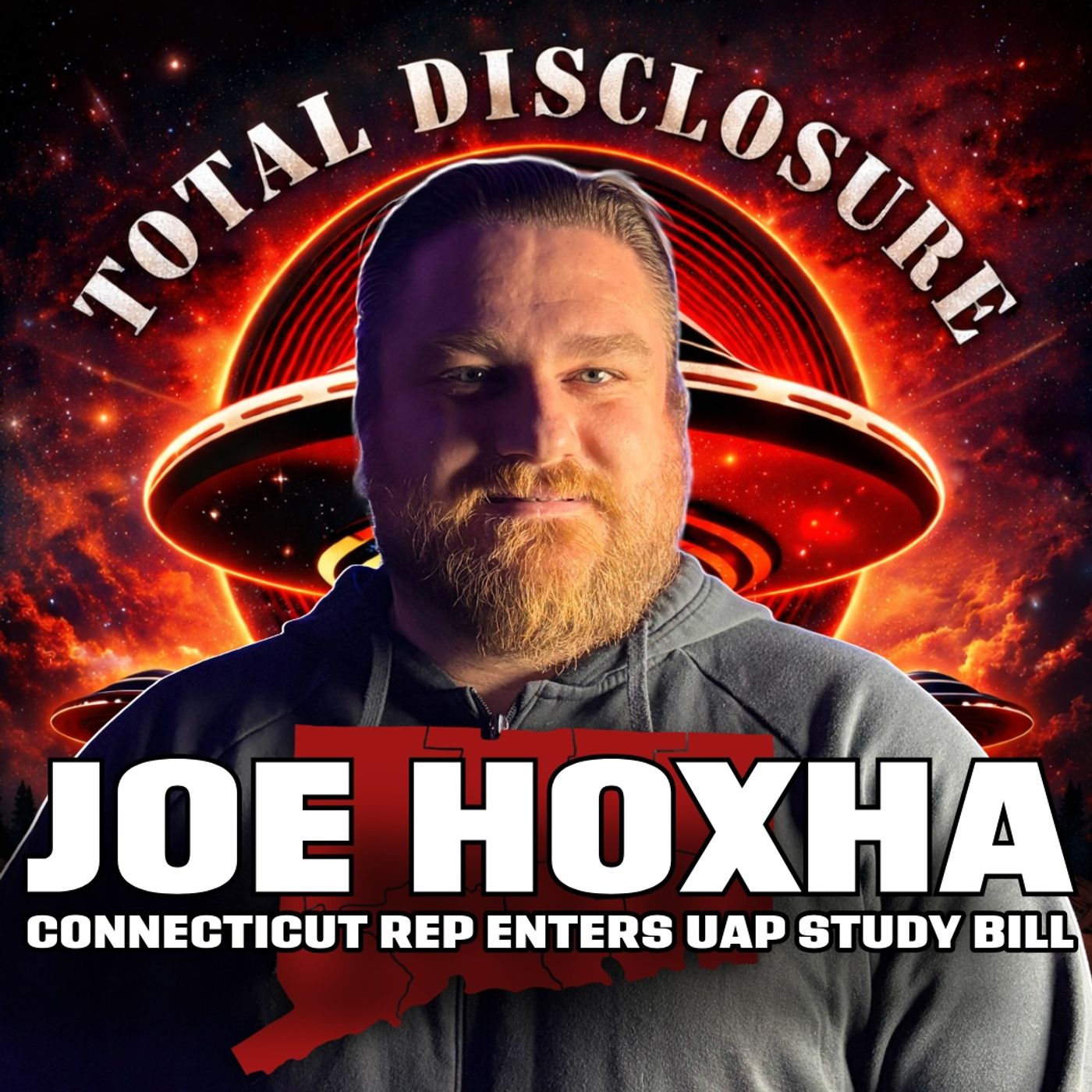
Connecticut's Bold Move: Official Scientific UFO Investigation | Ft Rep. Joe Hoxha
🛒 Good Feels Cannabis Seltzer Get 20% OFF with code: DISCLOSURE https://shop.getgoodfeels.com/discount/DISCLOSURE
🛒 Strong Coffee Company - Protein Coffee 💰 Get 20% OFF | Promo Code: DISCLOSURE https://strongcoffeecompany.com/discount/DISCLOSURE
🔗 All Links & Platforms: https://allmylinks.com/total-disclosure
📺 Subscribe on YouTube: https://www.youtube.com/@totaldisclosure
🔻 SUPPORT THE SHOW 💰 Direct Support (No Fees – PayPal): https://www.paypal.me/TDPstudios767?locale.x=en_US
⭐ YouTube Membership: https://www.youtube.com/channel/UCy2Cra7aLAAMVxkA9rSYCxg/join
🔥 Patreon (Exclusive Content): https://www.patreon.com/Total_Disclosure
🔻 FOLLOW & CONNECT X (Twitter): https://x.com/DisclosurePod
Instagram: https://www.instagram.com/DisclosurePod
Facebook: https://facebook.com/@ty.totaldisclosure
Business Inquiries / Media Use: 📧 [email protected]
🔻 LISTEN TO THE PODCAST 🎧 Spreaker (Direct Support): https://www.spreaker.com/show/total-disclosure-ufos-cover-ups-and-cons
🍎 Apple Podcasts: https://podcasts.apple.com/us/podcast/the-pop-culture-corner/id1544297063
🟢 Spotify: https://open.spotify.com/show/0Yq6Iceyh7o24DG8tq4kvO
📦 Amazon / Audible: https://www.amazon.com/dp/B08JJSX9GF
🔻 ABOUT THE CHANNEL: Total Disclosure Podcast explores UFOs, government cover-ups, conspiracies, paranormal encounters, and hidden truths through interviews, investigations, and deep-dive storytelling.
Hosted by Ty Roberts of TDP Studios, bringing firsthand accounts, expert insights, and uncensored discussions to uncover what lies beyond the official narrative.
Special thanks to all supporters, members, and listeners—this show exists because of you.
🔻 DISCLAIMER: Copyright Disclaimer (Section 107 of...
Speaker 1: Siste.
Speaker 2: Welcome back to Total Disclosure. My name is Tay and I am so happy to be here today, coming at you Live from Boston. Today, we have a special show on Total Disclosure. We're joined today by Joe Hawksa, a state representative in Connecticut's General Assembly. He's a researcher and one of the first legislators in the country to push forward UAP focused legislation. He's born in a post communist Albania and raised in Bristol, Connecticut. Joe's journey SPAN's public service academia and a lifelong curiosity about the unknown sparks early on by shows like The X Files and In Search of Now.
Speaker 2: He's bringing that curiosity into the halls of government, introducing legislation to formally study the UAP phenomena at the state level. This is a conversation that the intersection of policy and the unknown. My favorite. Let's welcome Joe Hawksa. Is that right? Hot?
Speaker 3: Yes?
Speaker 2: I didn't even ask no.
Speaker 3: I was like, yeah, yeah, oh yeah, no, that's exactly how it's pronounced in the United States of America.
Speaker 2: Well, it's such a pleasure to have you have you here today. I guess first what most people want to know is why or how someone like you brought this kind of legislation. So maybe we'll just start at your origins and tell me how you kind of even got into thinking about this stuff.
Speaker 3: Yeah, no, great question, And yeah, it look like you said. You know, I've sort of had a lifelong curiosity about the topic. Uh, you know, any documentary, anything worth watching or reading I would always uh uh stay on top of and you know, make sure I watched the latest documentary or read, you know, the latest article or book that I could you know, that I could find on the topic. You know, and it's one of these things that for a lot of people, it's still very much so taboo, and I make it, you know, even like with the bill, I made sure to really keep the scope of you know, the the the bill and the intent of what we're trying to accomplish as narrow as possible because and even even though I did, the media still ran with it, and you know, put flying saucers above my head like I was gonna abducted by aliens.
Speaker 2: And exactly called me.
Speaker 3: You know, people on mine call me ufo Joe. They you know, I think that's taken. Yeah, you know, talk about Little Green Men, and there's no there's nothing about any of that in the bill. So I mean, I've always tried to The reason I bring that up is because I've always tried to make this pursuit as professional and as evidence based, science based as possible, and not about you know, hey, let's just you know, let our fantasies run wild here, and you know, it's it's never really you know, it's always been a very scientific based pursuit.
Speaker 3: But it was sparked by you said, you know, sort of fictional shows like The X Files. An intro of that show, you know, etched into my memory and it was such a cool show. And basically like the genesis of this curiosity started on a late summer morning. I was like seven or eight years old. It was summer vacation, and you know, I'm I'm I'm home alone. I think maybe my mom was grocery shopping or something like that.
Speaker 2: And back then we could be alone.
Speaker 3: Yes, exactly right, no babysitter.
Speaker 2: Mom was like, hey, I'm running out you.
Speaker 3: Good, Yeah, exactly exactly. And so you know, I'm just flipping through the channels, you know, trying to find someone to watch, you know, and I come across this show, and it happened to be that on that particular episode, they were discussing some UFO related phenomenon. I don't know if it was. I don't remember the details exactly. It might have been Roswell, it might have been you know, but I just remember seeing like a flying saucer in the picture and I was like, whoa this is This is really interesting?
Speaker 3: And why is this on the History Channel? Right? Like the History Channel talks about like presidents and wars and things that are facts, things that are real, right, Like I always told this, you know, aliens of UFOs. This is science fiction, you know, in the same category of you know, the Boogeyman and the tooth theory and you know, things like that. So why is you know this you know, credible program on this, you know, credible science history fact based channel.
Speaker 2: Uh you know back then again more history based. That is a good observation. Yeah, sorry to cut you.
Speaker 3: Off there, Yeah, yeah, no, And uh, you know I was kind of a bit a nerd really a large part of my life, but especially back then. You know, I loved reading about American history and you know, like like you said, you know, I wasn't born in this country. But I was, you know, pretty much raised your ninety nine percent of my life, and I always had like a deep appreciation for American history and American politics. So okay, yeah, so.
Speaker 2: You're watching you're watching this on the History Channel. Your mom's away. She already told you UFOs are part of myth fairy tale and you know, things that go things that just you know are legend. Right then you're seeing it on credible programming. What's I mean? Did you ask your mom like, hey, I thought you told me that was bullshit?
Speaker 3: Yeah, exactly right. You know, I don't remember the exact details, but it was something like that, like it was like a you know, a question at some point, you know, like, hey, you know, I you know, I saw this like on TV. You thought you said it wasn't real, and you know, she kind of just brushed it off, like, oh, you know, did I say that? Okay? Whatever, you know, It's like, it's just it's what you know, that's it wasn't a big deal, you know what I mean? And for many people it still isn't. And and you know, part of what I'm trying to do with this legislation is trying to change that attitude, right, But yeah, I mean it was just like one of those things.
Speaker 3: It's like how we got bigger things to worry about, Like, what are you talking about?
Speaker 1: You know?
Speaker 3: UFOs?
Speaker 2: That is an interesting point too. It is because oftentimes we do we get ahead of ourselves and thinking this topic is number one, but there are actual issues going on with real like events like where you know, kids are getting blown up. You know, it's like, how does UFOs take precedent over something like what's happening in say Gaza or you know anywhere else? Right, how does that take And it's it's shouldn't, but it also shouldn't get left behind just because of that either, right. So there's this weird dichotomy, And there's honestly this weird dichotomy between your story and mine, the way your mother interacted with you and the way mine interacted with me, because when I saw what I saw, when I asked her about it, she was like, you saw UFO.
Speaker 2: She let me know. Early on, we didn't know all the answers, so you know what I mean. I grew up like, Okay, it's on, right, especially after I saw one myself, right, I was like, it's on. And then you know. So it's weird how our parents can really either open the aperture or close it. And I think and I think part of the problem and part of the solution now is the older generation versus the newer generation. The stigma's gone away. People like you, like myself, who are now in government, we're more open to it.
Speaker 2: Whereas the World War one guys, World War two guys, Yeah, it's not real, right, right, exactly, you're talking fairy tales exactly.
Speaker 3: Yeah, on the right line. Absolutely, And I think that's you know, the the general attitude with just you know, of that time period across many topics, right like, and you know, getting things to change requires a lot of effort, and most of the times it's not gonna The old guard isn't going to be the one to change its ways. It's a new sort of force or movement has to emerge to change the old. The old isn't going to change itself, so to speak, the old way of thinking is it isn't going to change itself, you know.
Speaker 3: It's it really takes you know, a new way of thinking, a new generation, uh to bring about that change. And yeah, no, it's it's really interesting because you know, and I've talked to like other people on you know, about this topic and of many different you know, generations, ages, you know, walks of life, and you know, ninety percent of the time it's like, oh yeah, you know, it's it's an interesting thing to discuss, but I've never had a personal experience or that, you know, you know, it's it's not like you said, there's so many other things, especially nowadays, competing for people's attention, you know, and quite frankly, just more existential, you know, more of you know, so many more things going on now that are of an existential nature than the UFO topic.
Speaker 3: But the UFO topic it's really hard to define. Like you know, we was talking to Gene earlier. It's it's so all and it's the we don't know what we don't know. And depending on how far the government is willing to explore this topic and dedicate resources to it, there's really no there's no limit. There's really no limit. And you know, it could it could be you know, we could be pursuing this and it hits a dead end, or you know, the government does make like a good faith effort to get to the bottom.
Speaker 2: Of this, they might not be a bottom.
Speaker 3: There might not be a bottom, right, right, And and that's the thing. But I'm but but here's the thing. They can create one and tell us that it is the bottom line, and we almost have like no choice but to like have to take their word for it, right, right, And the truth could be that there's more more to learn and more to see, but we'll never know, right. So I think when you add all that together, I think most most people's attitude, the average person's attitude is, like you just said, I'm paying a lot in taxes, I could barely afford to put groceries on the table.
Speaker 3: I'm having trouble paying my electric bill. You know, there's there's a war going on in Gaza, there's a war going on in Ukraine. There's a war going on in Iran. Like, there's a lot of stuff going on competing for people's attention. But does that does that mean that like the doctor, the medical doctor, because there's a war going on in God's Iran and Ukraine needs not to keep up on medical research? Does that mean right? Does that mean that the the rocket scientists because you know, because rocket technology is being used to to you know, basically project bombs, halfway across the world, that we need not continue to research rocket technology and propulsion technology and and transportation technology because it could be used for bad you know.
Speaker 3: Unfortunately, the world is always gonna have sucky situations. But we need to you know, care about those things and bring about positive change. But at the same time, we also need that little you know time that that that that time to uh kind of expand our horizons, you know, uh do something uh that progresses our society. And you know it's.
Speaker 2: Take a risk. Yeah, take a risk, get out on a limb, and taking risk is something especially in government. So to backtrack on that, because I don't want to go too far deep, what has been the response from your colleagues, because I know you said the media put UFOs over your head and stuff, as anyone like, what's been the general consensus of your colleagues, I would.
Speaker 3: Say majority supportive, But then again, even the ones that have actually supported the bill and even voted for the bill, you know, injected a little bit of humor into the into the topic, which I don't mind at all. I mean I don't I'm not somebody to take myself really seriously, and I take this topic seriously. But somebody injecting humor into it is not going to make it any less or you know, any less serious. But it's sort of like, you know, there was enough support on without you know, getting too you know political here.
Speaker 3: But obviously you know, as you know here in Massachusetts and similarly in Connecticut, Uh, there's one party that kind of dominates the political scene right now, and it's not the party I belonged to. So our our bills, you know, the bills proposed by the party I belonged to do not usually get taken up. Maybe some concepts can be incorporated into you know, the builds of the majority party, but our like standalone bills usually do not get taken up.
Speaker 2: And yeah, however, yeah, even at the national level, UAP seemed to be.
Speaker 3: Very bipartisans absolutely, so it passed. So it passed essentially when it when this had a public hearing, there was a few people that spoke in favor of it, nobody really spoke against it. And then when it came time to do a committee vote, you know that there was a couple of people that you know, spoke on the bill, and I was obviously one of them because it was my bill and you know, I had people that voted no within my own party. I had people that voted no in the you know, in the opposition party, and people have voted for it in my party.
Speaker 3: People have voted for it in the opposition party enough on both sides that it passed by a pretty good margin actually, And I would say that, you know, even the people that voted against it, they didn't vote it against it because they thought that it wasn't necessarily a topic, uh, not worth pursuing at some level. They just did an agree with the fact that, you know, we would have to pay for this study, and the budget is really tight right now in Connecticut, and you know, we have all sorts of issues with deficits and you know, surpluses and things like that, or lack of surpluses, I should say, and so every we're you know, we're trying to pinch as many pennies as possible here.
Speaker 3: So you know, a lot of people just viewed it as a as an economic thing and not worth.
Speaker 2: Right, going back to that point about this doesn't rank high enough on the list to pay for exactly. However it passes. Now, do you has anyone come up to you and you know, out of those who voted no, have you seen any inkling of hey, you shouldn't be dabbling with this stuff.
Speaker 3: No, No, not at all. As a matter of fact, the the the the exact opposite. There was a representative that covers an area where there's a military base that that supported the bill, co sponsored the bill, came up to me and said, you know, I've been looking to do something similar to this in the past, couldn't really quite find the right person on the other side of the aisle to like, you know, work with on this. And I'm I'm glad you you know, came forward, you know, on your own and and introduced something like this, and you know, uh, this is something definitely worth pursuing, even in its small scope.
Speaker 3: And uh yeah, I've had a lot of people, you know, support the concept absolutely.
Speaker 2: So quickly because you just oh man, you opened my mind there. Can you just summarize the bill? Yeah, and what it's going to do for what your what what is the action of it?
Speaker 3: Yeah, yeah, no, great question. So basically, so this bill ran through a Probes Appropriate the Appropriations Committee, which, for your listeners that aren't too political, essentially all that means is the committee that decides where the you know, money goes. So most bills start off in another committee first, and then we'll go to a probes because a bill could be could have something to do with transportation, it could have something to do with education, it could have something to do with housing, and it starts off as a concept and then we'll get referred over to appropriations to get a fiscal.
Speaker 3: No, it's called a fiscal basically just you know, it tells us how much this idea is going to cost. So, but mind went straight to appropriations, which was a really good sign because then there was one less hoop it needed to jump. And essentially the bill allocates something like three hundred thousand dollars to the connect to a big money, right, big bucks. Three hundred thousand dollars for the Connecticut Academy of Science and Engineering to basically conduct a study and form a committee to conduct this study.
Speaker 3: It originally was going to go to Yukon the University of Connecticut, and it got moved over to case the Connecticut Academy of Science and Engineering.
Speaker 2: Right, Do you think it's better suited there?
Speaker 3: Yes, it is, because they're very more you know science, a science based organization and they've done things of this scope before, you know, studies of scientific you know things, And so I ended up meeting with the guy that's you know, kind of going to be overseeing this and basically the money is going to be used, like I was telling you guys before, you know, to hire a very qualified scientist that will then form a committee around and uh, then we're going to put into place some sort of system to record any anomalous sightings, whether they're on earth, whether you know, meaning whether they're on the ground, water or sky.
Speaker 2: Uh.
Speaker 3: That's that's why the bill, you know, I think they called it UFOs, but it was supposed to be UAPs and identified anomalous phenomenon because as enthusiasts like myself and you, uh no, you know, these unidentified events could happen and water could happen on the ground, could happen in the sky. It's not just in the skies most people are used to.
Speaker 2: In fact, most of it's not. I would I would argue that most of it if you call it, if you if you were to label it a UFO, you would be limiting the scope of you know, what you what you're actually looking at. That's why I think arrow does label everything is we have no credible evidence of extra terrestrial Like why use that word specifically?
Speaker 3: Right?
Speaker 2: Because they what if they're a two dimensional then you're you're not lying, but you're not telling.
Speaker 3: The truth, right, right exactly?
Speaker 2: So I like what you did there with the land, air and sea. Yeah, you can't go into space because of no right, right, you can't go above eighty thousand.
Speaker 3: Case is all federal I guess owned by the federal government.
Speaker 2: But okay, so I gotta know what sparked this now.
Speaker 3: Yeah, so great question. So you know, you sort of got my my genesis story here with the whole X files and in search of with Leonard need moy and everything, and but now you know, I gotta tell you a little bit about this, you know, sort of the recent events that transpired that prompted me to finally say, you know what, I'm going to use my authority to try to shine some light on this subject. So in recent years, obviously we've seen you know, congressional testimony by people like David Grush, Lieutenant Colonel David Fraverer, you know, the whole Ryan Graves.
Speaker 3: Yeah, you know, so many credible people, uh, stepping forward and sharing their UAP stories and you don't have to take their word for it. They actually have footage. It's not just I, you know, was out in the middle of you know, the desert and I saw something and and oh it's like, oh, well, you're sure you weren't smoking anything, you know whatever. It's these are credible people on the job in uniform reporting these things. So you know that. It also even before that, you know, just you know, the topic was sort of simmering and now it's kind of blown up.
Speaker 3: You know, Trump is talking about it. You know, President of the United States is talking about it. Just yesterday he said something, you know, said that something you know, major was going to get delivered to the American people soon. You know, as far as you know information what that is, I mean, I don't you do.
Speaker 2: I think it's going to be the forty six videos that Rep. Luna requested from the d D O W Now Department or war. I'm Pete hag Seth because even going back and forth on that, So that's what I think is would beat Yeah. Yeah, So with all that movement, like you said, continue.
Speaker 3: Yes, yeah, no, no, no, no, no, thank you. Yeah, I mean, it could be that maybe it's something else. You never know. With Trump, he's always.
Speaker 2: A wild card, truly a wild card.
Speaker 3: And you know he's done some great things, you know, and I you know, supported him, but you know, I don't carte blanche support, you know, uh, anything and everything everyone says, you know, regardless of uh, you know, even if they're somebody within my own party. You know, I am you know, sort of look at things and assessed with my own eyes and years and my own brain, eyes and years. You know, I don't just go with what, you know, with what the party line is, as they say in politics, right exactly.
Speaker 3: Yeah, I try at least, yeah, and you know, but I'm this topic. I mean, he's done more than any other president has. And I give kudos to Obama too. I mean he broached the topic a little bit, you know, George Bush and Bill Clinton. I think we're asked about it and typical.
Speaker 2: Kind of even back to Jimmy Carter.
Speaker 3: Yeah, Jimmy Carter. Oh yeah, we know about Jimmy Carter. He reported to move on. Yeah, Siding Key had and and Ronald Reagan had one too when he was under of California. So it's like, I guys, if I'm crazy for putting up, you know, putting in a bill to study the subject. Then I guess Jimmy Carter, Ronald Reagan, Obama, George Bush, Bill Clinton, and Donald Trump, they're all crazy.
Speaker 2: Obama is funding a Betty and Barney Hill film.
Speaker 3: I heard about that Netflix like original Yeah.
Speaker 2: Yeah, and I mean you gotta ask, yeah, why why?
Speaker 3: Yeah?
Speaker 2: Right? Yeah, And you know it could be just like good you know, good old fashioned you know, venture capitalism and like getting into like new new things. Yeah, but there's also a big component to that story of the interracial ass Like, yes, that's Barney was heavily into the civil rights right, so I think I think he respects that part of their degree.
Speaker 3: And Obama has done I think, like a Netflix movie before.
Speaker 2: Yeah.
Speaker 3: Oddly enough he has like actually dabbled into the movie production.
Speaker 2: But regardless, again, regardless, And so you made a point earlier that I wanted to touch on, And it seems that when whether it's a president, a person like me, uh like Gene, a producer, or anyone, doesn't matter where you are in the world, when you have one of these sightings, it fundamentally alters you to a degree where you may have had a certain trajectory prior after the incident. This is the only topic I've ever seen that will change someone's life course. The rest of their life is dedicated to figuring out what that was.
Speaker 2: Yes, yeah, right, yeah, and it blows my mind.
Speaker 3: Yeah, yeah, exactly. And you know, I was eventually going to bring this up, and I guess now would be a great opportunity to bring this up. That the sort of the fifty ton whatever elephant in the room when it comes to any of these discussions about UFOs and extraterrestrials, whatever, is well, if we discover that it is an extraterrestrial or non human intelligence behind these things, then what that's really what all of this boils down to. All the studies, all all the hearings, all the you know, the whole pursuit of this is to when we finally pull the you know, the veil off, and we find that we're truly out alone, then what then then, what it's like do people go crazy because of you know, strongly held religious or spiritual views that maybe humans as we know them earthlings were the only, uh, we're God's only creatures in the universe, which I don't believe in I don't think there's actually any evidence for that in any sort of Judeo Christian scripture either.
Speaker 3: But there's some people that do see the world that way, like uh, you know, like people would go crazy, right, And people that have had sightings on an individual basis, right, have like you said, been fundamentally changed for the rest of their lives because they've seen something or I've believed to see something that like they they're a human brain just couldn't handle. So that's why this topic is just infinitely interesting. And you know, with this bill, we're just pursuing a very very like you know, uh, a shaving off of the tip of the iceberg.
Speaker 3: Honestly, if you if you want to look at the potential of the whole topic, this what I'm doing is just a little shaving off the tip of the iceberg.
Speaker 2: Well you got to you gotta start cutting suff exactly right.
Speaker 2: So back to because I know where this I know where it's going. What what kicked this off? I kind of we kind of got off top, not off topic. I think that was great. Yeah, So what sparked this movement in you?
Speaker 3: Yeah, so you know, just like seeing this growing interest coming from the national level, and from uh scientists, you know, like you know we're talking. You know, I follow, you know, doctor Stephen Greer, I follow you know, like a v lobe. You know a lot of like these other people, and you know it's like we could all have, you know, our opinions on them, but I I try to follow as much as I can from everyone that's that's you know, has a level of credibility on this topic language. Yeah, And and it's like it's just becoming you know, you're seeing more documentaries pop up on like Prime Video, on Netflix, on you know TV shows.
Speaker 3: Obviously Ancient Aliens has been you know, on forever and you know, rip to Nick Pope, who you know sadly just passed away.
Speaker 2: I gotta give you credence, man, you know your stuff, Yeah, I know your stuff.
Speaker 3: Yeah.
Speaker 2: Yeah.
Speaker 3: Nick was Yeah, yeah, great guy. Yeah. And I saw him live once in Torrington, Connecticut.
Speaker 2: Actually I was at Contact in the Desert with him last year. Yeah, and I got to sit in a room with him for like thirty thirty minutes and we just just me and him talk really wow. Yeah, it was it was, it was, it was so ancient aliens. Yeah, that stuff, you know.
Speaker 3: So you know, ancient aliens again on the History Channel, you know, and the History Channel I think still has a decent amount of credibility. It depends on what you're watching, right, But like all these things are like real things, I think, you know sometimes you know, because since the advent, this is a totally different rabbit hole and topic we could get into. And I actually want to feel almost like just to you know, know, almost as much about as as UFO is actually maybe even more than the sole era of social media, right, content kind of gets garbled into this you know, new dimension known as social media, and because it's now called you know, social media content or Internet content that you know, it kind of gets lumped in with thing that things that are just like not have no use, you know, like brain rot and you know, all this other garbage that's on the Internet, right, And because it exists on that platform, it doesn't mean that it's that thing, right, Like we're talking about like you said, Betty and Barney Hill, that story has been around forever, but it only existed in the domain of print media, and you know sort of just this you know, oral retelling of the story.
Speaker 3: You know, there wasn't really like you know, like a center for the study of this phenomenon that happened to these people to like give it sort of that like academic level like stamp of like credibility, right, so, you know, as because it's not it hasn't been taken seriously. This topic hasn't been taken seriously to that level. These stories had to go somewhere and they went on.
Speaker 2: You know, the internet, national acchoir exactly, stuff.
Speaker 3: Like that, exactly. And it's unfortunate, right, And because of the way we're just wired as human beings, we associate things, right, So like if I saw this on Instagram, or if I saw this on you know, YouTube, or if I saw this on Alex Jones or something, it's.
Speaker 2: It's inherently less credible exactly, right, even though and but guess who's saying that.
Speaker 3: Oh yeah, right right.
Speaker 2: The ones who like who gave them the right. It's like you guys are playing pharmaceutical ads every every thirty seconds, I know where your allegiance.
Speaker 3: Is, right, come on, right, And I think more people are smartening up and they're seeing things for what they are and not pre judging things because of stupid you know things like that, like oh, you know, you know, it's funny. It's like, you know, you go you know, you go to the doctors, or you go to you know, some like professional right, or you go to your your banker or whatever, you know, somebody that holds a professional position, right, And I work in banking. You know, it's like my other job, Like I'm we don't make enough money to be full time politicians.
Speaker 3: We're only part time, so you gotta have another job, right, Yeah, that's a problem. Yeah. Yeah. So you know it's like you go to like, you know, the authorities. I guess that's the term. I was looking for the authorities, right, the professionals, the authorities about a particular topic. Like you go to your doctor and you talk about you know, like hey, I heard you know, maybe this diet is better than that diet or taking this supplements has like been shown to you know, to have this positive effect.
Speaker 3: And immediately these people in these positions of authority, they'll go, oh, or just see that on the internet. Yeah I did, and saying I saw that on the internet as a kid to saying yeah, I took out a book on that subject in the library. The internet isn't all bad, and it's not all junk. It's you got to judge things on a case by case basis. If I'm producing you a document that is a study that was published somewhere on the internet, it could have been from the official like government source, it could have been from like, you know, the National Health you know department or whatever.
Speaker 3: You know, it's like just because it's on the right. And I think, again, going back to that whole older generation thing, I think that it's tough, you know, with people that, especially with professionals in their respective fields, it's really tough for them to go against the grain of how their profession has taught them to think on a particular subject. It's really difficult. And there's a few people that are able to sort of unshackle themselves from that way of thinking and rise above it and welcome new information that comes in right, and use that information and judge it on its own
Speaker 3: merits instead of pre judging it from the lens of the previous paradigm that they were in.
Speaker 2: Right, do you think there's a problem in government where maybe some of the older generational people or even younger people, it's kind of taken off with that the younger generation now as well. But this really hardline religious belief where they think that we're dealing with angels and demons and we're invoking, inherently invoking demonic whatever, right just by dabbling in it. Do you think that that, even if it's not spoken out loud, do you think that that could be a problem.
Speaker 3: Yeah, I do, actually, and I think I've heard that a lot, and I've heard it from some younger people. I've also heard it from some older folks. I have a good friend who would probably be a great guest on this podcast actually recommend Yes, absolutely, I really want to.
Speaker 2: Talk to the person who's doing the study too.
Speaker 3: Yeah, oh yeah, that's yeah. I can definitely put you in touch with him. Oh yeah. And and part of what the study in Vaz is using that money to hire like a professor who's going to be doing this like full time. So we have we have some people on the shortlist, and I could run that shortlist value and see what you think of those people. Yeah, yeah, yeah, But you know, getting back to what I was saying, You know this this friend of mine, an older gentleman who has a military background, like like Genie here, and has worked in you know, intelligence and all that stuff.
Speaker 3: You know as he was, you know, actually a component of me, you know, finally, you know, sort of taking the step to bring this bill forward because of all the things that he told me that I couldn't believe we're true, but actually we're true. And so when so again it comes it comes down to people that are in positions of authority, right, or that were in positions of authority that we're part of the power structure, if there breaking off and they're saying, hey, what we've told you was not true, this is actually what happened, and this is actually how it worked.
Speaker 3: Uh that is I mean, you can't get any more credible than that, right, You can't get any closer to the source than somebody that was a part of the source telling you that what you're seeing on TV or what we've told you is not true.
Speaker 2: I agree.
Speaker 3: So that could have, you know, sparked more motivation and just more of a desire to bring this topic to use my capacity as an elected official to yeah I hear. Yeah, definitely an electric vehicle.
Speaker 2: I think it's a literal uf O.
Speaker 3: I love the sound those vehicles make.
Speaker 2: Literal yeah, neighbor.
Speaker 3: Yeah, And so where I was going with that was remind me again. So we were talking about my friend who.
Speaker 2: So what sparked the you taking the next time?
Speaker 3: Yes, yes, so you know, seeing you know how all these things are coming to uh you know, uh being brought into the mainstream and really important people in government are discussing these things. I said, look, it's now or never. This is this is the time for me to really, you know, use my my position, my tiny little position of authority here might but one that offers me a platform two to bring this subject into the mainstream. And if and if it accomplishes nothing else other than allowing more people to come forward, more you know, uh, scientists, ex military people to hop on this bandwagon, if nothing else, if it only results in that, then it'll it'll have accomplished its mission.
Speaker 2: I agree. I agree. So you told me on the phone. Yeah, and I want to segue here. You were in New Jersey, Yeah, during the quote unquote New Jersey drone incursions.
Speaker 3: Yeah.
Speaker 2: Can you tell me what that was like and what you were seeing? Yeah, you know what you felt and what was what was the Yeah.
Speaker 3: So this was late mid to late November of two thousand and twenty four. I was taking a road trip actually, to Arizona. Funny enough, I actually don't like to fly. I'm very interested in unidentified flying objects, but I myself do not like to fly.
Speaker 2: You're not going to take a ride in the UFO.
Speaker 3: If one was offered to actually believe it or not have one. If one was offered to me, i'd probably I'd probably take Yeah, like I would probably, you know, Yeah, you don't like fly, yeah, exactly, But I don't like to fly in commercial airplanes UFOs. I'm fine with them. So anyway, I had to go to this conference and in Arizona. It wasn't a UFO conference, it was something unrelated and I had some time, I guess, you know whatever. It was like during like Thanksgiving. So I had a few days off from work, and so I drove to Arizona.
Speaker 3: It was like a two day trip. I'd love to drive, I don't. I could drive like sixteen hours NonStop. I don't mind it at all, especially if it's going somewhere new that I haven't seen before. That constant like stimulation of you know, seeing new new landscapes and new cities is enough to keep me awake. But so I'm driving through New Jersey and I left it around like three or four o'clock PM, and it's it's already like dark by then, you know, that time of year. So but I'm at the part now where it's like leaving New Jersey going into like Pennsylvania, but still sort of on the New Jersey side.
Speaker 3: And from that point and until I got to about halfway through Virginia, there was a stretch of highway where every five minutes there was the red and green like flashing indicative of a drone or that you know, that particular sort of flashing that is required by law to you know, to be to be on a drone. Every five minutes or so, there was like a new one sort of just like hanging about one hundred or two hundred feet above the highway, and then you know, you would drive by because it was literally just standing in place, it wasn't like moving, and then five minutes later another one would appear, and every five to ten minutes for like about two and a half hours from New Jersey to Virginia, rotating through.
Speaker 3: It's rotating through. And the funniest and craziest thing was that there was literally signs on this highway that said that there could be like low hanging craft or aerial photography happened. So I said, Okay, that's that's what it is.
Speaker 2: Yeah, were these signs that seemed like they were just put up?
Speaker 3: Or no, no, no, they were like yeah, it seemed like they were there. They were like newer signs. I actually thought that too. I was like, is this something that they just put up or has this been a fixture on this highway for a while, and leaning more towards the ladder that it was, you know, a permanent fixture on the highway. But I just found it like really strange, like, hey, there's these signs that are warning us, warning or letting us know that there is these craft. And well, actually that made that sort of alleviated some of my you know, anxiety about these things because I saw these signs and it explained potentially what these were.
Speaker 3: But then when I go when I get to like when I finally like stop for the night or the next day or whatever, and I'm get a chance to look through my phone and catch up on the news or whatever, this had like made the news that there was like drones all over like this part of New Jersey that I was literally driving through, and I could safely say that they appeared to be drones. Did they want UFOs? They weren't things that were unidentified by me. They looked like drones. I could sort of make out the shape of the actual craft, and also based off the lighting, they looked like drones.
Speaker 3: But why there was dozens of drones along that stretch of highway on that night, I cannot tell you for the life of me.
Speaker 2: Right, right, So you're and that's very interesting, you know, because I had I had a member of Congress tell me, now, I think it's kind of come out and like a company kind of took responsibility and was like, no, you know, that's our stuff. But there's not a lot of drones that can fly at night, you know, because you need a certain thermal Like there's no sense in flying a drone at night because a lot of them don't have like the right cameras, like you're blind in the sky. But apparently they have these radiation seeking drones, thermal drones, right, So that's what's up there.
Speaker 2: And I had a member of Congress tell me on a on an encryptied chat to not go there, because I was like, Hey, I want to go and I want to see these things and he was like, I wouldn't. He's like, I'm not convinced that there's not a dirty dirt, dirty nuke that they're like a bomb looking for that they were looking for. He's like, I don't know if it's war games or not, but he's like, I just wouldn't take the chance. And I didn't. I didn't take the chance I wanted to. But it's odd, you know what it reminds me of because these things were breaching bases like Langley.
Speaker 2: They were breaching bases that you know, like right Pat and we'll get the right Pat and a few of them with the missing scientists and generals. I don't want to get into after the break, but there is how are these things a staying up for so long without you know, the size they were? It just none of it made sense. So a lot of people were saying, like, you know, there was a mix of UFOs and drones, and maybe the UFOs. The drones were there because of the UFOs, and you know that's how the UFO community spins every day.
Speaker 2: Yeah, but these things were also shutting down facilities like our sensitive facilities. So every drone I know of, you can't even cross into an airport without it shutting itself down, right, right, So who got who has that capability?
Speaker 3: Yeah, these were definitely special drones. They weren't, you know, And I kind of had that feeling, you know, just looking at them and the way that they were moving and the fact that they were sort of synchronized to like kind of take over rotate shifts every like ten minutes or so. That's almost kind of like what it felt like, because you would see one and it was about you know, maybe like a couple miles away or whatever, five hundred yards a couple of miles away, like you would see it as you would get closer, like it wasn't moving, because it would get bigger if it was moving the way or closer to you would either get bigger really faster, you continue to stay small in your sort of field of vision.
Speaker 3: But it was just hover there and it was about two hundred three hundred feet above ground, and there was a sign that said aerial photography. Maybe it's some sort of craft that's taking pictures of the highway or I.
Speaker 2: Don't know, right, your your your brains like yeah, yeah.
Speaker 3: Yeah yeah. But then it's like it would leave, it would just literally leave. It would be like it would just go and then like five minutes down the road, down the highway, there'd be another one in the same position, you know, just like sort of floating, you know, maybe not exactly staying still, but like you know, kind of current, like the current. Yeah. So it did that for like three hours, and that on the stretch a highway from New Jersey to Virginia.
Speaker 2: That's odd. I mean it's odd.
Speaker 3: Yeah, right.
Speaker 1: Uh.
Speaker 2: And then so that so that has to be something that at least because have you ever seen a UFO.
Speaker 3: I've never seen one. I know people that have. Actually a family member of mine just told me that she had seen one.
Speaker 2: Well, once he become the UFO.
Speaker 3: Guy, yeah, people start coming.
Speaker 2: Yeah, so they're going to feel a lot more comfortable with you going forward.
Speaker 3: Yeah, what's that?
Speaker 2: So you don't have to tell me her name what she is, but what did she tell you?
Speaker 3: So this was in a city in Connecticut and she saw a like classic like disc shape and she was with like another friend that like flew above their heads. When I say above their heads on I mean like right above their heads, but like you know, five six hundred feet above their heads, and that it just sort of like vanished, Like it didn't drift off into a direction, it just disappeared.
Speaker 2: Can you can you guys get me the the average count of UFO sidings in Connecticut? I think move on has it? Yeah, I want to know how many cases are reported there.
Speaker 3: Connecticut is high. It is high, right, that's part of you know, the the justification for the study is that Connecticut has some of the highest you know, UFO sidings per capita, and you know, don't we want like a central repository to collect this information and a sort of systemic scientific way to analyze it. I think so, especially for the discount discounted rate of two hundred and seventy five thousand US your connect A taxpayers.
Speaker 2: So oh man, so per month.
Speaker 3: It's a lot.
Speaker 2: That's actually that is a lot.
Speaker 3: Well, I mean we're right between Boston and New York. I mean, the two most arguably two of the most important cities in the country.
Speaker 2: Like, is there is there any bases in Connecticut that are noteworthy? Hey you brought one up?
Speaker 3: Yeah, Groton, Yeah, you got Grounton, Connecticut. You have the headquarters of raytheon down the street here.
Speaker 2: I'm sorry, the headquarters of Raytheons in Connecticut, no.
Speaker 3: No, no, in mass in mass yeah, yeah yeah. And Gronton's a nuclear basin right on the corner of Rhode Island and Connecticut there. And then of course, you know you have like anything that could come from the Hudson Valley in New York. That's a hot spot historically, Whitley Stream, Yeah.
Speaker 2: The whole, that whole.
Speaker 3: Uh yeah.
Speaker 2: During the eighties there was a huge wait, what do you think about abductions?
Speaker 3: So my view on that is I always defer to people that like have have talked to the alleged abductees and are privy to more information than I am. And I really like, like, I really like doctor Greer's UH answers to a lot of these questions, which is UH. And I firmly believe this because of conversations that I've had with people like Jean and my friend that I was referencing earlier, that the United States government has has capabilities that like the public will never know about.
Speaker 2: Can I stop you from the because you just just because I don't think this will be able to insert this and anywhere else? Yeah, do you hear about this ghost murmur thing?
Speaker 3: Ghost?
Speaker 2: What ghost murmur No with how they found that pilot that went down in Iran? No, they did. Can you guys bring this up the ghost murmur So? First off, whoever named it? Great job? Great job. So you know the pilot that went down in Iran?
Speaker 3: Yeah, yeah, we recovered him, I think, right.
Speaker 2: You know how we did that, Well, the CIA has this technology where they can detect a heartbeat, and they did it from thirty nine point something miles out and he Now, mind you, you have to separate animals heart beats, everything that has a heartbeat, and they found this guy. Now again I think take it with a grain of salt, because whether we want to believe it or not, we are in wartime.
Speaker 3: Yeah, and when you want.
Speaker 2: To scare your enemy and to think and you have some fucking crazy yeah you know technology, uh you know you but could it be a half truth? But yeah, they detected this guy's heartbeat from forty almost forty miles out and he was in a crevice. And the first thing he said back that he sent back, according to Pete Eggzeth, who I'm not believing that this is what he said first was God is good. That's not my first message back. It's like get me the gout of here, right, get me out of here? Not God is good, So I think that maybe the third or fourth right, right, right, like once you're getting contact of God is right.
Speaker 2: But anyway, but yeah, yeah, I mean that's crazy. That's and if that's what they're telling us, we am right.
Speaker 3: Imagine what we actually have. Look, I have constituents who have come to me really hard with things like this because it's it's like they could be crazy. But what if they're not right? And I've had constituents that have come to me and have said, oh, I'm sorry, Yeah, it's just one. One constituent has come to me and has said that he believes he was being targeted by like a like a directed energy weapon, right, yes, and can everybody described so he described like this like nothing overtly physical, but that he would kind of here like in the middle of night, like clockwork.
Speaker 3: And again this is also something people that are suffering from you know, genuine and mental health issues could probably experience as well. But he was describing a sort of like metallic noise like uh, like nails like coming down on like your roof, and headaches associated with it. Every single you know, every other night or something not like late at night, like eight nine o'clock at night or something like that. Like most people are still up by then, you know, unless you have some like crazy job you're getting up at like four.
Speaker 3: Most people are still up and like pretty alert at like eight or nine o'clock. And at least I am, I mean alert, Yeah, exactly right, that's when a lot of people are most alert. And you know, and this person, it's like, you know, when you talk to him and he's not talking about this subject, he seems like pretty normal, like a little eccentric, you know, but like seems pretty normal. And I've been trying to help this guy out a lot, and I've actually helped him out my story. No, he didn't know. He didn't serve in the military.
Speaker 2: Military. Do you work on anything?
Speaker 3: To tell you? It's hard. It's hard to do. No, I know, I mean I would, I mean I would. I wish I knew more about him. I don't really know too much about his personal life. Maybe that's something I could ask him about. But he's like sort of like a musician type, you know, and like just.
Speaker 2: Not boxes me. Yeah, yeah, there's something about it. Yeah, the metallic sounds and there's other stuff too. Yeah, and then just you tend to see a lot of creative.
Speaker 3: Creative people, Yeah, people being.
Speaker 2: Associated with this interesting. So you know, i'd be interested to know what he did.
Speaker 3: Yeah, yeah, And I'll talk to him. And you know, he's having a hard time, you know with that's crazy.
Speaker 2: No burning inside though, no like internal like like feels like his insides are. I'm not trying to lead you.
Speaker 3: I think describes a lot of like it's that sort of stuff in his head, like.
Speaker 2: Interesting like interesting stuff. I would implore you to look into something called Havana syndrome.
Speaker 3: That's what he described it as.
Speaker 2: Yeah, yeah, yeah, but yeah, yeah, that's that's deep.
Speaker 3: So it's definitely something to look into. And I mean, I'm happy to do it for him, and I try to help him out as much as I can. But but I mean, anyhow, I mean, we were, you know, we were talking about you know, abductees and things like that, and that actually brought me to thinking about a point that I was trying to make earlier about the angels and demons, and the same individual that's you know, told me about things that you know, the government, nothing classified, just you know, things that he was privy to that you know now has become declassified, but that he knew four thirty forty years ago.
Speaker 3: But that individual believes he's a big Roman Catholic and he believes that UFOs could be like demons, right or you know sort of you know, spirits or something. And you know, I said to him, well, you know, Jim, his name's Jim. I said, maybe maybe some of it is right. And again going back to the Stephen doctor Stephen Greer thing, he says, eighty or ninety percent of the things that we see in the skies, you know, are probably man made. Ten to twenty percent are truly unidentified. Now in that ten to twenty percent category, maybe some of these things do have like an interdimensional or spiritual you know component, like in the way a traditional Roman Catholic or religious person understands the existence of these things via their scripture, and in that same categor where it could be true extraterrestrial presence.
Speaker 3: But I really do think that it just makes a lot of sense at eighty to ninety percent of like what we've seen in the skuys is probably just Raytheon and probably just Lockheed Martin or Northward Runman or some of these black projects, you know departments, black budget departments or whatever, you know, testing their you know.
Speaker 2: Yeah, they're their next gens, their next.
Speaker 3: Gens and things that may we may never see.
Speaker 2: And you know, it's crazy to me that we've got to this point where it's not even that we deny it. We're not even denying anymore. We just go, yeah, it's probably black but black budget tech. Yeah, right, that's the deferral. Yeah right, it's not.
Speaker 3: No, you're crazy, you're crazy, right, No, it's it's.
Speaker 2: It's like, no, that's when we got cooking with Darba.
Speaker 3: I don't totally agree. I think, you know, this would probably have been a better way to start this whole conversation, uh, you know, with which is that I think the Overton window has moved right, Like, these conversations are not starting from the point of the person that is reporting a UFO first having to prove they're not crazy and then having to prove that they actually saw what they have to saw. I think we've moved past to the point now where it's like, Okay, describe to me specifically what you saw, and I can tell you whether it's something that is probably connected to something humans are doing or something that is truly unidentified or unexplained, right, like.
Speaker 2: If it's a bead of lights in the sky, probably starlink.
Speaker 3: Exactly most starlink I've seen. And I thought I had my first UFO encounter. I was actually on a face it and I had no idea what starlink was. I was three or four years ago. I was on a ferry from Connecticut to Long Island and as we were coming back from the Long Island side to Connecticut. Uh, it was the middle of the night. I think it was like eight o'clock at night, and uh, it wasn't quite summer yet. I don't think or it might have been like fall. And because it was, it was very dark. It might've even been like later than eight o'clock.
Speaker 3: It was really dark. And you know, they were in the middle of the sound there and there's no light, so it's just like really dark. And I look up and I see you know, like these things almost like uh meteorites or you know, flying uh like comments or something you know, like things like almost like burning in like the the atmosphere. And I was like, holy crap, Like I see a UFO pe yeah, right, And then I like I see somebody else like looking at it. I'm like, dude, you see this and he's like he has like a head of like his headphones in, and like he takes off his headphones and he's like what.
Speaker 3: He's like, do you see this? And he's like, oh yeah, that's that's a starlink.
Speaker 2: Here's a good here's an interesting thing though, right, yeah, did you not feel a little like a ship, like you almost want to believe?
Speaker 3: Oh yeah?
Speaker 2: And he like almost crushes you, oh yeah, being like, oh no, that's us starlink because it's like you you're thinking, you're like, oh my god, this is great. Yeah, and then someone's like, dude, starling and you're like, oh yeah, it makes and it kind of takes the wind out of your sails.
Speaker 3: Oh yeah.
Speaker 2: So you can see why people when they do have these sightings, they get defensive when they get explained prosaically. So we do have that as a problem. But any good UFO investigator researcher, they know that ninety percent, and that's being generous if not ninety five percent can be explained prosaically. Yeah, the five percent, that's what needs further investigation. And I assume that that's what you guys are going to want to see absolutely, Now, what kind of sensors and stuff are you guys going to be putting cameras?
Speaker 2: Are you going to be using existing astronomy you know, I know you met with Mark D'Antonio front of the show. He's got his observatories.
Speaker 3: Yep in Arizona, which is really cool. So basically, the funds for the study are gonna really only be going to paying the director and a couple of people that he's gonna have to sort of subcontract with. And then I think, because this is being run through the State of Connecticut, any resources and any detection software or anything that is watching the skies via the State of Connecticut's network, I think will be made available to the committee at no charge. Traffic camps, stuff like that. Yeah, really, like I think anything that like this guy is going to need that like the State of Connecticut owns, I think will be made available, like you know, free of charge because it's intra yeah yeah, yeah, yeah, So anything obviously that would be federal, we'll try to get, you know, like free of charge, but like if there's a charge or if we can't get because it's classified.
Speaker 2: Or as be interesting to see what they push back on.
Speaker 3: Right right, and and well that's the thing that'll also let us know where your boundaries are, where.
Speaker 2: You're yeah yeah, yeah, for lack of yeah, and also show as you ah, where they draw the line, you know, like it's anyway, So are you Are you a religious person? You don't have to answer yeah, but like, do you believe in a creator?
Speaker 3: I mean, yeah, I know, I think I do. And I think the best way I could answer that is there there was a guy that I follow who passed away. His name is Jordan Maxwell. Yeah, and I follow a lot of the work that he did. I'm not saying all of it was, you know, accurate or he was right about everything, but he had this one really really good quote that I love using, and he always said that, you know, he was just an ordinary man pursuing extraordinary knowledge. And he also had another really good quote on the religious side of things, which was that if you claim to know God, then you probably don't.
Speaker 3: So that's and that's where I stand. I think, you know, there a God exists, a creator exists, but me trying to understand what that is is is a futile endeavor. So I just appreciate what it produces and what it what it's you know, given to us. And this you know universe we live in and it's up to us to explore it and understand it better. But to understand why God did what he did and all that stuff is I think it's it's a futile pursuit. And you know, especially the way like you know, uh, organized religion kind of you know, creates this terrain where uh people, you know, they're pitting people against each other, Like I mean, I don't I don't consider myself like a Christian.
Speaker 3: Do I believe Jesus existed? Yeah, Jesus probably existed. Was Jesus divine in any way? Maybe? Maybe not? I don't know. I'm not ruling it out. I'm not don't have any evidence to show that he that he that you know, other than I witness is. And you know, things that are in the Bible, the Gospels and.
Speaker 2: Men and men can be flawed.
Speaker 3: They could be flawed, they could be tampered with, they could be corrupted.
Speaker 2: And we know the Council in Ico is they chose certain works and left others out. I mean, the Book of Enough, you know, Dead Sea Squirrel all that kind of stuff. So it's like it comes down to and that's why I think kind of an interesting caveat to this is while I do agree that the anthropic principle, you know, our universe, it's perfect, and it's so perfect for life, right that it seems from the micro to the macro intelligently designed. Right, So I'll give them that there is an intelligent design for sure.
Speaker 2: Like you look around and you just go, this can't be no reason. Like so when scientists, you know, talk about the Big Bang and then you know someone religious said God said let there be light, I say, you're saying the same thing, just do different lens. So when it comes to these UFOs or beings, are we just what they called angels and demons? Are we calling aliens right? Or extraterrestrial non human intelligence? I mean angels and demons by definition are non human intelligence. And an interesting case is the Virginia case.
Speaker 2: Gene and I actually took a trip down to not to Virginia, We're going, I have the connections to go, but we went to the National pres Club event. I spoke to some of the Carlos de SUSA, all them, and you know what stuck out to me, is this smell of sulfur? Because what is associated with demons? Red eyes, horns smelled like sulfur. Well, that sounds like you. If I saw that, I'd be like, that's a demon the right, So just again to me, I'm going I think what we're dealing with is this is not black and white.
Speaker 3: Yeah, no, for sure black and white. For sure, it's not black and white. And yeah, I'm very familiar with the Virginia case. I've seen I haven't seen the latest documentary on it by James James.
Speaker 2: Yeah what James Fox Fox, Yeah, I implore you too.
Speaker 3: Yeah, yeah, yeah, but I've seen other documentaries on it, and I've seen, you know, uh, like an older one where you know, there's footage from ninety six where there are people are being interviewed and they're talking about this thing like it's just like they're like you, these are like villagers, Like they're not paid actors. These are like people working at a hospital trying to make ends meet in like an impoverished area of Brazil. Like they're not You could see the blood and sweat on their face and.
Speaker 2: Then the then yeah, it's like this is real, man, what this the neurosurgeon. Yeah, I got we got to meet him. Oh yeah, okay, he worked on the beat. Like this guy has no reason to lie. He's still one of the most highly regarded neurosurgeons in that area.
Speaker 3: Yeah.
Speaker 2: Like this guy, he's got money, he's get you know, there's no benefit to him coming forward seemingly. So you know, that's where I start to ask. And again, you know, the new Jersey drone thing brought something up from me. And again you know, uh, are you familiar with like the the late sixties incursions of like Malmstrom and mine not where UFOs shut down news. Yes, yes, well I know those men personally, like Robert Sallas, Dave Shindeley. From them, I can introduce you sometimes for you to talk to them.
Speaker 2: But I walked Bob into a representative Mace's office and allowed him to brief her and then later on Burlssen. So no one in fifty years had been able to do that for him. And I did, you know, not tooting my own horn. But that's what I do. That's I don't that gives me, that's my purpose in this field. I know what my job is, right, But don't you think it's a little weird that craft have been routinely since the sixties, at a minimum, breaching our most sensitive facilities. And it's it's what not not on not on anyone's radar.
Speaker 3: Yeah it is. It's it's mind boggling, it really is, and it definitely is on someone's radar.
Speaker 2: And these guys are no joke. You know. They have to report when they take IV prof and they're on the the what is it, the personal yeah PRP, So they have to like report everything that they do psychologically all of that. So when those guys speak, I because I owe it to.
Speaker 3: Them and like, yeah, I know, I know exactly what you mean. Yeah, you're you're doing yourself at the service by not paying close attention to you know when when somebody like that speaks absolutely yeah, and I've come I've met people like that before.
Speaker 2: Is there a back to you know? So you you do believe that there's intelligent design in the anthropic principle? Again, our universe does seem you know, very very perfect, almost too perfect, like it was intelligently created. But there's this weird like what if we had you know, and again this is speculative, I suppose, But do you think that there may be a possibility that we find out that some of these beings maybe had a hand in our creation.
Speaker 3: Oh, that would be interesting.
Speaker 2: It's a tough, tough conversation, right.
Speaker 3: It's a tough conversation. And I don't know, I don't think. I don't know that I collectively will ever get to that point, because I think that would be too too hot for many people to handle.
Speaker 2: Would you be able to handle it?
Speaker 3: Yeah? Yeah, I think so, because I mean I kind of like already sort of believe that now, you know, I think that, like you know, it's sort of like I don't know if it was with you that I that I we used this analogia with Mark. I think it was with Mark when we had lunch the other day. That you know ants, right, like when you know, the proverbial kid with a magnifying glass trying, you know, burning the ants just for fun. You know, the ants don't necessarily know that there's somebody messing around with their lives for fun, using this you know, beam of heat to burn them.
Speaker 3: They just know that, oh shit, we're having this. We're getting burned here. We got to move out of the way, you know, just instinctively, I don't think ants have problem, yeah, move right, Like like an ant will know, Like if you put your finger next to an ant, like it'll sensor something there and it will go around. So that's some level of intelligence, right. So I think the way to like try to grapple with that scenario that you laid out was to think of it this way, Like we would probably react the same way the ants react when there's somebody trying to burn them with a magnifying glass, which is we would just be so caught up and the emotional state of what that sort of disclosure brings that, Like, I don't think we could ever get out of that headspace to collectively collectively.
Speaker 3: Obviously individuals might, there's some people that think this way now, but collectively I don't think we could handle it as a society to get out of like panic mode and to understanding mode. Right the same way. Ants will never get to that. They're just looking to get out of the way. They're never looking to go what's causing this? Right?
Speaker 2: You know, I'll take you one further before we take a break. We because I think it's more in line with something like this, right, because we didn't create ants, right, But I see the analogy that everyone uses that one, and I like it. I tried, because I do think the intelligence differential it's probably spot on, but I like I liking it to dogs. We took wolves that We took wolves, right, and we we altered their genetics because for our benefit, you know, not just because we won't need a friend. But the wolves that were that that followed early humans around with you know, and and picked up off their scraps.
Speaker 2: Oh the he and goes, well, you know, I could use you to alert if something comes into the area. Right. So then along the lines, then we have dogs. And now I have one sitting in the room with us, right right. I love him and I do anything for him, right anything. He is my world. He has saved me multiple times. Right. But I also some days feel bad for him because I'm like, you can't experience the way I experience. So I liken it to that where maybe these things came along they saw primates and they go, we can use you, yeah, alter the DNA, right, and then Homo sapien comes out of that, and that could explain why every other creature on this earth seems to benefit some sort of ecosystem.
Speaker 3: And we don't we.
Speaker 2: Shed our fur only to need pelts in the winter. We stood up only to have back problems, We get burned by the sun. Yeah, none of it makes sense.
Speaker 3: We're not natural, right, yeah, I think we are the aliens.
Speaker 2: Yeah, right, it it makes no sense. And and and the brain doubled cosmically overnight. The evidence is there.
Speaker 3: Oh yeah, I totally agree with you. I've always that's been that. This is like an ongoing thought I have, which is like, we are so unnatural to our environment, you.
Speaker 2: Know, and we all we want to do is create, create, create. We could where's my phone?
Speaker 3: And why is nothing? And if we're really, if we really evolved from some sort of ape like creature, why is nothing else of all?
Speaker 2: Think this? You know right, you think this this phone? Right? We could stop right here. Yeah, we could stop innovating the phone right here.
Speaker 3: Yeah, and we would be golden yeah.
Speaker 2: Right, yeah, everything looking around us, Look at all the stuff we have. This is going to be broadcast through the airwaves and you've seen in Australia wherever, and the UK, it's going to be all over the like, this will be seen globally. Right. We can stop right now and we could be good. But we can't humans, we just go, go, go go. Why is that? It reminds me of the story of the ancient Sumerian tablets. We were created by a race of from the sky. They came, not in Aki. They created us to mine gold.
Speaker 2: And I'm not saying again take this as just like a bullet point. I'm not saying that. I believe it's ay, it is the Inachi and we were created to mind gold. But I'm saying something like that. I do think it is very least yeah, categorically true. Yeah right, And I think the Church they were like, no, yeah, no, we can't have this.
Speaker 3: Well, going back to Jordan Naxwell, right, another one of his famous sayings of me. I don't know how famous it is, but he would he always would say that every religious movement is a little political, and every political movement is a little religious because you need It's almost like you need both of those components. Let me think about it, like you know, And I have a lot of friends who are Catholic. I thank Connecticut, the Northeast is very Catholic past and obviously Irish Catholic and whatnot.
Speaker 3: And I have a lot of a lot of my friends are Catholics, and I love going at it with Catholics and because I'm like, you know, I really think that the true, the true Christians are like the ones that are worshiping out of like right next to a bodega. Right. We've seen those churches, right, I don't even know what denomination that is, but they're like some form of Protestant because you know, they're really like, you know, like you guys have like these beautiful churches like you need like you.
Speaker 2: Got see that see that skull thing? Yeah we uh, I gotta say this because I just thought of it. And I can see that she thought of it too.
Speaker 1: Uh.
Speaker 2: We painted that at plaster fun time and there was just this church next door. Bro, the whole mall was ship Yeah yeah, like they party, right, but yeah, yeah, I'm sorry.
Speaker 3: You know, no, no, no no. And you know I've been to like Catholic Mass, and you know, I've been to Protestant churches and you know, all sorts of denominations. I've been to like almost every religious establishment you could think of. You know, what's it called Buddhist temple mosques and things like that, And I love to dabble in all of it. I love to talk to people about their their beliefs, their faith and everything. And I have a lot of Catholic friends and I love to tease them and I say, listen, they're really like you know, they're they're the true believers, man.
Speaker 3: I mean, they don't need this like beautiful, elaborate church. You guys need to like feel Jesus like they're in this like you know, next door to like a bodega. And and they're they're just as much in line with Jesus as you guys are in this church. Like and you know what I was trying. What I'm trying to get at, and this is a legitimate criticism of the Catholic Church, is that like they're almost like a corporation. They're very hierarchical, right, like you know, things come down from the Pope and through the cardinals and the bishops.
Speaker 3: And forgive me if I'm you know, not one hundred percent accurate with the way things operate, but it is very very hierarchical.
Speaker 2: And that they property that is always.
Speaker 3: A red flag to me because when any time you are and they don't pay tax, they don't pay tax. Well, I mean there's probably other religious institutions that don't pay tax. But the point is this, anytime you create this sort of like complex, hierarchical, almost corporate like structure around around faith and around you know, uh, like the spirituality, it always like raises a red flag for me, like you don't need you don't even need to go to church to you.
Speaker 2: Know, you are the church, right right? This is what was actually said, and and that's again these are the things that were taken out of the original translation because if everyone knew that, I mean, they say it the blood blood of what is it that I'm not com.
Speaker 3: Drink the blood of Christ.
Speaker 2: Drink the blood of Christ and the body of Christ. You are the church, right.
Speaker 3: Right, right right right?
Speaker 2: That's now, you know, that's that whole thing is you know, a church is is just a place to congregate. It's the building you bring in there. So and this could be a church, right right.
Speaker 3: That's the point.
Speaker 2: Yeah, So I think that again it's been lost and don't get me started. We're here in Boston where oh of course, yeah you know what happened, h yeah, what got broken open? And if God let that shit fly?
Speaker 3: Yeah yeah, And again that's I don't necessarily think that's the work of God. I think that's the work of man. And I'm very open about this subject. Like, I think that the reason that happens is, like, it can't be the case that bad people want to become priests at that level to the like the amount of like, you know, child abuse that has happened within the Catholic Church. So you mean to tell me that people that are sex offenders, that are predators want to become priests so they can have access to children.
Speaker 3: That's a theory, I guess. But you could also be a pastor and have access to children. You could also be a I don't know something else, a teacher and have access to children. Are we saying that, like, you know, oh, there's a problem in academia with teachers, you know, molesting children. No, it doesn't happen, of course it has, of course. But what I think it is is that like these individuals, humans, men, human beings, right, not gods, are taking these positions and you know, they're not getting married, they're not you know, they're not allowed to engage in, you know, sexual activity, and I think that's causing them to a switch may flip in their head at some point when somebody gets d you know, gets removed from their natural state.
Speaker 2: Of same way someone doesn't jail, right.
Speaker 3: And I think that that's what's happening. And I mean, unfortunately, you committed the act, you're you've got to pay the consequences. But we are the Catholic Church is setting these people up for failure really because so few people I think can put up with that, like you know, not being in that sort of those sort of confines, you know, moral and you know, physical confines and all these things. And it doesn't happen at the same rate on the like the non Catholic side, like with pastors, like in other Christian denominations, you don't hear about pastors as much, you know, molesting children as as you do with with the Catholic priests.
Speaker 3: Yes, so it's unfortunate. I mean, I know, like I said, a lot of my friends are Catholics. I you know, I have nothing against them. I you know, I love them, you know, equally. But it's it's a problem with the institution. And like with so many other things, it's always with the system. It's with the institution. You know, you put you put a good person in a bad situation in bad circumstances, they're gonna they're gonna do bad things.
Speaker 2: Sometimes, absolutely, So after the break, we're gonna take quick, uh five minute break. When we get back, I really want to start diving into the missing scientists and military officials as well. I want to get into a little bit of the Epstein file stuff, and then a few other things that I will Uh, I'm not going to bury the lead here. I'm going to save it as a secret. We have a couple of topics to get to when we get back. But I have a this has already been an amazing conversation, so we'll be We'll be right back.
Speaker 2: You're gonna hear from our sponsor right now. Make sure to like share and subscribe. If you want to help support the channel, become a member. Literally to keep all these lights on, it does cost money, so if you want to help support, of course, like share subscribe is a free way to do that. But if you want to take a step further, become a member and you'll gain access to early and ad free episodes, sometimes weeks in advance. So with that being said, we'll be right back. Yeah. I was a little bit shocked.
Speaker 2: He was working on something very secret.
Speaker 3: History is real inaccurate.
Speaker 4: What is this saying, Oh, it's technical specifications of the UFO, the electrical engineering Israel inaccurate.
Speaker 2: It was a manual how to construct the UFO.
Speaker 3: That original math is accurate.
Speaker 2: It was literally a blueprint.
Speaker 4: These documents were part of the official Soviet program.
Speaker 3: It's legit material.
Speaker 2: People are a little little upset that this book is out there.
Speaker 4: This was dangerous form to put it out.
Speaker 2: The people that it seemed to benefit the most were the ones pushing back the hardest, which raised a really big alarm bell for me.
Speaker 4: Logic and reason would tell me they shouldn't match anything.
Speaker 3: Technology he describes is not twenty first centuries like twenty second centurists.
Speaker 4: And all of the science points tore into the United States government.
Speaker 2: You think that that would be something that they want, because the people deserve to know the truth.
Speaker 4: There's things in there that can change humanity.
Speaker 2: I don't think they really want to see any change. He didn't have to fight anymore because other people fighting for him. The future doesn't belong in classified vaults. Back here at Total Disclosure TDP Studios in Boston. My guest, Joe Hawk's a state representative in Connecticut passed a very very very pretty remarkable bill bipartisan. You know, we kind of went through all that. Now I'm like kind of broaden our horizons here a little bit if you don't mind.
Speaker 3: No, of course, have.
Speaker 2: You been keeping track of some of the headlines regarding these missing scientists, missing generals, and just missing people that have ties or worked close to black programs, to nuclear aerospace and all those sectors.
Speaker 3: Have you been Yeah? Yeah, no I have, And I'm looking up at your screen right.
Speaker 2: Here, and so we have about ten of those.
Speaker 3: Ten right now. Yeah, and it spans a couple of years, I think.
Speaker 2: Yeah, because we could even start with Amy Eskridge. Okay, So she who was working on breakthrough technology, break through aerospace technology and propulsion technolog found dead. Right this is twenty twenty two, and now we're at twenty twenty six for you, and you know, Amy's case is very very odd. I implore you to look into it. Can you What do we have for Amy? She was again working in the aerospace and like the she she had a top secret clearance. She had warned on streams and on different podcasts that she felt she was in danger and then she gets found unalived and under you know, some odd circumstances we have to play the video or anything.
Speaker 2: But she was doing you know a bunch of these kind of streams with people, and she was, you know, talking, she was openly talking. So it kind of starts there, but then it weaves its way through ends up really making headlines with General mccaslan.
Speaker 3: Yeah.
Speaker 2: Right, yeah, So are you familiar with these?
Speaker 3: Yes? Yeah, So the previous podcast that I did, it would it was a part I was a part of. My segment was a part of the show that covered General McCasland. And after watching the podcast I was on after it was released, I saw that they were talking about General mcaslym and I looked into his case and everything, and what's what's interesting to know and what I am gonna you know, when I go back home and you know, dig into this a little deeper, is I really want to make sure that these aren't just because I mean, you know, you know, the thing with like statistics and data, like you can manipulate it to kind of like drying the conclusion you want if you're good enough with manipulating that sort of stuff.
Speaker 3: And I'm not saying that that's what this is by any stretch of the imagination. But what I wanted to know was is direct connection between all these people and one particular project. That's the thing, because you know, to say, like even in you know, we were talking about the new Bob Lazar documentary.
Speaker 2: You know, have you watched that I have?
Speaker 3: I have, and you know, just one of the like not even like directly related to the subject matter. Things that I noticed about the documentary was that, like in the directory for the company that he worked for, there was like three other Lazar's if you like look like they cut to like, you know, an image of the director.
Speaker 2: I don't know if that's the Low Alums National exactly.
Speaker 3: Yeah, And there was like a lot of there was like three people with like the name Lazarre or like Lazarre in the name, which I found interesting. So I guess what I'm trying to say is that, you know, there's so many people that work in defense X amount of them dying a year is bound to happen for any reason. What's going to be interesting to see is how they were related. And you know, you're talking about some pretty high up it shouldn't be hard to find.
Speaker 2: Mccassle and what's interesting about him is the fact that he oversaw the budget, the black budget, specifically on a lot of this aerospace stuff. And he's working out of right pat which you know long Ben rumored in the UFO lore to have housed material because that's where our uh was it weapons research lab is, so you know, where we develop and and you know, make those next next generation kind of weaponry project out of there as well, which is again and there's allegedly this room on right back, they call it the red room or the blue room where you know the roswell material is where beings are being held.
Speaker 3: So worked out of there and saw some beings.
Speaker 2: Yeah again you know your stuff. So in mccaslan he just you know, Trump, Trump says, I'm going to classify the UFO files. This guy had been not outed but years prior. Remember that Wiki leaks thing where all the emails came out for the DNC. In that set of emails were emails between McCasland and Blink one eighty two star Tom DeLong, who is starting to the Star's academy with guys like how put Off, Elisondo, Kate Green, you know, former skunk works like the who's who of this that world? Right? And you know, you just start to ask questions why these people?
Speaker 2: Why now? And what do they all have in common?
Speaker 3: What do they all have in common? Yeah, like you said, I think that's the key to on my.
Speaker 2: Current thread is black programs.
Speaker 3: I think that's the current a specific program.
Speaker 2: We can't get that information, right, but at least two of the mcaslin and his research assistant or his science assistant. She is one of them, so she worked with him at his lab and those two are missing. That alone, those two warrant some sort of serial activity. So have you ever seen the three Body problem?
Speaker 3: No?
Speaker 1: Oh? Man?
Speaker 2: So the three Body problem is this science fiction book that was turned into a film into a series, and essentially what the storyline is, without getting too deep off the course, here is our top scientists in a specific field start to go missing. Yeah, okay, and it's some alien intelligence that wants to take our planet because theirs is dying.
Speaker 3: Okay.
Speaker 2: And again you look at these things like Project mocking Bird and all these things where Hollywood's been used as kind of a soft disclosure of sorts, right, Uh, to soften the blow, you know, normalize ideas before they hit the you know, hit the real real world. Yeah, so I got to ask, yes, where what is happening right now as our top scientists in generals are either they know that something's coming and they're scattering and going into hiding, and some of them are because some of them are dying, or we have some real issue inherently that they're all going to disappearing.
Speaker 3: Yeah, I mean I wish, honestly, I wish I knew more about uh, you know, the the series and book you're referencing and how it ties into this. It is, It is concerning, It is alarming. On my personal like Facebook and social media, I share this stuff all the time and it gets some level of engagement. But I again, going back to what we were you know, talking about before in the first you know segment, that is just like not really at the forefront of people's attentions yet. And I think that, you know, more stuff needs to come out from uh, government officials, from people that have a huge following, more like concrete stuff like you know, we're kind of caught in this loop and of like, oh, you know, we keep punting the ball on this in one way or another, and it's like and a lot of people are guilty of that.
Speaker 3: It's not one person or the other. And it makes you wonder, right, like why like why do we keep you alluded to this a little a little bit beforehand. It's like with the Epstein files, right, like, we're going to release the Epstein files. We're going to release the Epstein files, and a lot has been released. I'll give Trump a lot of credit. Biden didn't release anything. Obama didn't release anything. Bush didn't release anything. These files were Clinton didn't release anything. These His activity was spanned the course of many presidents, five presidents, right, they all could have released something, but it's really you know, Trump released more than anyone, but you know, and it's but a lot of it is redacted.
Speaker 3: A lot of it is still redacted. And they say that there's still some very important documents that can sort of that sort of unlock a lot of mysteries that still loom over us.
Speaker 2: What really interests me about Epstein specifically.
Speaker 3: Yeah, I know where you're going with this.
Speaker 2: His interest, Yeah, in theoretical physics, anti gravity, for lack of a better term, alternative, alternative propulsions, and his ranch. He placed it next to Los Albumos specifically because he wanted to target those scientists. Why is a guy like that, do you know so intrigued or interested? And for me, it's like if if you got a guy that's able, if he's the one, can we agree that the president is the most influential, powerful, public facing person, public facing, yes, right, public facing?
Speaker 3: Right?
Speaker 2: If this is the guy blackmailing that guy who's he worked for, that's the deep state? And who's just why are we not making this connection that maybe the same people that are blackmailing the president are also suppressing this kind of technology to keep the general population because they see themselves as above us. Clearly with their actions with children, with you know, even adult aged people who you know, we don't know what the consensus consensual the nature of their interactions, but the way that they viewed the common person was absolutely.
Speaker 3: Below the right, right, right, yeah, And I mean, you know, a lot of this is you know, still exists only in the you know, the the land of speculation, so to speak. You know, obviously Epstein had blackmail and a lot of people, was Trump one of them? Who knows? But I mean he's he's dead now, he obviously can't speak for himself. Is he Yeah, well that's I was going to say, some people think he's.
Speaker 2: Peak guy.
Speaker 3: Yeah yeah, yeah right, yeah cameo really similiar.
Speaker 2: People are paying that again, yeah, problem with society, right, yeah, people are paying that guy. Yeah cameos. Yeah, overnight he has, he grew one hundred thousand followers and I'm like, just blew me out of the water with the one day.
Speaker 3: Yeah. It's it's I mean, it's disgusting what you think about it, because it's they're obviously paying him to act like Epstein, you know, and it's like, you know, you see all these and I'm sure you know you get them, and I get them, like, you know, these all these means with Epstein on on Instagram and TikTok and whatnot, and he's kind of getting glorified in some ways, and you know, people are sort of you know, pushing this narrative, narrative out there that that you know, no one's really that upset with what Epstein did because we all kind of like wish to, like, you know, have all these connections with with you know, rich and famous people, and it's.
Speaker 2: Like I'd be careful there, yeah, because we don't want to all be like.
Speaker 3: No, no, no, no, no, I know, but I'm saying that there are attempts on social media. Social media is being used to push that narrative.
Speaker 2: Dampen. Yeah really, Oh okay, I see what you're saying.
Speaker 3: Yeah. Yeah, To be clear, I'm going what I'm saying is to your point of they're using this guy whatever his name is, Saint Petersburg Pete or whatever, or Tampa Pete whatever, Yeah, palm beach feet. There you go. The reason he's famous is because he looks like Epstein, and the reason he's on Cambio is because people are requesting him to basically act like he's Epstein and give them a happy Birthday message. Why would you want to do that?
Speaker 2: This guy is a pedophile, the same the same society that allows OnlyFans but then looks down on the women that exploit the the the game. And of course we're going, you know different. Let me tell you a little story, yeah, Dlade Maxwell, Yeah, now, character, very very interesting character. Now there is this story that, just like Epstein, Galaine also had helpers hands, but she only wanted a specific type of person Norwegian. Norwegian like blonde haired, blue eyed, and a couple of the guys that were working for her had noticed that after they'd like take showers, the hair would be missing from the dream.
Speaker 2: What does that sound like?
Speaker 3: Sounds like, Yeah, sounds.
Speaker 2: Exactly like that. And so again, pardon me for trying to see the big picture here, but as bad as what Epstein did is, I need, I need to know what else that guy was doing, you know what I mean? I need And you know, I'm not trying to be political about it. I'm not trying to to to to keep giving limelight to a guy like that. But what he is, there is something there, There's a there there.
Speaker 3: He exposed the dark underbelly of some levels of our society. That again what I was getting to before we assumed was going on. But now like we have the proof to like as clear as day, like a lot of these conspiracy theories that were once conspiracy theories about child sex rings and elites of all levels, whether political, whether Hollywood, whether businessmen, were you know, all these people the theory the theories. Former theories were that these people were involved in child sex rings and like take ticals, cults and child sex rings.
Speaker 3: And before the release of these documents, as imperfect as they've been, the release of them has now given a definitive proof that these things exist and the they're international, yeah, and that there's they're multi layered and that like like you brought up with with Glaine Maxwell and her you know, her background and her father and and all that stuff, and it's like who was who was really Batman? And who was really Rob And it's a bad analogy because Batman was a good guy, but who was really you know, the lead and who was the the henchmen in that relationship between Epstein.
Speaker 2: And who is the agent?
Speaker 3: And maxwel right.
Speaker 2: Exactly, And she's just as much to blame, yeah, her father, and then you know the I mean they're the one that you know, every textbook has their name on it. I've heard of this, Yeah, you know they were. So they're putting history into the schools and it's just it's bizarre to me when you start looking at all of it and you go, wait, what.
Speaker 3: The and these are facts? Like we don't even need to have an opinion about these things. They just exist facts, right.
Speaker 2: And you know, again, I apologize, but I.
Speaker 3: Can't absolutely you know, and I have this thing that I've started saying because I'm a pretty like outspoken person in public, not just in private as well, Like I don't really have like a demeanor I switch to when I'm like in my job as like a legislator. I like say say whatever I want to say, and I post whatever I want to post, and I always can back up everything I post because I always ask myself this question by like, how did we get to the point in society that calling out the thing which is egregious somehow becomes more egregious than that thing which is egregious, right, Like pointing to something and saying Epstein and Gleane Maxwell have been abducting children and forcing them to have sex, for forcing them to have sex for rich people and with rich people, and for their amusement and gratification.
Speaker 3: And oh no, well you can't talk about that's like so jarring to even about. Yes, I know it is.
Speaker 2: I'm gonna have to bleep it, yeah, just so it doesn't get But that's the problem. I'm don't have to bleep this just to get it on YouTube.
Speaker 3: Yeah, exactly.
Speaker 2: It's crazy. And did you see this? This is kind of off topic here, but did you see California's trying to pass this? Uh stop? Nick Shirley act they did so, and it criminalizes investigative journalism specific It's it's fucking crazy to me, yeah, you know, and it makes you want what timeline are we on?
Speaker 3: Well and see, And that's the thing I mean. If if it looks like a duck, if it quacks like a duck, at some point you're gonna have to say, well, this is there's probably a strong possibility that this thing is a duck. And what I mean by that analogy is that like if it smells like corruption, if it sounds like corruption, if it looks like a corrupt if it looks like corruption, that probably means your government, certain you know, elements of your government are acting in a corrupt way. Here if you're shutting somebody down like a Nick Shurley, who I know very little.
Speaker 3: I know that he was the guy from Minnesota exposing the Somalian daycare fraud and stuff, and it's like, Okay, he exposed something that was a crime, you know. And it's like if he's going around and he's exposing he's trying to expose things and he and he falls flat, and it's he's going after something where there's no there there, then that will also come to the light and people will say, well he was wrong there he went after something or some people or whatever that were innocent. So you know, he.
Speaker 2: Still protected by a second Amendment. Right, first Amendment firm right, Sorry.
Speaker 3: He may use the second Amendment to protect his first Amendment.
Speaker 3: Oh yeah, yeah, where's your mind?
Speaker 2: Uh no, So and you know, shout by the way, shut out Nick Suarly, keep doing what you're doing, kid, Yeah, twenty one.
Speaker 3: He looks than that.
Speaker 2: Twenty one. How are you kidding me? The change that could be brought But and you know what, he's exposed again. I always had this like full circle when I bring something up, because if he's able to find billions in waste rodden abuse. Yeah, you don't think that the the black programs, Lockey Martin, that they're that they're not also charging eight hundred dollars for a nail.
Speaker 3: Yeah, yoh yeah. That stuff was time ago. There was actually a famous case. I mean you may vaguely remember this because we were around the same age during like there was some sort of like audit done during the either Afghanistan or Iraq war, and there was like a company that was like selling like the Department of Defense, like special washers for like one hundred thousand dollars weeks, like a washer, right, Like I don't know how special a washer can get. Maybe it was made out of like element one, I don't know, but for like one hundred thousand dollars apiece, and like they were getting away with it for really long until they finally got busted.
Speaker 3: And it's like, I'm sure there's of those types of stories, and you know, and that's not the sort of like fraud that Nick Sureley's going after per se. But like, you know, I'll even give you an example with Connecticut, and this isn't technically fraud, but like in the budget there's you know, we're all familiar with the term pork spending or pork barrels spending where you know exactly we'll throw off sorts of you know, stuff for their districts in a budget. In Connecticut, we call those rats you know whatever I more fitting term, actually I think it sure is.
Speaker 3: And you know, you'll look at all these things and individually they're anywhere between two hundred thousand to a million dollars, but when you have hundreds of them, they add up, especially in a small state like Connecticut, and we we have a lot of money. We're a rich state parts of the state.
Speaker 2: But you're now fighting that because you're like, oh, wait, where is all the money?
Speaker 3: Yeah, but here, and let me give you some examples. So look, this is how ridiculous it is, and you're it's gonna be really hard to believe. But if you look at our last budget that we passed in there there is money for a club known as Jeep Owners of America, like literally a recreational club, like a club of Jeep enthusiasts are getting state or getting taxpayer dollars. There's ethnic based organizations Indian Americans, Indian Americans, Bengali Americans. Uh, you know, all sorts of things, wonderful people.
Speaker 3: I love the I love the Indians, I love the Bengalis. But you shouldn't be getting taxpayer dollars to throw your festivals. You raise the money, raise the money, and throw your festivals like everybody else does. Literally, but these are but you could track it. You could you could see who is advocating for certain groups, all sorts of LGBT groups that are getting money, all sorts of ed It's listen, all these things can exist, but why are you getting taxpayer dollars, and then when you add them all up, Tyler, it's all like it's it's like millions of dollars, millions and millions of dollars.
Speaker 3: And that's just the low hanging fruit. The stuff that's like ingrained or like webbed in uh, you know, other departments and under other builds and things like that. That's where the real like juicy end of the wasteful spending is. Even if it's not to the level of something that would be classified as corruption, it's still wasteful spending. And you know this isn't you know, the type of place to talk about that. But you know, the point is this that we have created this this huge, like Eisenhower said, military industrial state at the federal Yeah, and that it's and it's only gotten bigger and bigger and bigger.
Speaker 3: And here's the thing, and this is the thing that I've I've always been been afraid of, but I think it's it's happened, you know, even before I've i was born. Is that that military industrial state, I think has gotten into the private economy, has has gotten it's it's nailed into the private economy into national economy. Here so far deep that, like, you can't just cut it out now, because if you do, then if you don't know, like you know, you work you let's say you work a factory job and you're just you know, a simple you know, assembly line worker.
Speaker 3: Let's say whatever you're making a part that goes into something, well that's something maybe bought by another company who then sells it to the government, and every it's all interconnected. And if you cut the head off of all this money that is going into the private sector from the federal government for defense spending, you're killing thousands and millions of jobs potentially, and then you're the bad guy. And then you're the bad guy because you've just caused a massive recession and depression maybe you know, and people are losing their jobs in the It's almost lost, like there's no way to win that that battle.
Speaker 3: Yet the military industrial complex has already won because now, like you said, you're the bad guy if you try to do something about it, because it will have negative rambifications.
Speaker 2: Right, I gotta ask, Yeah, do you believe Bob Bluzar Uh?
Speaker 3: Yeah, I believe him personally, I believe him. I look at him and I've never once seen him. I've never really like I'm not gonna pretend to be like an expert like body language reader or anything like that, but just my gut feeling when I look at somebody's face and the way they express themselves. I've never once like read any insincerity in his face or in what he's saying in a story. Is estates so consistent at least that I know of. Maybe somebody has picked up a discrepancy here and there. I mean, listen, if you ask me to retell my whole how I got into the UFO you know field story.
Speaker 3: There's gonna be some discrepancies obviously, but so but he just comes off as a sincere individual. And and the fact that if you look at if you look at the new UFOD I'm sorry, the new S four documentary, it's called S four US as for the.
Speaker 2: Bob Bazar story exactly, Luigi, He's coming on the show. So cool, Yeah, he Rogia Gravitz are very very very talented. Like so I saw the you know the thing they keep referencing in that documentary, like the the VR headset.
Speaker 3: Yes, I put that.
Speaker 2: On and you're in the hangar really wild, and that's how this it started. That's all it was going to be. And then they were like, oh, no, we need to we need to show people because like we we can't just like expect everyone to have reality goggles. It was cool, but they were like, we need to be able to show this to people. This is something next level.
Speaker 3: So yeah, but yeah, get so getting back to that, the reason why I believe him. Part of the reason why I believe him is in that documentary S four
Speaker 3: they talk about I think it was George Knapp were we were just talking about him that he he called. He tried to either get los I mean, does lost animals even exist anymore? Yeah, yeah, it does. So he tried to call like a few different places to see if they could give them confirmation that Bob worked there. And I think the only place that gave him some sort of confirmation was like this like staffing agency who said that like gave him some hunters head hunters. Yeah, they gave him some sort of confirmation that yes, there was a Bob Lazar here and we like referred him over to S four or not g g there you go, yes, yes,
Speaker 3: And as far as military, they wouldn't refer him over to that, and which is a part of area fifty one, right four, So.
Speaker 2: As four as a sector of area fifty one Groom Lake. Yeah, but it's up by pat Boost Lake is where S four is. Yes, so that's where allegedly he worked, right, And I mean, like you said, consistent, consistent really hasn't made money off of the UFO topic. You know, people will fly him to do the podcast. I don't consider that making money. It's like, you know what I mean, but this community labels anytime money gets involved, you're a grifter. You're a grifter. And it's like, guys, you were throwing that word around, just like we throw a whistleblower around, right, We like these buzzwords in this community.
Speaker 2: Right, you can't just be a witness, you have to be a whistleblower, right right. You can't just be a researcher, you have to be the foremost expert.
Speaker 3: Right right, right, exactly, so exactly.
Speaker 2: We love that kind of stuff. But Bob, I get that same feeling.
Speaker 3: Yeah. Yeah, And you know, there's been a few documentaries that have been made about him, and I've seen all of them, and like we were saying, the story stays stays pretty consistent, and uh, with this latest one, and I found this to be really interesting, and I suppose it's something that you know, can be explained or you know, if anybody wanted to to sort of doctor this this type thing, they could. But at the end of it, and you've seen the documentary, they show like where the hangars were supposedly, and they did something with the lighting and once they like dimmed it down enough, can.
Speaker 2: You bring that up? Look up? Look up S four bob Blazar. Uh damn what we look up? It was Bob Blazar S four Bob Blazar aerial photos.
Speaker 3: Yes, the hangars and the mountains.
Speaker 2: So what And I'll tell the story. So during COVID, someone got no, these aren't no. Yeah, well, well while they're pulling that up, you'll see it. It looks like a brown grid.
Speaker 3: Yeah. And then when when he did he did something with a contrast on the photo and it exposed the brown grids the four hangars. Yeah. Keep look, these are like maps.
Speaker 2: We're getting there. We're getting there, all right. I don't want to waste too much time. I'll overlay it. But there's these these pictures that show and when they so during COVID, a private pilot got clearance to fly over the base, and he had a powerful nikon with him. He knew exactly what he was doing, right, and they granted him access to fly over the base, and he just just picture after picture after picture after picture, and you put them all out and then no one ever saw anything, right, because it just it's meant to blend into the side of my mouth.
Speaker 2: It's meant to be hidden. And they discover all of a sudden that, you know, if you adjust the contrast, all of a sudden you make out this. You know, six hangars are in the first one's bigger, just like Lazar described because that was where the sport model was. So it was interesting. And then there's all these tracks in Papoos Lake.
Speaker 3: Yeah, I did right too, And they say.
Speaker 2: There's nothing out there, So why are all these tracks out there? Why is there one road out to Pappoos Lake at dry Lake bed if there's nothing out there, you know, So all these questions are raised. Yes, I will say, yeah, So you believe Babazar.
Speaker 3: I do. I think I believe him. He comes off very sincere. Uh this I think even says at the end of the documentary that if he could go back and never talk about this, that he would do that, and that this has caused nothing but grief to him and his wife and his personal life and the and the you know. And it's funny like when when you look at the things that they like try to like smear him on, it's like, you know, no record of him here, no record of him there. Listen if you know, and I've spoken to government officials at that level, if the government wants you erased.
Speaker 3: We saw what stopp Ellen did in the Soviet Union. Why wouldn't the United States government have the ability to like remove you from like records and schools and things like that, especially pre digital age right where it's just only on paper. And paper could be our friend and could also be our foe fall in the sense that it makes it easier for those interested in erasing you, makes it that much easier, but also friend because a physical copy of something could have been in the possession of anyone, whereas something that only exists on the Internet can be deleted, and once it's deleted, it's deleted for everyone, unless you've like downloaded an image or something like that.
Speaker 3: But like, and that's where like, you know, like he had like a newspaper that mentioned him in in you know, the sort of like the.
Speaker 2: Employee referred to him as a physicist at Los Alamos National Laboratory, and that was the article that Ed Teller was reading when he when he ed Teller dies, I'm right here, right. Ed Teller was given a speech and that's who referred That's who ended up preferring him.
Speaker 3: Oh okay, yeah, yeah, was am I right? Okay?
Speaker 2: Because I'm like, am I crazy?
Speaker 1: It was?
Speaker 2: I'd tell it. I was given the speech, right. But that's interesting. Do you have a favorite like UFO.
Speaker 3: Case, favorite UFO case.
Speaker 2: Like one that when you hear you're like, that's it, that one happened.
Speaker 3: I don't know if it's my favorite, but it's the one that I reference a lot because I always try when when I talk about this subject to uh a normy right like me? And you were not normy? Yes, there are plenty of normies out there. The one that I try to use the most, and I've used this with with journalists that have called me from the AP, journalists that have called me from local publications and things like that. I'm like, just look at this one case. If you don't believe anything else, but look at this one case.
Speaker 3: Arizona. The Light's Over Phoenix nineteen ninety seven. Oh man, look at this one case. You had thousands of probably the most widely seen UFO sighting, a single UFO sighting ever, twenty seven thousand and thirty thousand people witness this, and there's recordings of people like giving their you know, eyewitness testimony from all walks of life. And then the very next day, the governor of Arizona, Fife Simington, gets on stage and has one of his staffers dressed up like in an alien costume and try again, trying to make a light situation as is common.
Speaker 3: And then ten fifteen years later, guess what he goes. He goes on camera and he with James Fox, with James Fox, is that who it was? Yep? And he fes that fesses up.
Speaker 2: That he saw it.
Speaker 3: He not only did he see it, but the reason why he chose to cover it the way he did was because he was so stunned at what he saw that like his almost like his fight or flight kicked in and he was like but not fight or flight, like make light of it, or give it, give it, you know, life, giving it life would be talk about it in a serious way and really tell people how you felt, which was that he was astounded the same way everybody else was that witnessed this, But he chose he's a pilot. He's a pilot, and he was the governor of Arizona.
Speaker 2: Yeah, so he was like trained in yah, knowing flight, what flew and what didn't.
Speaker 3: He a smart guy.
Speaker 2: Yeah, he's like that was a spaceship and people, you know, I find that to be that one of the most incredible cases.
Speaker 3: Oh yeah, And I just tell people that this is like, imagine our governor in Connecticut, Governor Lamont. Yeah that's his name. You got. I forgot who you guys have up here, but you got Charlie Baker. And imagine him like Michelle, it's someone else else, Yeah, forget, but just imagine like a like a normal like politician like on the state level, doesn't even need to be federal, but somebody important on the state level. Like can you actually imagine this? Like Trump has an experience, right, and you know he's been beating around the bush on this issue.
Speaker 3: I know we have some stuff we're gonna release in this whatever, but imagine he one day has a press conference. Yeah, and he goes I saw a spaceship or I saw lights, I saw a V shaped formation. Nowadays, we've become so desensitized, not just because of him, but because of just social media and like what we were talking about before, all the all the content that exists out there that we like, we may see something like that and and may go, this is like, uh, shock content, or this is like, you know, supposed to be something funny.
Speaker 3: Like, not everybody will have that's that same uh synchronous reaction where uh they're all like, what did this guy just say? Like, not everybody may have the same reaction.
Speaker 2: Right, visceral guttural exactly.
Speaker 3: Exactly because because because of the the nature of the times that we live in that like some people may see that it go, oh, he's just trying to be funny again, or oh, this is just you know, a joke. Right, But back then there was that that didn't really exist. There was no there was the real world, There was no social media world, right, and you have the governor of the state getting on camera and making a joke about this. Everybody that didn't see it themselves thought it was a joke.
Speaker 2: Yep.
Speaker 3: Then now I forgot when the video came out, I think seven years ago or something like that, twenty nineteen, twenty eighteen. Maybe he comes out and he says, I felt the same way everybody else felt. I was in utter shock at what I was witnessing, you know, and I'm paraphrasing whatever.
Speaker 2: You know.
Speaker 3: I don't know exactly the words he used. You could look it up, but he basically admits to just having having felt the same thing everybody else felt when they when they saw that. And but that's not what he portrayed to the world. And that's that's the part that like I think, you know, is is the most uh is the most interesting, And even for somebody that's a quote unquote ormy, you know, we use that term. You know, it's it's sort of lightheartedly. But you show that to somebody, and if they're willing to try to digest the point you're making, it should it should make them, It should resonate, it should make them go holy shit, like yeah, I see what you're saying.
Speaker 3: Like this guy was the governor of Arizona, made light of it, and then fest up fifteen years later and said that like he actually believed it to be what everybody else believed it to be. An actual UFO siding.
Speaker 2: Yeah, and not only just he didn't even say UFO. He said it's a reship.
Speaker 3: Yeah, it's not of.
Speaker 2: This world, like it's a pretty like you know, stern descriptor.
Speaker 3: Yeah, right, yep.
Speaker 2: Uh so yeah that case, that case, I'm in contact with doctor Linkatai. She got like the famous footage and pictures.
Speaker 3: Of it, oh in the light.
Speaker 2: Yeah, she made she funded the documentary about it. Yeah. So she's a wonderful person. You hope to have her on soon. But moving moving forward, you talked earlier about Ancient Alien Yeah, now, I know everyone laughs when I you know, it's it's almost like comical. I agree to like that because we all think of the show, right yeah, yeah, yeah, and the show has gone seventeen goddamn seasons, like eighteen goddamn you know.
Speaker 3: Oh yeah, so of.
Speaker 2: Course that they've had to stretch, right yeah. Component And but do you think it's crazy to think that that we've always been in contact with something?
Speaker 3: No, I don't. I don't think it's crazy to think that. I and I consider Ancient Aliens the show a very credible source of information, because again, it's a show that's presenting established findings it has professionals speaking, uh to you know, it has professionals speaking on the show about certain things, scientists, they're using historical facts and documents. They're just packaging it into this thing called Ancient Aliens with some vibrant characters that are the hosts. But again, the stuff that they're talking about, it's like we were talking about before, just because something comes from the Internet, you don't automatically disqualify it as oh, that's garbage because the of the Internet, because there's everything is on the Internet, the good, the bad, or the ugly.
Speaker 3: Right, So it's like Ancient Aliens is absolutely a valid show to get good information on the UFO topic because all they're doing is aggregating all these you know, cases and documents.
Speaker 2: Even take the show, Take the show and put it aside. Yeah, the actual like base theory.
Speaker 3: Yeah, oh right, right, the.
Speaker 2: Actual base theory. Because the problem I have with the Engine Aliens that I think they go a little too far in saying that like everything's alien, but like things like the pyramids, right, the precision, the astronomical, the mathematical, like this this idea that that in almost every culture, every civilization, they talk about beings that descended from the sky and taught them civil civilization essentially agriculture, you know, mathematics, astronomy. It seems that we all across the globe we're seeing the same thing almost as early as time itself.
Speaker 3: Yeah, no, exactly. For me, the biggest thing, the biggest piece of evidence in my opinion is forget it. When I say evidence that it is not like actual footage or eyewitness testimony. I'm talking about historical evidence before the time of cameras and photographs. The biggest piece of evidence for me is the the cave paintings. Yeah, and we're talking about paintings that are pre date civilization, like caveman times, like when we didn't have like real civilization, and there's depictions of flying objects, of people in space suits.
Speaker 3: And then fast forward, you know, thousands of years later, medieval paintings of of Christian figures, Jesus himself and.
Speaker 2: Crafts Christ a ufo right off the top of it, exactly. And then there's that, I mean a lot of the like you said that that that period, the medieval period, it was almost like because again the Church at the time they're judged jury and execution. Oh yeah, right, So art that's the way you can hide what you were seeing but also document it right right, Well, yeah it's the sun right.
Speaker 3: Right, a star or an angel, but it's like.
Speaker 2: Got this light that's descending on to Jesus as he's being baptized.
Speaker 3: And then there's like those drawings where like there's humans in like these crafts, these like intricate crafts. Yeah, it's not like it's a human and a cloud. You know, it's a human in a craft like it's got like a steering wheel and it's got like things around it. And all these people that try to like you know, cope and say that it's clouds or it's something that they could you know, wedge into their all pre existing paradigm. It's not. It is what it is. And there are some pictures where there are clouds and you could say, okay, those could be clouds there, but there's ones where they're clearly not.
Speaker 3: And that's the point. Why were people you know, thinking to draw these things before anything flu anything flu.
Speaker 2: And like I mean stripped down like a dragon, right, strip down a dragon and bring it to the base. Right, If you didn't have if we didn't have a word, right, if the closest thing we had to flying object was dragon, right, That's how they're going to describe them, and a fire breathing dragon. What does that sound like to you? Sounds like are you a modern day rocket blowing fire out the back the dragon? Right? So I think the language is particular, and again I think with improper translation, a lot can get lost.
Speaker 2: So that's why I do think like some of these tribes that are uncontacted or like the Dogons, you know, where they we'll have to have another another. Yeah, because I see we're coming up on time here. Is there anything I didn't ask you that I should have?
Speaker 3: I think we we covered? Uh, we covered.
Speaker 2: What's next?
Speaker 3: Yeah for you?
Speaker 2: And what what do you want to see happen as far as disclosure?
Speaker 3: So yeah, that's a good question and one that I don't know the answer to. Honestly, I don't know if we're ready for disclosure as as a society, as a as a racer, you.
Speaker 2: Know, not everyone says that.
Speaker 3: Yeah, I don't think we are. I mean because I have these conversations lightheartedly, not as intense as we've gone here obviously with with a lot of people, you know, and especially now like people actually come to me, and think they come to me from every sort of level of this subject, from some pretty intense, you know, perspectives like what we've discussed here, to some pretty casual, like we said, normy sort of like views on this like a little green men, you know. And I just get the sense that like very few people can really have really grasped the seriousness of the implications of what it would mean if we really had disclose to us that we are truly not alone, and that the things that we've been seeing have actually been other life forms, other intelligent life I just I don't feel confident enough that we can grasp that, like we literally could have like a full on, like panic dystopian level collapse of society.
Speaker 3: I think you think, oh yeah, I don't think that we're as humans. I mean, look, look, look how like weak we are like in so many respects, Like you know, we still fight these wars, and you know, the smallest differences, you know, result in conflict. Like really, like to be honest, I don't think we're ready. We're not ready if this is real, We're not ready as a whole to to digest to digest this.
Speaker 2: Honestly, I respect the fact that you're willing to say that yeah, and still.
Speaker 3: Willing to pass like you did to pursue it.
Speaker 2: Because most people sit in that chair and they go, we're ready because they want us to be ready. It's not that we are.
Speaker 3: I want us to be ready to but I don't know that we are. But if I could do my little part in at least offering a scientific way of analyzing whatever we see, and you know, maybe putting some people at ease as far as experiences that they may have had in Connecticut that can be explained by a study of this nature. And if nothing else, like I said, just bring more awareness to the topic and show people it's being taken seriously by the by the by the government.
Speaker 2: Isn't it funny I mentioned this on the phone to you. The enemy of the UFO. Yeah, conspiracy world has always been the government. Yeah, but the only way confirmation comes is from the government.
Speaker 3: Government.
Speaker 2: It just seems inherently conundrumic got made up a word again.
Speaker 3: Connut canun like like a quagmire.
Speaker 2: Yeah, it's it's inherently yeah, I because I don't need disclosure. I've seen things.
Speaker 3: Yes, you were gonna tell me, I was, Yeah, we'll.
Speaker 2: End it here. So I was young outside throwing a ball, waiting for the other kids to get home from school. My audience gonna be like, dude, I don't want to hear this story again. I look up gun metal, gray craft, oscillating moving forward, tree top level, no mistaking what it is. I didn't have a write frame of reference for that type of craft. I lived to Hanscom Air Force Base and I grew up next. You know, during nine to eleven, I knew what flew? What did this thing should not.
Speaker 3: Have flown here in Massachusetts?
Speaker 2: Yep, dead silent bill ricka mass right to Hanscom and at the time, a raytheon raytheons in that area. So I see the craft, I run in. I tell my mom. She's like you saw UFO. Brings me to the library the next day, YadA, YadA, Yeah, move on life. I end up going a different direction, right, I'm not happy with that direction. Something's off, you know. Then I get sober, things start to clear up a little bit. If she would drinking, and you know, my mom passed, but she got to see me sober for a couple of years, which is you know, for me, that's everything that was that.
Speaker 2: That's the most proud of myself that I've ever been is that she got to see it all the way through because she was there to during the bad right. She was always there and she always remains there. It's weird, but I'm in the room with her. I come back and I'm not happy with like things. I'm in the right place. She's like she knows podcastings like, She's like, you found it. What makes you happy? She saw it lit me up. But she's like, you'll find the top because she knew I wasn't happy with what I was talking about right inherently she knew what path I was supposed to be honest this one.
Speaker 2: And so I'm in the room when she passes of breast cancer, and man, I can't I can't explain it. But just a little ball of like you ever looked down a highway on a hot day like that discussion fact, so like a soft like a ball. But that'side. It's hilarious. The eight ball size of that just crosses my field of vision and hooks an l. So I saw it. It wasn't like something like in my eye that you know you have the slowdies. It wasn't one of those because this thing turned and then I saw the depth field, like you know when something makes it elwick.
Speaker 2: You can now you're seeing it move away, so it's cross and then it's moving away and it goes out the window boom up. Or at least I lost it outside the window because I'm colorblind, and it didn't I don't know, I don't know. It didn't admit a color. I'm color blind to a degree, so it I just saw it as it looked like light bent around it. But my mom was there. She was there like just like, you're there. I can see that you have a conscious spirit right now, you're in there. I watched this thing going by.
Speaker 2: I look back and then my Mom's gone and I close her eyes. I never put meaning to it. I didn't talk about it for like a year because I thought I was crazy. But that day total disclosure was born.
Speaker 3: Yeah. Wow.
Speaker 2: I held her hand and I was like, I will find out. I feel like it was her last one get on the right track, you know. So she was the common denominator in both of my experiences. So it's weird. It's like the dichotomy of like what you went through that right, not saying your mom just brushed it off. My mom almost embraced.
Speaker 3: It, definitely right.
Speaker 2: She handed me Whitley Sreevers communion. She was that girl right. Took us to church one time, brought us out. She goes, you guys want to go back? We said no, and we never went back. She let us go journey. So wherever she is, she's the highest picture in the studio because she's always always there. Her ashes are up there as well, and she's always ready. I've brought her into Congress Halls of Congress to watch Ufo pi Wi testify. We've done some amazing things together post mortem. And she's a She's the life that that guides my She's my north star.
Speaker 2: Where can people find you? Where can people keep up with what you doing?
Speaker 3: Oh? Yeah, I mean so you can find me on like Facebook, Just just Joe Hawks on Facebook.
Speaker 2: I'll put the links in the description.
Speaker 3: You can email me. I would love to get actually emails on my legislative look through my legislative email that way, you know, it's like an official Your got to me to my official capacity, and I.
Speaker 2: Can use that as and we can put that email out.
Speaker 3: Oh yeah, okay, information, It's Joe dot Hawks at c G, A, dot c T, dot gov. So for those international listeners, the dot gov makes it like totally legit. Yep. So if you know, that's how you know, like I'm actually working with in the in the government, in government.
Speaker 2: Yeah, I'll put I will put that link.
Speaker 3: In the description. Please send emails.
Speaker 2: Anything coming up that anyone should be aware of.
Speaker 3: So the bill will pass because and I don't want to drinx it, but because like I said, it's an appropriations bill, it's basically going to get baked into the budget, and the budget's going to pass because it's the budget. It's how we find fund the government, and so we will have this money, we will spend it. So we may create a website that will probably definitely create Like I'm working with a group called the Disclosure Foundation.
Speaker 2: I am very familiar.
Speaker 3: Oh okay, good, they're out of Connecticut. A couple of guys you know, reached out to me and yeah, I see that's ironical to mention that. Yeah, so they're gonna be taking up a piece of this endeavor, so to speak. Uh, So we'll be on social media and everything, you know. I'm sure we'll have like a page a website or to report anything and to interact with the public. So you're you're gonna hear more and I'll send you whatever you need to get it out there.
Speaker 2: Well, we'd love, we'd love to have you back. I'd love to continue doing this and maybe next time we could bring another person, do whatever. But you have an open invite, my friend, and thank you. Thank you and everyone out there listening or watching. Thank you. We couldn't do it without you, and I don't know if I would want to. I definitely would actually, but without you guys, this wouldn't be possible. Please, if you can like, share, subscribe, you already have your phone in your hand, don't be lazy.
Speaker 2: It takes twenty seconds, rate and review on your favorite podcast platform. And if you can take a step further and join our membership for early and ad free access. Thank you so much to producer Jane, to just on the keys, and to Lissa doing the background notes. The team has been doing doing a great job, and I just want to say thank you guys from the bottom of my heart. Truly, it's been a it's been a process giving up control. I was a one man show for years, many years. I have a tough time letting go of rains.
Speaker 2: But yeah, so we've been doing this is this is right, but we need to be so thank you.
Speaker 2: We're out, see you guys on the other side.
 Apple Podcasts
 Castbox
 Castro
 Goodpods
 Moon FM
 Overcast
 Pocket Casts
 Podbean
 Podcast Addict
 Podcast Republic
 Spotify