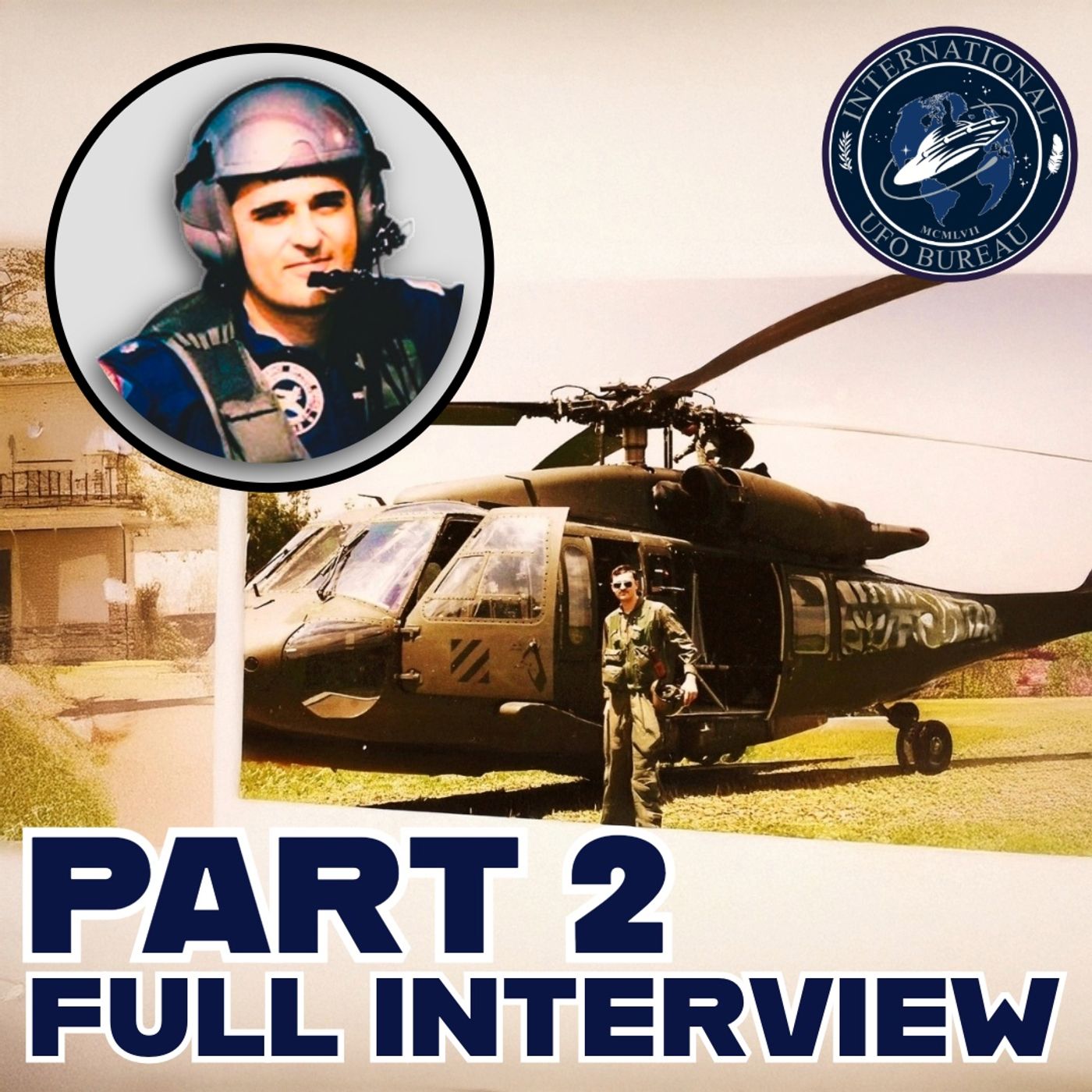
NASA Flight Surgeon Reveals Secret UFO with Air Force Insignia | Dr. Gregory Rogers Speaks Out
Dr. Rogers recounts being shown a mysterious craft bearing a U.S. Air Force emblem, an experience that challenges official narratives and raises questions about hidden aerospace technologies. With a distinguished career at NASA and the Air Force’s 45th Space Wing at Cape Canaveral , his testimony offers a rare insider’s perspective on the intersection of military operations and unidentified aerial phenomena.
This episode marks the launch of Project: Whistleblower, a new initiative aimed at unveiling concealed truths about UFOs and government secrecy. Don’t miss this exclusive interview that delves into one of the most compelling revelations in recent times.
Part 2 The FULL INTERVIEW #NASA #WHISTLEBLOWER #UFOs #totaldisclosure
LINK THREAD—https://allmylinks.com/total-disclosure
Subscribe and Watch Video episodes www.YouTube.com/@totaldisclosure/subscribe
Become a supporter of this podcast: https://www.spreaker.com/podcast/total-disclosure-podcast--5975113/support.
CONTACT TDP DIRECTLY For Collaboration, Use of Segments/clips, or any other media produced by “TDP” —[email protected]
Special Thank you to all of our PODCAST/YouTube Channel Members for your continued support, and dedication to seeking the truth, together. We can’t do this WITHOUT YOU!
-COPYRIGHT-2020-
Copyright Disclaimer: Under Section 107 of the Copyright Act 1976, allowance is made for "fair use" for purposes such as criticism, commenting, news reporting, teaching, scholarship, and research. Fair use is a use permitted by copyright statute that might otherwise be infringing. Non-profit, educational or personal use tips the balance in favor of fair use. Total Disclosure Podcast Copyright 2020 and … segments, early access to interviews, and a yearly gift autographed by yours truly!thank you in advance now, Let's explore the unknown together!
Speaker 1: And so uh when they're using experimental aircraft.
Speaker 2: When it started to move and do things as.
Speaker 1: It did, it did this and used it a little more, and then it rotated and the other way.
Speaker 2: But when I saw what was on the front, I was really shocked because it's a US Air Force, no way, the US flight.
Speaker 1: It was just above episode said that thing of Oh my goodness.
Speaker 3: No, you go on record at least say that. Welcome back to Total Disclosure. I am your host, TI, and tonight we have something extraordinary. What happens when a man entrusted with the lives of our nation's astronauts, The very chief flight surgeon for NASA desides, it's time to speak the truth. Doctor Gregory Rogers isn't just another name on a list. He's not just another military veteran. He was a guardian of human performance in the harshest environments imaginable space, from West Germany in the Cold War to Cape Canaveral at the dawn of a new era.
Speaker 3: Doctor Rogers has been at the epicenter of American aerospace medicine, but behind the Paulish dresme lies a secret for decades, he's remained silent. Found by duty by clearance fear until now. In this exclusive total disclosure episode that is brought to you in part and mainly by the International UFO Bureau, Doctor Rogers breaks ranks and steps out of the shadows to share what he's never shared publicly before, his direct experience seeing a flying saucer. Not speculation, not a story, but a first hand account from a man who's walked the corridors of NASA and looked after those who left Earth.
Speaker 3: This isn't again, just another whistleblower. This is the chief flight surgeon.
Speaker 4: And what he's about to tell us may change the way we look at reality.
Speaker 5: I occasionally think how quickly our difference is worldwide would vanish if we were facing an alien threat from outside this work. And yet I asked you it was not an alien force already among us.
Speaker 6: We must guard.
Speaker 5: Against the acquisition of unwarranted influence, whether sought or unsolved by the military industrial company. The potential or the disastrous rise or misplaced power exists.
Speaker 6: And will persist.
Speaker 2: Now I am become the drier world.
Speaker 5: In my association with Project Group, they definitely withheld information.
Speaker 2: On the essay.
Speaker 5: We're all going against Hloby Twar for the test when you're about to give us the truth, the.
Speaker 6: Whole truth and helping the truth.
Speaker 3: So help you guy?
Speaker 2: Do you believe that our government is in possession of you? Against?
Speaker 6: Absolutely?
Speaker 2: All?
Speaker 3: Right? So we're back with doctor Gregory Rogers, uh, NASA chief flight surgeon for many years, author of an amazing booked Impact. That's a lot of information, uh, and from someone who's highly credible, uh, such as yourself, you know, due to you know, the jobs you've had, the clearances of you you've held. I really want to make sure that we were able to cover everything here. So before we dive into what you've you've witnessed, can you walk us through what your role as NASA's chief flight surgeon and what kind of responsibilities and clearances came with that.
Speaker 1: Okay, Well, I was actually the chief of aerospace Medicine for the forty fifth Space Wing. Now the forty fifth Space Wing owned Cape Canaveral Air Force Station. But NASA actually is the owner of Kennedy Space Center. But we worked hand in hand for the space program. The only thing that separated us was the Banana River. If you cross the bridge, you're on Kennedy Space Center. If you cross the bridge, the other way. You're on Cape Canaveral. So I was responsible for at the time of launch, being the senior flight surgeon for the astronaut reskin Recovery team.
Speaker 1: We had these helicopters HH three Jolly Green Giants, and so I was usually on Jolly one. We had another flight surgeon on Jolly two, and then another flight surgeon on Jolly three. If anything happened on the pad or after launch or during the landing and the ash were injured, we would swoop in, pick them up, provide medical care, and then get into an appropriate hospital. So for the astronauts that that was what we did.
Speaker 3: Okay, So you've served in both Army and Air Force. You were stationed at Cape Canaveral h during that time. Did you ever encounter protocols or situations that, you know, looking back, maybe seemed unusual given the information you know that you have now.
Speaker 1: The security protocols at Cape Canaveral Air Force Station at the time now it's Cape Canaveral Space Force Base, but they were extremely tight.
Speaker 2: You know.
Speaker 1: One of the funny things that would happen is sometimes we'd have visitors who thought they were important and so like a three star general drives up to the front gate and at Cape Canaveral and says, hey, I want to see what's going on inside. I'm a three star general. And the guards are saying, well, you may be a three star general, but you do not have authorization to enter this facility, sir, You're going to have to turn around and leave. So the security measures for what we were doing on Cape Canaveral were very tight.
Speaker 3: Wow, okay, And you know, I know that you don't like to you don't like this necessarily speculate, but you know, in the UFO world, in the UFO community, there's been there's been a lot of talk about NASA and potential like esoteric rituals that were performed. I mean, if you even look at the names of the launches, you know, whether it's Artemis or Apollo or Colombi. You know, you go through all these things and there there seems to be something more to it. Did you ever did you ever wonder about any of that?
Speaker 1: Well, yes and no. You know, one thing people didn't really know about the Space Shuttle orbiters. They were not named for space objects or anything else. They were actually named after famous ships that were in the America's cup, so so Challenger, Atlantis, Columbia were originally ships or or speedboats that were in the competition, and so they actually chose those names from that. For the spacecraft, they did go largely to Greek mythology, and so Gemini there's two of them. Well that's kind of easy.
Speaker 1: But why they specifically chose mythological names as something that I heard speculated about but absolutely no official information.
Speaker 3: What was the speculation among NASA employees.
Speaker 1: Well, the names came from the people at the top. So if the people at the top had any sort of link to outer space visitors UFOs anything like that, perhaps that may be why they went back to Greek mythology. But generally speaking, I think they just wanted to use names that uh sounded like you know when when when we went to the Moon, we we even had one of the spacecraft that was named Snoopy after the cartoon series, right right, Yeah.
Speaker 3: So that that's that's also a very very good point, you know, And I just I I've always wondered because we look at people like you know, Jack Parsons and his connection to the esoteric and you know, mainly being you know, uh, the father of rocketry. And then you know Berner von Braun, who famously was brought here from Germany, you know, Nazi Germany after the win of the war, to to develop the NASA space program. And you know, you just you start to wonder if there's something other or something more to it than just names of spacecraft or where they actually you know, some sort of ritualistic, uh, way of ensuring that the program was successful, and.
Speaker 1: I know it's it's the early race for the space program was whether the Germans we had captured could beat the Germans that the Russians had captured. So they had different reasons for choosing names, and some of them were rather curious. For instance, we could have beaten the Soviets into space with Sputnik, but we had one of the Redstone rockets that Werner von Braun, who was working on that it had actually I believe, exceeded sixteen thousand miles an hour. Well, seventeen thousand miles an hour is orbital speed.
Speaker 1: So if you get to seventeen thousand miles an hour, you drop off of satellite. It stays in orbit. Right from what I heard, President Eisenhower did not like the idea of the Germans being the ones that put America in space, so he wanted the American project in Vanguard, which is owned by the Navy, to be the first ones to orbit a satellite. That they kept having setbacks. So when the Soviets launched Sputnick, he told the Vanguard people get out there and launch. Well, it blew up on the pad, so that was no good.
Speaker 1: So they went back to Werner von Braun and said, look, paint your rocket some other color. We're going to name it the Juno one because we don't want people to know that it could have launched last year. So they changed the name of the rocket to the Juno one and we launched the Explore one satellite. Now, then the Sputnik did nothing but send radio signals to say it was there. Explore one actually had scientific information and we discovered information of the Van Allen Belts of ionizing radiation circling the Earth.
Speaker 1: But we could have done it earlier, you know, Okay, paint the rocket something else, change the name of it. Now we'll go to space. So that's when we finally got to Explore one into space. Those are the kind of back room deals largely due to politics causes great problems for the space program. You know, I think you mentioned my book Impact. One of the reasons I wrote it was because the NASA managers, due to costs and launch weights, refused to send repair kits with the Ash astronauts. And so in nineteen eighty nine, nineteen ninety, ninety one, ninety two, I found this extremely disturbing.
Speaker 1: Lots of other people did too. It wasn't just me, but I decided to write a Space Shuttle novel explaining through the story we've got a huge problem. So in my story, we launch an orbiter, it becomes damaged and has a puncture through the thermal protection tiles, and so because there's no repair kit, the only way these people have a chance to come home is for us to launch an unmanned rocket that they could rendezvous with, get the repair kit, seal the hole, and then use reinforced carbon carbon to cover the external portion of it, and then come back and land.
Speaker 1: Well. Eight years later, the reinforced carbon carbon was damaged at eighty one seconds into the launch. The Columbia crew had no repair kit. Because they had no repair kit, NASA didn't do anything because even if they found a hole, what were they going to do. They had no repair kit, so they just sort of hoped that just like many other times before, we had terrible problems and they said, we'll probably make it fine, and in previous ones we did, but aren't so fortunate with that now. I think if you go back to Hoote Gibson, he has gone on the record about one of his early DoD missions and he and his crew thought they were they were going to die.
Speaker 1: And when they landed and they saw how badly the orbiter had been damaged, they said, oh, my goodness, we got to do something. But the thing is, movement of changes within the space program are extremely difficult because of all the bureaucracy. So even though I wrote my book in nineteen ninety five, I had books signing with buzz Aldron, I had a book signing with Jim Lovell Junior, the commander of Apollo thirteen. People knew about my story, but they did not do anything about it. And so eight years later we lost the Columbia because of damage to the thermal protection tile with the reinforced carbon carbon on the leading edge of the left wing, not too distant from where I had damaged my orbiter in my story.
Speaker 1: Had they actually had a repair kit and just covered that hole, the crew returns the orbiter's damage, but you can fix that and it would just be another near miss. But with no repair kit, it wasn't a near miss. It was a catastrophic failure.
Speaker 2: Yeah.
Speaker 3: So do you think now, in your in your educated and experienced opinion, why were they so ignorantly Why was NASA so so non attentive? Two set issue? If tons of employees were raising warning flags or was it a case of nobody wanted to raise the warning flag because they didn't want to lose their job.
Speaker 1: Well, there there were. There were other people besides me who raise the warning flag. But the problem is the lower level people working on the orbiter were totally out of touch with the NASA managers at the top. And at the top they're worried about the finances. If you put weight onto a Space Shuttle orbiter at the time of launch, you have to take something else off. They weren't interested in doing this, so they said, you know, we're taking a calculated risk, but we think it'll be okay. Well it was okay until it wasn't.
Speaker 1: And when it wasn't, they killed the screw and you think that this could have had that crew been able to repair this hole. You know, it's maybe like eighteen inches. You repair an eighteen inch hole and the crew doesn't die, and the orbiter survives, and then you exit on the ground.
Speaker 3: Right.
Speaker 1: I can tell you how frustrated I was when that happened.
Speaker 3: Well, I can't even imagine. And and of course you know this is where things kind of start. And you know, I just want to say, because you did bring up D O D space flights and I just wanted to get this off my chest while while we're on the topic. Because now, obviously there was the public facing space program. Do you, as a NASA, as a NASA employee in general, as a d D you know, as a as a career man, is there something to the idea that there could be a more secretive space program that is funded through black money.
Speaker 1: Well, in a certain extent, we already know that it happened. The X fifteen was a vehicle that could actually reach into physiologic space. There were members of the X fifteen crews who got their astronaut wings based on what they did with X fifteen and not as part of NASA. If you go to Kennedy Space Center. There's a wall where it shows the name of astronauts who have died. When you look at those names, you're going to see some that were never directly associated with NASA, but they were flying other experimental aircraft that had the power to reach space, even if it wasn't orbital.
Speaker 1: But that is an example. It is very easy to say, well, you know, once they started it, they also did it here or there. You know, they have an experimental aircraft or spacecraft that now sort of looks like a space shuttle. It's unmanned, but they send it up and it can stay up in space over a year. Well, no one knows what it's doing, but you know it's doing something important. So I'm not going to dismiss that as something inconsequential because there's no telling all of the implications there. We had missions where before launch we knew what was going on, but they were not going to tell the public.
Speaker 1: You know, I mentioned the Air Force Technical app Location Center. One time I deployed on what was called a constant globe mission, and so we went to the South America and we did things to check the weather. Officially, it was a w C one thirty five. So it was a weather plane, so we checked the weather in South America. But it was related to the context of what AFTACK does and so anyone who's interested can look up what AFTAC does and then you can probably sort of figure out what we were doing there.
Speaker 3: H this is and you know, I don't mean to go off on a side journey there, but the secret there's been a lot of controversy with with you know, atential secret space program because we know that there are there are Charlatans out there, and there are hoaxers out there, grifters who have perpetrated you know, a whole mythous behind the secrets pace program and even gone as far to say that NASA is you know, a huge front. So I just wanted to kind of get your your take on that before we dove into your event.
Speaker 3: Thank you, So I appreciate that. And so so to get into the event, what everyone wants to talk about. So I want to first, I want to start off. I do this with most witnesses to anything. I'd like you to bring me back. I know you spoke about it in your statement, but I want to be there. I want to be there. I want to be standing next to you. Can you describe that day in as much detail as you remember? So where where were you? How were you A approached?
Speaker 1: I was actually leaving the building. At the end of the hallway was the external door that went to my car, So I believed that I was walking down the hallway to go get in my car and drive back to Patrick Air Force Base. This guy stops me, and you know,
Speaker 1: at the time, my first inclination was I don't want to bother with whatever the guy's doing. But he was kind of insistent and said, it'll just take a few minutes. I've got to show you this thing. So I foolishly went inside with him and he locked the door, closed the loovers. As soon as he did that, I said, why are you doing that? He said, well, we need to do this, and my alarm bells were going off because I knew of no reason that I should be in that office locking the door and closing the loovers.
Speaker 1: So he sits down at the computer and he said, this will just take a few minutes, and he's doing stuff on the computer and then all of a sudden, I can see that a video is loading, and so he moved to the seat to the left, and I sat down where he was, and just about the time I sat down, lo and behold, here on the computer screen is the image of a stinking flying saucer. And yeah, it was like, what on earth are you doing? Why would you show this to me? Even if we have it, I don't have a need to know.
Speaker 1: You know, you shouldn't be showing this to me. But at the same time, I'm looking at a flying saucer, so you know, I'm so I'm sitting there thinking, man, what on earth have I gotten into? And so then he said, just just wait and you'll see what it actually does. And again I want to emphasize there was nothing on the screen that said any degree of classification, where it was located, what the time or date was. So it was just this clean screen that just happened to have a flying saucer on it. So I'm sitting there watching it, and then all of a sudden it starts doing all of the things that I described, and so, you know, I'm very surprised to see this.
Speaker 1: And then all of a sudden there's a knock on the door and this guy goes ballistic. Yeah, and so as soon as he shuts everything off and tells me not to say anything. I realize, Man, this guy had no business on earth showing that video to me. But the thing is, you can't unsee that. No, it's a flying saucer. I saw it. It was moving, it was doing stuff. But my goodness, in nineteen ninety two airline pilots F sixteen pilots, they're not going to report UFOs. So as I'm thinking about this, I thought, man, there is no way I want to touch this with a ten foot pole.
Speaker 1: Well there's something I just decided I'm getting out of here.
Speaker 3: Well there's one. There's one. I want to go into the characteristics of what you're seeing on the video, because you mentioned one detail that I don't think I have ever heard. Now, I've heard a lot of UFO stories. I've heard a lot of encounter stories, and you know, someone will always bring up the point, you know, it didn't have an American flag on it. Uh, it didn't have a Russian flag on it. It didn't have a Chinese flag on it. You know, So they're they're they're very unclear on what you know, Uh, whether it's it's from up there or whether it's you know, our own technology.
Speaker 3: What you saw did have the US Air Force emblem on it, right.
Speaker 1: Yeah, yeah, that that was as shocking as seen the vehicle itself. Now, then it is my firm belief, you know, when when we're testing vehicles and things, we will put like rectangles in mar so that as the aircraft is moving, we can make sure that the cameras that are tracking it are seeing what's going on. So the black triangles on this completely white ship seemed totally Yeah, that seemed totally consistent to me with the testbed program somebody, you know, I don't know if it had flown before or this was the first time they were testing it, but this this was a prototype vehicle.
Speaker 1: Now, then, one of the things about that is sometimes defense contractors will be given money and projects to do, and they will operate these things outside of the official US Air Forces they're developing it. You know, you go back, I think it was Northrope that was developing the F twenty. They were not authorized to spend the money to develop the F twenty, but they got Chuck Yeager to promote it and they did all of this stuff. Now, then that was done within the confines of that defense contractor.
Speaker 1: Now, then if there was a defense contractor or several defense contractors. You know,
Speaker 1: in the nineties they went from NASA operating the Space Shuttle to the United Space Alliance, and so they said, well, we're just going to smash these contractors together and we'll let all of them do this. So the United Space Alliance was formed. If there was some sort of a contractor of this sort, it might not have even been an Air Force vehicle, but it could have been in the process of being designed and tested so that it would eventually be put into the Air Force inventory. So I cannot say that even though it said US Air Force, that it was actually a US Air Force inventory vehicle.
Speaker 3: Right, And again I do want to go into some of the characteristics because you said that it pitches, it almost turns, and doesn't it's able to essentially control its angle of attack without or maintaining its angle of attack. This sounds very similar to you know, when you watched the gimbal video that came out with the twenty seventeen article that was filmed in I believe it was twenty seventeen. It was filmed twenty fourteen when it was filmed, and it rotates and they say it in the video it's rotating.
Speaker 3: It's rotating. Now was this craft and that video could you draw any conclusions to how it was moving?
Speaker 1: What the gimbal video vehicle was caught on film doing was the very same kind of thing that I saw that got me so interested with the forty five degree angle of attack. For instance, if a helicopter is flying, there's a rotor disc. Now, then the rotor disc points straight down at a ninety degree angle. If your level, it stays where it's at. But if you change the angle of attack for the rotor disc, the force vector is going to alter, and so you're going to have a downward force vector, but you're also going to have a forward force vector.
Speaker 1: So as soon as you change the angle of attack of the rotor disc that that helicopters moving, it's going to follow the force vector that the rotor disc creates. In a fixed wing, you can have thrust vectoring so that you do different things, but
Speaker 1: the thrust vector of an aircraft is going to decide what it does. And so for traditional aircraft, if you go to a forty five degree angle, the thrust is generally coming out of the act of the vehicle. From the engines. So the thrust vector is going to be straightforward, so it's going to move directly opposite the thrust vector. This thing did not appear to have a thrust vector, and as it was moving, the reason it was staying in place was because it was not demonstrating a thrust vector that would cause it to move.
Speaker 1: So something else was going on.
Speaker 3: So this was not using any any propulsion technology that you were aware of in our inventory that's visible.
Speaker 1: I'm not going to answer that question. I mentioned some electromagnetic dischargers, but also one of the things was that there was sort of a mass coming up and you had these umbilicals. I don't know what's in the umbilicals. It could have been control elements, you know, electronics. It could also been, you know, a massive electrical surge so that the power plant that was on the vehicle may not have been satisfactory to perform all that it was doing. So they were feeding additional electricity so that the vehicle could do things.
Speaker 1: But are you I would be totally guessing, and because of the nature of what those guesses would be, I'm just I do not want to make those guests.
Speaker 3: Well, you know, it's it's kind of funny. And I totally respect that.
Speaker 1: I really do.
Speaker 3: I anytime anything like that occurs, and you do because I don't think I said that in the beginning. You know, feel free to decline to comment. But you know, I'm sure you know a guy named T. Townsend Brown, you know, in the in the fifties, all the magazines, all the scientists or propulsion experts, and you know, at the time, they didn't they weren't the aerospace. It wasn't the aerospace industry. There were aircraft companies and all the aircraft companies. We're talking about how the g engines were coming and then all of a sudden, the it just goes you know, it just goes dark.
Speaker 3: It just it disappears. So, you know a lot of people have suspected that we did crack anti gravity at least you know, by nineteen fifty five, and that it probably went underground, it went to the black programs. And you know a lot of people have talked about the B two and how that can be a reference to the Buyfield Brown, you know, Buyfield Brown effect, and you know, charging each side of the stealth fighter, uh, you know, positive or negative to increase its abilities, And you know, I think that's you know, what you're discussing.
Speaker 3: I don't want to put words in your mouth. Of course you you did not say that, but I mean it kind of sounds like it adds up with what the the lore has told us, or at least the it's fitting your story fits into the larger puzzle. And that's what interests me. It really does.
Speaker 1: My response for something disappearing like that is one of two things. Either it proved to not work or it proved to work very effectively. Now then if it proves not to work, everybody's going to dump it and they're going to try something else. If it actually works, then the capabilities of what works you're going to start expanding. You're going to use them on all kinds of things. Once we got microchips, the Aird air missiles that the United States developed were far superior to what had been available before.
Speaker 1: And every time we developed new technology, we're going to use it. Back in the fifties, we were in the Cold War. If we if we had something that was so extraordinary that it could change the balance of power, I don't believe we would have ignored it. We would have used that somewhere. You know. It's like sometimes people ask me, do you believe there's a conspiracy with pharmaceutical companies to not let people know that we've actually cured cancer. Well, my response to that is, you got to be kidding me.
Speaker 1: Every doctor who does research is wants to be famous. Every time a doctor do you know, doctor Alsheimer just discovered what was going on with a neighbor of his, So what do you do? You name it after yourself? These people, you know, if they have a chance to name something after themselves, they have a chance to get a Nobel Prize. You think they're going to keep that quiet because somebody's afraid of many. No,
Speaker 1: if we have anything like that, whenever it is brought forward, those are the people getting the Nobel Prizes. If we had something that would absolutely cure cancer, whatever doctors were on the research, they would be jumping up and down, they would be on all the talk shows. They would be doing everything they could to get that Nobel prize. So when people ask me questions like that, this is how I get that.
Speaker 3: Yeah, I totally get that. So okay, back to the event, and I want to ask one one more question about the look of the craft. You had said to me in a private converse or in a phone call that it was sixty percent you know, top and forty sent bottom shaped shaped like a disc. Uh. You know you've obviously drawn that here in your in the best ability that you can.
Speaker 6: Uh.
Speaker 3: We don't trust me. That's that's better than I could do.
Speaker 6: Uh.
Speaker 3: So I appreciate it. What you know, there was a there was a person who claimed to work at Area fifty one and who told the world in nineteen eighty nine that what that he saw something that that was shaped similarly. I'm not I don't want to say any names. I don't want to go specifics here.
Speaker 1: Everybody everybody knows who it is that one thing, one thing, you know, I can't speak to, of course, of anything he said. However, when I saw what was called the sports model, when I saw that, I thought, man, that that looks, you know, pretty similar to what I saw. And I saw it in nineteen ninety two, so there would be only three years difference. I don't know if it would be the same type of vehicle, whether someone else was trying to do a similar sort of thing, but it was. It was very similar to what was called the Sports model.
Speaker 3: And that's that's that's what I wanted to figure out, and I don't because I don't like to. I don't want to tie anyone's story to anyone else's. Of course, I just find it odd that in nineteen eighty nine, you know, in that timeframe, that story comes out, and then in ninety two and he had in you know, when he did give his testimony to George Knapp, in that silhouetted version, he had said that these were in hangars. You know, they were in hangars, and what you saw was in a hangar and it was undisclosed, you know, an undisclosed hangar.
Speaker 3: There was no time or insignia that would have told you when it occurred or when it was filmed. You know, could it have been something similar? And I think the answer to it is, you know, obviously something that is going to speculation, But it is in that same time frame that you're seeing both, and I find out to be peculiar.
Speaker 1: If I was asked the question, did you see any close similarities between this drawing and what I saw, my answer would be yes, I see some significant similarities.
Speaker 3: Well yeah, and that's that's that's what I was asking. So I really do appreciate, appreciate you going into detail about that. Now, did you see any flight surfaces, any rivets, any seams, anything.
Speaker 2: It was.
Speaker 1: Not only was there nothing of that sort, but even everything was extremely smooth. You know, even where the little top met the main aircraft, it was blended. If you think about the difference of the F one seventeen, At the time they made the F one seventeen, they didn't have very good computers, so they had to make lots of flat surface. By the time they made the F twenty two, there's no flat surfaces. Everything is very smooth and blended. Because anytime you have a corner or straight edge, you're going to increase the radar signature.
Speaker 1: So if I had to say that the surface looked either like the F one seventeen or the F twenty two, I would say absolutely, it looks more like that F twenty two outer surface than anything that F one seventeen would.
Speaker 3: Look like wow wow. So you know, to paint a picture almost like something that was three printed in a hole on a mass scale.
Speaker 1: You you look at the history. The F one seventeen started out in the nineteen seventies and then came out operational in the nineteen eighties. All of the pre production work and research for the F twenty two was being done in the nineteen nineties, and they already had computers that could figure out, okay, if we blend the wing here, if we blend the tail here, here's as long as we blend it in this way, we're going to significantly decrease the radar cross section. That is the kind of thing I saw on the vehicle I witnessed in ninety.
Speaker 3: Two, absolutely amazing.
Speaker 1: And there were no straight no straight surfaces, no corners, no rivets, there was nothing. If I was thinking, what's going to be the radar cross section of this thing, I would think, man, the radar cross section is going to be low, so you.
Speaker 3: Know, very low chances of it being picked up, high chances of stealth available stealth capability.
Speaker 1: Well, you would also have to do radar absorbent material and a bunch of other kinds of things, but just from the appearance of the surface, it would be susceptible to that type of engineering.
Speaker 3: And when again, so after you watch, after your see the video, you you turn to the person that showed you and asked something along the lines of you know, is this ours? Where do we get this? And he motions upward as in it came from either the gods or.
Speaker 1: He pointed up as though he's indicating space, and he says, we got it from then, so that is some intelligent source.
Speaker 1: At that moment, I wasn't really interested in they with any additional information because he had already screwed me over.
Speaker 3: Right right, And that's a you know that that is an interesting aspect to this thing, because you know, you didn't ask to see this, and you know, I I, I don't even want to ask this, but I think I have to. Is there any chance that this was done to you on purpose to have you an eventual some sort of disinformation campaign, some some some way to try to trick you, to discredit you. Is there is there any chance that that could be what's at play?
Speaker 1: This is going to sound a little bit personal, but my impression of the guy who is showing me this was that he was shorter than me, a little bit dumpier, and with just sort of the way he acted, I think he was probably someone who is not necessarily well liked by his co workers, especially when I saw the response of those people to him, when they came into a locker room and he's there, and the way he responded, I think he probably had some ego issues and as such, if you were going to pick someone to be responsible for transmitting information, this was not the person you would choose.
Speaker 3: Well, that actually raises multiple questions now because you know he so it sounds like maybe he wanted to show off a little bit.
Speaker 1: Exactly like my total impression was he wanted to show off to me. Yeah, I said, I have something that even you have never seen. As soon as he said that, I'm thinking, oh, man, what's he what's he going to do?
Speaker 3: Right? And and and and Honestly, I think people need to remember that your first I mean, you're you're you're a patriot the way I see it, because you know, the first thing that's going through your mind is how do I report this? And you ultimately come to the conclusion that you can't because I mean, the reprisal rate was at one hundred percent. You know, you probably fly a desk for the rest of your life, and you know you have to go through major psycho vals and and and you know every single person involved would have been, you know, in serious issue, serious trouble.
Speaker 3: Do you ever regret not reporting it.
Speaker 1: No interesting. If I had reported it, it would have caused a whole chain of events for I have to report to these people. They will have to report it to these people. I would not have wanted to go to myke colonel who was my raider, to say whether or not I'm doing a good job every year, and he always gave me good, excellent ratings for the job that I did. I did not want to go to him and say, hey, sir, guess what I just saw flying saucer right you got to beginning. I wasn't going to do that.
Speaker 3: No, this is the person, you know. I just want to show a couple of pictures of you.
Speaker 7: You know.
Speaker 1: Okay, this was my flag Surgeon's office out at Launch Complex thirty nine A. I'm in the backseat here, but this is a NASSA T thirty eight at the Shuttle Landing facility. So that's me when I was in West Germany and we were getting ready for UH sixty flight with the third Infantry Division. So you can see the third i D markings on it.
Speaker 3: And then here I'm going to show there will be super imposed, but there's a picture with you and buzz Aldron at a book signing. So I just want to and I show these things because I do want to show people that you absolutely are who you say you are. Anybody, I think we'll be able to look you up and see your credentials you provided them to me. You know what, what what made you decide to do this?
Speaker 1: This picture that I have on the wall back here, it's not really a picture, but it was given to me at the time that I left the Space program, and so it says Space Shuttle Support Team as pictures Shuttle operations. But then the flag below the flag, it says flag flown in space. So when they presented it to me, they said that this particular flag they thought had flown on STS sixty three with Atlantis for at least three point seven million nautical miles.
Speaker 2: Wow.
Speaker 1: So this flag was flown in space and then presented to me, So they wow. Do things like that very often unless you've got a reason that you deserve it well.
Speaker 3: And that's another thing about your character, my friend is and that's what I want to convey to people, is that you've kept this secret for how many years now, almost thirty.
Speaker 1: Thirty thirty three years. I didn't even see my wife for fifteen years, and when I did, she said, well, why are you telling me this now?
Speaker 7: Well, I have a told anybody else. You know, you're my wife, and you know, yeah, yeah, you know.
Speaker 1: But she didn't appreciate the fact that I told her fifteen years later.
Speaker 3: Right, And those things, you know, those kind of secrets, they they'll eat away at you and over the years. I do want to ask that because I don't think people really take this into consideration too much. You know, when you were.
Speaker 8: Seeing things on the news, or when you'd be at the grocery in a supermarket checkout and there would be a tabloid you know there about some crazy alien conspiracy.
Speaker 3: I mean, did it ever eat you up a little bit? That you know what you saw is an indication and just the fact that you have a knowing that other people around you just simply don't.
Speaker 1: Generally speaking, No, that really didn't affect me. I've done a lot of things down through the years. I was an ear doctor for six years. I had friends of mine back in the military who died for this country.
Speaker 1: One particular situation comes to mind, and we had just had a crew that had flown a perfect mission on gunnery, and so it was the first time that anyone had a perfect score for like four months. When they come back to the FARP, the forward arming and refueling point, the pilot who had done the shooting was actually one of our safety officers. He gets out of the aircraft, he's age one Cobra. He walks to the tail of the aircraft because he has to clear the aircraft since they had used live ammunition.
Speaker 1: When he gets to the back of the aircraft, he takes a ninety degree turn and walks right into the tail rotor of the helicopter. Took the top of his head off. Pieces are flying everywhere. The pilot that was at the controls the foot pedals control the tail rotor, and he could feel this sudden jerk on the foot pedals and as he looked, everyone was running behind him. He just got a sick feeling and I believe he threw up and he ended up having a tremendous amount of problems. Well, there were also eighteen or nineteen people who had witnessed this, so I wasn't there, but bring in the flight surgeon.
Speaker 1: You know, there's going to be things I have to do to get blood and urine samples for the accident investigation, and then I'm going to have to process his body for an autopsy, and I had to go out. I found one piece of his skull about a one hundred and thirty feet in front of the the aircraft, so I had to recover it and make sure the photographer got a picture of it and all this, and at the same time, I'm having to deal with all of these witnesses who are just breaking down all over and it was just an absolutely terrible time.
Speaker 1: Well, I didn't get back to my we were because we were at gunnery. We were actually intense A GP medium was what we had. And as I came and sat down, I was just totally exhausted. But one of my medics said, Captain Rogers, how bad was it? And I said, it's as bad as you could imagine. And so I'm sitting here talking to her a little bit, and she looks over at my boot and she says, doctor Rogers, I don't know how to tell you this, but I think part of Ronnie's brain. Oh my god. So I looked down and sure enough, there's brain tissue on my boot.
Speaker 1: So I reached down and pick it up and I throw it into this pop billy stove that we had for heat, and then to me. The very next moment, there was hand on my shoulder and it was my staff sergeant in C I see, and he says, come on, doc, we got to get over to the third attack. And I said, what are you talking about. It's the middle of the nine and I said, no, it's not, it's five fifty. We need to get over there. What I ended up tracking down the medic who had been talking to me, and I said, do you remember talking to me last night when I got back And she said yes, sir.
Speaker 1: And I said, do you remember telling me that part of the brain was on my boot and I threw it in the pop belly stove And she said yes, sir. And I said what did I do next? And she said, well, I was trying to talk to you, but you weren't responding. So I just got back in my sleeping bag and went to sleep. I lost five hours from absolutely nowhere because of the trauma of all this thing. So when I look back at all the different things I've done, I've got lots of things to think about. I can't just imagine something has happened.
Speaker 1: And you've got a really injured person who happens to live just a few doors from your house, and he's dying. You're doing everything you can to saving, but you can't saving, and he dies right under your hands.
Speaker 3: Yeah, my god.
Speaker 1: I've got lots and lots of stories. So if if I'm going to be thinking of stuff, I'm going to think about that. During Hurricane Andrew, we went went down and rescued people. We got credited with twenty three lives saved. I hardly remember any of it because I was so busy with it. But we lost one girl. She was sixteen, and she had no heartbeat. Stuff had collapsed on her, got the heartbeat going, she was breathing again, and so we're booking it to Jackson Memorial Hospital so that we can get her into surgery.
Speaker 1: But as I'm seeing her, I noticed as there was fluid coming out of her left ear. So I took a four by four cotton four by four and I touched it to the fluid well Cerebros. Spinal fluid and water have different densities, and so if water is there, it will absorb in cotton to a certain length. But if you have cerebro spinal fluid. It will spread in the cotton, but not as far. And so if you see a double ring, you know, okay, this is water, this is cerebral spinal fluid. She's got a base or skull fracture.
Speaker 1: I've got her breathing, I've got a heartbeat going. But this is really bad. So we dropped her off and the next day it was a madhouse. In the hallways, they didn't have any rooms, so they would just use post it notes and stick it up. And so this spot in the hallway was the room for that patient. And so all up and down all of the halls, the rooms were just sticky notes on the wall, and you had patients in every conceivable location. Well, I took another victim to the hospital the next day, and I saw one of the nurses that had taken care of this girl, and I said, did they end up doing any cranial surgery on her?
Speaker 1: And she said, oh no, no, she died two hours later. And I said, oh, my goodness. Nothing. The people I saved, you know, we were credited with twenty three I hardly remember any of them, but the patients I have lost stick in my mind for the rest of my life.
Speaker 3: Of course, of course, right naturally. I mean I couldn't even I mean, thank you for your service to this, you know. And I think it goes a long way. It goes a long way with people to hear your things like that, because you're not just someone who's coming out and saying, you know, I saw something, I saw something, and you know I want this or that. You know, I want a book deal or that. No, you just want to do something for the greater good. And I think at the end of the day, you know, we'll all be judged for our for our actions.
Speaker 3: And I think I think, my friend, I think you've I think you've done far more, far more good.
Speaker 1: There's one thing I want to say that I have probably said ten thousand times in my lifetime. When my friends died in the military, they did not put a Democratic flag on their coffin. They did not put a Republican flag on their coffin. They put an American flag on that coffin because that person gave everything they had to this country. And when I see people, especially elected officials, that are more loyal to their party than they are the United States of America, that drives me crazy. Yes, and have people dying giving their lives for this country, and we have other people that manipulate money and the government and political power just for the sake of their political party.
Speaker 1: So, you know, independent voter, and I just find the political infighting incredibly ridiculous.
Speaker 3: It's also redundant.
Speaker 1: We should we should have we should have people in Congress who are Americans first. They should do whatever it takes to be good for the United States. George Washington did not want to be president, but they said, look, this constitution thing isn't going to work unless your president. At the end of four years, he said, I'm finally going to go home, and they said, you can't. We've got so many problems. And so he had given his entire adult life to this country. But he said, okay, I'll be president for four more years, but I'd a lot rather go back to Mount Vernon and let everyone forget me.
Speaker 1: But he didn't do that. That's what our founding fathers have done. The military personnel who are so superior, so dedicated to this country, will give their lives. And there were many times that I came close to dying.
Speaker 1: I would not have wanted anything but an American flag on my coffin. People, stop doing all this political garbage and try being an American for a difference.
Speaker 3: Yes, I couldn't. I could not agree more with you, honestly, And I want to get into something here because I know we discussed this in our preliminary phone conversation. Uh what what would you say to people that are going to be skeptical of your experience in the sense that maybe you don't have you know, obviously they're you know that in the comments and people write articles and say it's just another it's just another story, it's just another there's no evidence to support it. What would you say to people like that?
Speaker 1: First of all, I have no evidence, But secondly, I couldn't have gained evidence at the time. I carried a pager because we didn't have cell phones. I had to leave the pager at the security office at the front door. Even if I had an iPhone, I could not have taken it in there. If I had the iPhone, I could not have taken a photo in that area without permission. So you know, I could sit there and get some crayons and draw something, but there was zero chance I was going to get any evidence because I was in a classified area.
Speaker 1: You can't take cell phones. I've done a cell phone, but I had to leave my pager at the front. Exactly how could I have possibly gotten any evidence of this?
Speaker 3: Yeah, and I've been in US gift uh.
Speaker 2: You know.
Speaker 3: And for anyone who doesn't realize, uh, these I mean these clean rooms, these these secure facilities. Uh, I mean they're designed most of the time too to suppress any you know, signals, and and you know, you have to give up your phone, You have to give up anything that sends or receives a signal, even if it's an Apple Watch, you cannot have it in there, no recording devices when they bring you into these places. They ensure privacy and secrecy.
Speaker 1: Uh well, operational security even goes beyond that. Let's say that you're in a room and it is an absolutely secure room, and you have two workers there. If one of the people is talking to another person in the classified location and they are talking about Project A, if the phone rings for the other person and he picks it up, he cannot hold the conversation in the vicinity to where the person A is discussing another security issue. So one of them's going to have to hang up and call back later because they cannot both be discussing separate types of secure information because the person on the other end could hear the other person speaking.
Speaker 1: So when you get into operational security, it's a lot deeper than what most people can even possibly comprehend.
Speaker 3: Yes, I couldn't. Yeah, I couldn't have said it better myself. So and that goes to show you that you know, one of our problems scientifically, I think, and with breakthroughs I do think, is the stove piping of information. It's the compartment compartmentalization that is that has ultimately been built in to the infrastructure of our scientific advancement, you know, through d D contracts or other government contracts. And you know, Eisenhower obviously warned us about the military industrial complex for several different reasons, but I think one of them was that we would lose sight of what's important, and you know that the we'd become a very militaristic, militaristic society or a police state with one of the things, I think I would be crucified if I didn't ask you this.
Speaker 3: Did so many people in this community would crucify me if I didn't at least ask you a couple basic You know, we.
Speaker 1: Don't want you harmed, so go ahead and ask it.
Speaker 3: Well, there there are these you know, these questions. So astronauts have obviously spoken out and said that they have seen things in space, whether it's lights, discs, whether it's orbs, this or that. I I would be remiss if I didn't ask you, have you heard those same stories and given what you've seen, you know, is there do you think that it's possible.
Speaker 1: I have heard those stories, and I've heard the stories from people that I consider absolutely reliable. The only problem is, just like me in ninety two, who's who's going to turn around and talk about this? You know, if this is your flight, first flight into space and you mentioned something like that, it's also your last flight in space. Yes, if if you say something, the concern is okay, they've just removed you from the astronaut core. Most of the astronauts do not get paid a whole lot while they're astronauts, but when they retire, they get hired by all these big corporations because they say, oh well, we want astronaut X on our board of directors.
Speaker 1: And whenever somebody comes to visit, they trot out their astronaut and do all of this stuff. You do something like that and report something, nobody's going to want you.
Speaker 3: That is a sad reality. It is a sad reality. And you know, I think from from the landing on.
Speaker 2: The Moon.
Speaker 3: To you know, just International Space Station work, people have reported. You know, they've at least come forward in recent years because you know, I think the stigma is fading away a little bit. You know, the Navy has put in place protocols for people to report, but there is still that stigma element to it that people have signed to it. You know, there are reporting mechanisms now, but people are still less likely to report something because of the stigma that people impose upon it. So why are you coming forward now of all time?
Speaker 1: Because I've just retired from the Department of Defense and I don't have to worry about any promotions or bonuses or anything of that sort because I'm out. However, I am still very concerned that for me, my family, my grandkids,
Speaker 1: there could be people out there who are going to go to extreme links to harasses. I really hate to think that anybody would do anything to any member of my family, But you can't put anything beyond anyone these days.
Speaker 3: So so you are aware that they're you know, there there are you're taking a chance by coming forward, and that there could be repercussions, and you know, I think that, you know, I think that's a sad thing because I know a lot of people are going to embrace what you're saying, and they're going to look at you for who you are, for who you've proven yourself to be. But again, there's always going to be those people who they're just kind of stuck in that box and they don't want to pick their head up and realize that anything else is possible or that something else may be going on they can't explain, because God forbid, they can't explain it.
Speaker 3: That frightens them the most.
Speaker 1: Yeah, Well, there are people that we rescued from the search and rescue missions out this one time this but with five people sunk one hundred and thirty five miles off shore, we had to get in our helicopters hook up with the C one tanker to get out there because we could not hover with the fuel load that we took off with, So we had to go pick up these people then aerial refuel because if we don't do the area refuel We're not going to get back to land. The people we rescued appreciated what we did.
Speaker 1: However,
Speaker 1: of the people on this planet have never heard of what happened, and so you know, most people have no idea who I am. And I am just really going to be concerned that if I'm at a restaurant, somebody's going to say, hey, that's the flying saucer guy, and that's all I am.
Speaker 3: Well, you know, I think again, I I I am generally I'm going to be generally optimistic about this and say, I think that people are going to receive your testimony. You did another interview with Josh Boswell and that will have come out by the time this comes out as well. So I know you don't want to do a ton of interviews and you want to get things off the record with as few people as possible. I think that goes a long way to say, you know again, you're not looking for you know money, You're not asking for money.
Speaker 3: The International UFO Bureau has been your outlet that facilitated all of this, you know.
Speaker 1: And I really want to bring that up. Mandy top Fest is the director, Terry is running everything. I just got through talking to her five times yesterday. But the International UFO Bureau in Oklahoma City was actually founded back in the fifties that this was one of the earliest UFO or organizations, and Jimmy Carter reported his UFO he wanted a place he could trust, and he wasn't president at the time, but Jimmy Carter trusted the International UFO Bureau to take his report and handle it in a proper fashion.
Speaker 1: So these are the kind of things that as we're sort of expanding the International UFO Bureau that we really want to make clear we are not just taking people off the street and doing stuff. We are taking specialists in different kinds of fields, some of them in information technology, we're doing some with like me, military or technology backgrounds. And when you look at the people that are now part of it, and I'm looking at one of them on the other side of the screen here, yes, these are extremely professional people.
Speaker 1: This is not being handled in a lackadaisical manner. It is not being treated as you know, just some story. The stuff we're doing will make a difference. So anyone who is not paid attention to the International UFO Bureau, they certainly need to do that, and there's no better time than now. But yeah, the Bureau is going to make a difference.
Speaker 3: And what would you say to any other whistleblower of any sort, you know, if they if they had an experience, or if they have any information that they wanted to share with the public. Given your experience, would the International UFL Bureau be capable of handling that.
Speaker 1: Yes they would. However, everything about this ninety two experience
Speaker 1: is just now being revealed, so I can't tell you what the six month repercussions are going to be because it's going to take six months for me to find that out. So I would encourage people to tell the stories that they have. You know, when I was a flight surgeon, we had multiple aircraft miss apps and so we would always look for every witness who saw anything about that aircraft misapp and we want to get their report because one person might until one little detail that becomes very important, and then someone else has a different detail and you know, maybe they're not very accurate about this, but they tell us this one thing and as soon as we hear that, we say, oh my goodness.
Speaker 1: You know, you know, people these days, because of what happened in New York, they're asking about mass bumping. Well, mass bumping originated back in Vietnam when the Hueys were first being used, so that they were crashing and they didn't know why, so they ended up having to put special cushions on the dual roator to prevent mass bumping. But if you don't pay attention, you still lose a helicopter and crew right right.
Speaker 3: And you know we talked earlier about your book Impact, and you know, you tell that story, you know, it's almost like you were the muse was working through you and you were channeling something because you know the story you told, you know almost you know, it almost happens. You know, it does happen a few years later, and other people have described that.
Speaker 1: I have heard the story that, you know, I've not done research on it, but somebody, sometime or another I heard that in like nineteen or eighteen ninety seven, somebody wrote a novel about a ship on its maiden voyage going from England to the United States. It hits an iceberg and sinks, and supposedly the name of the ship was the Titan. And then oh and then in nineteen ten twelve, the Titanic does exactly what the guy wrote in the book. Well, I hate to say this, but what I predicted would happen.
Speaker 1: If you had damage to the thermal protection system and tried to land anyway and tried to go through entry without protecting the thermal protection system, You're going to die. And eight years later, the crew of Colombia was lost because they did not have a repair kit so that they could return to Earth in a safe manner. And that's a tragedy. Oh my goodness, it's such a tragedy. But you know when that happened, it just broke my heart. I mean, man, I told you that.
Speaker 3: It right, it's almost worse. It's yeah, it's almost worse in your case, because you know you did. It's it's almost like I said, you know, cursed with information, and you know the could haves the wood ofs and the did not. You know, those will, those will get away at you. And and you know, I'm sure, I'm sure you know you have to come to grips with it some some way, and and you have to some degree. But there's still that that inkling of like, you know, I feel like we could have done more. We could have done more, and I really want to thank you for having the courage to, you know, come forward and tell what you saw.
Speaker 3: I think it is a piece in a larger puzzle that we continue to try to understand. It's something that you know, we're not We're not dealing with with something that's simple here. Uh, these phenomena are are among the most complex. These questions are complex.
Speaker 1: And they're very old. I mean, go back in the Bible, Elijah and Elisha are walking through Jericho and the sons of the prophets come out to Elisia and saying, hey, don't you know that your boss is going to be taken up to heaven today. Well, he says, you know, yeah, I know, don't bring it up. So they cross the Jordan River and on the other side, you know, it's it's like, I hate to say it like this, but I'm going to anyway.
Speaker 2: You know, he.
Speaker 1: Went through the check in process, he put his luggage out there, he went to gate number one. This fiery chariot spacecraft comes down and lands, He gets on, his luggage, gets on, and then they take off. Now, then, at the time, they had no word for rocket. The fastest thing they knew was a chariot. But this fiery chariot with smoke takes off and leaves. Well, if you took some of those very people out to a space Shuttle launch when I was doing that, and they watched these seven people in these funny orange suits climb onto the space shuttle, and they don't know what a space shuttle is.
Speaker 1: And then all of a sudden they watch and this tremendous roar comes out, and flames and smoke are coming up, and you see these people go up into space. They would have no words to describe what they had seen. And so when we look at this fiery chariot that took Elijah to Heaven into space, how do we you know what that fiery chirt was. It could have been a piece of technology that we now understand that those people wouldn't have wouldn't have known. If I took an iPhone back to ancient Egypt and I took pictures of people and I did all this stuff, you can do.
Speaker 1: You know, somebody is five miles away and I talked to him on the iPhone. They would think I was a god that'd be worshiping me, or think that I'm a devil and put me to death right, But it's technology right, and and.
Speaker 3: You know, given I guess to, I want to get your take on that because it is kind of interesting. It's always interested me. You know, you talked about earlier, you know, the how they named the ships in Atlantis, and uh, do you believe that there? You know that there could possibly have been a more advanced civilization that you know existed pre ice pre the last Ice Age, and that you know, that's who may be being referenced in a lot of these you know, stories of antiquity and back even further of this civilization that seems to be global and to have godlike powers.
Speaker 3: Could that have been misidentified technology?
Speaker 1: Well? The one thing I would say is when you look at the archaeology, where are the remnants of any of this thing? If we have a seven forty seven crash, they'll go out in the field and they'll try to pick up everything that's there. But you could go back five years later and and a little piece of wire that was there and it's copper and it's got a coating on it because it was part of an aircraft. If you had that kind of technology, there should be that sort of residue that's out there. But I want you to think about something else.
Speaker 1: Our solar system is four point six billion years old. If there's you know,
Speaker 1: and as the star Antari's that has solar system with
Speaker 1: say two planets that actually developed intelligent life, but they did that one hundred thousand years before us. Look at the technology difference between now and one thousand years ago. If you're talking about one hundred thousand years in the future in those other planets, in other solar systems, they could be so far ahead of us that they're they're watching us just to make sure we don't kill ourselves, but they're not necessarily going to intervene a lot. You know who's a Star Trek fan. You know the prime directive you don't alter the development of culture on rather primitive planets.
Speaker 3: Yeah, you don't play god.
Speaker 1: Yeah, according to someone who was from a planet one hundred thousand years ahead of us, we would look primitive absolutely. And then and then all of a sudden, a nuclear weapon goes off. Well, this alerts everybody. Well, when did the biggest part of the UFO phenomenon start? Once we set off nuclear weapons? And so that's you know, there could be early warning systems that you know, maybe they can monitor gravitational waves that we can't. Maybe they've actually discovered a graviton with a plus two rotation boson.
Speaker 1: There is no telling what they might know that we don't know, and so us trying to figure that out. You know, I heard of some islands in the South Pacific during World War Two. All of a sudden, the Navy lands, and we have airplanes, and we the cargo cults, and then all of a sudden, two years later, everybody leaves, and you know, some of these primitive islanders started building what looked to be airplanes as best they could make it, and they thought the gods had visited them. It wasn't the gods, you know, it was the Navy and the Air Force, but it was beyond their capability to comprehend.
Speaker 3: Yeah. So that's the classic cargo cult story. I love that one because it does give you, It gives you like a modern day case study into what happens when you know, we would call superior civilization meets more primitive civilization, and.
Speaker 1: We have actual evidence. You know, people went back there and they found this is the evidence of the thought process of these humans. They thought they met gods. Yeah, no, they were Americans, but not gods.
Speaker 3: Yes, And that's that's a great you know, that's a that's a great point. That's a great story, Doctor Gregory Rogers. I thank you so much. This is only going to be I think part one. I think we're going to do try to do it part two, and we're going to try to do that. I would like to do it in person. So before I let you go, what what do you hope that people understand most from you coming forward? What do you hope to get from this? What like from people?
Speaker 1: I hope we beg I hope we begin to consider the fact that, you know, there are tiny little problems that we make into major mohills and then all of a sudden something happens. You know, there were people in villages that were fighting each other in Poland, and then on September first, nineteen thirty nine, the Germans invade. Well, the arguments they were having with their neighbors are nothing compared to the fact that panzers are rolling through their village. We don't always have a good perspective on what the most important things in our lives should be.
Speaker 3: That is that is wonderful, that that's truly truly wonderful. Where can people uh, where can people find out more about your story or you know, more about you? Can they buy the book Impact on Amazon?
Speaker 1: Oh? Yeah, you know Amazon? You can contact the company that makes it, Austin mcaulay. But you know it should be on Barnes and Noble or or what.
Speaker 3: Yeah, okay, great, Yeah, but I think it's a wonderful story.
Speaker 1: Well, I wanted to be. I wanted it to be very educational. When people get through with my story, they're going to say, man, I had no idea the space program was this complex.
Speaker 3: Yes, and that's a it's a super I think it's super important to highlight that it's not you know, it's this base program. But ultimately there's there's politics involved, there's there's there's so many components, there's so many working pieces and moving pieces that you know, one decision doesn't get made without seven to eight people, you know, agreeing or disagreeing. So, you know, for everything that you've done, for everything that you've done for your country, I want to say thank you for your testimony as well.
Speaker 3: And if given an opportunity, uh, would you tell would you speak under oath?
Speaker 1: Sure?
Speaker 3: Okay, Well, with that being said, everybody watch out for part two. UH. The International UFO Bureau will definitely be announcing that as well as you know. If you want to stay up to date with the story, International UFO Bureau, all the links are in the description below.
Speaker 2: UH.
Speaker 3: This has mainly been brought to you by the Internet Salophone Bureau in partnership with total disclosure and like I said, and Mindy like Mindy teufest uh the leader of the bureau. So with that being said, we will catch you next time. Keep your eye on the sky. You never know what might fly by. Thank you, doctor Rogers for everything.
Speaker 1: It was my pleasure.
Speaker 6: M
 Apple Podcasts
 Castbox
 Castro
 Goodpods
 Moon FM
 Overcast
 Pocket Casts
 Podbean
 Podcast Addict
 Podcast Republic
 Spotify