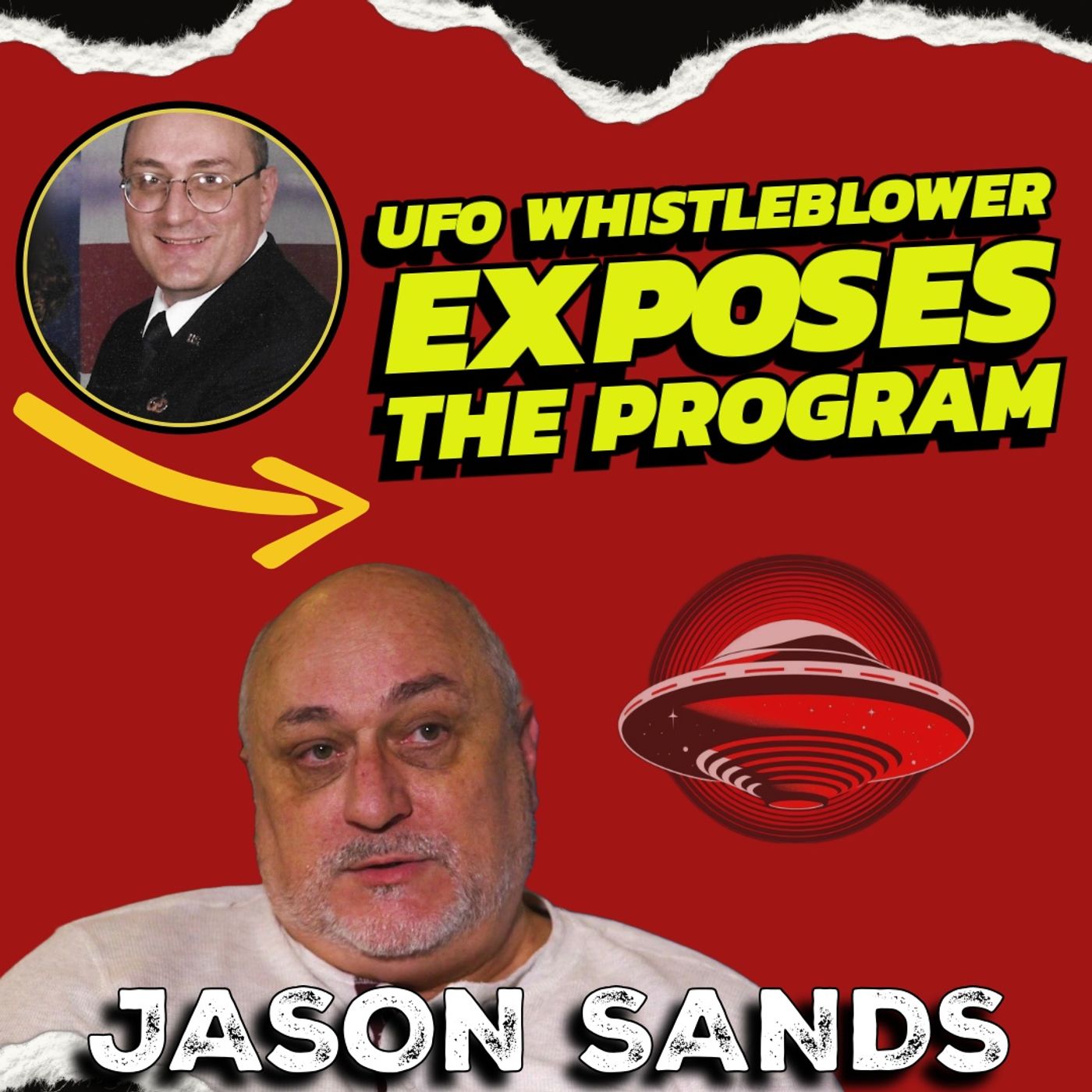
"Shadows of Secrets: UFO Whistleblower Jason Sands Exposes Role in "The Program"
In this exclusive interview, Sands pulls back the curtain on his extraordinary experiences, revealing details of his involvement in classified operations that dealt with Non-Human Intelligence (NHI) and related phenomena. From the desolate expanses of the Nevada desert to the heart of military secrecy, he shares firsthand accounts that challenge everything we’ve been told about our place in the cosmos. Who is Jason Sands? A patriot, a skeptic turned witness, and now a voice risking it all to bring the truth to light.
What did he see? What does he know? And why has he chosen this moment to step forward? Join us as we explore his journey, unpack his startling revelations, and confront the questions that linger: Are we truly alone, or has the government known the answer all along? This is not just a story—it’s a wake-up call. Tune in, and prepare to question reality itself.
**GUEST LINKS**
JASON SANDS ON X
HELP SUPPORT FUTURE UFO WHISTLEBLOWERS: FIRSTHAND
**TOTAL DISCLOSURE PODCAST LINKS**
LINK THREAD—https://allmylinks.com/total-disclosure
Subscribe to the channel on YouTube—— www.youtube.com/@totaldisclosure
GIVE A TIP to TY and TDP Studios directly VIA PayPal (No FEES)— https://www.paypal.me/TDPstudios767?locale.x=en_US
YOUTUBE MEMBER—-https://www.youtube.com/channel/UCy2Cra7aLAAMVxkA9rSYCxg/join
PATREON MEMBER—https://www.patreon.com/Total_Disclosure?fan_landing=true&view_as=public
GET YOUR “TOTAL DISCLOSURE” UFO/ALIEN INSPIRED MERCH, OR A GIFT FOR YOUR FAMILY MEMBER, FRIEND, OR TREAT YOURSELF!—- https://pop-culture-corner-store.creator-spring.com/?
Follow On X—- Www.X.com/@DisclosurePod
Instagram—- www.instagram.com/DisclosurePod
Facebook----Facebook.com/@ty.totaldisclosure
CONTACT TDP DIRECTLY For Collaboration, Use of Segments/clips, or any other media produced by “TDP” —[email protected]
SPONSORED LINKS & SERVICES USED BY TOTAL DISCLOSURE
USE OUR CODE AND SIGN UP FOR TUBE-BUDDY TO START UTILIZING THEIR AMAZING TOOLS, LET TUBE BUDDY DO THE WORK FOR YOU!-——<a...
Speaker 1: Today, I am beyond excited to bring you a conversation with a man who's lived a life most of us can only imagine, a life that sounds like it's ripped straight from the pages of a sci fi thriller. My guest is former military veteran now turned UFO whistleblower, Air Force Master Sergeant Jason T. Sands, whose career took him to one of the most mysterious and to one of the most heavily guarded places on Earth, the Nevada Test Site, better known to insiders as the Range. This isn't just another military base.
Speaker 1: This is a place where secrets don't just live, they thrive, and Jason was right there in the thick of it, witnessing things he describes as truly out of this world. Jason's journey didn't just stop at the Range. He since stepped into the spotlight, sharing his extraordinary expl experiences in James Fox's A Claim documentary, The Program, and most recently, sitting down with Joe Rogan on The Joe Rogan Experience to peel back layers of reality most of us never get to see. But why come forward now?
Speaker 1: For Jason, Well, it's about more than just telling a simple story. It's about pulling the curtain back on what he believes humanity deserves to know, even when it means facing skepticism, scrutiny, and the weight of a truth that's hard to swallow. From his days serving in the military to encountering phenomena that defy explanation, Jason's here to take us inside a world of classified operations, non human intelligence, and the questions that keep us all up at night. Forget to like, share, and subscribe as well if you're listening on one of our amazing podcast platforms, if you can't leave a rating and a review for the show, it truly helps us so much.
Speaker 1: It's free and takes just a couple of seconds. If you want, you can also help support the show by joining our membership. It really helps fuel what we're doing here at Total disclosure, and it's pretty much pay what you want and everyone gets the same perks early access and add free content, as well as a yearly gift after twelve months membership. Let's get into it. Please welcome Jason Sands.
Speaker 2: Glady bab Lab.
Speaker 3: I occasionally think how quickly our difference is worldwide would vanish if we were facing an a in threat from outside this workman. Yet I asked you, it's not an alien force already among us.
Speaker 4: We must guard.
Speaker 5: Against the acquisition of unwanted influence, whether sought or unsought by the military industrial company. The potential or the disastrous rise or misplaced power exists and will persist.
Speaker 4: Now.
Speaker 3: I am becoming a world in my association of Project Group, they're definitely withheld information.
Speaker 1: Now.
Speaker 3: But look on the essay, we're all going again for the way that the hunter.
Speaker 6: You shall be swear or a firm.
Speaker 2: Asking me, you're about to give us the truth, the whole truth, and not England's truth.
Speaker 6: So how you got do you believe that our government possession?
Speaker 4: Absolutely?
Speaker 1: Thank you so much for joining me today, Jason. I want to kind of just I want to get right into things. What is so, what's one thing about your time in the military.
Speaker 2: You're a master sergeant in the US Air Force.
Speaker 1: You've gotten to some crazy places, seeing crazy things, heard crazier things. But what is something that you're most proud of in your career looking back?
Speaker 6: Well, aside from the getting introduced to very clandestine programs, in secretive programs within the Air Force, I'd say the one thing I find the most precious is finding my family. And I know that might send corny to some folks, but to me. You know, I met my wife when I was at Nellis and then I was newly wit when I got introduced to the program, and there's a lot of things that happened that were nasty and things I don't want to keep having to dig up again, but there are a lot of good things that happened during those years too.
Speaker 6: So I got to build my family, and the Air Force really took good care of us, and it's improving over the years now for other folks that are members of the military nowadays. So I'm very happy to serve.
Speaker 2: I guess, so what drew you to a career in the military in the first place. Was it adventure? Was it duty? Something else?
Speaker 6: I wanted to prove to myself that I was going to finish this. You know, I'd been out there in you know, the civilian sector with jobs off and on, started thinking I wanted to get into security, maybe be part part of the police force, things like this, and eventually I just settled up on, yeah, I think Air Force would be good. I need to get in there and Besides, my dad said that he didn't want me to go on the Army of the Marines, even though he was a retired army guy of twenty two years himself. He's passed on since, but he actually told me, no, go in the Air Force.
Speaker 6: The maybe because they'll teach you a technical skill because back in his day, you know, they didn't have a lot of technical stuff in the Army and the Marines. So that's where he wanted me to go. And I honored my father by doing, you knowjoining the Air Force and keeping the military tradition going.
Speaker 1: Yeah, that's amazing. And I actually usually say this earlier, but I do want to say thank you for your service.
Speaker 2: To the country.
Speaker 6: You know, it's my pleasure, you know, for.
Speaker 1: Your family, your father his service as well. You know, without guys like you, were not able to have these conversations, right, so.
Speaker 2: It's all the more.
Speaker 1: Necessity, you know, it's all the more satisfying and you know, gratifying for me, you know, to be able to talk to people who you know, have done such amazing thing and never wanted credit for it, never you know, sought credit for anything.
Speaker 2: It's doing it because it's the what needs to be done next.
Speaker 6: So it is a job, but it does come with the trimmings of you know, you may have to give your life for your country at some point, and I think a lot of people take that for granted, but I took it seriously along with a lot of other brothers and sisters in the military that do. You take it very seriously. And yeah, I'm very thankful for everybody who came before me and the people that are coming after me. It's not an easy job, right, It's a lot of sacrifice, and that's another thing that you have to deal with in the military is a lot of time away from home and.
Speaker 1: Family, right, And that's I mean, you know, I come from a military family as well, and that's you know, that's one of the hardest parts is you know, there's the amount of time that you know is spent not around anyone that you know, you're fighting for the people that you care about, your fighting for, you know, the people you love, but you rarely see them while you're in and you know, it can be tough and I've seen it do some crazy things to people, but you know, you're all the stronger for it. And like I said, I really appreciate what you've done and what you've given.
Speaker 1: It's what you sacrificed to be here sitting today.
Speaker 6: So I'm glad that. I'm glad I made some sacrifices along with the men and women I served with, so that nobody else had to, right, I look at it. That's the way my dad taught me when I was growing up. You said, the only reason I did two tourist in Vietnam is because I didn't want you or any other young men to have to go through this.
Speaker 1: And I didn't even want to open the Vietnam can of worms. But so so your early life, you you kind of have. What I really like about you is you're kind of an open book and you've been able to tell a lot of background. I don't want to have to go over every single part of it, but can you tell me a little bit about your early life before the military, your family dynamic, and were you you know, were you always interested or were you ever interested in UFOs? And you know, existential questions like what happens after death?
Speaker 2: You know, are we alone?
Speaker 1: All these you know kind of existential questions that humans have.
Speaker 6: Yes, I'd have to say this is the phenomenon has has kind of followed me through my life as well as my family, my mother and sister, my eldest sister, mainly with some other things that go on with my younger sisters as well. But there seems to be in my younger years, at least there was to me much more spiritual I guess contact. I did have encounters along with my mother with beings that we couldn't explain, people you know, that we thought were just they kind of look human, but there's there's something off, kind of a thing.
Speaker 6: So I've had a few of those, But pretty much I was just an army brat. I I said, my dad was in the service, and we moved around quite a bit. I'd have to say that the strangeness really kicked in when my father was, you know, newly married to my mother in England. I had an incident there. Then moving to Fort Devon's, Massachusetts. There's a couple more there that happened that I can't explain. Some of these things will be in my book later, by the way, I'm going to be writing about them so you get more detail.
Speaker 6: I'm still writing that. But anyway, that's the way childhood was. But No, I didn't really have an interest in UFOs until I saw my first UFO in San Jose when I was ten years old, and I guess it made a bigger impact than other things. When I was younger, I just tended to, you know, shut it out of my head. I was more interested in playing, honestly outside stuff like that. But at ten years old, you kind of opened up a little bit more intellectually, and I think I was more receptive. But I actually had UFO encounter there.
Speaker 2: Could you mind, Do you mind going into that sighting?
Speaker 6: Oh? Sure? So it was around November December, the holidays. My aunt, uncle, my mom, and my dad, everybody was in the living room with my sisters and they were all talking. I got tired. I went into my bedroom that was down the hall from the living room, and I looked out the window without turning on the light yet, and I saw this weird looking red, very bright red orb looked like it came in from the atmosphere or upper atmosphere, and it was headed straight at me. And it was very small at first, and as it got closer, it descended.
Speaker 6: And my house at the time in San Jose was on the side of a gentle slope of a foothill, and I could see the rooftops all the way down to the bottom of my street. Then there was a little a ranch that a rancher that honed some property across the street. So there's this little valley and then right it rose up again to another hill and that's where this UFO or orb was coming down. So when it passed by the upper part of this other hill that was close by that was on the ranchers land, it, you know, it really lit up the whole thing with this brilliant red and it just kept coming straight at my neighborhood and at the bottom of the street, my friend Eddie, that's where he lived.
Speaker 6: That's when it got really close, and there was this brilliant flash of white, like a flashcube went off on your cellphone or camera, and it was blinding, but it only lasted an instant. And then the moment that that my eyes cleared right there about, you know, five foot above my friend Eddie's house roofline. He was in a single story home, and it was just sitting in his backyard, you know, a few feet above where his roofline would have been if his roof went out that far, and then it started moving towards the street or his driveway, and over the driveway.
Speaker 6: There is a light post at the bottom of the street there, so it was you know, shedding light. And this thing was low enough to where when it passed over his house, it started moving towards this light. That's when I took the opportunity to start screaming at the top of my lungs that there's a UFO outside. And I started running from my dad's binoculars that were in the hallway closet, and the only person that responded was my other and everybody else is just like, Oh, that's just Jason. He's he's uh, he's just having some kind of a weird, you know thing going on.
Speaker 6: Maybe he's just about something. It's probably a helicopter or whatever. So anyway, I ended up running out the front door and out on the front lawn. My mom follows me. By the time I was on the front lawn, I kind of the the UFO had come right underneath the uh, right over by the the light, so I could see it perfectly, and it looked like just a drop of mercury with a kind of flat bottom. But mainly you know, kind of a upper part looked more like an egg or an oval, and it had this really weird sort of a pen or it looked like a little times baby wing or something.
Speaker 6: It wasn't it wasn't like supporting its flight or anything, but it was kind of like an appendage or something that stuck out of the side on the bottom. So that's about the time I'm mom comes out and stands next to me. We're both amazed. It takes off like a shot up into the sky and it rotates around this other point of light that looks like a star. The one that my mother and I saw remained stationary, and this other point of light in the in the sky takes off across the horizon and my eyes couldn't even keep up.
Speaker 6: That's how quick it was. I actually could see it in my peripheral vision as it shot across the mountaintops that were million, you know, miles and miles in the distance, and it was really amazing. So after that incident, that's when I started picking up some books like Chariots of the Gods. That's when I started reading a little bit more. I got to the Project Blue Book and started reading through that as well. And that's when I started actually read some stuff. And I did that for a couple of years, and then I kind of put it down and just forgot about it until I got in the Air Force and got you know, put into the program.
Speaker 6: Then it all of suddenly became reality in my life again.
Speaker 1: Right, Memories start coming back and you're like, oh my god, you know I've seen some of this stuff.
Speaker 2: I think.
Speaker 6: You know, yeah, you're always you know, when it happens to you, it kind of rocks your world and you're like, what on earth is that? It really makes you wonder, you know, what are these things? Are these you know, other beings? You know all the things that you ask yourself and then if they are other beings, what does this mean? You know? Was this for me? Or was this for my friend Eddie? Was it for all of us? You know? Why did they come? And what were they doing? All those things that are going through my mind constantly is to figure out.
Speaker 6: And that's why I kept reading, because I was looking for answers.
Speaker 2: Yeah.
Speaker 1: I call it the moment of conversion, right, It's the moment that the world goes from black and white to really gray, right, and that it's I had a very similar experience around the same age, you know, and and that's I went to the library right after, you know, kind of very similar to what you're saying, and you know, started. My mother was very supportive, you know, of she helped me. She's handing me books. She told me what I saw I was probably a UFO and then explained what a UFO was, you know, So I hadn't I didn't even know what a UFO was prior to to to her saying it.
Speaker 1: And because I grew up next to an air Force base and very very very familiar with what the inventory looked like. My dad worked on base, you know, we're always in and out, so I was very familiar with, you know, planes and all that kind of stuff. And I saw the classic gray disc, you know, and it was oscillating but also moving forward.
Speaker 2: At like a breakneck speed and.
Speaker 1: Tree top level ce chers and not you know, or a sorry lack of feature. It was, you know, looked like it was what I would say is three D printed now, you know, no seams, no rivets, nothing found at all.
Speaker 6: Same with me. I didn't see any rivets. It was a smooth as glass or smoothest mercury would look like if it was just sitting on a drop or on a plate, you know, right perfect in every way. When it came to that other than this little sort of little wing thing or whatever it was sticking out of it on the one side, probably had the same thing on the other side. I just couldn't see the other side.
Speaker 1: But okay, so that that moment, uh, you know, it really converts you. You now you're starting to read things Chariots of the Gods Project blue Book obviously, you know when you now, let's I kind of want to fast forward. You go into the military. How do they how does someone get entered into the program? What are they looking for? How does that happen? How do you go from you know, just a person in the Air Force to a person in the Air Force and the program.
Speaker 6: Well, I didn't start off as an intelligence person. I actually started off fixing airplanes. So I was a sheet metal troop or an airframe repair specialist. So it was kind of serendipity that ended up in Intel, which led to me being introduced into the program. Once I did switch into Intel after the first three years of service, I guess you're you might be getting groomed. You might be being looked at at any given point in time by folks that are read into special access programs and they're looking at certain individuals that have potential, but there's no paperwork at all involved in that.
Speaker 6: So I actually served a tour of duty in Seenbach, Germany, before anything happened, and before I was introduced to any special access programs.
Speaker 6: But I did go on a couple of clandestine type missions that I wasn't told what was actually going on, so I wasn't actually read in, but I know that the mission supervisor, for example, was so I did maybe touch a little bit of some of the special access programs, but it was not as far as I knew, part of any UFO program or reverse engineering program. Then my next duty station was Nelly's and that's when things really got strange after the first six months or so, so I started off there. I know that there's a couple of things that got people's attention.
Speaker 6: I guess that people talked about me. There was one time and a good friend of mine, Ginny, was testing me for a volume review exercise for me to make it to my next career skill level as an analyst. And you know, I had like three hundred questions on the test, and I only read through it once and handed her back the paper, and then she started quizzing me, and I was able to answer ninety seven percent of the questions correctly and even finish her sentence for her. And so people thought that was kind of weird that I could remember things that quickly.
Speaker 6: And then there was an incident where they were on now's test range. And it's kind of dumb, but this guy Al and me and a couple of the other guys were at this one site and he was trying to change the combination to the safe because there was cryptographic material we had to pull out of there, and so we had to have a lock safe in
Speaker 6: our site. So he was trying to change the combo and he accidentally took out the screws that hold the whole thing together, little springs and everything like cupoop all over the place, and he was he was like, oh geez, you know, he's thinking, now we can't get the mission going and all this other good stuff because I broke the safe, and and I'm like, well, let me give it a try. I used to do some mechanical stuff. It's an airframe guy, and I actually put it back together and saved the day for him.
Speaker 6: So that story kind of went around a little bit too. So maybe they just thought I was a good analyst able to figure out things on my own. But they it was only a verbal invite, and they just said that, you know, we'd like to get you on board. And on top of that, I'd actually been up range in a car with one of the people that I ended up finding out was in the program already, and he was actually planning on, you know, getting to know me. I think that trip up range, he just we got to know each other.
Speaker 6: We got along great, so he knew as a team player, he knew that we were friends, and you know, we both have a lot of similar similar hobbies and stuff like this. So I think think I got friendly with them. They liked my analysis work. Maybe some of those things that I did that were kind of strange for other people. You know, you know, have a good memory, that kind of a thing. They knew all these things about me, and I think that's what got me introduced into the program. So that's kind of how it goes is you be picked by hand, really and people that are in the program are kind of always looking out for, you know, potential people to help.
Speaker 6: So I think that's what got me in there. It wasn't really a formal or anything. It was just kind of like they saw me somehow, they liked me, and then they invited me.
Speaker 1: So kind of like a perfect storm. It sounds like you what they call like a photographic memory, where you don't really you can look at something and then you know, well.
Speaker 6: Yeah, it's It's not that I have a photographic memory, because that requires total recall. What I had was a linking memory, and whenever I hear something similar, my brain fires off in all these directions and I link things together that are like I don't know how to put it, that are connected. I find the connections pretty easily. So that's when my memory comes in. And if I don't have that trigger, I don't just pull it out of my head. I've got to have a trigger and then I can remember it.
Speaker 1: Okay, And that makes that That does make a little bit. That makes more sense, okay, And okay, so the perfect storm of of all those things they they you're actually let's kick it back.
Speaker 2: When you went to Nellis, did you know that.
Speaker 1: Did you know that this place had a history of you know, secrets. It was a very secretive place where you know, obviously you know the public has been talking about it for a very long time.
Speaker 2: You know about how they.
Speaker 1: House certain you know technology there and yeah to YadA YadA. Did you know this going to Nellus or is this something that kind of you start seeing things that that pique your attention?
Speaker 6: No, I really didn't know much about you know, the area up there, the Nells Test Range, Black Mountain Operations. I knew nothing about any of that until I actually got there.
Speaker 1: So what was your first day like on the range? I mean, did it feel like just another job or did you see dirty?
Speaker 6: Yeah? Well, the first day I was on range was when I was training to become what they call a Red Force operator. Where you go upright, a Red Force operator is not the same thing as a Red team. I just want to make that distinction as I go through this. Red forcing is where you pose as an enemy force, but you're a good guy and you're training either pilots or army battalions on how to fight a war under realistic conditions. That's what red forcing is. Teaming is totally different. Red teaming is what I did when I was doing telecommunications monitoring, and it's kind of the same thing where you come from a discipline where you're playing the part of an enemy that's trying to get into the mission type of the organization that I'm assessing.
Speaker 1: So finding finding holes, findingnesses so that we can strengthen those weaknesses.
Speaker 6: Correct and you're there to help train people and report on that. So here I am going up Rains for the first time, and I'm doing a Red Force training thing where I have to go through and you know, there's a you know, a few weeks long where you have to learn how to utilize the equipment, how to set it up, and how to train in this case, aircrews or pilots on how to survive in a wartime environment. So we're making it difficult for them to use the radios, trying to get them to use their countermeasures so they can get bombs on target, those types of things.
Speaker 6: That's what I was learning. And that's the first time I was up at Nellis on Black Mountain, and that's when I found out from one of the other people that were stationed there already and knew everything about this this Red Force and on Black Mountain they pointed to a mountain range that was across the plateau that was in front of us. Because I'm standing on the top of a mountain and you can see this mountain range from Dreamland or Groom Lake is right there. I mean it's many miles away, but you know, on a crystal clear day, it doesn't look it looks like you could walk through it.
Speaker 6: But it's longer than that. But yeah, that's when I found out because everybody was pointing, ooh, that's Dreamland. People are saying all kinds of crazy stuff about UFOs and blah blah blah. And I was like like, oh, that sounds cool, you know, and then I had to, you know, get back into class pretty quickly after that. So you know, that's when I first started kind of thinking, well, I wonder what really goes on over there. Yeah, so that was the first time I kind of got introduce to it. So I knew a little bit about it, but I really didn't know the inside story until I got read in.
Speaker 1: Right, I want to I want to distinguish something. So when you were doing the telecommunications stuff, yeah, you had you you heard things on secure lines that made you think, like, wait, what are they talking about? And so that you were not in the program when that happened.
Speaker 6: Well, the locations that we would go to, you know, we'd have teams go out on normally two week missions. It's about ten people total. Depending on whether we're doing you know, daily ops or twenty four hour ops, you'd have to have double up your team kind of a thing. But you could be you know, most of my normal day to day missions were telecommunications for non program stuff. It was like going out to you know, McCord Air Force Base and monitoring you know, just this one organization on that base, and then I'd go out the next month and I'd go to another base, like in Colorado, I'd go to Cheyenne Mountain and do another mission there and things like that.
Speaker 6: So, yeah, you get chipped out all over the place to do all kinds of stuff on those missions. And each time it was kind of up to the customer or the commander of those locations to actually tell you what to focus on or they tell you you get absolutely nothing. You need to come in as if you're the enemy and I want you to give me an honest assessment as to what you found out. So it kind of depended on what you were given on the onset and it was just the same inside the program as well. However, we use the exact same equipment, we use the exact same methodologies, but now we're doing it with an OSI team who's doing the physical security assessment along with us, and so you had additional folks working alongside you to do the assessments inside the program because they had other concerns about you know, people you know, blabbing outside of work, you know, and so the OSI agents would go to the bars and things like this.
Speaker 6: Sometimes we would go help them as well if they needed it. So it's a little bit more robust when you're doing it for the program than these daily jobs that we did. So it's that's how it ran. So the normal operations was outside of the program. You could go to any place in the continental US sometimes overseas. When you're in Germany, you do Europe. When you're in the United States, you do United States locations and installations, et cetera, et cetera. You know, if you're in the Pacific, you do the Pacific rim locations and where the But the one thing I want to distinguish as well, we're only allowed to legally monitor d O D owned and least telephones or telecommunication systems, so you can't just you know, I'm not monitoring people outside the base.
Speaker 6: I'm only monitoring the organization. That's all. I've got the legal means to go and and monitor. And that's something that I think a lot of people don't know, is, you know, especially with all the stuff that's gone on politically with you know, this administration, previous administrations overstepping their balance as to who they can tell. Community. If you are monitoring somebody's phone and they're an American citizen and you don't have permission, that's a crime.
Speaker 2: Is a crime, Yes, that is illegal. It's a crime of the highest degree.
Speaker 6: Yes, that is you are literally encroaching on the Only time you can do that is if you have proven evidence that this person needs to be under arrest, has committed a crime, or is threatening bodily harm and killing someone else. And those are the most extreme of cases when you can divulge things. But you have to assume as soon as that happened, it would be out of my purview. I'd have to turn it over to like say, the police department or whoever to try to, you know, save somebody's life, or to you know, resolve the crime that I just heard about on the phone.
Speaker 6: That kind of stuff got it.
Speaker 2: So when was the first?
Speaker 1: So this is when I've heard your story and i've you know, listened to I think almost every show that you've done.
Speaker 2: What my my confusion is when.
Speaker 1: You talk about listening into the the phones and they're talking about you know what what they mentioned reptilians or the grays working in the lab.
Speaker 2: Is this for your your day job or is this when you're in the program?
Speaker 6: I mean the agrement at that point. In other words, these were from actual conversations on these sites where these people operate out of for the program, and you're talking like the what everybody's already been talking about, right Patterson White Sands, Eglin Air Force Base. All these are part They have laboratories or office space on those installations. So that's what we were monitoring was those locations, and we would picked very specific lines that we thought would be productive. Sometimes they were vetted with the customers who wanted very specific offices and laboratories to be monitored so that we wouldn't waste our time.
Speaker 6: We only had two weeks. Chinese and Russians. They've got their whole life so plenty more time than we do. So we've got The more we got information on the onset, the better it was, the better the mission was. Anyway, we'd go from site to site doing that. But yes, we'd be listening in on probably the top brass you know, the people that were leaders, lead scientists, lead engineers, directors, general officers, laboratory environments, you name it. We were We had we had access to all that.
Speaker 1: Wow. So when was the first time that you heard something that really made you go, what the did you just say?
Speaker 6: Well, yeah, I heard the term zodiac, which has been thrown around. I heard constellations from stars, and those were things that I'm like, what are they doing here? Are these all program names or what? You know? But I've come to find out they had other contexts that associated with them. So it started very early on. But then I'd say it took me about a good few missions, about three three missions, and I started here ring, you know, and putting things together. And I was able to start putting you know, this site does this, that site does that.
Speaker 6: Therefore this person's context was this, and now that means this to me as an analyst, and I'm going to report on it differently from now on out because now I understand the bigger picture. So it takes a while, but you know, within that first year being on program, you get a lot a lot of insider knowledge, and that's when things are easier for you to put together as an analyst.
Speaker 2: Got it. So you hear.
Speaker 1: At one point, you hear them talking about some sort of laboratory situation where humans are working alongside.
Speaker 2: Yes, that was it, the grays.
Speaker 6: It was the grays and the tall whites. Yes. And the part that really raised the hairs on the back of my neck was when they said, only after the tall whites and the grays leave the laboratory are the humans allowed to come inside. And I was like, what on earth did he just say? So we're talking about tall whites and grays as being different types of people or different types of what you know. I just boggled my mind because the way they were referring to them was that the tall whites would come in with some equipment and do this, and then the grays would come in and clean up afterwards and take all the advanced technologies out of the laboratory environment.
Speaker 6: And then they'd have to reset up the you know, and then the humans would come in and do the experiment, and then they'd come in and redo the whole thing over and over again. They cycle through it that way, because it's like one engineer telling the other engineer or scientist how to run the lab. But that one piece of information, when they distinctly said, then the humans can enter the room, That's when I realized there was something really off. And I immediately after I wrote it down on my GI just sheet, I look at the lead analyst and I just said, what on earth did I just hear?
Speaker 4: Right?
Speaker 6: So, the whole team gatherers around my rack, that's what they call it. I had twenty telephone lines to monitor. They came to my rack and they made me rewind it, and they I replayed it for all of them. They put on their own headsets and they all looked at each other like, oh my gosh, what on earth is this? You know, they all looked just as surprised as I did. So very very very strange date.
Speaker 1: Right, because again, like you said, you know, you could have maybe chalked it up if they didn't, you know, to maybe they're referring, you know, code names, but then they specifically say and then the humans. So at that point there's a differential or a differentiating between yes, human being and something else.
Speaker 6: Yeah, And I had to distinguish that when I actually gave my testimony in twenty twenty two, because they asked me about that same incident, and one of the gentlemen across the table from me, who was interviewing me on the house side, well, I gave my testimony as a whistleblower. He said, are these like code words? And I'm like, no, Well, could they be talking about something else? I'm like, you got me. But the context that I remember was that as soon as they said, you know, this whole thing, the context was that these were not humans in that context of this conversation.
Speaker 6: So they had to go like, wow, you know. So I think some of them were left on the fence. Some of them wanted it to be a program name. I think some of them believed me and realized that yeah, this was you know, we're talking about different species of you know, bipedal beings or something, and yeah, so it got pretty weird in the room. There's a bit of a pause when I did that on Capitol Hill, as.
Speaker 1: Well, so right, because that story to me, that one that that aspect of your story I find to be just as fascinating as what we're going to talk about. You know, when you when you come upon something, you know, being that this is non human, I wanted to ask, so okay, so we established that the grays there, there's something that that are the grays, there is something that the tall whites, and then obviously we have humans.
Speaker 2: Right, So did you ever hear any.
Speaker 1: Other phrase that would that would insinuate it is another bipedal type of non human entity.
Speaker 6: Yeah, and that's the reptilans, as I spoke of in the Joe Rogan show. That was the only that was the third one or third type that I had heard in the program. But every time that the reptilians were mentioned, it was quickly hushed up by one of the one or more of the people in the conversation realized that they shouldn't say anything, and it ended the conversation. So I knew very little about that. It only happened a few times, so there really wasn't much to go on other than the fact that they used the term reptilians and it was not as detailed as the other other phone call that I just mentioned to you about the tall whites and the graze, right.
Speaker 1: And again, these people don't know that they're being monitored. Yeah right, So they're acting like that while not knowing them being monitored because someone does listen in, like hey, cut that ship, cut it. When they were talking about the reptilians, did it sound like there was fear or a negative connotation when referring to them.
Speaker 6: It was like a best kept secret. It wasn't that I didn't detect that they were saying that the reptilians themselves were this or that, just that it was a taboo subject, okay, and that was how they referred kind of it left me feeling that they were just very uncomfortable talking about this as if yeah, as if somebody would hear that, hear them, and then they'd be in big trouble. That's kind of what south.
Speaker 2: Right.
Speaker 4: Yeah.
Speaker 1: So wow, I mean that's a lot so that that even just hearing those things, I mean, you start especially you, right, because you're you're a person who's really able to connect the dots, you know, with like you said, with the triggers and all that. So I mean by now, are you formulating like, no, I think I think they're I think there's non human people like intelligence working a law sign of human beings.
Speaker 6: In our laboratories. Yes, that's what That's what occurred to me almost immediately when I heard those types of phone calls. Yeah, my mind immediately went to, my gosh, we're talking about you know, possibly extraterrestrial people in our laboratories. I also instinctively knew that by virtue of the fact that the humans weren't even allowed in the laboratory environment, that it could not have been you know, a free for all, you know, kind of technology exchange either because why would they separate themselves like that?
Speaker 6: Why was the environment so controlled when the extraterrestrials were in there? And what it led me to believe in an analyst, is that the extraterrestrials manage it. They control how much they'd want to give and or not give in a situation that they don't agree with everything that goes on, and that they don't want us to have full rain in the technologies they have. Those are the kind of thing as an analyst where logical steps that I could take at that point just to know that this is the environment.
Speaker 6: It's not Koumbaia. It's kind of strained. It's very managed and controlled.
Speaker 2: Wow.
Speaker 1: Okay, so based on your based on everything that you know now, I know, kind of skipping ad we'll go back.
Speaker 2: Based on what you know now.
Speaker 1: About our government and how they may be working with non human intelligence. Have you deduced that any other government or nation could have a similar situation.
Speaker 6: Yes, I know that the friends I worked with, I've seen them in other locations around the world, And you know when I was in Germany for a while helping the Noble Operations and the Iraqi Freedom and all those kinds of things. Yes, they had offices that I knew that they were still in a program. So I know that it goes on elsewhere. And again, if I'm putting on my analyst hat, I could walk you logically through the thought process that if these crashes and retrievals are going on just in the contiguous you know, United States, that's a large land mask Well, Asia is even bigger than us, right, So it's quite possible they have their own retrieval program because they've probably seen the same things we've seen and are testing the same things that we're testing, and the same thing with Russia.
Speaker 6: You know, the same thing with maybe Indonesia and other places where some of these stories have been coming out of for years. In South America and Antarctica, even they really, you know, logically flows that if our land mask gets some of these retrievals, the rest of the world probably does too.
Speaker 1: Absolutely that, I mean, it's only the only logical next step for you know, because people always say, like, oh, why is it. It's always the United States. It's always the United No, it's not. Some of the best cases, the best, the most well known, and the best cases aren't in the United States. Randersom Forrest, the aerial school, you know from I think that's Zimbabwe, mm hmm.
Speaker 2: So so many other cases.
Speaker 1: Uh.
Speaker 2: In South America is just literate with the Virginia.
Speaker 6: Operation plates. Fox's favorite, Yeah.
Speaker 1: Camp Penis, and I love that. I love that he has to say those two things.
Speaker 6: He used to laugh at me because I always got the mispronounced.
Speaker 1: It's like it's begging for puns to be thrown in there.
Speaker 2: But all right, so well.
Speaker 6: Let me go one step further on the logic that other countries have probably got some retrievals as well, and that is that perhaps we are fractured in our culture, in our politics and around the globe. However, for the Nhi, if that is the common thread, like let's say that the same crashes that occurred in Roswell, the same beings happened to be doing some things in Russia, and there's been some contact from the same beings from the same you know, civilization. So there may be some common thread there as to what these Nhi, that maybe they've captured some living and surviving pilots as well, and that maybe the Nhi themselves are aware that, oh, well, yeah, we've had crashes elsewhere in the world, and maybe they're kind of helping out, like they're helping, you know, in the laboratory environments in the United States, but the Nhi in that case.
Speaker 6: To further the logic is that the Nhi themselves also are having a say as to how much involvement is going on between these different countries. And I think that that is very evident, and it's very much of their Nhi's choice as to how much they divulge about the total involvement on Earth as to what exactly that is in the context. So that's something that I would say, you know, raise my eyebrows. And as an analyst, you know it's that's a logical step as well, that the HI get to say what happens in the labs not only here, but also in Russia, China, you know, what have you?
Speaker 1: Who and whomever else may be working alongside or with And that would make a lot of sense because you know, we hear we hear this rhetoric. At least you know I hear it a lot. Is you know when speaking about like things like the Ukrainian War, people like, well, if Russia have reverse engineer.
Speaker 2: Technology, you know they would have used it already.
Speaker 1: And it's like, well, listen, you know, they may know that Russia is a bit more aggressive and would use this technology to further their expansion.
Speaker 2: Let's call it that.
Speaker 1: And for that reason alone, they're not getting the same access we're getting over here.
Speaker 6: It could be and it could just be by virtue of their culture. Maybe they NHI find them more tyrannical rather than freedom. I think a lot of times it would have read from other abductees. What have been told by other abductees is that when there has been a message given that there's a common thread in most of it where the Nhi are reaching out for a purpose, that they're here to courage us. Some people say that yes, they are testing us and examining us, and those sorts of things are probably ongoing.
Speaker 6: They may have been on going for thousands of years, right, And that's quite a possibility that, yeah, we are kind of being looked at and for whatever reason, and that may be the hidden cause behind they're being here, and that that is a highly sought after, you know, question for an answer to that, that that they seem to be holding back the mystery of it all because I think they would prefer us to have a free walk forward and advancing ourselves. It seems like it was very heavy handed. If you look back a few millennia, there were wars fought on this earth.
Speaker 6: It seems that there's a lot of manuscript and eyewitness accounts that that is is what's happened. There's been a lot of battles. There's the wooden plaque of Nuremberg and the sky pretty much being filled with all these objects that were all fighting on some of them crashing in farmers fields and things like this. And then you go back to Mahabarata where there's actually gods themselves claiming one side or the other in favor or against the humans. And there's natural cities and even radioactive sites right now even today that people are finding it hard to explain unless there was some sort of really large solar flare or something else.
Speaker 6: But even the vitreous, the vulcanized soil is a telltale sign that was probably more nuclear. So all these things add up in my mind, as like I said, as an analyst. As you can see, I'm kind of trying to lay it out as well for the listeners and your followers, because I want them to understand that there's more to you this. If you think your way through it in an organized way and take you know, these little tidbits of think of truth, you can actually find some threads and we can get a little further down the road with our analysis on what's actually going on.
Speaker 6: To me, it looks a lot like the Nhi do want to be here, They do want to see us get better. They always seem to be very sad that we don't realize our our own potential. That yeah, that's the Nurnberg.
Speaker 2: That was crazy.
Speaker 6: Yeah, isn't that Just imagine what those people back then. This was what four hundred years ago, I think, or the fourteen hundreds or something.
Speaker 1: Yep. Right, So I mean like and then, and you see how they're best representations of things are what they're using to represent whatever is fighting in the sky.
Speaker 2: And I just I.
Speaker 1: Find it really, really really intriguing the shapes that they use to the cigars with the circles in them, right, obviously that's like something that that you know, the tic Tac people.
Speaker 6: Everything we're saying today, it's right there in the plague. It's just what we would describe, right, And the same thing is said about you know, even in the Maha Brata. You know, it's got the same things mentioned, these balls, these cities flying in the air. You know, they saw the same things. The Bible describes it as well. You mean, even God himself is a pillar of cloud to the Israelites in the desert, and a pillar of fire you know by day or by night rather and a pillar of cloud during the day.
Speaker 6: So very much cylindrical shape, you know, just like we see in the placard from Nuremberg. So a lot of commonalities. These are things that analysts usually pay attention to. And you can you can start to make some baseline assumptions from that, and that's where we need to be with it. And I think that's why I feel that, you know, we need to really do a good job of going through some of the archives that people have. I mean, like Missus, Milton Howe and doctor Greer, move on. All these great people have great databases of eyewitness accounts.
Speaker 6: We need to start really sifting through those. And by the way, I'm not an advocate of somebody monopolizing all of them. I believe that having separate databases preserves their integrity more because a monopolized, you know, database can obviously be told to show the data only in one way that's favorable to the persons that own it, and I don't want to see that happen. I'd rather just have the raw data available. So anyway, these are things that I think ready to start approaching, and I think we have been and I think there's more people that are well informed that are ready to have that discussion, but they haven't been given a spotlight because there's too many people that are still at the beginning stages of even exploring all of this.
Speaker 6: But yeah, you're sure it's a really great artwork from love it.
Speaker 1: I love it because that for me is a huge tell tale or or a huge tale that I think. And I want to get your opinion on this, and we still have the the the encounter to get to.
Speaker 2: As an anal. I want you to approach this question as an analyst. Do you think that the the only thing or that.
Speaker 1: What we saw as gods quote unquote gods uh and and our our religion and and a lot of the tales around it, you know, the whether it's the Greek gods, the Nordic gods, whatever way.
Speaker 2: You want to go.
Speaker 1: Do you think that these could have been or may have been interpretations of what we would call modern day UFOs and aliens.
Speaker 6: Yes, if they're one and the same, as most people know it already knows them. A man of faith, I've not seen anything in the program or elsewhere that flies in the face of the fact that we're not alone. It distinctly states, like, for example, in the Bible, that there are other living beings. There's Serabim, there's Cherubim, there's several other types of angels. And it appears in the Bible that there was a war or at least a faction of these angels or beings that were cast as they state very succinctly in detailed wise to Earth, when they fell from grace.
Speaker 6: So if that's the case, we may be looking at these gods with a small g not a big g r as falling about the same timeands of years ago and doing some bad things, because that's the way it's described in a lot of these is that some of them were you know, teaching sciences and things like this, but they also taught some arcane things that were quite detrimental in some cases, and sometimes the technologies were used and killed many, many many people as well as other of these you know gods here. So we may have been maybe looking at all the same story that they were cast down here and that this is some sort of a i hate to say it, like a prison colony for them, and maybe they have a desire to see us succeed, because maybe that's the way according to the Bible, that they wanted to be redeemed for what they've done and for the Maha Barata, that they wanted to be worshiped or preserve mankind, depending on which god you're talking about in the Maha Barata, right, so there's all these different motivations that seem to be tied around all the different species that might have been here at one point, and they all come with different descriptions that again are echoed through the thousands of years.
Speaker 6: You know, blue people, ones that look like us, ones that look like beasts, you know, all these things. These are things that we're still seeing today.
Speaker 1: Yes, absolutely, absolutely, And that's why I wanted to ask that because I think it's like, you know, it's really important because you know, you talk about specifically, you talked about you know, the Fallen Angels, right, Well, okay, we look at that fallen Angels. Then some of those fallen angels had interactions with human women, right, and then we get Nephelin, right, so offspring.
Speaker 2: And now you know what is that that unlike to you? Right now?
Speaker 1: Well, I'll tell you abduction stories where they talk about a genetic some sort of genetic hybridization program.
Speaker 2: Is this something that that you know you've looked at as well?
Speaker 6: Yeah, I've looked at the genetic side of it. I think there's enough genetic data out there now to where people are starting to see you know, DNA and RNA a lot differently everybody's starting to agree that it's manipulatable, that you can turn on and off certain what they call junk genes and it does things to us. And that's why it's kind of dangerous because we don't really know what's switching some of these genomes on due to us. You know, do they cause cancers or there is a different benefit of maybe giving us the ability to read each other's minds.
Speaker 6: I don't know, but that's for science to dig around in and figure out. And it seems like, yeah, that's something that was that's been talked about for quite a while now, and I think they maybe have gotten a few answers to some of that, and maybe someone's kind of scary and they don't want to publish at all. I mean, we're having trouble enough just talking about clones. Is that even moral for us to do? You know, that kind of.
Speaker 1: Thing, and that that you know, it's funny that you mentioned that because everyone in the world, or at least everyone in the I shouldn't say.
Speaker 2: The world that was bad. Everyone in you know, in this community is like disclosure now, right, like we need it.
Speaker 1: Now, and it's like, okay, I listen, I get it. I get it, But you know, are we as a society as a species truly ready, Because I can guarantee you not all of disclosure is good.
Speaker 2: It's not.
Speaker 1: And there may be things like are we act actually ready to know that perhaps these are our makers? What would that do to us as psychologically? What would that do to us? And you know our motivation too, you know, become you know, a space fare and civilization?
Speaker 2: What would that do to us? All these things need to be looked.
Speaker 6: At, right And I think that we value other cultures, even amongst ourselves hereous humans, and I believe that intelligence races are kind of basically like that, And it would make sense to me that if there is other life out there, they are just as diverse and just as unique as we are, having maybe different amounts of like telepathic powers, having their own sets of history where they fought huge wars even in the star perhaps, and they can come from many walks of life as well. You know, some of them may not have a lot of problem giving themselves in their bodies physically to science while they're still alive, and maybe some of them are, you know, LifeWise abhorrent to that.
Speaker 6: There may be entire races that are you know, asexual or hermaphroditic, and the other ones that are like us that.
Speaker 2: Are binary and absolutely.
Speaker 6: Having a male and a female right. And then you know, whatever people want to do in their you know, private life, that's up to them. But that's the sexual expression according to me.
Speaker 2: But I love that.
Speaker 6: Yeah, so that you know, keep that to yourself. I don't sit there and talk about what I do with my wife or whatever, So please keep it to yourself.
Speaker 2: Go behind your yeah, exactly, exactly exactly.
Speaker 6: That's the way everybody's happier. I mean, nobody gets along. It seems like when everybody's in your in your face about it. But anyway, those are the kind of things I think that we're going to find out there is that there's all these different things, all these different cultures, all these different even forms of government that are stacked and layered one upon the other. Because you've got, you know, a planetary level government that owns certain resources for one planet, and even if the same species is another planet.
Speaker 6: As an analyst, I can logically think that if the resources are different on that planet, the government's going to have to change, the economy is going to change, there's going to be differences. So even amongst the same peoples in the universe, if they have two different resourced planets, they may have totally two different economies, two different forms of government, even being the same people, just like we would, I mean, we go to Mars, that's going to happen to us. There's only certain resources on Mars, you.
Speaker 1: Know, right, I don't wow, I can't believe I didn't think of that, but you're absolutely right. Like, so the first colonies on Mars, you know, let's just say that, you know, everything goes off without a hitch, right, and Elon puts a colony on Mars, they're going to have to decide how they're governed, how they govern themselves, and it may be radically different from how we do it here on Earth because of the circumstance. Yes, right, So that's a very interesting that's a very interesting thought experiment.
Speaker 6: Really to the fact that Elon might be an alien
Speaker 6: and maybe he's actually preparing the way for us because he realizes there's been too many influences here on Earth and he just wants to start fresh on the other planet. And maybe the aliens are ushering him in that way, right, a little bit.
Speaker 2: Sorry, while you did.
Speaker 1: Like fucking Zuckerberg right when he was what he was testifying in front of Augurs that dude looked more alien than any person, any single human I've ever seen, and you know, you look at them now.
Speaker 2: Someone clearly pulled.
Speaker 1: Him aside and was like, dude, you looked like there is there are now memes like people really think you're a reptilian, like grow your hair out, put on an oversized shirt, maybe get a gold chain, and.
Speaker 6: You know, yeah, you're right, honestly, there I have so many people asking me about what I know about reptilians. I wish I knew more, but some of them are you know, their logic takes them to the fact that they're walking around and they're able to disguise themselves, and that they're even in our government.
Speaker 1: Yeah, and that is something that is truly terrifying.
Speaker 6: You know. Maybe that's the reason why everybody thought that the top of reptilians in the program is taboo, is that they know that they are trying to impersonate us and maybe trying to manipulate us in some way, shape or form. I don't know.
Speaker 1: Oh wow, I hadn't even Oh wow, that, right, and they don't so from their perspective, right, they're they're talking about it, or at least, you know, if it gets mentioned, they're like, you know, shut down, shut down, shut down, because maybe maybe they have infiltrated our government, maybe the program who knows, and you know, they don't want to get caught talking about it because you know, then that's maybe when you get paid like a real visit, and you know, you commit suicide by shooting yourself three times in the head.
Speaker 1: Right.
Speaker 6: Other people that say that they've encountered reptilians even shopping in places like home depot, you know, and that they've glitched, you know, the they're guy's got glitched and then they're very surprised to see that everybody was looking at them and they're like, I'm sorry, I'm just here to live my life. I'm like you, I'm just trying to make a living. I'm like, Wow, that blows my mind. Hearing a story like that. It just blows my mind.
Speaker 2: It true, like it really really does.
Speaker 1: It blows my mind because again, even if one of these stories is true, the implications are they're exponential, right, all right, so you had you you have not just heard you have not just seen craft in the sky.
Speaker 2: You were on the.
Speaker 1: Range and you were aheaded. Okay, actually I'll let you set the scene. But okay, so you're in the program at this time, right, so you're in the program.
Speaker 6: Time of the encounter. No, I've just been read out earlier that year.
Speaker 2: Oh you were done.
Speaker 6: Yeah, I was done. And this was the encounter occurs later the year in the year around October. It was cold, let me put it that way. And it was around October, maybe September, I don't know, but anyway, it was very cold, very windy that day. And I'm out of the program already. I've been out of the program for months because I think I got kicked out of the program in February for taking my kids during the weekend to try to take them to the zoo over the weekend.
Speaker 2: Well, you know, it was that that rigorous, like.
Speaker 6: Yep, very rigorous. They thought that was a huge problem. Nearly got me killed. Actually, they're planning on putting a bullet in my head over it at one point, and I think my friends came to my rescue on that. But I had to do something just as nasty. But at least I got I got to keep my life. But anyway, so yeah, that that I got kicked out earlier in the year. Here it is October now and I'm having this encounter.
Speaker 1: Yeah, so can you bring out this isn't you know you've probably heard this because it's James Fowx. But so I want to be riding in the convoy with you, So bring me back. I want to be in the convoy right there with you.
Speaker 2: And no detail is too small.
Speaker 1: The floor is yours. So you're you're you're in a convoy. I'll leave it there.
Speaker 6: Yeah, So the convoy from the previous two weeks during this particular red flag exercise on the Nels Test Range. The red flag exercise that we were doing was taking place on the top of Black Mountain where we did our operations from excuse me to run our missions from. So the previous team came into garrison the previous Friday before I went up on the next Monday, and they had seen the UFO come out onto the range that was captured on the range cameras themselves, and it was also tracked on the kind of radar these video cameras track aircraft.
Speaker 6: Because these videos are very important to the Red flag exercises, especially if a pilot is in trouble or crashes, they have video to review and figure out what happened. So it's very important that these videos are accurate and that they can track the craft as they come into view. So they're all talking about this craft having come in the previous week and it flew right back by Black Mountain in the valley between, and so a lot of people had seen it and they're pretty excited that Friday, and I happened to be there because I'm getting turnover from them as the next crew going up, and they started talking and they were saying all sorts of things that I don't know what it was, but you're talking to people I'm talking about people like myself who literally seeing everything that our allies fly, everything that we fly in our inventory in the United States Air Force, the Army, you name it.
Speaker 6: We've seen the bombers, the fighters, the helicopters, what have you. And people were like, I have no idea what this is. So this was a strange occasion, to say the least, because you've got a lot of people that know how that have to know how to identify craft. Yeah, that's their job to know.
Speaker 2: This, so I don't want to. I'm sorry. I'm really am sorry to cut you off. I did not the I have that video and.
Speaker 6: Real quick, Yeah, that'd be awesome because then everybody could all your viewers can.
Speaker 1: See that, right and because I've actually I have some questions about some of the things that are seeing.
Speaker 2: So this is kind of like a loop. But let's play. Let's play this video. The sound isn't great about.
Speaker 4: That's why.
Speaker 2: It's by a house, house and going like.
Speaker 1: How happens by houses?
Speaker 4: Going to s m hm, here we are. I got capn't even know.
Speaker 6: Yam, I am, that's it. That's what I saw. So that's what everybody saw that that that week.
Speaker 1: So I I obviously the audio is I mean, it's it's a nineteen ninety four video, so do you do come rush in? And you know, so many other factors the quality of the video and the sound quality it's not great.
Speaker 2: But there's like this like squiggly line. I've always wondered what that is.
Speaker 6: That's that lock on mechanism that's on the camera. It's trying to lock on to the craft. If you if you look at the whole video, you see the camera trying to lock on, and when it finally does, it goes up in a spike. But you see it kind of panning to the right and to the left. It's scanning trying to lock on. But the craft itself is jamming. The signal is what's going on. At least that's what the technicians that recorded.
Speaker 1: It said, and that if I'm not mistaken, if so, if you're if it's an unknown craft, and if you are jamming, technically that is an act of war.
Speaker 6: Well, yes, and those particular frequent there's a lot of frequencies that the craft when you're playing on the exercise range there at Nell's Test Range, you're told not to transmit on because they're used to do things like monitoring the range. And that's why these frequencies were not supposed to be messed with or jammed and all this other stuff. So whatever is jamming this particular piece of equipment is, it's not supposed to be on those frequencies if it is something that we know about, like one of our own craft, because they would literally have a list of all the frequencies they would leave off their equipment so that it would not transmit on those frequencies.
Speaker 6: So that's a lower distinction I can give you is that those are the kind of things that don't make sense with the video. This is definitely not a usual craft coming out of the range. This is something that is literally actively jamming that signal on a frequency that shouldn't be it shouldn't be on. Okay.
Speaker 1: So with all that, like with everything you just said, plus it being one of the mode sensitive areas, why are they not opening why are they not kinetically engaging?
Speaker 6: Oh you mean the range operators?
Speaker 2: Yeah? Why why did they allow this thing to fly into the range?
Speaker 6: Why aren't they This was a surprise craft the only time, Well, you got, everything is orchestrated. First of all, if they're going to use live bombs, live firing ranges and things like this, even the sand sites or the Service to air missile sites that simulate weaponry flying, you know, missiles being shot at the craft, those were all faked. So there's no real kinetic missiles on any of the launch pads unless there's a damn good reason for it. And they're conducting a particular trust test on a drone and trying to see if they can shoot it down.
Speaker 6: But if you've got live pilots. You're not shooting down live pilots along with that, so you this totally makes no sense for that. But yeah, there is no live firing on most occasions unless you're actively in in the mode of what we call an AM or a PM push, which means that somebody said, okay, fight on, let's play war now, and then only those people that are needed to be able to drop live bombs or are going to drop live bombs. You don't shoot real bullets at your your friends or your allies, which is what we do when we're practicing.
Speaker 6: We don't kill our allies while we're practicing. So obviously that's all orchestrated, and that's that's the mentality people need to come after this with, is that we're not actively shooting planes out of the sky on the those test range unless there's a test on a drone.
Speaker 1: Right, Okay, all right, that makes sense. So with that being said, there's a lot of buzz. So this takes place one is it what how many days from this incident or roughly if you if you don't mind, from then your incident that we're about to get into.
Speaker 6: Okay, this was that movie was or that film is from the previous Friday. From what I understand, I came up to the range on Monday and had a second encounter with the same craft, but I also met the pilot right so that's what happened the following Monday. Because we all come every two weeks. Again, you know, two weeks is kind of a good timeframe for folks to change out. But the old team would come back in and the new team would go back up, so it's kind of a change of the team. So we're convoying up.
Speaker 6: We all ended up. It takes about two hours from Nellis to get to Black Mountain, or not Black Mountain, but up to Baty, which is where we were staying at a hotel called the burrow In. It's a very small town, but that's the hotel we chose. And then from the burrow In each morning we would take off in a convoy in our Chevy Blazers. They all were camouflaged four wheel drives. Because the roads suck on the test rains all dirt, very very seldom do you run into a paved area. So we're all convoying up in about three vehicles, probably about two to three people per vehicle.
Speaker 6: Sometimes four. It kind of depends on who cold shotgun. Anyway, we all get in there start convoying up for the day on that first Monday when I'm there, so I'm traveling up range for with about ten to fifteen other individuals. I can't quite remember exactly how many, because sometimes we had additional on certain weeks. But anyway, we're taken off. We go into the front gate and the lead the guy I'm in the lead vehicle with the ranking person who's driving the vehicle. I'm right behind him. There's a person to his right in the passenger seat, and there's also a young lady to my right, so there's four people in in the lead vehicle with me, you know, there's three other people other than me.
Speaker 6: So we're heading up and then that's when the ranking guy says, hey, we're going to stop off at the contoonment area, which is just inside the gate, and it's a place, you know, where you could cast up your car, change tires if you need to, you know, just do some general maintenance. But there's also a couple of what we call shacks, which are more or less just like mobile homes that are outfitted to do certain things and one of them's for the video operators, and he said, we have to go talk to the video operators because I guess he was there the week before and saw the UFO, and that previous week he was very loath to talk about it.
Speaker 6: He kept shaking his head every time anybody asked him about it. No, Nope, don't want to talk about it. So he'd seen the UFO and now we're going to review the tape and from the video operators, because the video operators wanted to talk to us as well, because they knew that it flew by Black Mountain where we worked. So we all went in, we all reviewed the tape. Our names were on a list of paper on a paper piece of paper that the video operator gave us, and he showed us all the video and people that had been there the previous week wrote down, yes, I did see this for real and all that good stuff.
Speaker 6: So somebody's got that piece of paper. It's probably worth its weight in gold at this point, because that's the piece of paper. You're going to get all the people's names that were there that reviewed that tape and actually had had had the names annotated as to who actually saw the craft. The previous week as well. So anyway, we get done, and as I'm going out the door, this lady who'd been sitting there looking shocked the whole time, next to this other guy against the other wall, she stops me and just says, there's there's there's somebody on the on the range.
Speaker 6: Don't talk to him. You can't talk to him. I'm like, all right, thanks, strange lady. I'll see you later. I gotta go work.
Speaker 4: Yeah.
Speaker 6: So sure enough, though, within about you know, a short distance from the Contonin area, about a mile down the road between this Contonin area and a mountain we call quartz Quartz Mountain probably aptly named. It's a court, you know, it has a lot of quartz around it. But anyway, we encounter this person running towards us. Looks like he's wearing the same kind of uniform we are. And I looked to the left, and sure enough, there's the craft that was in the video we just saw, sitting or resting on the desert floor.
Speaker 6: And it looks really weird, and I'm trying to make heads or tails of what it is, and I can't make it out either. But as we're getting closer and approaching this person that's, you know, hailing us from the side of the road. I start to get concerned for this individual because I'm noticing that his skin tone looks like he's getting hypothermic. So he looked like you had like human albino ish, very white skin, but it had this blue tone to it, like he was starting to freeze to death. So I was starting to think I needed to get out of the car and get out of the vehicle and administer aid.
Speaker 6: And I just remember telling the ranking individual, we need to slow down and stop. This guy needs help. And we got closer and closer, and then as we got about maybe ten feet away, as a passenger in the front seats, he screams he's got no ears, and I was like, well, that's kind of rude. This guy's probably dying and you're talking about his ears. And at the same time opening up the door trying to get my jacket off because I'm starting to think I got to pull my jacket off, get this guy warmed up, get him inside the car, and getting or get him inside the vehicle to.
Speaker 4: Warm him up.
Speaker 6: Those are the things that are running through my mind. So I step out onto the roadway trying to get my jacket off, and I closed the door and I look up at the guy and I'm like, holy crap, what is this. The guy doesn't have any ears. I'm looking at the ears. Usually, if there's a mutation in us humans, it's not symmetric. This guy's ears were perfectly symmetric. It just looked like his skin around his ears was conformed to his skull rather than sticking out, so that didn't bode well. And then I get a look at his eyes and I'm like, holy crap, those are huge.
Speaker 6: And that's what really struck me. And I got really scared at that point because I was like convinced. I was like, this is not a human being. This guy is not from this planet. Kind of a feeling hit me, and I was like, what if I just gotten myself into kind of a thing. So thankfully he started talking to me. It was not the same language, it was not English, but I understood everything he was saying. And I've been asked a number of different times, how would you describe that? Well, the reason I knew it was probably telepathic is because you know how you and I can talk right now, like you're assigning meaning to words as I'm speaking them, and at the same time I'm articulating words, but the meaning is actually being assigned just before it comes out of my mouth.
Speaker 6: But it happened so quickly we don't even notice. So I'm noticing that there's just a hair's breadth of a of the meaning coming before the words he speaks. So I'm understanding everything as if he's speaking my common language. But it sounds kind of like a weird version of Nordic.
Speaker 2: So there was auditory.
Speaker 1: Noises coming from from the being, and then it was changing in you know, like it was.
Speaker 2: Instantly translating in your head.
Speaker 6: Or yes, it was instantly translating. I'm sorry, I have to go get my uh my charging cord. My batteries going low.
Speaker 2: Actually yeah, okay, we'll pause then, so.
Speaker 6: Let me grab this. I'll sit at my desk. Yeah, no words, I've been too comfortable on my couch.
Speaker 2: I liked it.
Speaker 6: Okay, okay, let me go get my little box here. It's a prop my phone up.
Speaker 2: Yep, do like I said, do you?
Speaker 4: What's that?
Speaker 2: I said?
Speaker 6: Do you?
Speaker 2: I took notes so I got the time stamp.
Speaker 6: Okay, good, there we go. They're good.
Speaker 2: Absolutely, yes, all right, there two one.
Speaker 6: So there ANT standing on the shoulder of this road talking to this being and he's asking me questions to telepathically, and it calms me down somewhat because instead of being fearful, he's asking me questions because he describes the fact that this craft is broken and needs repair. He needs a certain kind of material that I didn't know what it was at the time. I have a lot of people telling me that, you know, I mispronounce it, but it's tight tintillium, is what I've been told by everybody that that's probably what he was saying.
Speaker 1: So I'm going to ask for clarification because I've I've heard on multi or on a couple of shows, and and I don't fault you for this, by the way, I think, because it's it's so it's one of those things where you know you don't know what he's talking about. So it's you know, you've you've you've mentioned it a different times, but it always sounds similar to.
Speaker 3: Some you know what you do well.
Speaker 6: I used to say trenttilion, tintillium, tantillium, something like that, right, But now I've been told stop doing that, just say till okay, and I'm like, okay, so we're settled up now scientifically with my scientific friends that say it's probably ten tillium, and I'm trying to keep yours. So I'm like, okay. So anyway, even at that point, you know, I'm not you know, even if I had remembered exactly what he had said as being tintillium, I'm like, I don't know what that is. Do you mean like titanium?
Speaker 6: And he's like, no, that's not what I'm looking for. And he's and I was like, well, I had just been, you know, kicked out of the program. And you can see part of the Groom Lake Mountain Range to our north and east. So I pointed towards the range and I said to him, they might have some of that material for you, and he's like, this wave of telepathic emotion just came over me of disgust, and I was like thinking, At first, I was like, why am I so disgusted? And then I realized it was coming from him.
Speaker 6: And he also said that he thought of them as barbarians and murderers, and I thought, well, that's not too good, you know, and I started thinking I want to help him, and he's like, yeah, do you have any other suggestions. I'm not going to go talk to those people.
Speaker 2: So he was in a state where he.
Speaker 1: So, no, he's not just translating, correct, he's not just translating words to you, but you're feeling the emotion that he has right exactly.
Speaker 6: We're actually sharing mind space. It's like, right now, if I'm if I can telepathically do what he did to me, you and I would feel the same emotions. You and I would feel like your own inner voice inside your own head and your own emotions because we're sharing our.
Speaker 1: Mind so kind of like so it's it for a broad not broad, but almost like entangling of consciousness, your consciousness.
Speaker 6: Yes. And it turns out that after I got interviewed by the UAP Task Force in twenty twenty two, also when David Grush interviewed me, that I had residual data in my memories that he was able to drag out in the interview because he's very good at interviewing folks. David is And it's like, I had this star map that was emblazoned in my head for some reason, and I mentioned that to him and he just said, this is the constellation Leo, and I said, really, I didn't know, you know, because I'm not big on stars, but he knew what it was.
Speaker 6: And then he asked me about the Red Star and in my you know, drawing, and that's when I realized I knew more about that Red Star than I should have. Ended up that I felt as though this was the world that this being had come from, or the star system that he lived in where he came from, And David Crush was like, yeah, it's kind of unusual. We just found exo planets around that sun just recently, and he's like, you shouldn't you know, it's possible that maybe he came from one of those. I was like, I didn't know that, but sure, yeah, sounds good to me.
Speaker 6: So that was a piece of new information. But here it was all I saw initially was this star map. However, there was this residual information that apparently he had shared with me, and sometimes I get like these little flashes of memory that come from him, not me. And the other thing that was strange is that his demeanor telepathically was much more organized, much more civilized than my own. And the way that I would describe it is if you and I had learned to communicate with our minds, we would be just as courteous and respectful with our minds and our thoughts and controlling them as we do in normal verbal conversation, you know who, because the way we run around, I think a lot of times is people are like, oh squirrel, oh that girl's got a nice but oh yeah, we'll look at that.
Speaker 6: Yeah, you all that kind of stuff is going on. He was not like that at all. He was totally focused, He was totally respectful, and his attention and respect you could even feel it coming at me, you know, between us, there was a mutual civility and respect that we both shared during that entire time, and actually that remains with me to this day because I've always wanted to be that controlled. I've always wanted to be that civilized in my own thought process. And you can do it. You actually can do it.
Speaker 6: You just have to realize that, you know, it's in the scope of possible that you can control your thoughts and emotions. Just as anybody would tell you if if you're into prayer, meditation, trying to live a better life, Yeah, it's just you've got to wake up one day and realize I can do this. It's really just me getting in the way because I'm not allowing my mind to think I can do it. And that's really what I felt like ever since then, is that, no, stop being stupid. You're just being a stupid human.
Speaker 6: Try to aspire to be more. So that's remained with me ever since.
Speaker 2: Okay, and that's so anyway.
Speaker 6: Telepath telepathy then was part of the conversation. I didn't know where to point him, so he began to walk off the roadway. There was no goodbye or salutations with that. He just got in his craft. He gets in the cockpit and he takes off over the roadway, and about the same time, all I look over in the vehicle to all my friends and it looked as if they were coming out of some kind of a trance or something. So I don't know whether they even remember the event. But I got back in the car because it was freaking cold.
Speaker 6: I had given him my what they call the liner to my jacket. I had an outer jacket that I kept with me, so I've got my inner jacket that was floating around in space somewhere, I guess with him, but he initially refused to take it from me and said he was okay, but I'm like, no, it's freezing cold out here, you know, please take this, And he graciously took it from me and I put on my jacket. But some you know, so James Fox and I have a good laugh about that too. He's like, oh, jacket's flying around uranus.
Speaker 6: Yeah, he's probably right.
Speaker 2: So anyway, so he you had there were some details about him, so he looked. I showed the picture already.
Speaker 1: So from the picture I discern that he is wearing what looks if you drew this, so it looks like he's in like candies.
Speaker 6: Like he It's exactly what we were wearing. That's why I when I posted this on the Top Secret forum for the UAP Task Force, the forum that we had that you know, if you're an intel WEENI you can Intel community person, you can actually go in there and contribute to it if you've got some way to you know, offer more information to help analyze. So that's where I put in the rest of this story. And some of the people there are analysts just like me, and I kind of favor one of the theories they had as to why he was wearing a uniform that looked like ours, and the craft that he was in was actually needing to be repaired, is he?
Speaker 6: They asked me, They said, well, would it make sense to you that maybe had an altercation or of some kind at you know, Dreamland or at Groom Lake and was escaping and they shot at his craft and damaged it, and that he was actually working with us in the program, and that's why he was given a uniform that looks like ours. And I was like, yeah, that kind of makes sense, honestly, And that also explains why he was disgusted with those people because they had shot.
Speaker 2: At him, calling them borderers and barbarians.
Speaker 6: Yes, right, So that came like months and months later though, after we analyzed and I'd been able to talk to all these really great people that you know, they come from all kinds of walks of life, and you'll never hear me talk badly about them, even though some of them adamantly disagreed with me, they did not want to have Ufosraelians exist at all, but I appreciated their debate anyway. But those are the kind of people that really brought some things out that I had not really thought about. And that's why you appreciate having a form like that that's full of analysts is there's so many more opinions and more ways of thinking it through that I had never thought that there had been, you know, a possibility of an altercation right there at Groom Lake with this individual, and that that's what he was escaping and why he needed help.
Speaker 2: And do you think that could be why the woman had said, don't engage with this thing on the on the range. There's something out there.
Speaker 1: Right obviously there no matter what you guys, not you personally, but the whoever at the Nelli's test site, they had knowledge of his being there and that there was some sort of craft, not just because they had seen the UFO on the on the video, but maybe that you're right, he was part of the program to some degree.
Speaker 6: Yes, that's that's pretty much what I would have gathered as well. And besides that he had been there the entire weekend, probably looking for help. The only other reason for him to wear uniform is maybe when maybe the lady who stopped me going out the door, maybe she ran into him and felt sorry for him because it was cold, and maybe she she thought that it was better for him to wear a uniform so he wouldn't look so shocking. I don't know, but that sounds less believable to me than other theories that I've had thrown at me.
Speaker 6: But she obviously felt upset that she had met this individual, and I don't think she would have reached out to help. She may have actually turned and ran right and things like this. So he got the uniform from somewhere I don't know where.
Speaker 1: And you said that the uniform was Now, when people go up to these you know, trainings and stuff, you're not wearing your your best right, you're not wearing.
Speaker 6: Your best you know, talking about one of the most dirty work you're going to get into. Because everything, dirt, everything, you know, just messes up your boots, It messes up your uniforms. So you don't take your brand new uniform that you just bought up range with you. You take your stuff that you've had around and it's all washed out from being washed so many times in the laundry. That's what you're wearing up range. And this guy who was just totally pristine, brand new looking boots, looking great, you know, just pristine all the way through.
Speaker 6: I'm just like, this is impossible. This guy's really out of place.
Speaker 1: Okay, And so when he gets in the craft, So now the conversation's over, right, or the discussions over, you point him to you had been attending classes, you said, Yeah.
Speaker 6: The only other place that occurred to me was that I had a professor at the time while I was taking college back at Las Vegas. It's the Community College of Las Vegas is where I was going, and I had a geophysicist professor, and I thought perhaps maybe he knew somebody was into metals and metallurgy. So I just happened to mention that to the this person or this being, and maybe that's what prompted him to go back to his craft. Maybe he was going to make pay a visit to some folks. I don't know, right, it's totally up to him at that point.
Speaker 6: All I know is he walked off the roadway and off he went, whether he, you know, wanted to go talk to somebody else or not.
Speaker 2: So when he gets in the craft, I know that we're going to get to your the convoy and how they were. But so do you get him. Do you see him get in the craft and then take off.
Speaker 6: Yeah, I'm kind of watching him the whole time, because you know, this is the weirdest thing that's happened to me. That's when I could see that there were clearly two seats in the cockpit area. That's when I saw the front kind of went, you know, pop up like a canopy would would on a fighter aircraft kind of a thing. So what you're looking at here, the black shaped portion of this is just the the That's where you would think if it was a helicopter, that's the tail. And if you look at the complete opposite side, that's where the cockpit is in that big rounded front area.
Speaker 1: Okay, and when when he gets in it, how does it take off? Does it take off with noise?
Speaker 6: Is it there's a little bit of noise. Yes, it sounds a bit like it is broken. It sounds like something is spinning, but it's hitting up against the something metallic. I guess the closest noise I've heard is if you can imagine ball bearings that are bad and they're rotating inside, say your car engine, and they make that squealing sound. That's kind of what it sounded like. But it was very fast. It wasn't like it, you know, squeak squeak. This is like speaking very quick, and it went vertically up and then when it went over the roadway, it just went up in chunks like you know, like this.
Speaker 6: It was like so it was having trouble getting altitude, is what it looked like to me. So whatever damage was done to that craft, I think it damaged the vertical lift of that craft rather than the horizontal because it didn't seem to have any problem once it got to the altitude it wanted. It just shot straight at.
Speaker 2: That point and just was it an instantaneous.
Speaker 6: Yeah, there was no pause whatsoever when it went It took up and went off like this and started moving forward. There was there was no transition like a helicopter would Like a helicopter would normally dip a little bit and push forward from the air thrust that was underneath. This didn't tip or anything. It just went up and then started going, you know, so very unusual flight characteristic.
Speaker 2: In that regard, and no discernible means of propulsion, like you.
Speaker 6: Said, no exhaust, no nothing.
Speaker 1: This is this is when now you're kind of you come out of it. Let's let's just say, you know, you're the exchange is over and now you start. Now you notice that the rest of the people in your in your convoy, sorry, thank you, they seem to be coming out of a daze.
Speaker 6: Yes, yeah, they definitely were glassy eyed until I was mostly in the in the car, and then they were kind of coming to themselves, and maybe they they would have in their estimation, maybe some of them saw it as missing time or that they just hadn't seen the same things that I had seen. I have no idea. All I know is I've tried to reach out to those people that were in the car with me. I think that anybody standing are in a car behind me, that lead vehicle would have difficulties seeing what I saw because I'm a big guy and I was standing directly in their line of sight.
Speaker 6: Okay, so maybe they could have seen his hat, maybe they could have seen part of his head, but at a distance, they probably wouldn't be able to tell if it was a human or not. But the people in my vehicle, if they were aware, I thought they would at least know. I've tried to look them all up. The ranking guy in the driver's seat we did hook up on LinkedIn for a little bit. I mentioned the UFO and he ghosted me. The guy in the front right seat or in the passenger seat. They tried to find him, but nobody seems to be able to track him down.
Speaker 6: Nobody knows where he's at, so I don't know if he's dead homeless. I have no idea. Nobody can seem to find him. The young lady that was to my right, I think they found her, but she's too scared to talk. So there's several of them, plus I've got another person, pretty well known UAP talking head. At this point, he also confirmed with me and James Fox. He said, I know two of the people that were there the week before that corroborate your story. Jason, and I was like, thank god, you know, are they going to talk?
Speaker 6: Are they going to support me? And he's like, no, they're too scared. So everybody's too damn scared, and it's sickening to me. But hopefully now that they've seen me out here in the public eye, you can see if you know how to talk about this properly, you can get by. You can do this as long as you're not giving away the nation's secrets about how the technology is being used to advance our weaponry. You're going to be fine because the thought of the fact that we're alone or not alone, well, that's the basic right of everybody.
Speaker 6: So you can talk about the existence of the NHI inside the program just as readily as outside the program. That's never was classified. And believe me, I know about the classification levels of things, because not only did I do the telecommunications monitoring for the entire program, I had to put on that report the exact right classification markings. So I literally had to talk to the scientists, the program managers and ask them, is this the correct classification level. So that's another thing that I find about some of the talking heads in the UAP community is that some of them don't know what they can and cannot talk about because they were never at that level where I was, where they could see everything and know why this was secret, why this was top secret, why this was secret secret compartment to the compartmental level information and onward and upward or even unclassified.
Speaker 6: So you had to know all of that stuff just to you know, file these reports. You had to prove to the leadership this was the right classification, otherwise you can to get in trouble. So that's another thing is that I've noticed a lot about the talking heads in the UAP community. You can definitely tell when people are doing the brush off about answering anything in public because they don't know whether it's actually a special access program required or not information. And that's where another thing that where actually did my adopter or my pre publication.
Speaker 6: That's the other thing that not everybody has done as a whistleblower. But I actually told DoD this is what I want to talk about publicly. I'm an Intel guy. I also claim that I've been in the program. This is what I want to talk about listed out, and they approved everything, literally everything that I wanted to talk about. So I was like, okay, we're good. So all those things can be done. So if you want to come forward, you want to talk about this stuff, I can help you do it discreetly. I can help you do it publicly.
Speaker 6: The Soul Foundation can do that as well. David Gros can do that as well. Just depends on who you have contact with. But if that's what you want to do, I'm easy to find on X and it's my first name, middle initial, last name, all one word. That's who I am on X. You know, direct message me and I'll help you with whatever you want. And I've already helped three or four other uh individuals come forward, and I'm happy to have been doing that. So I'm hoping more people come forward.
Speaker 2: Yeah, and that's that's one of the things.
Speaker 1: So let me ask you this, because skeptics and others are all there, they're what they say and what their notion or what their starting point is. Why why would the d o D allow these people to come out and talk about this kind of stuff? And then there's others that think that the d o D is currently, you know, in in some sort of controlled disclosure dissemination campaign.
Speaker 2: What do you think is happening? Why do you think that.
Speaker 1: You're allowed to talk about this stuff other than obviously you know, you can't classify nature like the nature of reality.
Speaker 6: Well, I would say that in my understanding of the program, it was incepted officially in the nineteen fifties. Okay, before that, things occurred, and it was more loose, loosely organized because it was a new program that was about ready to come out. But back then, you're talking right after World War Two. This is McCarthy era, where you know, people were pointing fingers at their neighbors saying you're a COMI right, you deserve to be in jail kind of a thing. And I can imagine that what happened in Broswell was probably that, Yeah, there's probably some truth to the fact that when people say that they thought that this was some kind of a Russian hoax or way for them to mess with us, you know, and maybe their first reaction was to be one of, oh, this is a threat, and that kind of started off things in that threat scenario kind of a way of thinking that military people normally find themselves in because we're there to protect, you know,
Speaker 6: So I think that was the initial thought. And because the program is pretty closed off, you know, most people, unlike myself, get to do it for their whole lives. So like the torch is from the person that was in the program initially, who was the leader, and the commander would have passed the torch to the next guy at you know, his retirement, and the next guy is just a carbon copy of him that he's been grooming for years. And pretty much it's like a microcosm inside because it's very very isolated program to begin with, It's got its own culture, and even when I was in some of the facilities, there is still very much construction from World War Two, so it wasn't much changed.
Speaker 6: And now we're entering this this era of disclosure, and I think that the new blood in the program is starting to consider, we'll shoot. Maybe it's better if we just admit that we're not alone at least, that we'll get that monkey off our back and then we won't have to deal with the fact that, you know, we're hiding stuff from the public, and that the only thing we're hiding is our national security weaponry systems and our technologies, and maybe they feel that that's a better way to survive in today's day and age than it was before.
Speaker 6: So the only thing that might conflict with that is maybe the nh I don't want everybody to know that in public. So that's the thought process that I have no way to determine. I'm not an alien by any means, So how can I, you know, make a judgment call for them. That's purely their own business, is whether they want to be public with somebody or not. They apparently seem to be okay with these kind of one off abductions where people are being talked to where people are being told that we haven't reached our potential as a human race.
Speaker 6: They seem to be okay with like these small messages of encouragement and kind of motive trying to motivate us to do things for ourselves and get out of this rut that we kind of get into when it comes to you know, like like what we're going through right now here in America with all the corruption in our government and in society and people that do bad things to children. You know, all this trafficking to drugs, all of that is probably related to it in one way or another. So we know it's humans, you know that.
Speaker 6: Yeah, if that's the nhi's mindset, I'm pretty sure a lot of the American a lot of humans will say, yeah, we're pretty screwed up, right, and we got some work to do here, folks. If we really want this to be you know, a full circle revelation of disclosure that the NHI are even comfortable with. You know, yeah, we can, we can declassify everything in the program, and still the nh I would resist us in a way. Is maybe a scenario that's.
Speaker 1: Realistic, absolutely absolutely, and that you know that's a very that's a very good lens to kind of view it through. Is you know, we can do all we can do, but at the end of the day, it's also it's not if there is you know, truly, if we're being visited on the regular we're being observed. You know, it's not just our decision at that point, it's the decisions. It has to be mutual.
Speaker 2: So you know, maybe they don't think.
Speaker 1: That society as a whole is ready for this, and that's why they're not landing on the White House lawn.
Speaker 2: That's why they're not landing, you know, in front of the you know, in Moscow.
Speaker 6: And that makes sense, yes, honestly, and to give some analytical rigor to that. The reason I say that, and the reason I'm speaking that way today is because if you think about it, it's probably quite more comfortable for them to deal with the military who concede land to them to create a place for them to live untethered, unbothered, and they don't even have to deal with our corrupt government. You know, they can actually just deal with military leaders who have to deal with the corrupt government for them, which seems to be something that they kind of do is they use a lot of proxies to maybe do that, and that seems to maybe be the way that they want to deal with it at this point, because we're not ready for them to come in and introduce themselves and share their culture and their technologies, because they're unsure of us as to whether we are a threat.
Speaker 1: Even right, I mean, look at us, Look at how we you know, just at our own human you know, bucket we we we tend to.
Speaker 2: Subjugate and.
Speaker 1: Label to everything, you know, whether it's nationality, uh, skin color, create you know, religion.
Speaker 2: We we love to to to.
Speaker 1: You know, uh, make each other, put each other in the boxes and groupings. And you know, if we can't get along, if there's racism, if there's nationalism, you know, if if these things are still happening, how could we even fathom another intelligence, you know, intelligence and other intelligence, you know, add that to the factor, and you know what goes wrong there?
Speaker 2: Then we have speciesism and you know other issues that wouldn't be there.
Speaker 6: Yes, and that's very true. So I think for all those reasons, that's the way I feel, and it's also feeds my analytical you know sort of mind, and I think it also strikes a chord with everybody else out there that's listening to the narrative of all these people who've had these encounters. I wish everybody could have had real life encounter like I could, and then there'd be no doubt. And that seems to be our biggest quandary right now. It's just, you know, I don't even think it's a requirement that everybody believes at this point.
Speaker 6: I think it's important though, that the people that do know for sure that there's a human aspect to this, that they are trying to help our society get to a better place. And I think that's really what not only we need, but it's also what is needed if we were to adjoin with all the other civilizations that are out there, you know, because they need to feel good about our way of handling things to a point to where they would want to be more formal about the interactions that are taking place here on Earth.
Speaker 6: But right now, we seem to be in more of experimentally spiritual and emotional role roller coaster mode where we end up in all kinds of different cat herding fur balls, and it probably is very frustrating not only for us, but for them to have to observe it.
Speaker 2: Absolutely.
Speaker 1: And so I want to ask what you know you've now, So you've gone from living in the classified world and having your story and all these experience is you know, pretty under wraps, and you know now you've come out and you know done Rogan the biggest podcast on the planet. You're in the James Fox film. You know, a very well known director in this in this topic. What is it like for you going from relative you know, in the in the shadows to now your your story is in front of millions, millions and millions of people.
Speaker 6: Well, I kind of take it as being part of the overall thing that I've been involved with. When I decided to go testify to Congress. When I had to make that decision back in twenty twenty two to go to Congress because they called me and asked me if I would come in and testify, I literally had to decide. I was like, this is a big decision. It's going to last the rest of my life. Now. At that point, I had the luxury of thinking I would not go public, so I could do this kind of discreetly anonymously, which I did for the most part that first year But then as I grew in relationship with all the other figureheads in the UAP community, and for a large part to David Grush and his kind of mentoring me through that, because he'd been through a lot of the wickets with other witnesses as well as himself, and those all weighed heavily on me.
Speaker 6: So at that early stage in that first year, I was on mission with the rest of them. I was like, somebody has to break the ice on this,
Speaker 6: somebody has to, you know, come forward and speak, and I know that I can help, is what I felt like, And so I went on mission is what I call it that day. It's the same way I felt that, you know, when I joined the Air Force, I could literally give, you know, give my life for my country if need be. I literally was giving up my life to do this. Now going public was another matter. When I met James, it was kind of accidental, as he's described a couple of times where they thought they were talking to Jay Stratton ran yeah, yeah, but you know, Chris Mellen was responding back to me, and I'm like, no, I'm Jay Sands, I'm not Jay Stratton, And he's like, oh, oh sorry.
Speaker 6: You know, but James Fox was part of that. And then James was like, well, who are you then, and so I had to tell him and then he was like, oh, well why don't you you know, have you thought about, you know, a deathbed confession kind of video thing. I can do that for you. So I thought at the time, yeah, that'd be kind of good if something happens to me, at least you know, I've got the recording. So I did that, and I gave that to some trusted individuals that have it and they're the ones that are going to bring it forward if need be.
Speaker 6: But eventually that footage ended up becoming part of the film that James Fox put together later on because accidentally, in twenty twenty three, the picture the picture of me of my name, well there shows the back of my head, but in front of me the little clapper board that the directors use, and it had my name on it. And of course somebody picked up on that very quickly. Who's the Jason Sands as he's the whistleblower. Yeah, it's exactly that. Yeah, So that made me think long and hard about going public.
Speaker 6: I had already seen David Grush and I were talking about going public and he was much more prepared, as I said before, because he'd already been through all of his legal wickets. I still had to do the ic IG complaint, and I had to do my pre publication, which did take another year to get through, and then I was able finally to come forward. So he went forward publicly and gave his testimony. He did a great job with Fraver and Graves. I know Graves as well. I don't know fraveror but I was very proud of all three of them, and likewise, lou Willie Zando very proud of what he's done for the community.
Speaker 6: I know he's taking his barbed spears and flaming swords for other people, and he's got his reasons for being the way he is too, so just you know, I give him a break because I know how tough it is. And anyway, so all those great people were part of, you know, weighing heavy on me with you know, you know, I'm not going to tell you what to do, Jay, but if you do go public is really what they were telling me. It's gonna suck. There's gonna be a big suck on this, And I'm like, yeah, I kind of get that, you know.
Speaker 6: So I finally got my pre publication. The clapper board had my name on it. I'd actually had to go talk to my employer at the time and tell him I may have to go public because people are asking and I'm getting, you know, a lot of folks bugging me. I've got people trying to track me down. They understood, and for a while there they were like, very good with that. And anyway, this came to that I decided to go public mainly because some of the Intel community people that I used to do the UAP Task Force form with, they were saying, hey, Jay, they've got you in a space or they're talking about you in a space and it's not you know, I don't think you'd like it.
Speaker 6: But and I was like, oh, what are they saying? So I went in there anonymously to listen in and then I was like, oh crap, they're getting a lot of stuff wrong about who I am. What's going on with my motivation. We're even saying stuff about David Greshen. Ain't right. I just was like, Okay, I'll pop in for five ten minutes, pop right back out. Then six hours later.
Speaker 1: Like yeah, you know, that's that's it the community. They're like a dog when you know, chasing a bone, right, so once they sink their teeth in, they don't let up. They won't let up. So when that picture that was that, when that domino fell, Yeah, it was people sprinting, you know, metaphorically sprinting for the information and they you know, and that's so I I understand why you because a lot of people like he came out on a Twitter spaces and I'm like, wow, I think what happened is you started listening, like you said, you heard some stuff that was like obviously wrong, and it's easy to be like, you know what, fuck fuck this, I'm gonna I'm going to run the ship here, right, And that's what you did.
Speaker 1: And it was it was something you didn't plan on doing.
Speaker 6: No, it wasn't. I didn't plan on it. It was just a spur of the moment, moment of emotion just overwhelming me because I was already stressed out with my employer because I didn't know what was going to happen, you know, and here here it was. You know, even the story was getting all twisted around, and even if I went public, there were someone truths already being spoken and I'm like, geez, there's no way out for me. And I just felt like really compelled to have to say something right.
Speaker 2: And and and and you know what, I don't again, I don't fault you for that. I don't.
Speaker 1: I don't think any less of you than I do David Grush or any of the people that you mentioned. You know, you just you took a different avenue again, and I like what you said in Rogan. It's like, well, I kind of took it to the people, like, you know, we get the best job done when we are united, and you're so spot on saying that.
Speaker 2: Yeah, so I commend that that and yeah.
Speaker 6: Very quickly after that first interview, in that six hour space, even while I was speaking, I was getting all kinds of direct messages or dms that were coming in that were so supportive, and I'm like, it really dawned on me that I had compassion for that. I was like, the people honestly just want answers, and here I am offering them one of the rare opportunities to talk to somebody inside the program. And it just hit me that not only am I on mission here, but I realized who I was doing it for. You know, and I realized that, yeah, it was unorthodox.
Speaker 6: According to all the other talking heads in the UAP community, They're like, you do this interview, then you do this interview, and you do it at this level and this level when you say this, oh, and don't talk about that. I don't talk about that. And that was kind of what was going on, and I'm just thinking, oh, I guess this is the way it goes. But then when I realized that the people needed the information, it kind of went a totally different direction. And at first there were you know, there was a bit of you know, oh, shoot, Jason just did something unexpected.
Speaker 6: You know, I knew, nobody knew what was going to happen. I mean, some people had their oh, well, who on earth would come to a you know, X space and do this? And now they're starting to see how it made sense because I find that, you know, I just kind of do things out of my heart, and even though it doesn't feel right at the time, it usually ends up okay. And that's exactly what I feel happened in this instance, is that I did it for the right reasons. I didn't do it for fame or fortune. I didn't do it because I wanted to be popular.
Speaker 6: I didn't want to do it even to write a book. Writing writing a book is just me telling you guys the stuff in greater details. So it's right there and you can go back to it without talking to me time and time again. And that's who I am, and that's honestly who I think that people really identified with. So in the long run it actually turned into a blessing to me because I have all these supporters now and I actually went to that them first, to get to know them first, is really what happened. Is unlike all the other talking heads, I'm right there with the people from the start, rather than that coming afterwards and then being pulled and gravitated towards all the fame and fortune kind of crap.
Speaker 4: Right.
Speaker 1: It's the speaking engagements the movie, right, you know at James, those kind of things you know that would like that. I'm not saying David Grush did this, but you know he did it the quote unquote normal way.
Speaker 4: Right.
Speaker 2: So uh.
Speaker 1: An article with the debrief or you know, written by Leslie Keene, well known you know, broke the New York Times story Cohen concurrent was the Ross Colthart News Nation interview and it all comes out in you know, a couple of days and then you know, all of a sudden, that's when the podcast come up. That's when everything, you know, people want to start digging in more. You you flipped that all on its head.
Speaker 6: So yeah, and that was mainly what happened was that, you know, everybody was thinking it was going to go down this way, you know, and me being a nube, I had no idea what I was really doing other than trying to keep true to my own heart and what I thought was the right thing to do. So yeah, it does tend to set up people that are established inside of what the topic of UFOs has been about. So yeah, it did upset the balance there for a while. But I think things have coming around, have come around differently on the back end of it, and that disclosure is a lot closer, I think, not only from my work, but also the people that are in the Planned Disclosure Group as well, which I'm still part of.
Speaker 6: But you know, they just you know, know that I'm on a different track and that I'm not I'm not controllable, I guess.
Speaker 2: Yeah.
Speaker 6: Yeah, But anyway, so I've kind of done that. But you're right, I kind of shook up the establishment.
Speaker 2: And I loved it.
Speaker 1: I love every fucking minute of it because I was like this guy, you know, he took a real chance here, and it takes gravitas and balls to to not to go right to UFO Twitter and just.
Speaker 2: Put them you know, six hour, four hour whatever it was, you know, just the whole scope of it.
Speaker 1: Obviously things, you know, emotions are probably you know, you're you're, you're adrenaline was probably through the roof, right, and you don't really realize it until after the fact when you start coming down that, Okay, maybe I went a little too far on some things. And you know, because people started drawing, conclude drawing line between you and stories that we're not going to mention them, We're not going to talk about it because I don't think it.
Speaker 2: I think it's stupid. But the community that has the tendency to draw lines and to conflate things, to fit narratives into trying to discredit or to to validate.
Speaker 1: So you got there was a there was a time when it you know, it was part of you know, Marky, But like you said, I think everything's called full circle, and it was all.
Speaker 2: For the best.
Speaker 6: Yeah, and I think so too, And yeah, I just wish that people would The one thing I see as being a big fallacy with the public outreach part because I know that you don't always have a lot of time with me to ask the questions. However, I am always available to DM me. If you've got a question, you've got a theory and you're wondering if it's correct or not, just DM me and i'll let you know. Oh, yeah, this part of it's good. This part of it, yeah, that's a misinterpretation of what has been said, either by me or somebody else, And this is what my opinion about it is.
Speaker 6: And I'll let you know if I'm talking from opinion or experience, it's best I can. Sometimes I forget to do that and say I'm speaking about you know, this is actual mission time, this is factual. This is an experience that I had one day working at work. Whereas, oh, now you're talking about something I just have an opinion about from my own analysis and my own form of logic, and I've tried to be good about that. But if you talk to me and you've got some of these ideas, like you know, people coming up with oh, well, you know, the reason the being was wearing a uniform was because you know, he's a warrior and all this other stuff.
Speaker 6: Think maybe not, you know, if you ask me, you know, don't go off on the don't don't you know, don't fall off the cliff on that idea. It would be my advice to you. But yeah, it's a possible theory. Okay, Yeah, I could believe that. Okay, you know, but that's the kind of stuff that I wish people would come out with, because you know, I'm the one who's claiming to have had that experience. And if you're taking one or two words and you're just trying to put additional context into what I'm saying, and then it changes like the context of it all, well, please ask me and I'll tell you, Oh, yeah, you know, this is the reason I said it that way, and I could have said it better, or you know, maybe you're right, maybe I mistook what was going on and this actually happened this way rather than the other way.
Speaker 6: And I'll be honest with you. I'm a very honest guy. I've never tried to be a liar. You know, I've held a clearance for jeez, I don't know what forty years now, multiple polygraphs, all this stuff that you know. Yes, I wish people would stop talking to me about that and the other wistle blowers. These people have integrity. They are not prone to be liars or deceivers. We're just not like that. We're not built like that.
Speaker 1: That's why we got selected for what we do, right, That's that's a huge angle for me because if.
Speaker 2: We in the community, you.
Speaker 1: Know, people that are searching for answers, you know we again, you know, not all of us experiences and seen things, so you know the these what these people tend to do is forget that there there's a level of witness.
Speaker 4: Right.
Speaker 2: So there's your your regular Joe Schmo. That would be me.
Speaker 1: Honestly, I'd be a regular Joe Schmo if I if I'm telling you something it's coming, you know you you have to kind of figure out my credibility that you know, based on past and with you. So, but then we talk about police officers, astronauts, people that held clearances, people that worked on nuclear basis. We we and I say that because most of us understand that the level of credibility that that alone brings.
Speaker 2: With your testimony.
Speaker 1: Now, if someone who works at a nuclear site comes to you and says, so these are the best of the best of the best of the best, right, they have to report.
Speaker 2: When they take time at all.
Speaker 1: Right, they've had to do all these things to get into that job. If that person is now coming to you saying, a UFO came over the base and then missiles were taken offline, we did everything in our power to take them apart trying to figure it out. Nothing, no damage. You gotta like you have to take whether or not you would you think it's true or not. What you owe that person is to listen and hear the story, right, And that's what I find that the community often doesn't do.
Speaker 6: And they they well, And I blame only a small portion of the community for that, because you've got a lot of people that are doing exactly what you're saying, is that they're respectful, they'll listen. They might not agree with everything I think. Julian Dory in that show, he definitely He and I did a discussion afterwards. He said, I don't believe everything you say. You said, but you've really presented your case, and he said, I really don't know what to think at this point about some of the things you've said.
Speaker 6: He said, and even if one thing of what you've said is true, then it's like, holy crap, you know this is this is seriously going to rock the world. And I appreciated that. I don't want him to believe everything. But the part that I think that doesn't belong in any community is that cadre of folks that not only have a different theory or don't want to go and believe you, they have to get ugly.
Speaker 2: Yeah, those are the people that.
Speaker 6: Have to go. Those are the people that you know, people like yourself, if you have on your show or you're hosting a space, you have to be the leader. You have to demand. Look, if you can't stop doing this, you're out. And I think a lot more whistleblowers and people that have stories to tell that are already scared will find a lot more reassurance in the community if of a cadre of like that, especially in the UAP community. And as soon as you start hearing from people that are just gonna, you know, just make people feel terrible, just get rid of them quickly.
Speaker 6: They have in other words, that first of all, they're not coming out just because they think and feel a certain way does not make things. What they say is a fact. It's like me, I can say, well, yeah, I love the way your studio is hooked up, but that picture behind your head, I hate that. Not only do I hate that, I'm gonna call you names and I'm gonna make you take it down. I want you to take it down because I feel a certain way. That's kind of what they're doing in the community is they're just trying to bully us into just shut up.
Speaker 6: Believe what I say. And really, what I have to say is really my opinion. Your picture is actually fine on your wall. There's probably thousands of people that appreciate it, and I'm the only guy who's got a problem with it, right, And that's why I'm saying that has to go out of the community. We have to strike those people down, make them feel like they're the ones who's got it wrong until they.
Speaker 1: Can act right right and and and and I could, like I said, I I could not have said that better, my friend. But one last so we were right past two hours, coming up on.
Speaker 2: Two and a half. I want to let you go. It's our it's certainly.
Speaker 1: You've done and we've already talked off air about the stuff that we have that that the potential for stuff down the line more in person, and I think, like I said, I think as long as we stay in communication, those things are gonna come and we're gonna have more conversations and we're gonna it's gonna be really fun. I I see, I see good things with you, Jason. You're you're like I said, you're a very humble, humble person. And I I do credit myself in.
Speaker 2: Being able to read someone throughout you.
Speaker 1: I've always been had that ability, right at least to myself, and with guys like you, with guys like.
Speaker 2: You know, blood Ceat.
Speaker 1: You have this demeanor, and it's like it's something that's different. It's refreshing because, like I said, I don't find you rather deceitful. I don't find you seeking you know, fame and fortune and speak getting speaking engagements.
Speaker 6: And you know.
Speaker 1: Everything that comes with all that, right, because there are people in this community that do arrive on people's sense of searching for answers. They pray upon that, and you, my friend, I do not find that. I do not find you deceitful or in any shape or form trying to take advantage or you know, I know this word gets thrown around a lot in the community, but grifting yet, Like, okay, enough with that, but what is.
Speaker 2: Have you ever felt that you wish you could.
Speaker 1: Unno what you know, that you could just kind of put the genie back in the model.
Speaker 2: And I don't know what I'm saying.
Speaker 6: I've never had anybody ask me that before I tell you the truth. That's a good, really good quick question. Honestly, if I had a respond just right now, off the off the cuff, I would say I wouldn't change a thing. It's been difficult, just like other parts of my life, you know, with my alcoholic dad and him finally getting better later in life. It was tough during those years, but I learned a lot. Same thing happens here. It strengthened my faith in my in my God and my creator. It strengthened my knowledge about who we are.
Speaker 6: It didn't make me feel ostracized or belittled by the fact that I know that there's other life, and even that other life seems to respect, seem to have respect me for who I was, and treated me fairly as a coequal. Actually, so no I think it served as a bit traumatic. Yes, I wish that part I could take away. Maybe that's the only part, is that if I could actually know what I know now and not be traumatized by the whole event, I think that would be better, because it seems like That's the other thing about abductees is that, just like with me and my encounter in the desert, they were surprised.
Speaker 6: You know, when you're caught off guard like that, sometimes your feared runs your mind and horror shows begin thereafter. And that's kind of what I wished. I had been more knowledgeable about things before it happened. But just like everybody else, I got caught off guard with this strange encounter driving up to work one day. You know, so I can't. I can't take it away. I don't think i'd wish it away. I just wish I could give it better context. And that's kind of what I'm doing now.
Speaker 1: Well that that, my friend is beautifully said, where can I'll put all your.
Speaker 2: Just the links for you in the description below, mainly just use X yeah.
Speaker 6: I've recently started on what is it, TikTok, yeah, yep, and WhatsApp, and it's one other one Instagram. Okay, people are people are wanting me to do like quick videos and things like this, and some of them are on top shows and go live. So yeah, those are some of the things I'm starting to build a follower base for. But right now, my biggest follower base.
Speaker 1: Is on x and that's at Jason t stand and I'll have the links in the description of blow for your Instagram, TikTok and anything else that you'd like there.
Speaker 2: Thank you, Thank you, Thank you for your service, for your story, for your willingness to come forward. You know, I again I give you. I give you a lot of props for how you've done this, how.
Speaker 1: You've approached the community, how you've you know, given respect and you know, hopefully for the most part that respect is reciprocated from the community.
Speaker 2: Thank you Jason for being on the show today.
Speaker 6: Yes, and thank you for the time. And if anybody in the show it's listening. There is a fund that I'm trying to stand up for other whistleblowers to come forward so that they don't have to suffer the same repercussions that I and David Greshav had to suffer because our clearances have been wiped and messed with. It's crazy, well not totally wiped, but they're just not willing to pass them on so that we could reuse them. And things like this happen. But I want to at least have a pot of money to help other whistle blowers out, so that if they can go to the first Hand Fund, that would be another link that maybe you can provide to your followers.
Speaker 6: I want to contribute and donate. That would be good and that would help us for the rest of the community and probably getting some other whistle blowers to come forward because they'd feel a bit safer. What is it called first hand first hand fund?
Speaker 2: So first hand fund?
Speaker 1: Okay, all right, yeah, I think that's a great thing. And and and you know, to little parting way parting words, it should not be this way. It should not be that you should lose your livelihood for coming forward and telling the truth. You know, their needs to be And that's why you know, we need to talk to you know, everybody, anyone that's listening to this show or listens to the show, have an interest in this, in this topic. You know, we need to talk to legislation and get protections in place for you know, the quote unquote whistle blowers, people that are coming forward to first hand experiences.
Speaker 1: The only way we're going to get that is if they know that you know, they're going to be protected. These people have families, they have livelihoods, and you know they're not going to just throw it all away just just for the sake of you know, telling you that UFOs exist.
Speaker 6: Yeah, They've got real lives to have to go back to. Yeah, Thankfully, I've had a lot of support. I mean, yes, I'm still scratching by, you know, financially, but it's been enough support to help me. And I do have to thank my wife a lot for that as well, and a lot of friends from the community also have contributed. So it's helped me personally in that regard, especially during the tough months this past year. But like I said, I just don't want to see any other whistleblowers have to suffer the way that I'm going through.
Speaker 2: Those Well, I'll continue, Yeah, I'd like to.
Speaker 1: I'd like to make a contribution as a from Total Disclosure, So I think, yeah, I think, you know, I think I'll put in I'll have to to divert some funds from the show, but I think, you know, if I can give you know, a couple of thousand, that would be something I'd actually really like to do and and help support what you're doing.
Speaker 6: So fantastic. Thank you very much.
Speaker 1: Yeah, well don't thank me. Yeah, like I said, I'll have we can we talk after. But everyone, I'll put all those links below. Jason, thank you so much for for your time today. Uh Follow Jason, Follow what he's doing. Keep an eye on this guy, because you're gonna wanna You're gonna wanna be be in the conversation, uh in the future.
Speaker 2: With that said, guys, you know what to do.
Speaker 1: Follow, like, subscribe, share, you know, if you're watching on video formats, if you're listening on one of the amazing podcast platforms, you can leave a review, sometimes a star rating, or just follow the show.
Speaker 2: It truly helps. It's all free. We have other ways you can support the.
Speaker 1: Show, monetarily by joining on YouTube or atreon all those links in the description below. It helps us keep doing things. Next Saturday, I'm going to talk. I'm going to tour the Galileo Observatory with Avi Lobe and then interview them after, so you know, to be able to continue to do things like that that you know, support from everyone that watches and listens. That's the only way I continue to make these things happen. But you know, like I said, I love it. It's truly the best. Thank you so much everybody.
Speaker 1: We'll see you on the other And.
Speaker 3: Then I think, and I think that the thing other thing that I think then and I think that
 Apple Podcasts
 Castbox
 Castro
 Goodpods
 Moon FM
 Overcast
 Pocket Casts
 Podbean
 Podcast Addict
 Podcast Republic
 Spotify