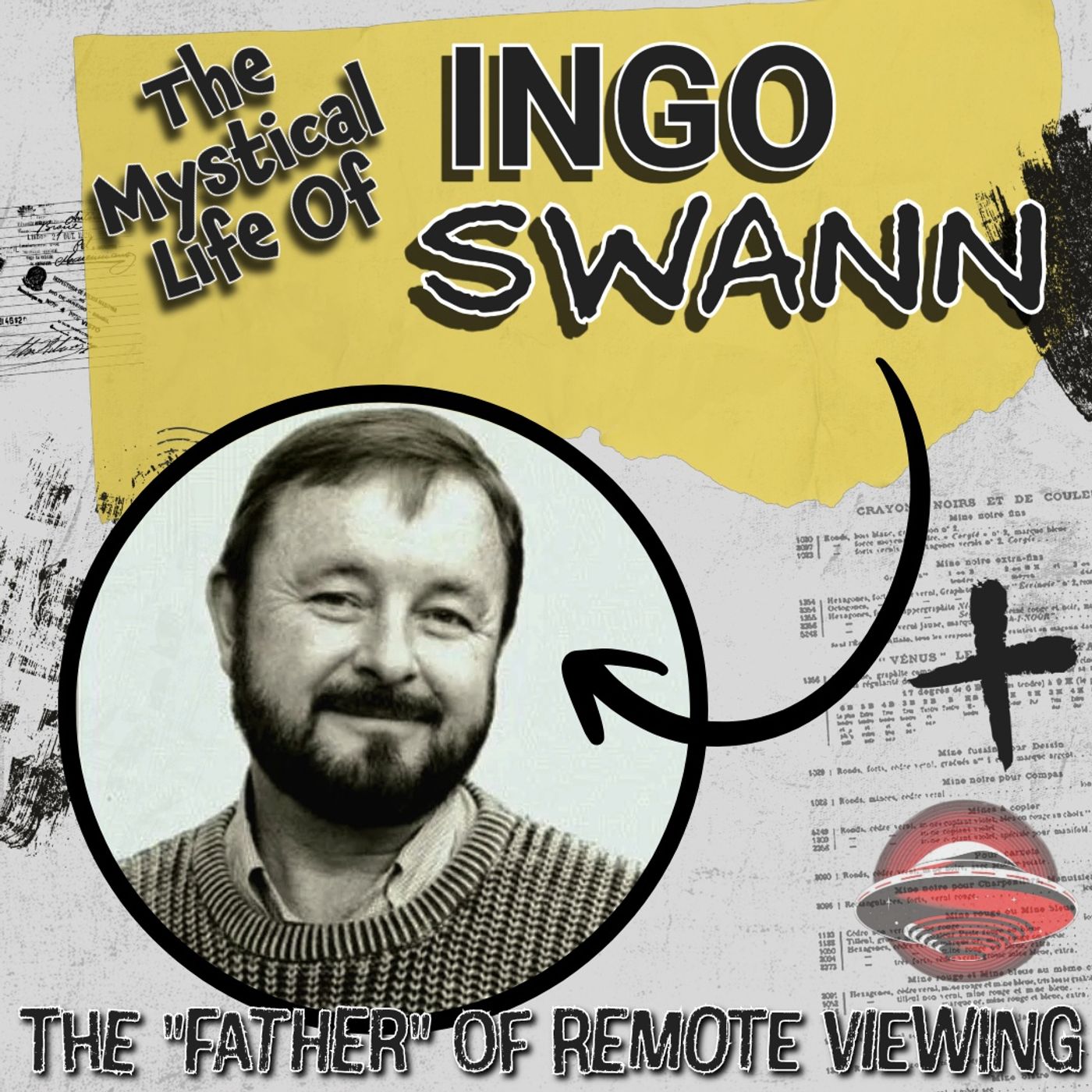
The "Father Of Remote Viewing" INGO SWANN & His Mystical Journey
https://allmylinks.com/total-disclosure
TOTAL DISCLOSURE’S HUB The 1—Stop-Shop For all things Total Disclosure— From Our Documentaries, to Youtube Videos, and Podcasts, keep up to date with all things, here on our Website: https://totaldisclosure.onpodium.com/
Subscribe to the channel on YouTube: www.youtube.com/@totaldisclosure
Support TDP directly: https://www.paypal.me/TDPstudios767?locale.x=en_US
Be A Member On The Audio Feed (Limited Perks: Early Access/Ad Free Content) https://www.spreaker.com/podcast/total-disclosure-ufos-coverups-conspiracy--5975113/support
YOUTUBE MEMBER; https://www.youtube.com/channel/UCy2Cra7aLAAMVxkA9rSYCxg/join
PATREON MEMBER; https://www.patreon.com/Total_Disclosure?
fan_landing=true&view_as=public
GET YOUR TOTAL DISCLOSURE: UFO/ALIEN INSPIRED MERCH, OR A GIFT FOR YOUR FAMILY MEMBER, FRIEND, OR TREAT YOURSELF! : https://pop-culture-corner-store.creator-spring.com/?
Follow On Xr: Www.X.com/@DisclosurePod
Follow On Instagram: www.Instagram.com/Total.Disclosure
USE OUR CODE AND SIGN UP FOR TUBE-BUDDY TO START UTILIZING THEIR AMAZING TOOLS, LET TUBE BUDDY DO THE WORK FOR YOU: https://www.tubebuddy.com/POP
Sign Up for VIDIQ and Get Tons of Creator Content Tools, SEO Boosts, Keyword Scores, Title Suggestions, & So much MORE! VIDIQ can be integrated seamlessly into your Browser and Youtube Channel, Start utilizing this tool now, Sign up with TDP’s Link-www.VIDIQ.com/TotalDisclosure
Movie Palette allows you to put your favorite scene on Canvas, a great gift for your...
Speaker 1: What all.
Speaker 2: Our diap I occasionally think how quickly our difference is worldwide would vanish if we were facing an alien threat from outside this work. And yet I ask you, it's not an alien force already among us.
Speaker 3: We must guard against the acquisition of unwarranted influence, whether sought or unsolved by the military industrial contact. The potential or the disastrous rise or misplaced power exists and will persist.
Speaker 1: Now I am become Death Dyer of World Association with Project Group. They definitely withheld.
Speaker 2: Information, definitely.
Speaker 1: Going again.
Speaker 2: You shall be twere or for the test when you are about to give us the truth.
Speaker 4: The whole truth, and nothing the truth.
Speaker 1: So help you, guys. Do you believe that our government is in possession of the agents?
Speaker 4: Absolutely come back to total disclosure. My name is Tie and I am your host. Today you we delve into the extraordinary life and legacy of Ingo Swan, a name synonymous with pioneering exploration in the realms of consciousness and the unknown. As a central figure in the field or remote viewing, Swan's ground baking work not only challenge conventional boundaries but also open doors to new dimensions of understanding. I am very happy today too, welcome the niece of Ingo Swan, Ellie Lippin. Ellie, how you doing.
Speaker 4: That's such a great name, by the way, Oh that's wonderful.
Speaker 1: Well, thank you, thank you for such a wonderful introduction. And what an opening. I mean, you're opening to your podcast is so sparring chilling. It's just fantastic to be on your podcast.
Speaker 4: So thank you, well, thank you for doing this. I know this is a little bit unconventional obviously, you know, we're talking about someone someone else and kind of going through you a family member too, to try to paint as vividly as we can the life and the mysterious and the mystical aspects of Ingo Swan, who is you know, really well known in the UFO community and just this you know, gray world that we live in. And I think I really, I really wanted to start diving deeper into these these individuals.
Speaker 4: After a couple months ago, something happened and I've kind of been on a path lately of trying to explore and find things that validate what I experienced. I need to be very nuts and bolts now not, I guess that's the way to say it.
Speaker 1: You know inga would say, we hardly understand the real reality that we live in. So it's probably a very fantastic thing that you've moved from a materialistic nuts and bolts to a more ambiguous understanding of the world. Because Inga would say, our frames of reference, you call them reality boxes, are dictated to us. So if you can start to make your way out of them, you'll understand actually what a prison we do live in. So I commend you for starting on that journey.
Speaker 4: Yeah, and so maybe we can introduce So who is Ingo Swan to you? I did say introduction, but maybe we can start off by just getting to know a little bit about who you are and why you've continued to, you know, stay relevant in the in the realm of what Ingo's Swan did and what his work was.
Speaker 1: Sure. Yeah, so Ingo with my uncle. He was the older brother to my mother. So Ingo had two sisters, my mother and another sister who passed away in nineteen eighty nine who has her own family. So but Ingo was closest to my mom. So my mom was the baby of the family and Ingo is eight years older than my mom. But for some reason they just formed a very close relationship. Even though there was say eight years between them. My mom always said that she would just follow along whatever my my uncle was doing with his friends.
Speaker 1: And she know, of course, like a young sibling, wanted to do everything with him, and he wanted nothing to do with her. Who would do had this little young girl like following along with your friends. You're trying to have adventures, right, and here's this thing like holding you back. But as they got older, and my mom was living in New Jersey, and when she graduated from high school and ultimately went to nursing school in New Jersey, she was just across the river from Ingo, who was in Lower Manhattan at the time, and so they just began to sort of reconnect at that point and it ended up just forming a very strong bond from that point on.
Speaker 1: And so because of that, when Ingo was at Stanford Research Institute, which is, you know, just outside of Stanford, California, my mom had moved us, my sister and I to Coopertino, which is you know, now known as the headquarters of Apple but before that it was just you know, a sleepy bedroom community of orchards before Silicon Valley really blossomed. So cooper Tino was not that far away just outside of San Joise from where Ingo was at Stanford.
Speaker 4: So Inga would spend a lot.
Speaker 1: Of time with us. Sometimes he when he was at SRI, he was a consultant.
Speaker 4: He was not an.
Speaker 1: Employee, nor a full time employee, but a consultant, so shuttling between New York and the West Coast. So sometimes he would stay at hotels, sometimes apartments, sometimes with friends and sometimes with us. So it's always sort of this charismatic, mysterious individual that would just pop in, take over one of either my bedroom or my sister's bedroom, and then and then and then leave. And then sometimes we would go up and stay with him at his hotel or apartment because in Everly it had a swimming pool and we would just spend the time in the swimming pool.
Speaker 1: So yeah, so he he was just a family member to us, a little kind of unknown and it's sort of a mystery around him until he's started to bring his students and.
Speaker 4: I can talk about that. So so yeah, so he did you know what was going on? Like, so when did you find out who he was? Who he really really was?
Speaker 1: So when we were in Cooper Tino, we knew that he was doing experiments at s Ryan. We knew that they were like psychic in nature because sometimes you would bring the students over and they would have dinner with us, and sometimes they would pull out the silverware and then they would all try to bend the silverware. And yeah, I tried to hear it again, and they were very successful, and it like drove my mom crazy because you had to always get new silver w Yes, they would do it, but but you know, to me, I was in middle school and that was sort of a frightening experience for me because in my mind, like psychics could read your mind, and so I know, my sister and I were always deathly afraid that they would know some sort of secret we were keeping from my mom, right.
Speaker 4: God, so yeah, so so, but we.
Speaker 1: Didn't really need to worry about it because Ingo loved to get people really drunk and he loved me kind of them, so I think they were like a little too slash to really be concerned about any secrets that we may be keeping from my mom.
Speaker 4: Yeah.
Speaker 1: So yeah, so we knew he had We knew he had students that were working on psychic stuff. And really it wasn't until I graduated from college in nineteen ninety one, and I didn't have a place to say, I sort I have a roommate and that fell apart, and the Goo said, hey, come live with me. And it wasn't until I sort of moved into his home at three fifty seven of the Bowery, which is in the East Village of Manhattan, that they got to understand that things were a little bit more complicated in the.
Speaker 4: Life of Ingo Swan, right right, Oh, that's very interesting. So can you can you tell us about Englishwan's early life and what kind of led him to develop and explore this ability.
Speaker 1: Sure, so even from when he was a young child.
Speaker 4: It's very precocious.
Speaker 1: He could see things that obviously figured out very quickly that other people could not see. So he describes it as seeing butterfly lights around people. We might call that seeing auras today it's seeing lights and energies around individuals. And he would try to explain this to his parents and they didn't really have a concept for what that was. But fortunately his maternal grandmother, so my great grandmother, she had many of the same experiences that Ingo had, and so they could form a very close bond the two of them, and sort of talk to each other in a way.
Speaker 1: So even when he wouldn't explain these things to his parents, he had a grandmother that he could sort of weave his way through life of a very strange understanding of what was happening around him. So very young, So even when he's two or three, he's having these experiences. And he does write about having his tonsils removed, and he talks about having his first out of body experience during that surgery where he drifts up and then he's able to actually see in the operating room where his tonsils are in a jar, and when he wakes up, he can he can describe them in the jar.
Speaker 1: So yeah, seeing Auras he's having out of body experiences and he's actually having premonitions. It was something he actually was able to discuss with his grandmother too. Tell You're right, he writes, is very before it was all the written famous, the playground and the written famous. It was a mining community, and Ingo says, those who work very closely with with the environment are very attuned to when there are shifts in that environment, so very apt to knowing when something might happen. And definitely tell you writes right against a very sheer, sheer mountain face.
Speaker 1: So the danger of landslides, the danger of avalanches was always present, or caven's in the cave, in the in the mining caves, and so miners were very attuned to like when there might be a shift happening, and so it was known, as he called it, the knowing.
Speaker 4: So he's already in.
Speaker 1: An environment that's kind of using their intuition and they've gut instincts. And then and then he himself having these other types of experiences. So he did have premonitions. When he was young, he saw his house catching on fire. He did warn his parents about it. They did ultimately take him at his word and fled the house, and then there was a fire that burned down the house. So yeah, so I think he from a young age had these things until he was about seven or eight when he started to have very philosophical discussions with his Sunday school teacher.
Speaker 1: And once these discussions happened, and he quickly learned that these were very taboo subjects and certainly not one to be having your Sunday school teacher. So he was so he was sort of banned from Sunday school, which was it was a very difficult experience for him. So he was very learned to sort of kind of not talk about these things and to shut these things down because the ramifications were very damaging to him.
Speaker 4: Right right. I mean, you know something that's on the mind of a lot of people right now are the televithy tapes, that podcast that just came out. And I mean American sign language was considered pseudoscience for up until the seven right, So we look at that like, that's just one at least one notion to say that yesterday's supernatural is today's natural. And it sounds like what Ingo had is a very acute brain and attuned to the environment around him, something maybe that we all have inside of us, but more activated inside of England.
Speaker 1: Yeah, I think he would say that. I think that was his life's journey, is to say there are what he called superpowers of the human bio mind that are innate within it. So within our biobodies and our bio minds, abilities or faculties might be a better word, in which we are very plugged into a very interconnected aspect. The way he might describe it is how you might look at the Force in Star Wars, very similar, very similar that there is this interconnected web that we can plug into, but we've been trained away from utilizing what he called our perceptual awareness system.
Speaker 1: So the vast array of senses within our bodies. And I'll give you example. So for those who are maybe able to hold things in their hands, you know psychics who are like, let me hold something and I can.
Speaker 4: Get some read off of it.
Speaker 1: What may be happening, he speculated, is that we have some senses in our hands that are able to sense these energies and vibrations off the object, similar to maybe how a dog smells a piece of clothing and is able to track that person based on the scent. Very you know that there's some sort of energy or aspect that is able to be sensed in some way in our biobodies.
Speaker 4: That's actually a very good, a good way to visualize it, because you know, I've always thought, at least to myself, that the consciousness seems to be the key. And why do you think, why do you think that is so taboo? Why do you think consciousness is no taboo?
Speaker 1: Well, he Ingo explains, it is the original definition of aware meant two things to be wary, to be attuned to things that might be dangerous in your environment, to be kind of on guard about something, and then to look for opportunities. So two sides of the coin. No danger, but knowing something might be very beneficial for you. But if you're a power structure, you certainly don't want a lot of aware people who might be aware to what kind of things you might be manipulating around them and able to do something about it.
Speaker 1: So so yeah, So he talks about power structures that are very afraid of having very powered individuals.
Speaker 4: So essentially keep the masses suppressed right so that they cannot and will not want to see what's really there. And I talk about this a lot lately because we grow up, or at least most of us, grow up in a home that is, you know, our parents, we learned that the world is black and white.
Speaker 2: Right.
Speaker 4: What you can see, feel, touch, what you can what you can smell, Those are the sense you know, Those are the things that are real. This table is real, this microphone's real. It's not until like it's not until very much later in our lives that we kind of realize there's more gray than we were ever led to believe. And I call that for me I call it the moment of conversion. For me, it was when I saw a Ufo as a child. Then the world became really gray, right, And I had so many more questions that my parents couldn't answer or weren't willing to answer.
Speaker 4: Other people weren't willing to answer them either, maybe due to their religious beliefs. So there's a lot of constraints societally when it comes to these phenomena. So I definitely understand that you.
Speaker 1: Think about a good analogy would be the Hubble telescope versus the James Web telescope. Right, So our world, what we understood, was defined by what or let's say the universe or the Solar system or space defined by what we could see in telescopes, and the furthest one was Hubble, and that's what we built our understanding around. And then all of a sudden, James Web comes along, and James Web is able to read at frequencies and translate that spectrum for us, and all of a sudden, what we thought didn't exist.
Speaker 1: There's something at these extended extremes of these frequencies that is there, and so is re defining our understanding of space, of what's out there in space, how space operates, and so if James Web could do this, why wouldn't our human bodies.
Speaker 4: Also be able to do this? Right?
Speaker 1: So we get so locked into the scientific mode of it's tangible when I actually tangible is just a minute example of what is around us. What is around us is more intangible.
Speaker 4: Than tangible, right right, right, And that's a really good segue actually, So as a family member, you know, what, what unique insights can you share about NGO's personality, work, ethic, or mindset that contributed to the groundbreaking work.
Speaker 1: Well, he is a virgo. His love lifelong passion is astrology. So if you know Virgos, you know they're very precise and very detail oriented, very demanding. He's also a rooster in the Chinese astrology, so he's very vibrant and likes to be the center of attention. And then you have this very precocious child that you know, for a good seven years was an only child and like doted on by everybody in the community until his sisters came along and kind of ruined that party for him. But you know, at least had a grounding in that, so he had a lot of things going for he was very you know, inquisitive, and of course he had, like I said, he had his grandmother to talk about, So even though he wasn't really sharing it, at least he had some sort of grounding that something else was out there.
Speaker 1: Even if he wasn't exploring it, he least kind of had an understanding of that. So I guess that from individual viewpoint, he had these very interesting confluence of personality traits and sort of how he viewed the world in inquisitiveness that kind of led him down that track, which is I think different. And of course because he's outside of society too. You know that I started outside of society and he just kind of even though it was suppressed, it's still inside of him that questioning of what is the proper way to go about living a life?
Speaker 4: Yeah, so how did we go from how does it go from Ingoswan having these abilities to the government taking notice? I guess that's so he must have been doing doing something that alerted that, like, hey, he might be a good candidate. So when did he or from your best recollection of the events, what what was he doing before the government contacted him? That maybe through the right flag up.
Speaker 1: Sure, so in the late nineteen sixties. So around sixty nine he began. He was very good, well, he was concerned what he hadn't Moniker, which was the psychic artist. So he after he left the army in the late nineteen fifties and he moved to New York, he wanted to be an artist. And so I'm going to sort of give some it's sort of a little long story if you did bear with me for a moment, Sorry to Dicrasp, but I do think. So he comes to New York to be an artist, and of course he's going to try to fit in with what everybody else is selling, which is sort of that Dolly Askue kind of surreal black and white kind of imagery.
Speaker 1: But he's just one of like ten thousand artists in New York. It's not like he's going to be any Nothing about him is unique or stands out. So he's struggling and he says, finally, you know what, I'm just going to paint when I want to paint, And so he starts painting what he sees the auras, the.
Speaker 4: Bubbles, entities, aspects of.
Speaker 1: Other realms, things of that nature. So not really a commercial success because his day job is at the United Nations. He's a secretary in the pr department at the United Nations. But he at least is painting the imagery, the coal imagery, the other realm imagery, the aura as the aura imagery that.
Speaker 4: He wants to paint.
Speaker 1: So he gains a reputation as the psychic artist. And he's really connected within the West Village, very bo So there's an undercurrent brewing in.
Speaker 4: The West Village.
Speaker 1: It's very connected to things of an other nature, so extrasensory type things, and he's always very connected with that community. And because he's connected to that community, it's at a party one day that a young couple now has a crillion camera right that can record auras, and they say, hey, let's go to a back room, let's close the curtain, and everybody think about an energy ball over your head and we'll see if we can photograph it. And so they all do, and when the film has developed, there's Ingo's the only one with a ball of light above his head, and that's when everybody goes, oh, you must be psychic, right, there's something about you that could create this energy above your head that we could then we could then photograph and because he's connected to this sort of underground extrasensory kind of movement that's happening, they put him in touch with very researchers and the first one is Cleve Baxter, and Cleve Baxter is known sort of as like the Primary is books on Primary Perception, but he's also known for doing those experiments with plants.
Speaker 1: So his first thing is he's been doing experiments himself. He's a former CIA interrogation specialist, is very much into sort of like hypno and narco interrogation is his specialty. But he's built his own kind of pseudo lie detector that he connects up to plants, and he's been doing experiments where he's thinking about harming the plants to see if they'll be sort of and he's hooked up as plants, so a reaction from the plants if there'll be some sort of on his machine. And he's able to do that, but he feels like, because he's both the experimenter and the participant, that that's probably not going to be very valid.
Speaker 4: So he is part of.
Speaker 1: This community that is connected with NGO and says, hey, why don't you come down, let's sort of try out you do this, and of course when Ingo does this, the plants respond immediately, and that is like thinking, I'm going to light a match and then set your leaf on fire, and the plants, the plants somehow they're read out to spikes until the plant figures out that Ingo's not really going to light a match, and you know, and then it kind of diminishes, which is kind of fascinating. So their studies are on plants on other bodily fluids, including blood, and Ingo is actually able to perturb the blood, and cleavebacks are being former quite possibly even still currently.
Speaker 1: CIA says, Hey, the boys down in Langley, they're going to be really interested about this. So I think he was already because of that, because he's able to perturb blood.
Speaker 4: I mean, that's pretty fascinating.
Speaker 1: Yeah, that's going to be pretty interesting to them because at this time the Soviets, their work in parasitecology has been on psychotronics, and psychotronics is the manipulating of some sort of something, primarily sensitive equipment, but also could it stop somebody's heart, could you set off a bomb? You know, the whole spectrum is really what they're working in. The CIA is obviously very concerned about what the Soviets are doing with psychotronics. So Inga's ability to manipulate something, it's going to be of interest to the CIA.
Speaker 1: So I think he was because of that, became on the CIA's radar.
Speaker 5: Right almost, So it's almost a psychic spy, right, or psychic warrior spy, at least from the CIA's perspective, right, if they're they're worried about what the Soviet Union's doing.
Speaker 4: Well, but we got to do it. We got to do it better.
Speaker 1: We have to do it better. Yeah. So he then goes on to work with doctor Gertrude Schmidler at the City College of New York, and her experiments are she's putting thermometers into sealed canisters and INGOs in a different room and she's saying what to do to each of the thermometers, and Ingo's able to do whatever it is, make the the monitor go up, make the thermometer go down, or do nothing. And again that's going to be very interesting to the CIA. You can affect some sort of change, right of a.
Speaker 4: Liquid sil candish right.
Speaker 1: But ultimately he then goes to the American Society for Cyclical Research the ASPR, where doctor Carlos Osis and Genet Lee Mitchell are doing out of body experiments and in that case, he's doing astral projection experiments to look at things and the shelf that's in a different room.
Speaker 4: And this is what he writes about in.
Speaker 1: His book Everybody's Guide to Naturally Speace, talking about those kind of experiments, and you know, ultimately the confluence of those psychokinesis experiments and his out of body experiments sort of create a pathway to where he's put in touch with doctor hal put Off at SRI and ultimately leaves has him leaving the ASPR because he gets fed up because his work he is one hundred percent accurate, and the board at the ASPR says, it's just impossible, nobody could be that good. There must be some fraud involved with that.
Speaker 1: And of course doctor Osis and Janetlee Mitchell and Ingo or Flabbery Acid like.
Speaker 4: There is no fraud.
Speaker 1: But here you a paracutsmer psychologist saying it's too good to be true, it can't be true. And that is very frustrating for NGO, and I think compels him really into doctor Putoff's arms, and he's going to Stanford Research Institute for psychokinesis not for out of body, for remote being, but to be able to manipulate sensitive equipment. Again, the Soviet with the race with the psycho kinesis is of paramount importance, and that's why he is at SRI and Uri Gellers is.
Speaker 4: Not far behind right when he gets there. Yeah, yeah, And there's the famous famous story from his uh work with the American Society of Psychical I was messed up the American Society of Psychical Research where he tells Uh, he says, there, I can't see anything but darkness, and You're like, you can't, you know, he can't do it, only to find out that when they went in the room, the light bulb had been out. So that's kind of really that story really sticks out and stands out, and then from there goes to Sri Help put Off.
Speaker 4: Help put Off is someone who I've been very interested in. I mean, I'm interested in all of them, Russell targ Edwin may Ingo and Pat Price and many of these people because they were on the inside of these programs, the programs right now that we're trying to get a hold of, and it just it fascinates me. So okay, so he meets how put off and from there where do we go?
Speaker 1: Yeah, so there are two things that happen. So so how says, I have this experiment for you. It's going to be a psychokinesis experiment. It's going to be in the Hall of Physics at Stanford University. There is a machine, it's called a Magni meter. It is looking for what I guess you would call it quarks or sort of like nanoparticles. It is trying to detect them, and it is buried under eight feet of cement and its design is classified. Yeah, and until that point, the line on the machine has been like this, I mean.
Speaker 4: Just study. So they have a good base.
Speaker 1: They know it's they know the design is not out there. No one knows what it looks like. And it's buried under eight ft dismounts. It's well shielded, and there are physics physicists around with machines monitoring it. So I think it's a very good experiment.
Speaker 4: Okay, ango, I'm gonna bring you there. You do your thing. That's basis.
Speaker 1: Do you do your thing? So Inga says, he actually just shifted his attention. So when you think of something like we use the word attention, right, attention is your energy. You think about it, I think about we pay attention, we give somebody our attention, we steal attention, we divide attention, we concentrate our attention. Right, all these things the way we use the word. But so fascinating. It actually is just putting attention on something, so putting his energy onto it, which he does.
Speaker 4: And when he does this.
Speaker 1: This little readout that's been like this starts Coach and as he's doing this, he starts to draw the design of this which then Ingo says that the physicist like one of them like runs out, tries to run out of the room and runs into a door. I mean, they're just so shot that not only is this machine reacting, but now he's drawing a classified piece of equipment what its design is. And at that point, how how's on the phone with the CIA right like we got him, We got we got it because SRI at this point, it is not the funding is you have to go get your own funding.
Speaker 1: Yes, this isn't This isn't like you there's a well spring of funds. You have to go fundraise your if you want to do work, you have to bring money. You're bringing money to the So of course anybody is going to be calling any potential funder that they can, and they know the CIA is going to be very interested in this. Now, keeping in mind that Russell Targ has said that just after this he has approached the he has been through a series of circumstances. This is an interview. He gave it to Richard Dolan, so it's you know, it's on YouTube.
Speaker 1: You could watch it where you're Ultimately, he meets a person by the name of Arthur Arts. Arts is short Reads, and Reads is an engineer with NASA, and Art brings says to Russell's pitching his ESP machine as an ESP teaching machine, and so Russell's looking for a way to get this funded and he he in Arts meet with the director of NASA. This is what Targ says, and Russell is very aware of their recent Apollo thirteen disaster, and they saying, hey, you know, instead of having people in space where something could blow up, I could help teach your pilots how to use equipment in space and on the Moon telepathically.
Speaker 1: And for some reason this is very appealing to NASA, and all of a sudden, a few weeks later, he's got dollars in hand with Art Reaches, his contract manager, and he shows up at SRI. So you have NGO working with hal on telecmeesis or psychokinesis experiments, and then you have targ showing up with NASA funding to teach people how to operate something in space, which I think is pretty fascinating. And shortly thereafter that's when ur A Geller comes on the scene. So it's a combination of the CIA funding and this funding from NASA for that first.
Speaker 4: Year, right, right, So isn't it interesting NASA? Yeah always, It never ceases to amaze me to hear how they're always involved yet you know, no nothing from them on anything.
Speaker 1: Yeah, yeah, so anything. So that after that first year, so in May of nineteen so that's the summer. So Ingo comes in the summer of nineteen seventy two, and in about the spring of nineteen seventy three, Ingo writes a letter to l Ron Hybrid Ingod had been studying scientology at that point, so Ingo is very interested in a lot of things. That was something that he explored. But you know, he had in the nineteen sixties, he had studied Alice Bailey's Artne school. He'd studied Rudolph Steiner with his his sort of theosophical bent on things, So he was very familiar with the occult, all the occult angles.
Speaker 4: He studied them, very interested in the Fourth Way. So every Eastern.
Speaker 1: Philosophy, every major religion, and so when Scientology comes on the scene, you know, it's kind of the thing that's kind of exploring the mystical stuff. So of course he's going to add this to us about So.
Speaker 4: Do you think that now had any influence on that?
Speaker 1: Oh? No, Ingo was already studying at Scientology before he went out to SORI, So he actually was studying and he left his job at the un and studied in Los Angeles doing all the high level courses in nineteen sixty nine, and he doesn't go to SRI until nineteen seventy two.
Speaker 4: Yeah, so you know, so.
Speaker 1: He manages to Anger's like an incredible networker. He manages to become very close with l Ron Hobbard's left hand and right hand. So two women, you know what, doing opposite, Virginia Downsborough and then an and another one, so they're they're very close to Alvin Hubard is very close with Elvin Hubbard, and in fact, he and Alvin Hubbard are sharing correspondences back and forth, you know, and and Hubbard's very supportive of Ingo's work at SRI. And so Ingo writes a letter in May of nineteen seventy three saying
Speaker 1: I have figured out one we're not alone on this planet. And two there is a deep seated control mechanism in place.
Speaker 4: So some sort of like we might call it the deep state. Deep state, Yeah, the deep.
Speaker 1: State that is that is working to create an unemployable, unproductive, uneducated majority and mind control and bioautomative.
Speaker 4: If only he could see yesterday.
Speaker 1: Right right, I mean exactly, this is nineteen seventy three, and I look at our society today and I go, wow, that did take long?
Speaker 4: Yeah, what he said, aged, well, yes, yes.
Speaker 1: So so shortly after a month after that letter to Howard Pat Price, another scientologist appears at sr and I think he's actually come to assist NGO with this. You know, we've discovered something. This is pretty major. There's there's something undercurrent that is really working against the development of the human consciousness in really trying to deride our individuality. Right, so my Price shows up and they and Price begins working on experiments with Ingo. Now Price is interestingly, I know he's going to hail to sort of like the gold standard.
Speaker 1: But Price was Price's work was often spotty and it was often inconsistent. And the contract monitor for the CIA, so the one who was sort of the CIA, the scientific sort of monitor watching the funding from the CIA, is reporting this back to see to Langley, and Langley's kind of concerned because he's either really really really really good or he's not really really really good. And there's ultimately this session where he does sort of this crane session. And so ken Krass, who is the handler for the CIA, has this work analyzed by two individuals.
Speaker 1: Somebody who can speak to the fact that is it geographically correct, as he got all the geographical aspects correct, and then someone who I've sort of identified is what I would call it a risk manager. Is there a possibility that this information is been acquired from other sources or is being leaked to other sources, So that kind of risk manager, and that risk manager looks at it and says, again, he's either really really good or he's not really really good.
Speaker 4: And he's not really good.
Speaker 1: When he is there at SRI but he seems really really good when he goes to his apartment and he can phone in this information, which then raises the question is he could he possibly be an asset for the KGB.
Speaker 4: Right, which is it's understandable, understandable. Yeah.
Speaker 1: So at that point the CIA comes in and the shuts down temporarily. The work at SRI with inga Ingo goes back to New York. Everything's on hiatus, and they move Price to a different handler, and Price moves to West Virginia's taking a job as the president of a coal mine. There seems to be some sort of scientology connection with this coal mine, not the owner of it, but somebody high.
Speaker 4: Up in it.
Speaker 1: And he begins work with sort of research and development with a new group. And this new group is fascinatingly sort of connected with an assassination group, and they're also connected with trying to figure out like, if if information has gotten out, how damaging could it be to us? That's this group, Like what is the level of risk to us of the information that is in other hands? And also trying to figure out, well, which hands did it get to and how is it getting in or out?
Speaker 4: That's the group he's working with.
Speaker 1: And he's working with them, I guess for these six six months or so before they say they're going to.
Speaker 4: Go operational with him.
Speaker 1: And I think what they're doing is they're not feeding him correct information. They're feeding him things to try to sort out what where are you getting this information and where it's going, you know.
Speaker 4: So they're trying to kind of reverse engineer.
Speaker 1: Him, like what has happened, Like where's the information going? And what kind of information are you getting? And it's one last meeting where they ask him and this isn't a declassified document. They ask him, you can work off of just coordinates, right, and he goes, well, coordinates are okay, but I really could use like photographs and more descriptions and detail. And I think that that may have been one of the things that sealed his fate. That meeting is in April, and he died. He died that July.
Speaker 1: But the second thing that's really fascinating in that transcript is he talks about an upcoming interview with the National Inquirer and he says it's just really about remote viewing and you know, non non classified information and just you know, psychic stuff and my work with scientology and whatnot. But if your follower Project eighty two hundred, you know that in this intervening time back in in In, you know, eight months prior, he had handed how put off a series of drawings and notes regarding underground UFO basis, which Ingo later in an art Bell interviewed, said Price called human extraterrestrial cooperation basis.
Speaker 4: So similar to what we've been hearing lately from say David Grush, that there's some sort of agreement that was made and that we are working with this non human intelligence.
Speaker 1: Yeah, yeah, yeah, so right, okay, very weird and yeah, so if you read Jackvelit's Forbidden Science two book, you know that during this time frame, Valet's trying to figure out is the US government working on UFOs and how it's just come back from a meeting in Washington. He and Halli is saying, while there are UFOs that are really extraterrestrial, and then there are things that are terrestrial in origin. So you know, we got some technology of some sort that we're developing. And then there's a program that is using my psychics so to figure these UFOs out, And my psychics would be Ngo and path Price.
Speaker 1: So we know that Ingo was involved and also remote viewing these you know, I think that if you kind of follow this narrative, I mean, in my interpretation anyway, is that National Enquirer interview Price may have strayed a little bit more from just remote viewing as a thing in scientology and maybe was a little frustrated and wanted to go into what we would called disclosure with the National Inquirer, and that ultimately may have been what his demise.
Speaker 4: Was, right, because we know now I'm not sure how many people know this, but the National Inquirer has with its roots. I think the person I don't remember his name, but there the person's father or someone was in the CIA, pretty sure, so this would have been a direct line essentially.
Speaker 1: Right, so they would have known if he was talking about something he shouldn't have been talking about. So, you know, I think ultimately that is what did him in, was that he may have just strayed a little bit too far into the realm that he shouldn't have. Where like Ingo and hallen Exer left off, this part is that after the programs shut down and Prices in West Virginia and Ingo's in New York and how still working on something else at Sri. Hubbard writes a letter to Inga and says that what you hal and Pat are working on is, you know, of the utmost importance.
Speaker 1: So this is in December, so they've been shut down for like six months. So clearly hal Ingo and Pat are still working on something.
Speaker 4: I believe that's disclosure of some sort.
Speaker 1: And Pat may have just gotten a little too ahead of the game, like frustrated, right, So the three of them may have had a game plan going and it's just monumentally difficult to go against a control system that doesn't want a narrative out and you know, or maybe just playing a little fast and loose with his information.
Speaker 4: Yeah, right, right, And you know that is a very interesting kind of question. Not it's not a question, but you know that following that train of thought, it makes complete sense by you know, Died. I don't want to say anything further than that, but that's you've shed some light on something for me, So thank you.
Speaker 1: Yeah, yeah, you have to sort of put the pieces together. It wasn't you know that he was this spy or that spy. It just I feel like they were working on something of importance that somebody didn't want anybody to know about. And they were in very treacherous they were in very treacherous territory. I mean, you kind of have to watch the disclosure movement just to know that in the nineteen seventies the intelligence community has this lockdown. They've had it locked down since the Robertson panel comes on this scene in the early nineteen fifties tells the CIA, here's the game plan.
Speaker 1: We're going to create a mass education program. We're going to use mass psychology, we're going to use the media. We're going to use movies, we're going to use programming. And then what.
Speaker 4: News mage means because at the time, you forget, yeah, you know, radio TV was super limited with three channels, four channels. Magazines they were they were that was celebrity gossip and and that kind of stuff and the juicy stuff that you know that that that it's like reality TV if it's day reality, you know, you know, so that's very interesting and and and if I'm I'm just gonna and now that I've already cut you off from your your your amazing story here, I just want to say that isn't it ironic too that after Roswell whatever happens at Roswell.
Speaker 4: If it's real, I think it is. Whatever happened there birthed the National Security Apparatus, so the CIA gets formed. So it's an it's my I at least believe that the the National Security, and the CIA, all these three letter agencies are pretty much birthed from the cover up and the attempt to cover up this information. So would it be their main goal to complete and control that narrative? I think so yeah, I.
Speaker 1: Mean, and so you have to understand that's the early fifties, So this is nineteen seventy, so they have twenty plus years of having this downpad. So you look at us seventy plus years later, do you think anything is really going to be different? You know That's why I kind of ultimately I came to the conclusion because you know, Ingo said, we're not alone on this planet. I said, I'm going to go on this journey. I'm going to go figure out what else is on this planet with us, And I document this in a book called Conjunction dot World, and ultimately came to the conclusion in that is Ingo saige.
Speaker 1: You know, if you follow the line of demons, it just brings you deeper into demonology.
Speaker 4: And I don't mean like evil entities.
Speaker 1: I just mean something that is you can't understand in something that is just like gnawing at you, and the more you try to try to unpackage it, the further you fall into that hole. Whereas what we should be doing is just, hey, I'm going to stop chasing you and trying to figure out you. Because Ingo said, we don't know who they are, we don't know what their agenda is, we don't know what they're.
Speaker 4: Doing with us.
Speaker 1: We have a very limited frame of reference that's been created for us. So what we should be working on is ourselves and enhancing ourselves because clearly they don't want us to enhance ourselves and that, but we should peel that away and work on that and work on developing telepathy so we can keep that message from coming in. And then this sort of something else, which you know, we were sort of talking about what Star Wars would call the force, how we can connect with us and develop our perceptual awareness SYS and enhance our intuition and our internal guides and our awareness and and perceive what is really there instead of what has been created for us.
Speaker 4: Right and and you know, it's it's it's really something that I have been again thinking about lately. And you know what, if the brain has developed these you know once you're when you're young and you're molded. You know, this is when you're molded by your parents. So if your parents have a very religious uh nature, you know you're gonna you'll you'll tend to follow that same path and see things, you know, in a similar way. Same as like the house I grew up not religious, I'm not very religious. You know, in this time that we're by our parents and the people around us, you know, we're kind of taught that the world is black and white and very mechanical, right years and what we talked about are things that we can see and not.
Speaker 4: Do you think that if that's the case, then the brain would develop in a way to only see the black and white, right because it only needs to see the black and white, but there are times when it needs more. So maybe this is what intuition is. Maybe this is what instinct is. Maybe this is what you know some of these telepathic or people who have visions, maybe that's what it is. Is they're picking up on the brain's picking up those senses that it has and it's throwing it to you, but you're not used to it, so we think it's a phenomenon.
Speaker 4: It's really just the brain's way of saying, you know, it can do much more.
Speaker 1: It could do much more, right, so you don't have you haven't built the pathways to interpret what this information.
Speaker 4: Is, right right. Yeah. I probably sounded like a crazy person right there, but I think you get where I'm coming from. Yeah, hard to talk about this kind of stuff like telepathy, psychic ability without kind of for me stumbling over my words because it's so new for me. And honestly, it it makes the field, makes the world feel a little bit more magical, and I just can't understand why more people don't want to see what's really there.
Speaker 1: Well, keeping in mind that along with this, you know, you talked about these these clandestine agencies being developed to control this narrative. You know, the other thing that they've been working on is mind control. They've been working on subliminal messaging. You know. I I after I started to sort of pay more attention to my environment, I was watching this. I was watching the movie about the dating show serial Killer. The serial killer that was on the dating show it's a new movie. And very early on I started to be like rooting for the serial killer, like rooting for him to kill people, and like, where is this feeling coming from?
Speaker 1: Oh my gosh, this is some subliminal thing that is happening where I am being bombarded with some sort of emotional content to root for something evil. Oh, I shut that off right away. And if it's it's as insidious as that, you can imagine the whole spectrum that is being just driven to us.
Speaker 4: Well, yeah, I've ever heard of the ghost frequency?
Speaker 1: What is the ghost frequency?
Speaker 4: Oh, you're gonna love this. So the ghost frequency is it's an infrasonic frequency of about between eighteen and nineteen herts. And some people think that it causes you to the ghosts. Okay, were using.
Speaker 1: So person person might have person gen Persinger's work.
Speaker 4: Yeah, yeah, so horror movies use this this a lot to subliminally scare you, to to get you into that that that state of mind, if you will. I think it's it's it's absolutely plausible that we are being influenced by media, especially when it's copy and paste media. Yeah, right, right, looking right.
Speaker 1: So the early MK ultra studies were really on hypnosis big part instead of little messaging, big part of drugs, but about a lot a lot of it was on like surgery, on temporal lobes and things like that. Until you didn't need to have you didn't need to torture anybody, You didn't need to use a lot of drugs and anybody. You could just subliminately send this message, these messages at frequencies like you're talking about. Think about now social media, where you're scrolling and when you're scrolling, you're kind of putting yourself into a little hypnotic trance, and how readily that information can then just be transmitted to you because of that.
Speaker 4: Yes, I want to talk about the moon. Okay, Ingo, I know, and I brought I was gaving this because I find this to be one of the most interesting topics that people are discussing it. But I don't think not enough that so Ingo famously said, I am not the first to see that we are not alone. So he was tasked to remote you the moon, so things like tracks on the moon, like from sort of tractors, and he saw humanoids doing work on the moon, essentially mining it. Can you tell us about this?
Speaker 1: Why can only tell you what is in his book Penetration that he talks about remote viewing the dark side of the Moon and seeing structures and domes and things of that nature. And it is just fascinating to comment that not long after his remote viewing session of the Moon, he was tasked to or he says, he's just sporadically, I think he was tasked with Harold Sherman to remote view Mars where he saw very similar things on Mars. And this is in the mid nineteen seventies, so yeah, he saw activity there.
Speaker 1: But he says, this.
Speaker 4: Is not new.
Speaker 1: Anybody with a telescope can see anomalies happening on the Moon, like strange lights and moving objects. This is and it's not just relegated to the dark side of the moon. Anybody with a telescope who takes time can see there's something, something's happening up.
Speaker 4: There, right, and it's just it's it's for me, like the the moon is an interesting subject because first off, it's tidal locked, so we only, like you said, there's a dark side, the side we don't see and the side that we do see, and that is interesting because we look around at other moons in the solar system, and they're not. They don't they're not. They're not doing that, nor are they perfectly this the perfect amount of distance away and sides to eclipse the sun perfectly. So there's a lot of strange things about our moon and could it be a satellite of some sort or you know, artificial even insight.
Speaker 4: Yeah, so Inga's Inga actually penetrations.
Speaker 1: His book Penetration is broken into three parts. The first part is you know, all his adventures, and the second part is on how the moon he believes is an artificial satellite purposely placed there right right, right right, and then the third is why we need to develop telepathy.
Speaker 4: Right.
Speaker 1: But you know, he makes the case that there's too many, as you just illuminated, too many strange coincidences, that market is unique compared to any other kind of orbitating celestial body that's considered a moon, to any other celestial body, which are they're more alike each other. And then you have this one anomally called our moon that just is perfectly done to create life on Earth. It creates and keeps life on Earth, which is so fascinating. And he also talks about it being a hollow body as well.
Speaker 4: Yes, and now so famously did the the experiment where they dropped. I don't know if what it was, but it was I.
Speaker 1: Think they under the lander that the landing equipment, yeah.
Speaker 4: Right right, and the moon rang like a bell like reverberation. No, I didn't actually ring like a bell, but it reverberated as if it were hollow. I did this for up to three hours, so you know. And then and then not to mention that there are religious texts that in some parts of the world that talk about a time before the moon and a time after the moon. So I just that is that's something I want to look more into, and I think everyone should look more into, because again it is it. It's like perfectly sized, it's perfect distance away, it does all everything.
Speaker 4: The chances of its existence are like one and a number that's incomprehensible to us, right, it's the odds of it being all of these things are just it's infinitesimally smile. So it intrigues me.
Speaker 1: It is I think Inngo we found in his archives this chapter on Mars that we put into that special edition, the updated special Edition and penetration, and I think what he would you know, obviously, he's not going to write something that's going to be censored, right, So the stories themselves are all allegories. But I think if he had actually been able to include Mars in this discussion of the Moon, it would have been a grander theory for him that there was something on Mars, there was some sort of holocaust on Mars that led to some sort of evacuation.
Speaker 1: But if you're Marson and you're coming to Earth, it's a radically different environment, right, that something's going to have to be reprogrammed or re engineered for you to be able to live on Earth or have some sort of population on Earth. And so I think I think this is me that he saw the Moon as some sort of station somehow related to Mars.
Speaker 4: It's that is that's amazing, because we see evidence that something happened that the huge scar across the Martian surface, something clearly happened there. And then we look at ourselves, look at just look in the mirror. Our bodies are are more in tune with the Martian day and night. We shed our you know, if you believe in the evolution, we shed our fur when we need pelts and furs in the winter. We have back problems, We're the only species to get sunburns, and all of these things start to add up and make you really wonder if we're not aliens ourselves.
Speaker 1: Well they do. There are many anthropologists cannot make the connection for how Homo sapiens just suddenly appeared. It's not just you know, a conspiracy, that's you know, anthropologists even struggle to explain how this happened. And so I think what we've lost is the ability to question right. It doesn't met you know, we might be wrong, we might be completely off base, but we are not allowed to question or deviate from the narrative. And I think that is what it's dangerous.
Speaker 4: And when you do, you're labeled a kook, you're discredited. We see, we saw this with David Grosh. Now David Grush, I only bring you upposite an example because he's, you know, someone who came forward as recently and they immediately tried to discredit him using his PTSD from being in a war zone, which I think is super sympathetic and just goes to show how dirty these people are. This deep date you know, whoever they are. And Daniel in a way Center for Why famously gave that speech who said that you know, there is uh, this deep state.
Speaker 4: They have their own ways of fundraising, their own army, their own navy, and their own agenda, and they operate above the law, you know. And and I think we really need to start looking and looking around us and seeing that we have been placed in some sort of societal prison.
Speaker 1: Uh.
Speaker 4: And it's been it seems like implanted on us. Yeah.
Speaker 1: I mean, if you if you, if your main goal is mind control, and that is what you have brought over with the Nazis. I mean, the Nazis started with it, and you've brought that over.
Speaker 4: Many of the scientists who.
Speaker 1: Came over with Operation pay per Clip were you know, doing mind control experiments in the concentration camp. And that's your foundation. You're going to do something with it.
Speaker 4: Yeah, You're going to do something with it. Yeah. Yeah.
Speaker 1: So so that is why I think it's important. I mean, what I ultimately did is I really don't dive much into social media, very cognizant about just don't even watch the news. Cognizant about movies. I mean, like I am down to just documentaries and comedy shows.
Speaker 4: Yea wow. Yeah, let me ask you a question. Yeah, you being who you are. Have you ever seen anything?
Speaker 1: Well, that's what I write about in my book. So I write about that I wanted to figure out. So I went to different places, oh where things of an anomalous phenomenon happen. And I talk about because there were things at three fifty seven Bowery, that's the building Ingo's building from the nineteen seventies, that there were a lot of entities at three fifty seven, And so I talk about that coming into contact with them because they were they played ango, you know, they did you when you open up and you start explanding your awareness and perceptual systems, you are going to run into things.
Speaker 1: He said that, And so it's very important to remember that we don't again, we don't know who they are, and a little bit of caution when interacting with these things might be prudent, right Like if you're going into a neighborhood you've never been in before, you might be a little like, Okay, I might need to know a little bit about more where I'm going into before I just start, you know, opening up my doors to everybody, because you don't know if everybody, if these things have our best interest in her, which I don't believe they do, right, So a little caution before doing that.
Speaker 1: But you are going to run into them. It's sort of like again the James Web. You're starting, You're going to start to see different things, but you don't really have a roadmap. It's like going into a jungle and you've never seen anything before. Like you want to touch everything, right, but you shouldn't touch everything. You should just maybe kind of sort out and examine it before interacting with it first. Yeah, So there were a lot of a lot of entities at three fifty seven, and I did go to places like Dudicola Rock in North Carolina, which is which has quite a history as being a portal.
Speaker 1: So I had experience with that. I had an inadvertent experience with a time slip.
Speaker 4: I didn't even know what was happening.
Speaker 1: I thought we were I was actually at an Easter brunch with my son and had this sort of time slip experience. We both thought we were hallucinating. Was just crazy. Things kept changing around it, the people kept changing around us.
Speaker 4: It was crazy. I talk about it. What is that? What I'm like missing time? That doesn't sound like missing time.
Speaker 1: It's not missing time. So what is fascinating is this. This location is called Mountain Lake Lodge. It's in southwestern Virginia, and what I discovered is the whole building is made of a sandstone with a lot of courts in it, and the ground beneath it has got layers and layers and layers of quarts. And there are those who are studying in geology. They're studying the effects of courts with what we would call sort of anomalous phenomenon, so as something that is able to record and hold memories, which is really fascinating.
Speaker 1: So a lot of times when you look at structures and people report ghosts. There was actually a really unique study that I found where a graduate student took like a ghost hunting show and you know, knowing that some of it is for entertainment, so a lot of it was maybe not made up, you know, made up and not real, but still kind of overlaid. Where they went with the geographical and geological makeup of that area and where there were high incidences were like where there were high levels of courts, and sort.
Speaker 4: Of theorizing that maybe what people.
Speaker 1: See as ghosts may just be sort of a replane of an energy, like some something traumatic happened that imprinted a huge amount of energy on the environment. And then people who are operating in a broader spectrum are then picking up this and it's replaying like a movie to them.
Speaker 4: Oh my god, right, you have no idea, how how weird? This just got yeah, and you'll holy shit. So so this is a theory that I've posed recently. I'm making a documentary myself a homemaker, and there's three places in Massachusetts where I live, Salem and h Dudley Road and the Bridgewater Triangle. All three are hot spots where these phenomena seem to converge. They all have courts and they all have these human atrocities. So the Bridge out A Triangle had King Phillip's War, Dudley Road had a lot of Native fighting, and then the Sale obviously has the Witch Trials.
Speaker 4: Uh. The title of the film is called Cursed Echoes because that's exactly what I think is happening. I think what people see as quote unquote ghosts is really just the land showing its memory.
Speaker 1: Yeah.
Speaker 4: Yeah, absolutely must define the theme of the documentary that I'm working on.
Speaker 1: Yeah, well, yeah, check out my criticity or yeah, it's great. So conjunction dot World. So I've put a lot. I've put that research paper on there and some other documents about stone memory theory. It's called stone memory theory. Really fascinating. So the way Angle explained it to me is like he said, there's no ghosts, right, there's no such thing as ghosts, because I've had an encounter in when I lived with.
Speaker 4: Him three times.
Speaker 1: So we talked about the first time, but the last time I was commuting to New York and I had an experience on a train where I just.
Speaker 4: Saw something repeat.
Speaker 1: And he explained it to me, as you know, like the same thing. There was some sort of energy trail, something happened that ignited some sort of entrapment of a loop of energy, and that's what we're seeing when we see ghosts, Like the same thing is like the same person walks down.
Speaker 4: The stairs, or it's the same knocking or whatever it might be.
Speaker 1: It is this kind of replaying of this energy loop that people are picking it so they're able the wider their spectrum, their frequency spectrum, they're operating like James Webb, They're going to pick up these memories that have been implanted in the land or in the stone for example with quartz.
Speaker 4: I think the.
Speaker 1: Researcher said also streams nearby were also could.
Speaker 4: Be attributed to it as well. That the aspect of it. Yeah, so you do believe there are hot spots hot spots. You probably coat there's something to do with energy and maybe you know different that could differ, you know, whether it's electromagnetic or you know, from different different spectrums. But something's different in these places than you know, just your average area that I don't know doesn't have this weird stuff going on the way we're stuff going on. Yeah.
Speaker 1: So so in terms of my time slip thing, the way I've come to understand it is that time moves differently, and the person is can interact with different time periods, not like radically different, but you know, like a few minutes or an hour.
Speaker 4: Something is happening.
Speaker 1: And that's what I feel happened to us is that the stone recorded these memories, and we were experiencing these memories different like it would go flip back and forth between when we were seeing the memories and then when we were seeing actual things happen, and it was just it was it's just really wacky. Like my son and I had different experiences and who we interacted with, And like I'd look over at a table and it would be six and then twenty minutes later it would be four people, and I'm like, what happened to the six people?
Speaker 1: So that were there, there was a family or you know that time just moved very interestingly. So I think there is a dynamic with time too that I don't quite understand.
Speaker 4: But yeah, right, and we all know that we see time as linear because that's how we experience it based value. But that is that's it's not real. It's it's not a real thing. It's something. It's it's a force, just like gravity is or you know space space time. Uh, there's something there, And I think I think that's that's very interesting. That's a very interesting experience. Yeah.
Speaker 1: Yeah, So with time and a portal and entities, and I went like looking for UFO and I feel like I called the division quest because I feel like everybody.
Speaker 4: Keeps looking for them.
Speaker 1: It's like their vision quest, and you never really get where you're wanting to go. But I did have some sort of vision quest experience and then ultimately sort of sort of like a strange magical encounter which I talk about that. I went to try to figure out what I was thinking was the land was the driver of these things, like you and your documentary right, that somehow the land was responsible for these things. Was so I was trying to go to places where the where things happened because of the land themselves.
Speaker 1: And I ended up in Pennsylvania, and I was thinking that I was going to go to one place, and before it opened, I was waiting in another place. And I didn't even realize that this was like a paranormal hotspot. Like the whole time, I didn't even realize it, which is which was fascinating.
Speaker 1: But I read an author who who said, people like to go to this location use Wiji boards.
Speaker 4: It's like an old cemetery.
Speaker 1: And he's like, people, they already have enough doorways into us, like using a Wigi boards, like just kicking a door open for them.
Speaker 4: You guys are like idiots.
Speaker 1: And I realized, oh that that was That was like what my vision quest of all this was. So yeah, so very different kind of experiences at each one of them.
Speaker 4: So you've had a quite a remarkable You've had quite a few of these experiences, ranging from all types of different phenomena which.
Speaker 1: Different types, And honestly, there was a part of me like was is this real?
Speaker 4: Could this be real? Sure? Like? Am I just imaginative?
Speaker 1: And I'm just like putting things together because that's how I want them to put together. And as I was finishing my book and thinking about the historical tidpits that I put in there, so that's a really fascinating section of the book which talks about like how I think the technology came, how the Nazis got to technology, and how I think we got it from the Nazis, our understanding of extraterrestrial and interdimensional entities and the history of a remote viewing, what have you. So I was really working on that and I went to my apartment's workout room really small, and I always just use the elliptical machines and they face a window, but the back of them is to like the room proper, right, and then there's a little workout bench work right right behind them, so your back is to anybody who's like coming into the room or anybody's in the room.
Speaker 1: And when I got to the room, I could see that there was a guy in there, and immediately I had these like huge bad vibes just everything was off, and I unfortunately attributed it to Okay, well there's a guy in there working out, right, it's small space, he's going to be behind me, he's got access to waights. You know, the things that you might put through your mind. Did he hit me over the head? Could something bad happen? No one's going to know. It's just an unsettling feeling. But it was really worse than that.
Speaker 1: But I pushed on, like, hey, he's just a guy working out. You just need to get over this going there and do judging him, right, yeah, Like why are you judging him? He's just in there doing his own workout. He's you know, obviously got in there. It's Keith had to get in there. So I started in immediately. So he was behind me to my left, like right behind me to my left, but immediately from my right I felt this force come it and I was like had my hand on like one of the handles, and I was like about to put my phone down, and it literally picked me up and I still see myself in the air, and it slammed me down and I landed like on my left side and on my and I was right underneath where he was working out and he never stopped, like lifting weights was like doing virus like these kind of things.
Speaker 1: And when that first stopped, even though like I knew, like the ground like my phone went flying, my earphone case went flying, I landed right underneath him and he never stopped, and I was like, oh my god, I think they're connected, Like this entity must be connected to him. Like something picked me up, and I just like like walked like crawling the floor and picked up all my stuff and like scrambled back up onto the the olliptical. I was like, you're not going to scare me, Like I am not going to be afraid of you.
Speaker 1: I'm not going to give in to this fear whatever it is. And I could feel the just negativity from that moment on, but like and I was in pain, but I just pressed on for twenty more minutes and then I laughed. But it was like, you are not going to be the boss of me in this situation. I know you're way more powerful than me. I get that because you picked me up, like you literally picked.
Speaker 4: Me up.
Speaker 1: And you slammed me down. And it was after that moment where I was like, it's actually real, but it's not. Oh yeah, I got out and I would go back because I was saying, I don't want you to.
Speaker 4: I don't want to be.
Speaker 1: Live in fear and I and I actually found so Ingo and I would many times go walking in the streets of New York and look for pennies and he was like, everybody discards pennies.
Speaker 4: And nobody keeps them.
Speaker 1: And we would come back with like lots of pennies. And he had a nice silver tray in his desk of like it was full of just pennies that you find. So after he passed away, I started to find pennies, you know, just at times, like encouraging times. If I was kind of down or thinking about something, I'd find a penny.
Speaker 4: But this is something that is happens to people sometimes.
Speaker 1: Yeah, yeah, so I'd find find coins. And I went into the workout room and there were two pennies right where I had been slammed down in the workout room. And I took a photo of this. So it's not like like that's a little.
Speaker 4: Strange, like that is different this one's actions where he Now, I know people are rude, but if a woman literally gets picked up and slammed, even if she just falls. I'm going to go and be like, are you okay? You know, you know, help up? You know, is there anything I can do called ambulance? You know, you would break routine. This guy just continues his it just kept going. He just kept going.
Speaker 1: And that's when I knew that they were maybe he was connected in some capacity to this thing, because there's just no way that, like your bench is on the ground, you're going to feel when there's some vibration on the ground that is hard because I keep down hard, never broke stride.
Speaker 4: And I'm just weird, so weird.
Speaker 1: Yeah, yeah, So I did it for I did it for a few months and then I just, you know that PSTD just kind of me like I still don't know what's behind me kind of thing. I think I'm just going to join a club where there's a lot of people and I can be around a lot of people because I can't continue to just always have it in the back of my mind that something could happen. I don't want to live like that. So no, I'm not going to stop working out, but I'm just going to be more cognizant of when I feel that something is not right in the environment.
Speaker 1: And I'm not going to attribute it. I'm not going to analyze it from my oh everything's okay kind of thing. I'm really going to listen to my gut. I'm really going to pay attention to when my body is speaking to me about something that's.
Speaker 4: Not right right and that, and that's something I think more people need to do. It's you know, people call it, you know, trust your gut and and all these things. We have these phrases, and it's like, guys, something there's something that's being told right with these kind of with this black and white world that we're sold, but the gray that we live in, right, there's there's the difference. So you you you, that's a really odd experience to be in gray. You can pick up and slam down by an invisible force, start asking yourself what the fuck is going on?
Speaker 1: But something is there?
Speaker 4: Right?
Speaker 1: And so for me, when you think you hear these abduction cases, yeah, I absolutely one hundred believe them where something physical happens to them. I saw it because it happened to me. But I was present in my body. I was always conscious. There was never sort of an intervening period where I lost time or wasn't aware of anything, so I figure, if something can interact with me, and it wasn't the first time. My first story is in the book, I do talk about interacting with something that I later figured out was an entity.
Speaker 4: I mean it interacted with me like a human. It handed me a piece of paper, so it was able to.
Speaker 1: Materialize in hand me something I thought it was a human being.
Speaker 4: It this thing showed up in.
Speaker 1: A car, it got out of the car, and it interacted with me. So I obviously know that they are very good at mimicking humans.
Speaker 4: There's always something that's off.
Speaker 1: Something that's off, like for this individual was very very tall, but he was mistressed like things from different decades, and it waddled like he like he was like very athletic, and I was like, oh, this guy looks, you know, like he might like go on the a walk with us kind of thing, until he waddled, and then I was like, that's not normal.
Speaker 4: There's something not normal about this.
Speaker 1: But again I was in a situation where I was more afraid that you know, we were in a in an isolated spot and had we come across something maybe we shouldn't be a part of, like is human trafficking offering is or is there some like drug trade going on? Are we in somebody's territory? All those kind of analytical things that you pushed for. So I wasn't even thinking paranormal. So I recognize they can interact with us. They can manipulate things in our environment, and they can manipulate us, which gives a lot to me, a lot of credence to the stories of abductees.
Speaker 4: Right, And I want to ask you something. Yeah, a lot of now, a lot of what you just talked about sounds demonic. Do you think that there's that that we need to know how to separate that there's a fine line between aliens and demons? Right, at least in my mind, they're they're separate things. But is it are they?
Speaker 1: You know what I came to a conclusion of, right is the way I've come to understand it because I had a lot of help too, Like things just came together in the right way, or those pennies were there, or you know, I feel like, is there good in the world?
Speaker 4: Is it helping you? Is there evil in the world?
Speaker 1: Is it against you? In the way I've kind of like articulated, is you know the Hunger Games makes the movie The Hunger Games, and you know that there they send these two people from each section to go compete and they have to kill each other, right, and the victors are the one the boy and the girl who are left right. And but during that time, sponsors send things like medicine or extra weapons, right, right. So imagine if you're in the Hunger Games arena and it's all manipulated, right, The arena is manipulated.
Speaker 4: Everything is staged.
Speaker 1: Everything is staged. But imagine and they know they're there. But imagine if you're in the arena and you don't know it's an arena and something you get hurt, and this medicine floats down to you. In that moment, you might perceive it as good, right, and but not realizing the sponsors sent it to you because they have money. They've waged money on you, so they've sent it to you so that you could win because they could win money. So yes, is it good for you and that immediate? But are they ultimately good?
Speaker 4: WHOA?
Speaker 1: Right?
Speaker 4: That just painted a really really vivid image in my head because that's WHOA like. Are we Have you ever taken this? Have you ever thought about that? Are we in some sort of simulation is that it makes sense, like are are so? Yeah?
Speaker 1: So yes, it's good.
Speaker 4: It's good in that immediate sense.
Speaker 1: So you know, Ingo said he believed there were like two fractions. John Keiola said the same thing many early. Gosh, Charles Ford said the same thing, like we're you when we're living in a farm. There are different entities that have different agendas. We don't know what you know, again, we don't know what their agenda is.
Speaker 4: So can I quantify it as good? I don't know.
Speaker 1: I don't have the full spectrum. Can I quantify it as evil? Again, you don't have the full spectrum. But I know that in that moment, good happens and in certain moments evil happens.
Speaker 4: Yeah, which could be why our ancestors and you know,
Speaker 4: they called it religion, angels and demons, but we call it aliens or extraterrestrials non human intelligence. Right, So just kind of like we're jock relays where the name kind of just changes throughout the ages, and it kind of I mean, if you look at our technologically technological advancement, it kind of coincides with that. So it's what best it's how we can best put words to the phenomena.
Speaker 1: That sure, sure so yeah, so when I looked at you coolorac, and I and that it's a Cherokee, it's a Cherokee reservation, it's it's a Cherokee, it's a Cherokee artifact. But the Cherokee say it was there before they even came into the area. The legend is that this this giant would use a portal to come into the Cherokee land and and took one of their people to be his bride. And the brother of this girl followed Judahcola and tried to take her back and was killed by Judahcola. But if you look at these early legends, right, miss legends, fairies the gin in Islamic tradition, and a lot of these entities, they talk about needing brides or husbands, and how they take children to be their their spouses and to create children.
Speaker 1: And then you look at modern abductees and they're saying, well, my, you know, my bottomed bodily fluids in that capacity or taken from me. We categorize it as aliens on a spaceship. Others categorize it as fairies taking them. So to me, the storyline hasn't changed what.
Speaker 4: What they look like has changed the descriptors the descriptors of them. So that's that's very interesting. I mean, that's that's kind of why I think happened, or or that's the best way to I think contextualize it. I want to ask you something, though, did Ingo ever tell you anything that I don't know? Maybe was too sensitive and that you can't or are Maybe he was too scared to say, Uh, was there anything? Did he ever see anything that was that that that hasn't been spoken about in his books?
Speaker 1: Sure? I think I think if you what Ingo did was Ingo taught me how to research things and how to put things together. So he would say, if you read in the paper about an earthquake, you forget that six months later there was a you know, if there's another earthquake, you forget about this one six months earlier. But if you cut it out and you put it in a folder, and you start putting all the earthquakes together, you'll start to see a pattern. You'll start to recognize something. So he taught me how to look at information and recognize patterns and see that sometimes information is covered in some way, and how to like investigate it right.
Speaker 1: So if you look at his remote Viewing the Real Story, Remote Viewing the Real Story, his book Starfire and horse Penetration, all of these in some capacity, I think our disclosure documents. But of course he's not going to be able to tell outright, so he gives us lots of clues about it. And so what he taught me was how to go about solving this clues. But also because I've read I have access to a lot of his materials read Retter material, not necessarily in the public domain, but maybe in his archives and separate from that, and know where he's been quoted in other places he's written documents, I'm able to go to those and I can use those as some sort of cipher and on package actually what he's talking about.
Speaker 1: And I'll give you an example. I've posted this on X recently. So in his story about the supermarket, and he's with another psychic call yeah Conrad, and he says, I'm staying in the house of Conrad. I'm staying at it. I'm staying in his house. Like, well, that's not an enacting reviews, you're not staying in somebody's house. But that's a very simple, right I'm not staying in somebody's house. You're staying with somebody or at.
Speaker 4: Their house, at their house.
Speaker 1: So I said, well, what is what is in houses? And I know he's an astrologer. Well, when planets are in houses, that's in astrology terms, So planets are in houses, that is a description of somebody's personality and experiences. So understanding the placement of a planet in a house is going to unlock some description of them as an individual in their experiences. So immediately following that, he gives us descriptions of Conrad. So I'm going to give you descriptions of Conrad. Now you take that and you can put it against something and you'll figure out who Conrad is.
Speaker 4: Wow.
Speaker 1: Right, Simple things like that, that's right or or you know. He says in Penetration, I got this signal, and it's in. The signal came three months later. So I got this signal in in he was like June and three months later would be the Fall. And the next chapter he says, in July the signal came, Well, July isn't three months So he's giving us like really kind of obvious things but hidden in a way that we're reading it with the subtext, you'll be able to kind of start to say, question, Hey, if we're if they're flying to Alaska in the middle of the summer and they arrive at nighttime, Well that can't be because Alaska in the summer is in potential perpetual daylight.
Speaker 4: Right.
Speaker 1: So right, so he's giving us little clues along the way.
Speaker 1: But of course everybody loves everybody loves the stories of penetration because it's palatable. Oh, it's just a crazy He's sexy alien in the supermarket, right, Like, how you know, how can you trust what he says? He's like, see some sexy alien in the supermarket? Well, what does he say in the supermarket? I turned around so I could see the front.
Speaker 4: So what do you think that means?
Speaker 1: Oh, he's not looking at a sexy woman in the supermarket. He's somewhere where he needs to get around whatever in blocking him, and he needs to see the front of it.
Speaker 4: Yeah what. Wow, that's a that's quite a trip because that means I mean I'd have to go back and start relooking at everything and everything and everything.
Speaker 1: Yeah. So so I think that's spectacularly crafty of him.
Speaker 4: He's kind of leaving codes. You know, I can't say it at face val, I can't say it like you said at face value to a podium and say this is what's going on. But here's my way of telling you read between the lines, right.
Speaker 1: And so here and so can you imagine how how
Speaker 1: sad and frustrating it must have been for him to write these stories and then everybody believes the stories, and and he has to stick to those stories. Because he's written these stories, he can't tell you all it's just an allegory, and so now he has to support it. I mean, how how like just.
Speaker 4: Sad?
Speaker 1: I can't even find a word like how sad for him to be Like I tried to write this so you guys would figure it out, and now you guys are doing is like tell me all about the sexy alien, so.
Speaker 4: You're look wrong aspect of aspects, like somebody, somebody figure out this.
Speaker 1: But in the meantime, I got to support this because this is what I wrote. Otherwise you know I'm going to end up like Price.
Speaker 4: Right right, But again, and it's also a way to weed out those who are in it for the wrong reasons, who want the information for the wrong reasons. If you're just focused on, well, what did the extra sexy, extra chrest feel look like? You know that? Oh you're clearly not grasping the whole the whole story, the story. Yeah you shouldn't know.
Speaker 1: Yeah, yeah, so yeah, so I try to see so part of me know because I've seen his own whole art catalog too, Like I know that when he's like she's in a this bikini looking not like a halter top that's with yellow and pink polka dots, it's actually a motif that he used in a lot of his paintings, and I recognize that he must have said that for a reason, and like polka dots is just as the history of polka dots comes from rock art in South Africa or used to designate supernatural potency or some sort of like shamanic possession, like some entities coming through and that's it's portrayed, and rock art is pokonts.
Speaker 1: Yeah, dangerous, very dangerous, I would say, dangerous situations. Yeah.
Speaker 4: So do you think that that your path or our paths are I don't know, I don't want to say predetermined, But do you think that you're always meant to kind of be who you are and I who I am. Yeah, that's a tough question.
Speaker 1: I mean, Ingo tackles that sort of in your no Stradamis factor because you said, well, clearly a future must exist if we're able to perceive it, right, But does it also mean we can change our path our past? Like for people who have premonitions, there are those who act on it and alter that course. So that he talks about the Titanic being a good example, but quite a few people had documented premonitions. Some of them acted on it and canceled their tickets, some ignored it.
Speaker 4: And went on.
Speaker 1: So, you know, was it always meant to be that they would ignore it or that.
Speaker 4: I don't know.
Speaker 1: I don't know, but it seems that there must be some hints of a possible future that maybe we are able to take advantage of if we listened to.
Speaker 4: It, if we listened to it to it, Yeah, trust your gut. Yeah, I always say, because the same thing happened with things like you know, nine to eleven. There's a lot of people who had visions of planes crashing and then didn't get on their flights or change their flight or whatever for whatever reason, changed their stay. All these different stories and that's maybe a more modern example the Titanic, but it allows us to you know, I mean nine to eleven happy. When I was a kid, I remember it. So these witnesses are still here to this day that we can talk to.
Speaker 4: And many people had premonitions or gut feelings leading up to that event. So I think that's powerful. It is powerful.
Speaker 1: I watched a show called The Missing.
Speaker 4: Something like that. It had like several seasons.
Speaker 1: I was thirty nine shows in. In every single show, somebody related to the missing person says, and sometimes it's a police officer. I had a bad feeling. I knew deep down in my bones.
Speaker 4: I knew in my.
Speaker 1: Gut something was wrong. Every single person. None of these people say they're psychic. None of these people were saying that they had some future seeing ability or telepathically linked with the person. They're just articulating some sort of feeling that they had about something with the missing person.
Speaker 4: Right, It's almost like it's almost like entanglement. Yeah, right, you become There's the same thing that when two or more particles are are entangled, no matter how much time space or distances in between them. Uh, you know, one action for one action. So it's almost like our consciousnesses are becoming entangled and we get these feelings or some degree of that, which is is really interesting because that that that that, like we talked about earlier, trust your gut, uh, the instincts, Where do these come from?
Speaker 4: If not our brain having the ability to pick up on things that we can't see, feel or touch usually, but our brains may be more aware of our our are true, we know that we only see like a little bit of a light spectrum, and there's a whole huge amount that we don't see. So what's to say that there is not more than that?
Speaker 1: There's more than that. And Ingo would say that that intuition part actually is before our thinking. Like some people talk about that their bodies just stop like something stops them. But it's not even an intellectual process. It is in just your body immediately taking some action of some sort, like not stepping off a curb, like when the light changes and then the car comes. And so there's something that is in our bodies, not even our mind, that is interacting with us to keep us from doing this.
Speaker 1: Something in stinctual is hard wired, hardwired in us.
Speaker 4: Yeah, do you think it's interacting with us? And our environment around us.
Speaker 1: And somehow picking up on it.
Speaker 4: Some big read that. Yeah, I've had that kind of experience where I remember I was driving and it was I was having a company van and I was on the highway and I was going you know, seventy and the highway was clear, and I remember looking up into or maybe looking down at the radio to change it, and something told me to like snap and look up. And as I did, traffic had come to like a grind hole really quick, and I just avoided this car that dead stopped and maybe saved my life. It wasn't like you said, intellectual, It was my body just literally did it as if it was like it's sense.
Speaker 4: The danger was there. I had to pull off the id to get off the highway, pull the car over, and I got out and like touched the ground. I was shaking. Yeah, I took over.
Speaker 1: Yeah, that's something takes over, right, And it's not an intellectual like because you're not even processing. You're looking down, so you're not processing intellectually what's in front of you in the road.
Speaker 4: Right, Some a a guardian angel or guide guiding entathy. So I find that to be intriguing. What what would you say, I wonder, we only have a couple more minutes left. But what would you say to someone who is looking into Ingo Swan's life and and maybe he wants to become a remote viewer or thinks they have some sort of ability, uh that that is similar. What would you say to that well looking into Ingo's life.
Speaker 1: I mean the website ingoswan dot com has got a lot of great information on it in terms of NGO's life. I think Ingo would would say, start by racking becoming aware. So first you have to break out of this what you called reality box, of this prison, these frames of references, So you can't do anything unless you believe it is possible. So that that kind of faith element, which I think is pretty fascinating, that you have to ultimately come to a spot where you believe. So you have to understand that we have awareness systems and perpetual and perceptional systems that are much grander than were led to believe.
Speaker 1: And I think it just becomes starting to listen to yourself.
Speaker 4: Now, you know, remote viewing.
Speaker 1: As a technique, what Ingo taught to army intelligence individuals is very different than what you find in the environment today. You know, contact is very post is very much a part of the equation, and that was something NGO worked very hard to avoid. You know, again, he didn't feel like they were in our best interests. He did like, again, we don't know their agenda, we don't know who they are. We don't need their help. We have these abilities internally, we can tap into these abilities internally.
Speaker 1: And in fact, when we created the protocols for controlled remote viewing, he did it as an intellectual process to prevent anything from coming in or relying on anything outside. But everybody has to ultimately choose their own path. He said. The most important experience is firsthand experience is adamantly against what he'd call like armchair intellectualism. So like secondhand experience, saying, we will decide that we will believe people who just have an opinion on something rather than the people who actually experience it, and that is a very sad state, you know.
Speaker 1: Like, like you said, if you want to know what's in the envelope, open the envelope. Know that, just like going into a jungle, there's a lot of things you might not have a framework reference for, and being attuned to that I think is very important. And like I said, you know, his thing is tapping into this interconnectedness of all of us and recognizing reck to start by recognizing we're extraordinary. We're an extraordinary species.
Speaker 4: Right, absolutely, absolutely? And how can people? How can people keep up with what you're doing? So in all of your work.
Speaker 1: Yeah, so I have an on X on the platform X at estate Ingoswan. I started in Instagram at a state Ngoswan official and then a YouTube channel along the same. So what I'm doing currently is I'm taking his superpowers of the biolind essays. He put those all up free. I've they're in as one big conglomerate on the Ngoswan website, but also by topic too, They're broken out by topic. So I'm taking them. I've founded a generative AI platform and I'm just taking paragraphs and I'm putting them into this generative AI and creating two to four minute videos and posting them on YouTube.
Speaker 4: That's amazing. That's that's absolutely amazing. So I'll put all of those links and the description for this video below, guys, and for the podcast anyone who's just listening, actually most of my audience. So what am I saying? I should be towards so last last question, if you had to describe them going three words, what would they be?
Speaker 1: Iigmatic and so an enigma.
Speaker 4: An enigma would be one congenial and determined. Okay, all right, I love that. I love that. Thank you so much for coming out today. I really really this is so fun. Yeah, it was fun. Thank you.
Speaker 1: Thank you for letting me share Ngo and NGO's stories and Ingo's message for humanity. I think that's very important, and so I appreciate the platform that you're you're giving giving me and for your listeners too well.
Speaker 4: I would very much love to have have more conversations about Ingo's work, maybe go into certain certain topics like you said, and I will definitely keep people up to date with what you're doing and point them in that direction, especially because I get a lot of people that you know, uh, you know, I want to I think I have this ability or I want to be a remote view or what do I do? So I like to be able to point people in the right direction. So thank you so much Ellie for coming on. Thank you for the work that you're doing.
Speaker 4: And you're to mister Ingo Sman and what he has left us. All right, well you too, same Thank you all right, everyone and watching. Thank you so much. You guys are the lifeblood of what we do here, and I wouldn't be able to do this UH this work and get amazing guests on here if it wasn't for for everybody who supports and UH engages. So thank you so much. We'll see you next time. Tonight, I'm having Ron James on the show live as well as next week. I think we'll be recording with Chris Bloods, so that should be fun.
Speaker 4: Keep your eyes to this guy, you never know what might fly by. Thanks An, I don't dast I don't
 Apple Podcasts
 Castbox
 Castro
 Goodpods
 Moon FM
 Overcast
 Pocket Casts
 Podbean
 Podcast Addict
 Podcast Republic
 Spotify