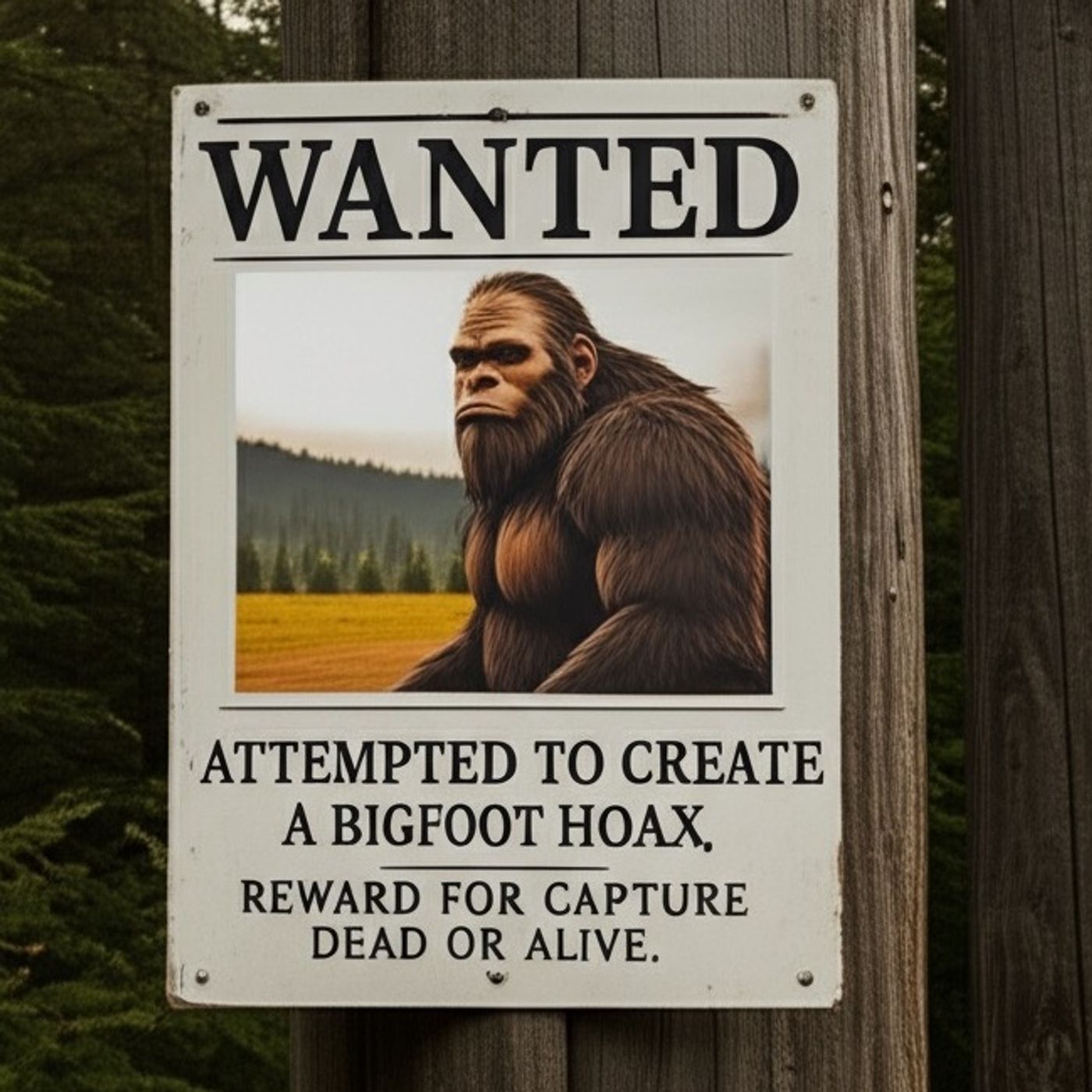
The Town That Cried BIGFOOT- Murder, Mystery and Cryptids
- The origins of the infamous Bigfoot hoax
- How the hoax spiraled out of control
- The town’s descent into greed, fear, and violence
- The lasting mystery behind the unsolved murder
- Why Bigfoot still captivates American folklore
- Whether there may be truth hiding within the lie
Become a supporter of this podcast: https://www.spreaker.com/podcast/total-disclosure-podcast--5975113/support.
CONTACT TDP DIRECTLY For Collaboration, Use of Segments/clips, or any other media produced by “TDP” —[email protected]
Special Thank you to all of our PODCAST/YouTube Channel Members for your continued support, and dedication to seeking the truth, together. We can’t do this WITHOUT YOU!
-COPYRIGHT-2020-
Copyright Disclaimer: Under Section 107 of the Copyright Act 1976, allowance is made for "fair use" for purposes such as criticism, commenting, news reporting, teaching, scholarship, and research. Fair use is a use permitted by copyright statute that might otherwise be infringing. Non-profit, educational or personal use tips the balance in favor of fair use. Total Disclosure Podcast Copyright 2020 and … segments, early access to interviews, and a yearly gift autographed by yours truly!thank you in advance now, Let's explore the unknown together!
Speaker 1: What all.
Speaker 2: By.
Speaker 3: I occasionally think how quickly our difference is worldwide would vanish if we were facing an alien threat from outside this work. And yet I ask you, was not an alien force already amongst We must guard.
Speaker 4: Against the acquisition of unwarranted influence, whether sought or unsolved by the military industrial contact. The potential or the disastrous rise or misplaced power exists and will persist.
Speaker 3: Now I am becoming a world In my associate facing the Project group, they definitely withheld information.
Speaker 5: On guess.
Speaker 6: You shall be twere we're test when you're about to give you the truth, the whole truth and the truth. So help you, guys. Do you believe that our government is in possessions and vents? Absolutely?
Speaker 7: Tonight We're going to a place where desperation turned into deception, and deception turned deadly. In the frozen grip of the winter of nineteen seventy eight, four small town officials in Virginia were facing the end. Bankruptcy loomed like a shadow over their homes, their families, their very way of life. But rather than fade into history as just another forgotten dot on the map, they made a choice, a bold, bizarre choice.
Speaker 8: They Cried Bigfoot. What started as a hoax meant to bring tourists, tabloids and cash worked too well.
Speaker 7: Money rolled in, attention skyrocketed, but so did paranoia, suspicion, and greed. And then someone ended up dead, a mystery that remains unsolved to this day. Today we are joined by the director of the film The Town that Cried Big Wolf, and I am super excited. This is the show I wanted to do for a while. It's been a while since I talked about cryptids, and I think this story is especially timely. Uh So, Mark Dasset is going to be such a great guest. We're going to start the show with the trailer for the film The Town that Cried.
Speaker 8: Big Wolf, Big Big Wolf, Bigfoot.
Speaker 6: Wavered Sheriffs Office, come out to night.
Speaker 4: Another body was discovered in the small town of Wayburn, Virginia, where he has local residents.
Speaker 2: Terrified for a while there.
Speaker 5: You know, Wayburn was a great blazer to grow up, you know, I mean it was the late seventies. Times were much simpler back in. That was about up until Danny Ship We came to town. Danny was a new hot shot mayor from Richmond. He is basically looking to climb his way up in the political ladder and looking for some low hanging fruit to do it.
Speaker 2: And apparently I.
Speaker 5: Guess Wayburn was his low hand brew of choice. Mayorship let and share through it met in secret with two other men, Lennie Hutchins, the town mechanic, and Lester Clemens, the town attorney, before of them came up with py the biggest hoaks ever pulled in the state of Virginia. That was pretty much the beginning of the hand for the town of Waiver.
Speaker 6: Last night, two men ran into the Wayburn Sheriff's office claiming they were terrorized out at their family's farm by a bigfoot.
Speaker 5: And what I've kept on right, he said, I have to all I went through on this earth, should I have to say something like this?
Speaker 8: All right, welcome to the show, Mark. It is so good to have you. Wow, what a what a what a trailer, what a film?
Speaker 7: And it's definitely something that combines, I think, something that two genres that are really really prevalent right now, and it's that true crime documentary, but also that with that that you know, supernatural and and cryptid element added in there for some real mystery and intrigue and what a what a what a really well made film, And I just I really want to start with with you know, where did the idea come from?
Speaker 8: You know, how did you get involved in this? Uh?
Speaker 6: Well, I'm I'm old. So I grew up in the seventies. That was that was around my time, and Bigfoot was everywhere. It was more popular then than it is today thanks to Lennard Nimoy in Search of the Bigfoot documentary I consider the godfather of all of them, came out in nineteen seventy seven and we all grew up watching that as kids. Then you had the six Million Dollar Man the TV show, and he was fighting a big Foot. And just like any kid that had that metal lunch box on the side of it, there was a picture of the six million dollar Man fighting a big Foot.
Speaker 2: Uh.
Speaker 6: People used to go to you know, just as Bigfoot for Halloween. So Bigfoot was huge back then. And you'd hear I grew up in Virginia, and you know, you would hear different stories. I spent summers in Roanoke near the Appalachian Mountains, and uh, you know, you'd hear TV, you'd hear tales or whatever. So it always intrigued me. But yeah, going deep dive down the YouTube rabbit hole will get you into a stories you've never heard before.
Speaker 8: So when if Okay, so starting from the beginning, what was that?
Speaker 7: What was their first moment that you knew that this strange small town story needed to be told? And like when I say that, I mean after you went down the rabbit hole and you know, come across this story, what sparked it for you?
Speaker 6: Well, actually it's included in the movie at the very end, right before the end credit roles. Was a Fox News story in Oklahoma from governor I think he was a governor justin Humphries where he This was in twenty twenty one or twenty two. He was trying to put in law bigfoot hunting license to bring in tourism and it's still they're still trying to do that today. So when I saw that story come up, I'm like, well, they can't be the first town that ever tried to bring in tourism try, you know, turn their economy around by using the legend to do it.
Speaker 6: And that's that's what sparked the idea for the story.
Speaker 7: Wow, And you know, I think green and you know there's this been this idea of you know, all around the world. You know, this goes for the UFO community as well, you know Roswell. You know, big tourism outlets are are built around these you know, sightings or encounters or stories. I mean in Massachusetts alone, you know Salem and the witch trials. I mean, I think that's all different because you know, we know that actually like you know, it happened, but it's it's they weren't real witches, so you know, it's it's another one of these things that you know, Uh, tourism is built around these quote unquote atrocities or legends.
Speaker 7: And you I mean, do you believe in Bigfoot? Do you believe that is a creature out there?
Speaker 6: That is the number one question I've gotten since I've been doing these podcast appearances. And my stock answer. The most compelling footage I've seen is the one in Farmington, Utah of guy looking through a hunting scope and he's recording it and you see an upright creature. That's pretty huge because this is the things like I think a mile mile and a half away with the scope, but you can see it clearly walking and knee deep snow at probably, I guess, I don't know. Forty five degree angle and knee deep snow at this crazy elevation and the ground it's covering and the rate it's moving is pretty impressive.
Speaker 6: So if you if you go to YouTube and just type in I think it's Bigfoot Utah or Bigfoot Mountain snow mountain footage, your viewers will be able to see it. But it's pretty impressive. So that's either AI or that's a big foot. I don't know, but that's that's the most compelling thing I've seen. I've seen way more stuff that is easy to go. That's nothing compared to Wow, what is that?
Speaker 7: Right?
Speaker 8: Yeah? So I see the Farmington.
Speaker 6: Yeah, you'll see like a blue sky with a white mountain.
Speaker 8: Yeah, so I see it here.
Speaker 7: I wonder if I could share it for anyone listening, you know, I just type in Farmington sasquats tourising deep snow.
Speaker 6: Yeah.
Speaker 7: If you guys can hear that. M I'm not seeing a creature yet, though.
Speaker 6: You will, you will. It takes a second. He they zoom in on it. He's down by the tree right here.
Speaker 7: Oh yeah, but could that just be somebody?
Speaker 2: Well?
Speaker 1: No, thing is crazy.
Speaker 6: Yeah, the the snow alone is knee deep easily. No humans gonna walk in knee deep You're gonna move very very slow. And knee deep snow you're not going to walk alone and especially let alone having Yeah, and that elevation, you're going to be winded as hell.
Speaker 7: Yeah wow, okay, So anyway, for me, that's anyone just listening, I recommend Yeah, Wow, that's bizarre because now it looks like.
Speaker 8: Now it looks like two well, that's bizarre. Yeah, I don't I don't know what to make of that.
Speaker 6: But anyway, yeah, that's that's my exact reaction. That's either AI or I don't know anything upright that's gonna move like that in that deepest snow at that elevation.
Speaker 7: Right, And and you know, I mean people talk about the Patterson gimbal footage.
Speaker 8: I I really there's too many holes in that.
Speaker 6: For me.
Speaker 7: Uh, there's too much like and for me, evidence is it. You know, evidence is evidence. I understand that. But you know, like if you look at the Calvine Ufo photo, it there's so much plausible deny, plausible deniability in that photo with the the debunkers can put it in your head enough where you don't know whether it's true or not, and like their explanation really does make it just as much as you know. It's when the debunkers, you know, put out these outlandish swamp gas theories that that's when you start really having to ask questions if the if the debunking is more outlandish than just a you know, a craft being seen.
Speaker 8: I think that's when we should pay attention.
Speaker 7: But the movie that you made, I mean, there's there's there's these larger themes of of corruption, you know, narrative and legend, but but then something bad really happening. So can you walk us through, like without spoiling the film because the links are in the description for below for anyone wants to watch the movie, But so.
Speaker 8: Can can you walk us through the cliff notes.
Speaker 7: Of the the the story?
Speaker 6: Sure? Absolutely so.
Speaker 7: Uh.
Speaker 6: This is in the town called Wayburn, Virginia, just north of Roanoke, Virginia, pretty much at the foot of the Appalachian Mountains basically, and it's nineteen seventy eight and it's a lumber mill town and the sheriff, they have a mayor that's been around for a while, and the sheriff happens to be cousins with a young mayor and Richmond, who he's trying to be mayor, who's not doing very well because he's a small fish in a big pond. Right, So the sheriff says, hey, Danny, who's the young guy in Richmond, why don't you come over here to Wayburn.
Speaker 6: It's a much smaller place. My endorsement is going to carry a lot of wait in this town. I can get you as a mayor. We can make some big changes here, and then you can start climbing your political ladder. Just do it in a smaller pond. Quit trying to jump into the ocean, and do it right. So Danny's like, yeah, this isn't working in Richmond. Let's do it. So he goes to Wayburn and one of the first things he tries to do to win the people over is the Shelby Lumber Company is the premier employer in that town.
Speaker 6: Like, either work at the Shelby Lumber Company or your farmer or some of them did both, right, And so what he decides to do, Let's make the Shelby Lumber Company pick up the big tax burden for the town to make. We can lower the taxes on the people and that'll get the people on my side. Well, the Shelby Lumber Company didn't like that idea, so mister Shelby basically shut the mill down for two weeks, kind of like at a standstill, kind of like what's you know, what's going on with tariffs and stuff right now?
Speaker 6: You know, you got two sides trying to strong arm their way to get what they want. Right, Well, mister Shelby shut the mill down for two weeks and then that didn't work out too well. But right at the end of that two weeks, it mysteriously burned down. And so the Shelby Lumber Company they didn't reopen, they didn't rebuild, they just moved to West Virginia. So now you have a brand new mayor and you have the sheriff who's the older cousin of that mayor who brought him in, and they're all like, what are we going to do?
Speaker 6: Like the number one employer in the town is gone. We're screwed, you know. And they meet with the other guy, Lester Clemens, who was the town attorney, and they meet in the garage of the town mechanic, Lonnie Hutchins. So the four of them. They later became known as the Fraudulent Four because of what they did. They were sitting around trying to figure out what the hell are we going to do? And back to what I said earlier about Bigfoot was everywhere in nineteen seventy eight, and they were on lunchboxes.
Speaker 6: Well, they're in Lonnie's garage and he sees his son's six million dollar man lunch box sitting on his work bench and he goes, what if we bring Bigfoot to Wayburn? And they're like, what are you talking about? And then he mentions the town out in California, Willow Creek. They when all that happened with the Patterson Gimlin film, people flooded that town. People were skipping Disney World to go to Willow Creek, and so the Mayor's like, you know, how the hell are we going to do that? And then the sheriff says, we lay Bigfoot tracks and we let the town do it for us.
Speaker 6: We scare them into doing the publicity for it. So basically they waited for the first snowfall and then they laid down big Foot tracks all around some I think it was two farms, and the next morning the town people just did the pr work for them. They were out there with their polaroid cameras taking pictures. They were called. They flooded the sheriff station with you know, these calls like I don't know what the hell this thing is. This footprints bigger than my tool. And it started to make the local news, and that's pretty much what they were wanting to do, get publicity, and it made local news, but it didn't it didn't hit like they wanted to.
Speaker 6: It didn't really start to drive in the tourism as much where anybody would see any dollars being made. And then they took it up a notch and they went out and I think it was in the spring a couple months later, and they slaughtered a farmer's cow and they threw blood. What you saw on the trailer that's at the beginning, there's blood all over the side of this farmhouse. And then that really kicked it off because then news, all news stations from way outside of the Wyburn area started covering it.
Speaker 6: Charlottesville, Richmond, you know, Virginia Beach, Norfolk, you know, Charlotte, North Carolina. It started to get a lot of traction, like what's going on? In this little town. And so then that's when, you know, I think within six months during that summertime, they had over a million and a half people show up into a town of fourteen hundred people. So really, yeah, it flipped the town. Like the h what's the saying, be careful what you wish for, right, and so uh yeah, the uh the guy who rents the canoe rentals he even says, he goes, I can't tell you how many people we have on any give on in Wayburn on any given day, but I can tell you I have twenty five hundred canoes that go out on a Saturday morning.
Speaker 6: That's a lot of people in the river, two hundred people. Like you could, you're pretty much aut of water.
Speaker 7: You just yeah, you know, fifteen bucks to rent the canoe.
Speaker 6: Well, I mean this is nineteen seventy eight. It was probably like six bucks or whatever. But yeah, yeah, they're doing really well.
Speaker 8: Yeah, they were doing really well.
Speaker 6: Oh yeah, and so well the big one, the big winners, the big winners or the actual farmers, because we got to remember, this is a town of fourteen hundred, it's a lumber mill town. There was no there was a holiday inn, but that was that way out by Interstate sixty four that was like twenty thirty minutes away. But there was no hotels for people to stay at. So what the farmers did is they turned their back forty their fields into makeshift grounds, and so they were renting out places five or eight bucks a pop, and the farmers were making a killing.
Speaker 6: Yeah, so they became and then farmers were doing big foot tours, you know, putting people. There's scenes of a guy pulling a tractor with all these kids on the back on this big trailer and he's just hauling them around his property. You know, like, hey, let's go see where a big foot walk. Yeah, so they very industrious.
Speaker 7: Who is the first person to report this? Because you know, where did they put the tracks that they knew that they were going to be seen?
Speaker 2: Oh?
Speaker 6: Around the farmhouse. The first call you hear is a woman saying, I don't even know how to report this, but my husband one you wanted me to call. We woke up this morning. I have bigfoot tracks that go all around. Because farmers the first thing they get up, I mean, it's it doesn't matter if it's raining or snow. And the first thing you do as a farmer. When you get up at six or seven o'clock in the morning or earlier is you go out and you check on your livestock. And they knew that's what they were going to do, and so they laid bigfoot tracks all around their house and out to their barn.
Speaker 6: So I mean they literally had to step in them to see them. You know, they weren't going to miss them.
Speaker 7: They targeted now and hear me out on this, I'm not saying, you know, they were like, all right, you know, let's maliciously put it on this person's property.
Speaker 8: But maybe they did, I don't know it.
Speaker 6: Oh, it was all malicious.
Speaker 7: They they targeted someone and then trespassed on the.
Speaker 8: Land to make these tracks and made this.
Speaker 7: I mean, I'm sure the people that lived there made a killing off of of.
Speaker 8: Bringing people onto their property.
Speaker 7: But you know, so, is that what you're saying, that they went on someone's property and and put these tracks there.
Speaker 6: Yeah. They not only went on somebody's property, That's what I was saying. They killed somebody's cow and they they threw the blood all over the side of the house. Yeah right, yeah, I mean they was.
Speaker 8: It the same person's cow?
Speaker 6: No, no, no, no, no, no, there was, I mean, yeah there was. It was like four or five farmers. They couldn't just target one person over and over and over, and then it wouldn't look like you know, it's like that would look a little silly. But yeah, they needed multiple calls. Yeah, they needed multiple calls into the share to make headlines. And then they needed enough where the news people could come in and they could start interviewing people and they can, you know, get story after story. They needed to keep this thing thriving so it would do what it did.
Speaker 7: And here's the thing, and this is again what I really love about this is the parallels to so many overlying issues in the community of UFOs. I like to just call it the phenomena, you know, and and you know that includes the paranormal, and that includes the supernatural and the underworldly and the intertal so the for for the future, let's I'm just gonna refer to it as the phenomena. And so the phenomena is people use other so stories and and and they knew that they were going to be able to corroborate one story with the other, even though they weren't related.
Speaker 7: But they were going to use one story to say that the other story was then validated. And we see this far too many times. People took the New York Times article in twenty seventeen and then you know said, okay, look, the government's admit admitted to lying.
Speaker 8: That makes what I'm saying true.
Speaker 7: So it's the same tactic, if you will, of bouncing stories off of each other that are unrelated to corroborate a larger narrative.
Speaker 6: Oh sure, sure, So.
Speaker 7: Okay, so what happens I mean, so they slaughter someone's cow and do some pretty atrocious things. What happens next?
Speaker 8: You know, people are flooding the town.
Speaker 6: Now, yeah, so the people are flooding the town. And basically you got to remember that there was four people behind this that were running it. And eventually, as money starts changing hands, somebody obviously starts money in power will make people throughout their moral compass right out the window. I mean, that's what the whole problem with d C exactly. That's why d C is the way it is. But they may go in with great intentions, but once they get in there and they're like, oh, this is how you play the game own, this is what the prize I get Okay, I'm in majority of them.
Speaker 6: I mean, I think there are one or two decent ones. But anyway, yeah, I know.
Speaker 7: Some of them, and honestly, most of them say that d C. It's you can't even call it a swamp because at least the swamp is an ecosystem. It's not even that, right, right right.
Speaker 6: So, so so what the what the fraudulent? For the four town council members, one of them doesn't feel like he's getting his fair shake because he's a mechanic, Lonnie where his barn the meetings took place. The other guys are opening businesses. They're opening big foot burger joints. There ones opening a nightclub, and they're starting to thrive. And he he he kind of says, hey, you know, I need some help, help me open open up side business for myself. They kind of blow them off because the other three are into their own thing, and he kind of, uh he blackmails them basically into uh, he found some tape recordings in the barn that Lester Clemens, the town attorney, was he was recording all their meetings, and so Lonnie ends up stealing the tapes and finding h and blackmailing the other three and lo and behold.
Speaker 6: He ends up getting killed obviously, and that's still you never really yeah, so they end up taking one of their own out. Yeah, this and so.
Speaker 7: Say that again to cover their tracks, they have to kill someone.
Speaker 6: Oh yeah, yeah yeah. The byeline is a lie to save a town, a murder to hide the truth.
Speaker 8: Wow.
Speaker 6: I mean that pretty much sums up the whole the whole movie. Yeah wow.
Speaker 7: So okay, so now they you know, they commit legitimate I mean this goes from.
Speaker 6: You know, allegedly nobody ever got nobody's been caught.
Speaker 7: Yeah right, and again I guess we should, you know, breakface that with this. You know, these accusations, these are not accusations. This is just a mere you know, a speculative theory. But so, okay, this graduates from because this is now graduated right from.
Speaker 6: Oh yeah, it goes from from bad to worse.
Speaker 7: Yeah right, publicity to like a real crime committed. How does that affect the tourism or does that increase the tourism.
Speaker 6: Well that's when by that time in the movie, that's when the wheels come off. The tapes get leaked to the news, the same news stations that have been covering it from day one, who were you know, they're like, wow, this town you know that's called the Bigfoot Capital of the East Coast. Now they're they're like, oh wow this uh look what we found. And so then that's when the wheels come off and it gets even worse. So, I mean, that's more people, more people die, So uh, it goes it gets really bad. That's all I can say because otherwise of that, nobody needs to see the movie because I've told you everything.
Speaker 6: But the cool thing is, here's here's a cool thing. From the moment, just like you saw in the trailer, from the moment you hit way up to the last five I think ten seconds before the end credits roll, you were in nineteen seventy eight. What this film is not is there's no boring drone footage over a forest with nothing happening. There's no random dude sitting on his couch, you know, in present day talking about something. For a half hour. You were seeing authentic nineteen seventy eight coverage from the moment it happened, all the way to the end.
Speaker 6: It's a short documentary, it's only forty six minutes, but you that was one of the things I wanted to be able to do is as soon as you hit play, you were in nineteen seventy eight. The entire time. There's nothing that pulls you out till modern day, until the last ten seconds, so that yeah, there's there's no there's no stock footage that you see in so many documentaries to kill Dome, right.
Speaker 7: And that's one of the things I do love about, you know, I love I do love about storytelling and how unique it can be. Is you can tell a story in so many different ways. Now and what you did was you took the meat of it.
Speaker 8: And and what I always loved about.
Speaker 7: Movies in general is the ability for to get lost in a story and to be trying, you know. And and I you know, I just put an episode about, you know how I think our brains and our consciousness can time travel, and you know, we do it all the time by thinking back on memories when you know, you know, a smell can bring you back to a memory.
Speaker 8: Music, music can bring you exactly. I literally cite.
Speaker 7: That and and and the in the the the short episode, and you know, it's almost like you're back there in that moment, and it's almost so real and vivid that you can touch it, and it's rendering it in real time while you know, a series of now compiles upon each other right in front of you. It's rendering that that thing. So it's a matter of time until the technology that we're using to to you know, shows it sounds like a black Mirror episode, but we're going to be able to play memories. And you know, I think that's what time travel really is, is the ability to you know, look back upon the past, because then you don't run into paradoxes like the Grandfather paradox if you're simply an observer, right, so.
Speaker 8: You know, and and like the ghost ghost of Christmas past. But that that's a whole different topic.
Speaker 7: But what you did, what you do in this film by you know, really like bringing the viewer back to nineteen.
Speaker 6: You know, seventy eight, Yeah, from seventy eight to eighty yeah, so.
Speaker 7: Yeah, so encapsulating the viewer and like how it would feel to be back there in that time while this is happening.
Speaker 8: And that's so unique.
Speaker 9: Oh, I think I might have lost your audio.
Speaker 8: Mhm, hey, uh.
Speaker 10: Nope, still can't. You're muted though, Oh there you are,
Speaker 10: cred a marker.
Speaker 8: I gotta. I'm gonna go back to the set of questions and go.
Speaker 6: Can you hear me now?
Speaker 2: Yep?
Speaker 6: Okay, cool, Yeah, I don't know what happened. That was whird. I'm I'm staying in the same spot. I'm not moving so all right, all right?
Speaker 7: So what does this story say about the power of belief, especially when that belief is manufactured?
Speaker 6: That that's the that's the theme stated in the movie, actually three times in the movie. Well, let me answer your question first. Critical thinking, critical thanking is very essential to any any community that deals with bigfoot, UFOs, any type of conspira who killed John F. Kennedy or whatever. Taking things at face value just because of aligns with your beliefs is very dangerous. Like about earlier about echo chambers, you know those, you need you need critical thinking to to analyze evidence, which it will keep it more authentic and relevant than just taking things at face value.
Speaker 6: Does that make sense?
Speaker 1: Yeah?
Speaker 6: No, absolutely, yeah. So yeah, there's one part when the news stations were picking up the story in Wayburn, and one news station actually says he's a new station manager, and he said, we are not going to bastardize our news just for ratings. And they weren't buying it, and so they weren't covering it. That's a prime example of critical thinking. Then you have the reporter who went to Wayburn as he's talking interviewing the people in the town, and he says, just like with any story, not everybody believes, uh, there's a big foot here in Wayburn, and you just cut to an old lady who just she goes, I think it's all hooey myself.
Speaker 6: Then you had one lady h chalk up the blood on the side of the house as devil worship because there was a red moon out the night before, so yeah, called the blood moon. Yeah yeah, yeah, So she attributed that. She's like, you're gonna see this type of thing come up when when this type of moon happens, and she just says, you know, just keeps and ears open.
Speaker 7: So yeah that you think was she right, because I mean it did happen. Someone grew, someone did murder an animal and do something atrocious, and.
Speaker 8: Sure you got to you can't. And that's the thing is that lady was technically right. This thing does happen, right, be a lot.
Speaker 6: Crazy, And that's the fun part of this movie, I think is one there's two things that that make me happy. Is one is a lot of people get excited because they get to see people like me that grew up in that era. They're like, my dad had that truck or we had that same type of metal box on our house or whatever. It's kind of neat to see, you know, like you were talking about it. It's time traveling, right. But the other thing is there's there are still a lot of unanswered questions that were never resolved.
Speaker 6: Now here's the interesting part. The sheriff did get arrested and in court on the witness stand, he stated, he said, look, we made two sets of bigfoot tracks at two different times. We did it in the winter of seven eight and then we did it in the spring of seventy nine. He said, but if you look at all the bigfoot tracks that were the pictures that were taken and that were on the news, they don't match up. He's like, we were using the same wood planks for the feet they show it, and he was like, those tracks aren't us.
Speaker 6: And he talked about people reporting bigfoot howls and uh, people throwing our bigfoots, throwing rocks or tree knocking or whatever. Even He's like, we didn't do any of that because he said, I'll tell you why, because we didn't know how to do it where people could use it as evidence, because we needed people to report this to the news. So not many farmers had cassette recorders back in nineteen seventy eight. They didn't really have a reason for it. But everybody had a camera, you know, Polaroids were instinct cameras.
Speaker 6: I mean, you press the button, your picture came out right then and there cameras were huge back then. Everybody took Christmas you know, morning pictures or whatever.
Speaker 9: Ye.
Speaker 6: So so they didn't make any noises and they didn't they didn't do all the tree knocking stuff because they're like, well, how's that gonna get on the news? You know, because then they wanted credible things to really drive the attention. That's why they laid down the footprints the tracks. But as he was stated, hey, look at the pictures. They don't match. Those those are ours. I don't know who did those. So that's kind of interesting as well.
Speaker 7: Yeah, it kind of brings up that idea of like manifestation and you know, if if the whole town believe that Bigfoot was there, you know, was Bigfoot, you know, or was something you know channeled by by consciousness and and you know made the veil dinner and and.
Speaker 8: Maybe something you know did it did show up.
Speaker 7: But also maybe just the news uh, you know, just as likely created tracks of their own to make the story more alluring.
Speaker 6: You know, sure, I mean that that's yeah, that's what makes us movie fun in my opinion, but obviously I made it, so I'm biased. But it's a fun watch. It's it's a fun, entertaining watch.
Speaker 7: Why do you why do you think Bigfoot still holds such a grip on you know, American folk or even in age of drones, satellites and you know, constant surveillance, whether it be trail cams or you know, other means. How do you think this, this this phenomena still persists.
Speaker 6: That's a very good question. I think. I think at the end of the day, people are looking for something to believe in. People, Uh, and they're like I directed you earlier to that Farmington, Utah footage.
Speaker 10: Uh.
Speaker 6: There is some some things that are hard to explain. The number one thing I've heard that correlates between what you just said with the UFOs and Bigfoot and Lockness monster or whatever is. You have all these witnesses from all different areas saying the exact same thing. So, you know, are there you even seen in my film you see a guy clearly making some shit up where he's basically talking about yeah, we saw Bigfoot throwing a tire at a bunch of cars, and they're like, how many people? He's like forty people?
Speaker 6: Oh okay, right, yeah it was. But as the narrator stated, you know, hey, you know some people are just looking for their fifteen minutes of fame as well, you know. Yeah, yeah, So I mean to answer your question, I mean, that's I guess I can't answer that because I don't know, I've never had an experience. I've never seen anything like it. I heard stories, but once again, they're just stories. And I've seen way more things on uh the Internet that are clearly clearly ridiculous as far as uh unlike that Farmington, Utah footage where you kind of go, that's different.
Speaker 6: That's that's a hard one to explain. Yeah, yeah, yeah, yeah, so.
Speaker 7: Well yeah, and that's the thing is, you know, uh, the the community has been so saturated with and you know, the advent of AI doesn't help. So you know, these older cases, these these older pictures are going to end up being you know, worth more evidentially, you know, until crystal clear footage comes out from the military of some of these crafts or whatever.
Speaker 8: Because the advent of AI, you know, it's.
Speaker 7: Almost too you know, when is it going to be When is it going to be our almost indistinguishable.
Speaker 6: Oh yeah, yeah, yeah, there's there's a whole YouTube channel now where they have it looks like green Peace, these ships pulling up and then you see a humpback whale emerge from under the water and they're scrubbing the barnacles off of its back, and it's rolling over and letting them scrub, which is clearly that's not real. But they've mastered. The hardest thing in Hollywood for them to master was water. That's why Avatar. Yeah, yeah, but they yeah, but they've nailed it. They've got that down.
Speaker 6: I mean, that's you know, but I've seen some silly stuff where AI has a hard time with fingers, Like they'll make somebody who looks just like Sylvester Stallone but he has a pinky growing out of his elbow, you know. But that stuff's getting better. They're fine tuning that like hourly. So yeah, you know this time next week, it's going to be one hundred times better, right, and.
Speaker 8: Then the week after that, the week after that.
Speaker 6: Sure, almost you know, with.
Speaker 7: The the merging of of of virtual reality with augmented reality, with artificial intelligence, you know, it's almost like a ready player. One situation is, you know, about to be you know, pretty close to reality.
Speaker 8: And I don't know what you think about.
Speaker 6: That, but it's not for me, dude, I'm in my fifties. Next twenty years isn't for me. I don't want any part of it. That's why I like making movies that take place, you know, back when I grew up.
Speaker 8: Yeah right, what what?
Speaker 2: What?
Speaker 7: What lessons can we learn from this town's descent into chaos? And you know, is it a cautionary tale or something more maybe sinister?
Speaker 6: I think it's pretty much what we already talked about. It's uh and it's it's and it's with AI. It's more relevant today than it was in nineteen seventy eight, which is critical thinking because when you go to YouTube or CNN or Fox or whatever you watched, even just to even check up on the news, they have AIS right in article. AI bots writing articles now and they've had they've been called out on it. They've had to pull it down because it was automated, and they're like, oh, yeah, okay, that was that was AI.
Speaker 6: We're sorry. And it's just getting worse and worse and worse, and but AI is getting better and better and better. We live in a paradoxal time right now, where we're a society that believes in nothing, but we believe in everything at the same time, meaning we believe in nothing because everybody, oh, you know, there's a conspiracy theory about everything, right Shador Sanders. You know, who's supposed to be number one or number two in the NFL draft pick, Well he didn't go to like one hundred and forty fourth or whatever.
Speaker 6: And there's all these you know, all kinds of things are around around that that was popular a couple of weeks ago or whatever. So yeah, everybody's quick to you know, not believe something. But as you stated earlier, the echo chamber, if you get around the right group of people, then you'll you'll believe as long as it aligns with your values and your beliefs. You won't care about fact checking it, you'll be like, yeah, yeah, that's right, you know, and you'll jump on that bandwagon without going well all right, well let me let me look into that.
Speaker 6: So it's a weird time. But the lesson is the lesson I believe is critical thinking. Uh, you really have to. You know. My father told me a long time ago, he said, believe half of what you see and half of what you hear. And that never made sense to me. But it's more relevant now than ever before.
Speaker 7: With AI absolutely, you know, and you know, you know what scares me is, you know, when is some you know, state actor going to make a video of you know, something that people think is real and you know, jumped to conclusions first, you know, I.
Speaker 6: Mean look at the look what the FAA the was it the fa did with the drones, the New Jersey drones for yeah, yeah, for what six eight months they're like, we have no idea, we're shutting down airports, we don't know what's going on. Then they come out later and they're like, yes, those are drones. We were doing studies, we were doing this. It's like, well, you just outright lied and said you had no clue what was going on, and you were shutting airports down because you acted like you had no clue. But then they come out and took ownership of it, so that's that's crazy.
Speaker 7: Yeah yeah, and and still some people aren't buying it, you know. So it really baffles me the disconnect between the authorities and you know, civilians, because you know, that's that's a rabbit hole in itself.
Speaker 6: But yeah, well it's kind of uh, it's you know, like with uh the elon the dough stuff where he's uncovering all this waist and scandal, which is cool, Hey, great, yeah, let's get rid of it. But if you're holding nobody accountable and nobody's being held accountable, and what's the point. Yeah, you're playing whack a mole. It's like we got you, and they're like, okay, but I didn't go to jail, so I'm going to do it over here.
Speaker 8: You know.
Speaker 6: So it's like it gives.
Speaker 7: You that mindset of okay, well, clearly I can get away with it.
Speaker 6: Yeah, exactly. And that's what I was saying earlier about d C the go ahead.
Speaker 1: No, it's saying, you know, it doesn't clearly doesn't matter.
Speaker 8: Just you know, it gets talked about and that's it. You know, like I no exactly comes of me. No example was yeah, but.
Speaker 6: You know, God forbid if you write a check that bounces, you could go to jail, you know, for seventy eight dollars at Walmart. But you know guys that were renting out football stadiums to throw these parties from millions of dollars or whatever. Some of the crazy stuff they uncovered, It's like, okay, we'll just stop it, but nobody's gonna be held accountable. You know, it's insane.
Speaker 7: It is a dangerous game. It is a dangerous game. And you know that kind of brings me to this question is if this event happened today, how would it play out differently?
Speaker 8: Do you think with social media the internet salutes and you know, viral content, do you think that it would.
Speaker 7: Be larger today or do you think that you know, people would see through it quicker.
Speaker 6: Well, it is going on, Like That's why I was saying it was really going on in twenty twenty two, I believe is in Oklahoma, the Senator Justin Humphries was doing exactly what the people in Weyburn. He was creating big foot hunting license there and it didn't be in tourism. They brought in like I think it was two million people, uh in Oklahoma over the reward for a bigfoot and I think it was twenty five thousand dollars they were offering. So that Yeah, when I heard that story, I'm like, this can't be the only one.
Speaker 6: So that brought me back to you know, what made me go down the rabbit hole to look for something like this is that that literally happened not even two three years ago. And I was on another podcast and the guy is from Oklahoma, and he said, yeah, they're still trying to get that going. It hasn't been passed into law because I mean, you got random tourists coming with them, start shooting up the woods, you know, at anything that moves. It's not a safe situation. So uh yeah, so it literally is going on.
Speaker 6: That's why I think this this is a very relevant documentary, not just a historical one about nineteen seventy eight. It's literally going on in Oklahoma right now. But I do want to think so to verify and to check all this, anybody listening, you can go to Wayburn, Virginia. It's spelled w E Y b U R in Wayburn, Virginia dot org. It's a historical site that has articles about everything, has pictures of the old holiday inn. They even have like a sciences of big Foot size rooms. So yeah, you can you can see the historical site on there and they may I got to give it to them.
Speaker 6: They actually made t shirts that are really funny, like it said one was a home of Bigfoot. Well sort of kind of maybe, so yeah, it's a but anyway Wayburn, Virginia dot org. I just want to thank them for helping me out with a lot of those.
Speaker 7: Wow. Ye that that I that that's that's pretty amazing. I didn't know, you know, I like when those you know, there's those things that the people can go look at and kind of like oh deep dive into it and really dissect it, especially if they liked the film. Uh you know, I'll put the link for that in the description below.
Speaker 8: That's well.
Speaker 6: Yeah. The uh the one thing too is the town is gone. This literally wiped the town off the map. They went bankrupt after because they were getting federal grants for land use projects because they were going to start building and get infrastructure stuff, and so when they found out it was all fraud, Uh, they had civil and federal cases coming in and they end up selling the town off piece by piece. And there's an Amazon warehouse where uh, where Lonnie's barn once stood, where all where it all took place, and coming up with the idea, let's bring Bigfoot to Wayburn.
Speaker 6: There's now an Amazon warehouse distribution warehouse there.
Speaker 4: Wow.
Speaker 8: That is That's that's crazy.
Speaker 7: So what do you what do you hope that you know, audiences will walk away thinking or feeling after watching U the town that cried Bigfoot?
Speaker 8: I know you got it a little bit.
Speaker 6: Yeah, just critical thinking, just not taking I'm really like, as we just talked about AI that that's what terrifies me the most, because it's getting better and better hourly, and you know, I mean, you could be watching an NFL game and going, is this real? You know what I mean, It's gonna look so real you won't be able to tell anything that you're It's not just news, it could be anything you're watching, you know. I Mean that's when when Bill Burr, the comedian was on Man the Mandalorian, I heard an interview.
Speaker 6: He said the first thing they did was take a three sixty body scan of him, not just for the merchandise. But in case they needed to do a reshoot, they didn't need to pay him to come back. They could just digally throw him back in the movie and have them say whatever they wanted, whenever they wanted. That's scary.
Speaker 8: That is scary. That and that you know they have the volume too. I don't know as a filmmaker if you've.
Speaker 7: Looked into the volume, sure, but yeah, I mean that's a pretty wild, wild technology. And you know because as a filmmaker myself, you know, putting someone in a green screen environment and you know, the actor has to visualize the scene and visualize, you know, even with all the props that you can give them, you know, merging a physical and.
Speaker 8: The effects scene.
Speaker 7: But the volume allows you to you know, place them into the world in real time. So uh, it's it's I mean, it's already alarming what what can be done and and.
Speaker 8: The you know, because people walk Uh there's a story that.
Speaker 7: I learned from the Marvel's chief editor or chief VFX artist, uh, Jeffrey Ford, where they walked into the volume and that what was being projected on the screen was uh some sort of fire of of uh you know, equipment and they someone thought it was real and ran over with a fire extinguisher. Uh, didn't realize it was fake until they got to the screen and people are yelling, you know, it's not.
Speaker 8: It's not real, Like it's not real. But someone thought it was real. Where they they went up went to put it out. Crazy.
Speaker 7: If this, if this weberd was to finally solve the mystery, what do you think that the truth would be?
Speaker 6: The mystery of h who killed Lester? Yeah, I mean Hutchins. Yeah, I mean, from my take on it, I believe Lester Clemens. I don't think he pulled the trigger, but I think he paid somebody to pull the trigger or could have been sheriff through it, you know. But yeah, my money's on Lester. Lester. Lester was a guy recording all all the conversations that you hear, the actual tape recordings that were leaked that caused everything for the wheels to come off. Yeah, he was a quiet dude. He was a guy behind the scenes.
Speaker 6: He's kind of like a Winston Churchill character. He was pulling a lot of strings without making any noise. So, yeah, there's more to Lester Clemens, and he's the one who ironically he left town and the last place he was on record to being he got a speeding ticket in Oklahoma in nineteen eighty one, and nobody's you know, I think in the movie it says, you know, if Lester was in fact alive today, he'd be I think ninety five or ninety six years old now. But it's interesting the last place he was seen was in Oklahoma, and now they're doing the exact same thing in Oklahoma with big Foot all over again.
Speaker 8: Wow.
Speaker 6: Yeah, it's the story that keeps on given.
Speaker 1: With that being said, I mean, do you believe that somewhere in this story there is a sliver of like a real mystery, and you know, can something more than oaks have actually happened?
Speaker 6: Well, there's another piece of evidence. I didn't tell you they actually Well there's one of the other deaths in the movie they believe was attributed to a big Foot And they have three eye witnesses and they have three eyewitness accounts of what they saw. But I can't, I can't give everything away.
Speaker 8: But yeah, you don't give everything away, please?
Speaker 7: Yeah.
Speaker 6: Yeah, there's a lot more. There's a lot in forty six minutes. There's a lot in forty six minutes. And like I said, the cool thing is, it's all archived news footage. There's no recreation. There's no guy sitting on a couch, you know the way I heard it, There's none of that. You're you're seeing what was being shown in real time and back in nineteen seventy eight.
Speaker 7: Wow, you know, bringing history back, bringing history back?
Speaker 8: Yeah, And what's okay? God continue?
Speaker 6: No? No, No, that's go ahead.
Speaker 8: So I mean, are you planning on any follow ups? Are you what?
Speaker 6: What?
Speaker 8: What's where do we go from here?
Speaker 6: Uh? That story? I mean I milked everything I could out of that one for what I could find. So there's there's no other answers. I mean, it's it is what it is.
Speaker 10: You know.
Speaker 6: It's kind of like with the JFK files. If they ever were to show what's really in those files that they keep redacting, they don't want to. They don't want to show anybody that the answers are there. But the answers. I I uncovered everything I possibly could for it. So it is it is what it is. There's no there's no part too. I wish there was. It was fun. It's a fun rabbit hole to go down. But yeah, it took three years to make this. This isn't something I made in a weekend. This is this is three years of digging and searching.
Speaker 6: Yeah.
Speaker 8: Wow, yeah, I mean I can attest to that. You know, I've been making so my first feature.
Speaker 7: It's mostly filmed, but it's been three or four years of like compiling interviews and stuff like that.
Speaker 8: So uh yeah, I mean it definitely does take a long time.
Speaker 7: And you know, I think it shows with the quality uh you know, just shown in the trailer, like the quality of of the of the production and so.
Speaker 6: Yeah, I would well, people ask me, what was it like making this? This is the perfect analogy, the best analogy I should say that I came up with. It would be like if building a jigsaw puzzle backwards, meaning you have you normally when you build a jigsaw puzzle, you have the box and you go, okay, well it's a horse, right, so let's start looking for the hoofs, get all the hoof pieces together. Well, this one, I really didn't know, oh what the full picture was going to be until it started to uncover itself.
Speaker 6: Because I was uncovering and finding and piecing all this together in real time. There was no, this is the story. That's what I ended up having to create was a middle, a beginning, a middle, and an end. You know. I started in the middle. Yeah, I started in the middle. It was like what's going on here? You know? And then I had to connect Oh, the sheriff is actually the cousin of Danny. That's why he you know, the mayor went to Leyburn to begin with because he trusted them and he knew because it didn't make sense to me, you know, I'm like, why would you go to a small town to climb a political ladder?
Speaker 6: You're not going to get anywhere. But he knew he could do a lot more stuff because he was cousins with the sheriff. So yeah, it was building a jigsaw puzzle backwards without having a picture on the box of what you were making.
Speaker 8: Got it right?
Speaker 7: Right?
Speaker 8: That makes so much That makes so much sense. So where can people? Where can people? I have the link in the description below, but where can people?
Speaker 6: Amazon? Yeah, support the film if you can rent, rent it on Amazon, you can buy it, you can download it the town of Wayburn, Virginia. They have a gift shop as well. Actually they're selling the movie on there as a digital download itself for nine to ninety nine or whatever. But I'm telling you, uh, Weyburn Virginia dot org. There's tons of stuff on there. See the movie on Amazon, but definitely, you know, pause the movie while you're watching it. You can you can verify what you're seeing. Just go to Wayburn, Virginia dot org.
Speaker 6: But the t shirts are hilarious. One was because they actually had in the movie. The mayor ran. He made a lot of money by running his Bigfoot chili cookoff. They had three thousand people show up for this in a weekend for this chili cookoff, And one of the T shirts on Wayburn Virginia says, yeah, yeah, we made up Bigfoot, but have you tried our chili? You know, they have some funny stuff on there that's so oh yeah, yeah, they totally lean into it. I think my favorite one was Wayburn, Virginia, We've been misleading tourists since nineteen seventy eight.
Speaker 6: That's my favorite one. So it's a I mean, they're not around anymore that there's nothing to go see in Weyburn, Virginia. The town is now it's an Amazon warehouse. But the T shirts made me laugh. They kind of they really leaned into what took place there.
Speaker 7: Yeah, and they also, you know, there's they can do. Whoever's running that, you know, can do what they want.
Speaker 8: You know, there's no sure, there's no talent to take retribution against.
Speaker 6: So yeah, they already made their money. Yeah, yeah, they did.
Speaker 8: So that's that's really awesome. And like I said, I'll include all the links in the description below. Guys, that was Mac. That was Mark Doest, director of the Town that Cried Bigfoot. A film that's equal parts mystery, morality, uh, you know, play and mirror.
Speaker 7: Be sure to check it out wherever you watch your documentaries, like we talked about on Amazon or on that website. And remember, sometimes the monster isn't hiding in the woods, it's hiding in us.
Speaker 8: For more interviews like this bhind the.
Speaker 7: Scenes, exclusives and upcoming film content, visit Totaldisclosure dot org, subscribe on YouTube, and leave us a review on Spotify. It takes two seconds and it helps with that pesky algorithm.
Speaker 8: Mark.
Speaker 7: Well, thank you so much for joining the show today. Guys, Stay carryous until next time, Stay skeptical, stay watching the skies and apparently watching the neighbors. Because they might be pulling up a big foot hopes on you all right, guys, See you next time. M hm s
 Apple Podcasts
 Castbox
 Castro
 Goodpods
 Moon FM
 Overcast
 Pocket Casts
 Podbean
 Podcast Addict
 Podcast Republic
 Spotify