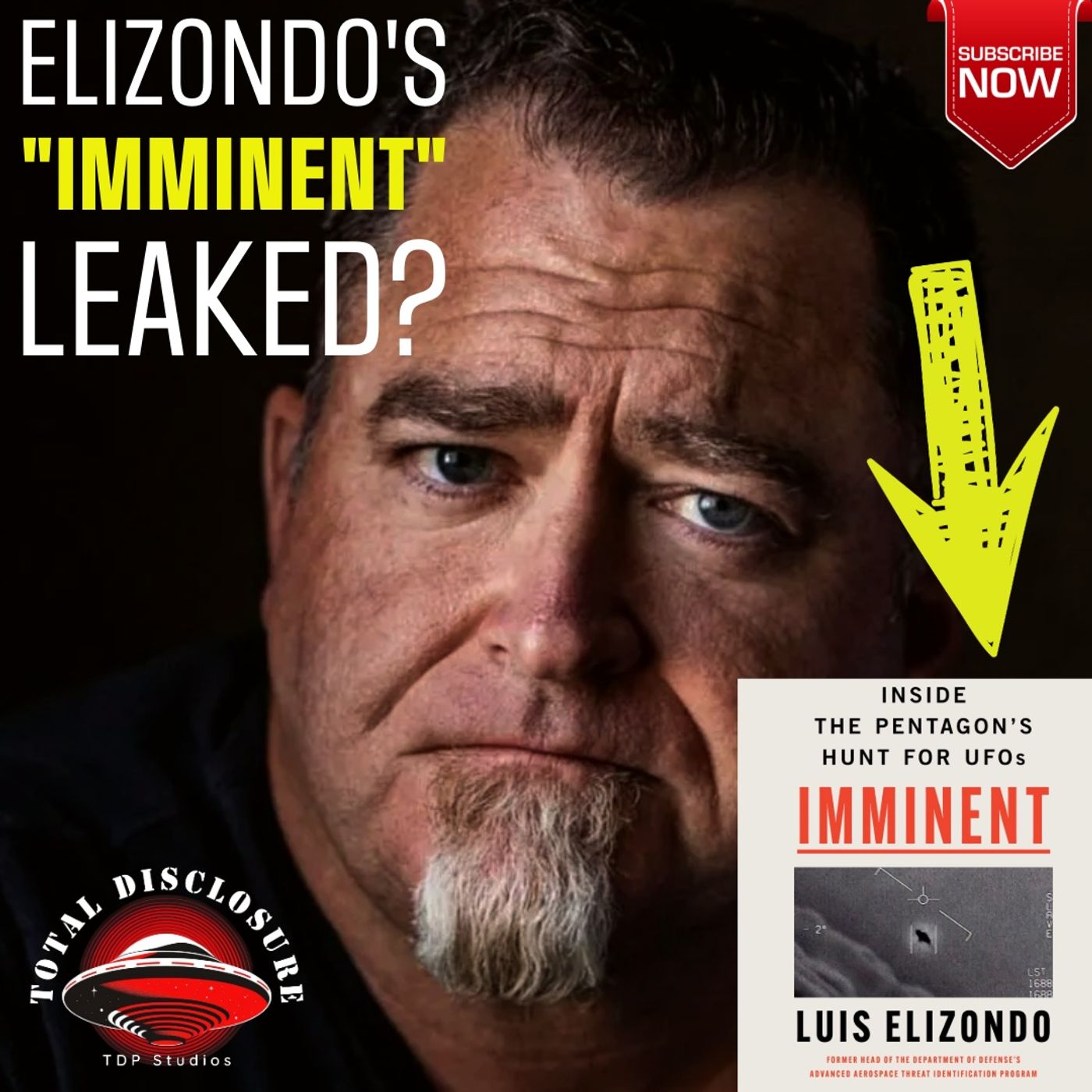
"IMMINENT" LUE ELIZONDO'S NEW BOOK LEAKED? ARTICLE BY JEREMY MCGOWAN Says Lue is part of Disinformation Campaign- REVAMPED!
Become a supporter of this podcast: https://www.spreaker.com/podcast/total-disclosure-podcast--5975113/support.
CONTACT TDP DIRECTLY For Collaboration, Use of Segments/clips, or any other media produced by “TDP” —[email protected]
Special Thank you to all of our PODCAST/YouTube Channel Members for your continued support, and dedication to seeking the truth, together. We can’t do this WITHOUT YOU!
-COPYRIGHT-2020-
Copyright Disclaimer: Under Section 107 of the Copyright Act 1976, allowance is made for "fair use" for purposes such as criticism, commenting, news reporting, teaching, scholarship, and research. Fair use is a use permitted by copyright statute that might otherwise be infringing. Non-profit, educational or personal use tips the balance in favor of fair use. Total Disclosure Podcast Copyright 2020 and … segments, early access to interviews, and a yearly gift autographed by yours truly!thank you in advance now, Let's explore the unknown together!
Speaker 1: Many dam.
Speaker 2: All right, guys, welcome back to Total Disclosure Live revamped.
Speaker 3: We're here with my buddy, Wait am I pointing the wrong way?
Speaker 2: Josh Maitland remote viewer, And today we have a big, big show for you, kind of early in the morning.
Speaker 3: I'm not used to doing shows this.
Speaker 2: Early anymore, Josh. I'm surprised you're awake.
Speaker 1: Yeah, I'm Most of my shows happen at night too, so it's different for me as well.
Speaker 2: But we're both here. We're both interested in in what we're to talk about. I think everybody in the UFO or you know, any related phenomena that encompasses UFOs, a paranormal and and all that knows who lou Alexondo is now el A Zondo has had this book in the works for multiple years and it's finally coming out next month. I know I have my pre order.
Speaker 3: I don't know if you've ordered it yet. But there was a fiasco.
Speaker 2: Google leaked like sixty of the pages, and I don't know if they're real, like if it was a leak leak or if it was like here's something for everyone who's been waiting so long, because I mean, the leak has everything from the Christopher Mellan forward to the chapter titles, and the way it's written looks correct.
Speaker 3: But there's a lot of talk in those pages.
Speaker 2: And and I'm not gonna We're not gonna blow loose book up or anything like that, but there were.
Speaker 3: A few things that have been talked about.
Speaker 2: Uh in in detail in those pages. And I want to start with Roswell because at one point in the pages, and this has been circulating, you know, Jimmy Church has talked about it, so I think it's pretty safe to say out there. But in a conversation with Kit Green, he basically asks asks Kate Green about Roswell, and Roswell Kit was a kid or how put off, I don't remember, but Kit basically tells him that you can take Roswell to the bank.
Speaker 3: That's a big statement.
Speaker 1: Yeah. So I haven't read any of the pages, so I've got some of the you know, stuff people have been talking about on Twitter or whatever, but I'm waiting for the full thing to come out before I dive in.
Speaker 3: Yeah, well, what do you think.
Speaker 1: I think Roswell was probably a real event. I mean, there's just so many, so many stories from so many people, and and it's been. It's been investigated so often over the years, and you know, people seem to all keep coming to the same conclusions about it, like it something.
Speaker 3: Happened that night. Yeah, for sure, something definitely happened that night.
Speaker 2: And you know the military doesn't put out a pressure release like that every day. Let's just put it that way, right, and then retract it the next day. But yeah, if if, if for some reason, if when Lou's book comes out, it turns out that these are the real pages. Kit Green is someone who's who's who doesn't really like joke around under or like poke fun or or say something he doesn't mean.
Speaker 3: He's a very real person who is very serious about the topic. So if he is actually saying that you can take the Roswell story to the bank, then that truly means that we have been in possession.
Speaker 2: Of UAP or UFOs since the forties, right, Yeah, And that would be consistent with you know what David Grush has been saying and stuff too, like that.
Speaker 1: The program goes all the way back to the forties and fifties, and you know, anti gravity research got you know, kicked off pretty heavy in the fifties and then suddenly just stopped, which you know, maybe it just went underground. I don't know. There's there's been lots of lots of lots of disparate kind of data points coming out in the last few years that really do suggest that something's been going on since at least kind of World War two sort of time. As far as our you know, humanity's uh, direct interaction with I would say the technology associated with the phenomenon.
Speaker 1: I think the phenomenon itself has been a much longer process. Like we've you know, even biblical times. There's there's lots and you know, the ancient alien stuff, all of that, Like it's it's something that's been around forever. But I think I think just the character of it started ramping up, you know, probably around that time in the in the forties fifties, and the cat's attacking the background there. So that's that's not ghosts or anything.
Speaker 3: I wish it was. Come on, just let the audience believe it. Man, No, I want to well, here here's the thing.
Speaker 2: Here's here's what I am very very interested in. Is like, because you actually brought it up now anti graviy. Now, this was something that was in all like the popular mechanics magazines. Yeah, scientists were saying that they were, you know, a couple of years away from a breakthrough, and then all of a sudden, boom gone nothing out of literally out of all the science magazines, out of all the circulation.
Speaker 3: It just disappeared.
Speaker 2: Now could that be because the military industrial complex had been formed and they have you know, they had kinda put the put the put the cap in back in the bag and and and stuffed it shut and said, you know, this is now a slap under a national security order.
Speaker 3: You know, do you think that that is something that could have possibly happened?
Speaker 1: Seems seems plausible. I mean, I'm only basing that assumption on what I've seen out in the public sphere. Like I know, Jesse Michaels did a really cool episode of American Alchemy about I think it was Townsend Brown yea, his his research into all the antigraph stuff. And I mean people are seeing stuff out there like there since you know, the whole time I've been on the planet, there's been people reporting these things and and well before that too, So I do think probably some of what people see in the skies is legitimate phenomenon.
Speaker 1: I imagine there likely is some kind of reverse engineering program that certainly the stuff that's out in the public sphere seems to suggest that. And you know, some pretty pretty reputable people coming out and saying that, you know, this is this is the case. And yeah, I know, I'm looking forward to to to see and lose book when it drops, because you know, he's he's been in the game. He presumably knows a lot more about what's going on than we do, so it'll be interesting to hear his his take on it all.
Speaker 3: Here is my issue, and I know.
Speaker 2: I've always I'm always going to stay neutral, But lou had claimed to run the a TIP program right now, that's the Advanced eraspace Threat Identification program this, and and he it's not like he put the notion in there that it had nothing to do with ASAP. It wasn't until he.
Speaker 3: Was questioned hard on the fact that he had to that he had to separate the two.
Speaker 2: So if no one had pressed him on it, I think he would have let people believe that a TIP was the because originally, remember in the New York Times when the twenty seventeen article came out, people don't realize how many errors were in it A tip did not receive the money that it was awesome.
Speaker 3: That was the sorry God, I always forget what else stands for one.
Speaker 2: Of the Weapons Systems Applications Process program something like that. They were the ones that received the twenty two million. Now by the time Lou had taken charge, if he took charge of this program called a TIP, that was by the time Lou had taken it over, it was basically unfunded. There was no money in it right, the money had run out. It had run out because Bigelow had gotten the contract, used it studying Skinwalker Ranch, other ranches like.
Speaker 3: The other the other ranch that he owned at the same time. It's it's I can't remember, uh right the top of my head. Yes, yes, yes, there's a mountain.
Speaker 1: Uh, Carl Crusher the one car.
Speaker 3: Crusher was Yep, that one.
Speaker 2: He owned both of them at the same time. So that's where the twenty two million went. Now Harry Reid asked for more money, and then they used the A Tip Moniker as a way to kind of not trick Congress, but to conceal that they were looking into the paranormal and the other worldly.
Speaker 3: They changed the name from US APP to A tip in the public sphere.
Speaker 2: So when they did the proposal for the next couple of years after the money ran out, they wanted more money, and the money increased every year, but as A didn't have enough to prove or didn't have enough to show, so they ultimately lost funding and the program was scrapped. Now I'm not saying a TIP didn't exist, but what I'm saying is a TIP was probably more of an unfunded program that people like Elizondo who are interested.
Speaker 3: Right did as a as a as.
Speaker 2: More of like a not a hobby, because I would say that that's wrong too. I think they definitely had very very dense motives and wanting to get to the bottom of it. But I do think it was a group of people that were just as interested in this topic as you and I, and we're just as motivated, and they were just in a position where they could kind of take that a tip moniker and carry the torch even though.
Speaker 3: It was unfunded. And I don't think that I don't think that's a problem.
Speaker 1: There's also, you know, different if you have different projects on your roster, Like I'm a project manager, so I know how some of that stuff works too, And if you've got different projects, you know, each project has kind of a buck a bucket of money. Let's say that you've that you've got that you can draw from for it. So if they've got this empty bucket and they want to go to Congress and get more money and fill up their bucket so they can do more stuff, you know, having the fact that something already exists and you want more money is a lot easier than getting a new project from scratch, right, So I imagine probably there's some element of that to it, like probably more of like a bureaucracy logistics type type thing there.
Speaker 1: You know, I just thrown it out there.
Speaker 3: But yeah, you don't, well, no, you're absolutely right, you don't.
Speaker 1: There's also a history of Congress not liking paranormal research. Like I don't have anything to verify this, per se, but I've heard that part of why the old remote viewing program was scrapped was because certain certain Congress folks who were of a religious persuasion thought that it was the work of the devil and decided to kybos places. So you know, it's controversial stuff, So I get that, you know, Yeah.
Speaker 2: It's definitely a huge problem in our government that that that they think that we're dealing with angels and demons, you know, like we need to wipe that off the surface, because even if we are dealing with angels and demons, it's.
Speaker 3: Our duty to figure the ship out, to figure it out, right, what is happening?
Speaker 2: And there are there are people that think that they're So my issue with Elizondo. I like him, I really do. I I like something in me wants to like him. And but but then again, I say the same thing about Ric Dooty so and like, I don't know if Rick Doty is lying right to my face, he's either the best he should be in Hollywood, or he's telling the truth. And I think that's where some people think who's at you know, once a disinformation agent, always.
Speaker 3: A disinfo agent.
Speaker 2: And I don't know if that's necessarily the case with Lou because he seems so genuine, But there are people out there who have been in Lou's inner circle that say that.
Speaker 3: Lou is full of shit.
Speaker 2: Now I am only saying what I've heard, and obviously everyone knows.
Speaker 3: Who I'm talking about. That's Jeremy mcgallan, right, he gave me.
Speaker 2: I talked to Jeremy before I did this show, and I said that I was going to put him out there because he wrote an article about about Lou and what he knows about Lou and remote viewing because apparently Lou is a remote viewer. Yeah, it's something that he learned after becoming interested in the topic.
Speaker 3: And like, who's this? I mean, you you're sitting right now to me.
Speaker 2: You you're remote viewer, right, I've seen your skills put onto the test. I know that there is something to it. So Jeremy, I don't think does I think there's anything to it? So he wrote this article basically saying that Lu's been tricked into thinking he has superpowers and he is out there kind of spitting information out as whoever told it to him once? Right, So again this like this like disinformation quote of quote?
Speaker 1: Do you think there is sorry, go ahead, do.
Speaker 3: You think that's what we're dealing with? Is disinfo?
Speaker 1: No? I I like, as far as remote viewing goes, absolutely not. Because I mean so I read I read most of the article, Jeremy's article there that you sent me, and I didn't have time to go through it all before this. But the uh, the argument he makes, I think is is that you know, the CIA is sneaky. They did, you know mk ultra, and so that's what remote viewing is too. And I mean my rebuttal to that would be, no, mk Ultra was mk Ultra. Remote viewing was its own secret thing, like it definitely was a secret program.
Speaker 1: And he he kind of tends to focus on Stargate, which was the last remote viewing program, like official one, but there was a bunch of programs before Stargate. There was Grill Grill Flame and Center Lane, and I think some others too, but you know, it was going from the I think I think Stargate was the nineties, like it was ninety to ninety five or something like that, and then there were there were previous programs before that. And I'm not an expert on the history. I don't have all the points to rattle off here, but it was ongoing for twenty years and I remember hearing I don't know if it was Skip batwater Ed may or one of those guys, but one of the people who was sort of involved in the administration and working with the agencies and stuff, and they said they had something like an eighty five percent return customer rate among the agencies that they were doing work for.
Speaker 1: Just today on Twitter, my buddy Daz Smith posted something about it was like a redacted document from the NSSAY talking about their experience working with the remote viewers, and it said we worked on three different projects, and then that was blacked out, and then it kind of went into what their discussion of those projects was, and they said, generally speaking, we got actionable, useful information and we were happy with the results. And that was I think on Center Lane, which was one of the ones before Stargate.
Speaker 1: But right, yeah, I mean, I don't know, you know, the idea that the focus on psychic stuff was was, you know, they were tricking people into believing they were a psychic. Like I mean, Joe mcmonagall was a natural clairvoyant and he just really really what this is remote viewing is just putting a framework around natural psychic abilities that we all have access to. Not everybody has developed these abilities, because I mean, the only reason I didn't get into this earlier was because I didn't even realize it was possible.
Speaker 1: I think most people don't realize that it's possible. But you know, all it is is intuition. It's just it's putting a remote viewing is putting a framework around intuition and using it to effectively extract data from you know, non local sources to pat.
Speaker 2: So medium is where Jeremy puts everything. I don't know how if it ended up on the intercept, then it came from medium, because at least Jeremy sent it through to me through medium because he knows I'm interested in this whole thing. And I and then listen mcgonagal his he there is something. I mean, the stories that guy tells.
Speaker 1: Uh.
Speaker 2: He was recently on Danny Jones and I remember he was telling a story about there's a missing boy right and.
Speaker 3: The cops or some whoever called him.
Speaker 2: The authorities called him and they were like, we need your help locating.
Speaker 3: This missing boy. And he was like, it's three am. Why are you calling me?
Speaker 2: You know, like okay, okay, uh, you know, did his thing. He's like, all right, he's at the top of this hill. Like go there, yeah, tell his name and he will come. Don't wake me up. Click they rang him again. Said the officer said that he would that a young boy under eleven would never seek high ground. He would stay in place or find somewhere close to him, and Joe said, follow my instructions. Click, and then they said to follow the instructions. They went up to the top of the hill, yelled the name.
Speaker 2: There happened to be a house at the top of the hill. The kid was right there. They called Joe back, said, hey, we found him. Joe's like, where'd you find him? They were like, right where you said he was. Click, went back to bed.
Speaker 1: If you get woken up at three in the morning, you're going to be in a pretty good state to do psychic stuff because you're going to be in that kind of subliminal or that liminal state between wakeful and sleep. So that's probably why he smashed that one out of the park. Right, He's pretty good at one for sure. He's he's an og. But yeah, that's interesting. I hadn't heard that story.
Speaker 2: But to say, to say remote viewings bullshit is bullshit in itself. Yeah, So I don't agree with Jeremy here. I don't agree with Jeremy.
Speaker 1: I would suggest that perhaps he hasn't likely tried remote viewing because I was a skeptic before I came into this, But when I first heard like I was introduced to this through the documentary Third Eye Spies, and that documentary at the end of it, I was just like, I gotta try this. Like that that was my reaction to hearing about the reality of remote viewing. And you know, I tried it and it worked quite well. It turned out, I was I had kind of a natural affinity for it, and I think that's just because I've had a lifetime of doing other creative stuff, and you know, I think I think intuition is is a creative process as much as anything else.
Speaker 1: And again, yeah, just remote viewing is is putting a process, like a procedure, a protocol around harnessing intuition for the purpose of acquiring specific information. And it's well designed, and it was designed well before the Stargate project, which was the focus of this article. It was you know, back in the in the seventies when Ingo and Hell and Russell targ and everybody else at SRI was developing this these procedures. And so in the article he talks about things like, you know how, oh, it's it's not scientific because they don't focus on the on the misses.
Speaker 1: They only focus on the hits. But some of the research that's been done in developing remote viewing shows that you know, if you're and this is at least from what I've seen, it is more particular to like the associative of remote viewing, the the binary choice stuff. But if you if you think of it this way, if you're even if remote viewing is just basic precognition and you're you're precognitively sensing a photo you're going to see in ten minutes or whatever, if you are only shown the right photo after that and not the wrong target, you're you're gonna do better because if you if you have to subconsciously discern between two different targets, you're going to get a better result if you're not shown both of them.
Speaker 1: So I mean there's an app called RV Tournament which shows you both and you know, people people complain that that's not a good protocol or not a good way of doing it, but you know, this is the idea that it's that the reinforcement of good results was some kind of manipulation. Like I don't agree with that at all, because you know, you it's it's like it's like training in anything. Really, like if I'm if I'm doing an engineering project, I'm not gonna I'm not gonna give the contractor my rough sketches to build something from.
Speaker 1: I'm going to refine them and get them to the point where I've got a final design that I'm happy with and that i know is gonna work. You know, it's it also sort of to the point of, you know, so a lot of the data is vague, Well, yeah, of course it is, because the first few pages of any given remote viewing session, you're you're you're capturing those high level, vague details, and then you're you're drilling down to the core of it as you get deeper in the session, as the signal gets stronger, as you connect more with the target.
Speaker 1: That's that's been my experience, and I mean that's that's really how it's how it's designed. You start, you start by scraping that high level data to connect to the target, you you make contact, and then you you dig deeper. That's that's the whole process, that's the whole procedure. So, of course, a lot of the data in any given session is going to be you know, either either nebulous and kind of yes, kind of no. But you're you're you need to look at any given session as as a whole, and usually it's the summary at the end of the session that kind of sticks out as Okay, this is where maybe some actionable data is going to because that's where you say, Okay, these are the tangible things that I know are here that feel important to me as the viewer.
Speaker 1: This is the other thing too. It's very subjective. It's a it's a subconscious process, and each viewer is going to get different results given the same target because they're filtering that information through their own subconscious mind. So you know, all their experience, all their all their emotions, all their everything is contributing to whatever it is their process. It's just like any creative process. Like if I'm playing music on sta age, the way I play is going to be different than another bass player because of the influences that I have on my on my music, you know.
Speaker 1: So it's he's looking at remote viewing I think as this kind of weird thing, But like I don't, I don't know. I don't think it's that weird. I think it's just I think it's just another creative process.
Speaker 2: All right, But you don't think that it is a little weird that we see the same people all the time wherever there's money, like whenever a contract like this is given out by the government.
Speaker 3: Right, we see the same people how put Off, Kick Green Bigelow. It's the same faces all.
Speaker 1: And and I think odd it doesn't because the Ingo Swan people specialize in certain things, right, So these happened to be the people that decided to specialize in the field of you know, wo wo psychic stuff and advanced technology in UFO and so on. So if you've got so how put Off for example, you know he was him and him and Russell Tard were both laser physicists, I believe, and they went from that world into studying all this esoteric remote viewing stuff. Sorry I'm talking too much, my throats getting all scratchy again.
Speaker 1: But you know, they they that they had like twenty years of experience with remote viewing with the remote viewing programs, and that experience would obviously be beneficial to leverage for additional research into similar phenomenon. So I don't think it's weird. I just think it's like, that's what those guys career trajectories are. You know, It's it's as weird as you know, me doing water resource projects because I've studied water resource engineering and have worked in that field for a long time.
Speaker 1: You know, it just happens to be that the topic itself is a weird topic overall, and so and there's very few people that specialize in that stuff because it's so kind of you know, off the beaten path, I think, And and even now, like tons, there's tons of people that as hobbyists kind of look into remote viewing and and try it out and study it and and just do it because they're interested in it. I know, I know hundreds of people to do that. You know, it's I mean, there's there's a whole discord and subreddit about remote viewing where people will trade the options and look into try different research methods and and share their results, and you know, it's it's just it's just such a niche thing that not many people know about.
Speaker 1: I think that's really the only reason that you see the same people kind of floating around it. There just isn't that many people that are, you know, highly specialized in this field. There's I think there's I think I could probably name ten people that do remote viewing professionally. There's probably well, I've only seen maybe that many.
Speaker 3: Well, here's my next question.
Speaker 2: Lou's book comes out right, he tells the world that because okay.
Speaker 3: I'm gonna tell you a story.
Speaker 2: Jeremy told me right, and this was when he was on the podcast, so anyone can go back and watch it. Basically he told me that he was when Lou was filming Unidentified, that was the show that he did when he was part of To the Stars Academy. They got in touch with Jeremy because Jeremy had an experience in the desert, the desert of let I think it was Turkey, just desolate and they were guarding a box.
Speaker 3: They didn't know what was in the box, but.
Speaker 2: It was this huge wooden crete and they were told not to get near it, don't open it, you know, if anyone approaches it, shoot them on site. And they just didn't know what the hell that they were that they were doing, and a craft or what seemed to be a craft came over them him and his partner that night, and that's what sparked his interest in UFOs and and he later found out that what was most likely in the crate was some sort of.
Speaker 3: Uh.
Speaker 2: They intercepted a nuclear a piece of a nuclear weapon, because you can't ship the whole nuclear weapon. You gotta ship it in parts, right, So that because that's how bad you know, state actors do things they can't the bad actors.
Speaker 3: You can't.
Speaker 2: You can't just ship a nuclear weapon, you know, across state borders.
Speaker 3: It's not how it works. So the US intercepted a piece of it and that's what was in the create Jerry Jeremy suspects. So YadA, YadA, YadA.
Speaker 2: Jeremy ends up contacting unidentified he gets on the show, he ends up becoming friends with Lou.
Speaker 1: And then.
Speaker 3: Stays behind the curtain. What Jeremy says is that.
Speaker 2: Lou is full of shit, that he's that that he is making it all up, YadA ya. You know, uh that Jeremy doesn't really believe anything that Lou says.
Speaker 3: Uh. There there was a lot of false promises made. There was a lot of tom foolery, if you will.
Speaker 2: Uh.
Speaker 3: So, Jeremy I think has an asta grind with Lou, which I think could cloud his judgment a bit.
Speaker 2: It But but we've seen in the UFO community. Wow, being at the top like this can affect you. Look at what happened with like Stephen career right, who started off as what I would say is purely intent, like had pure intentions.
Speaker 3: In the beginning.
Speaker 2: Yeah, so it's not fair to say that people don't become money hungry.
Speaker 1: Well, I mean, when you when you have a lot of attention on you too, Like it happens in music as well. You know, if if when somebody gets famous, all of a sudden, you see, you see people get famous and then go on ego trips and so forth pretty pretty regularly all over the place. That's certainly not unique to UFO world. So well, and I mean I don't know much about about that with lou particularly, so I couldn't really say much, but you know, I know there was I know I saw some stuff about you know, he made some predictions that didn't come true or whatever.
Speaker 1: And that happens all the time, you know, and in remote viewing you get it's it's like baseball, you know, you don't you don't bat a thousand, Nobody bats a thousand. Sometimes you'll strike out, sometimes you'll hit a home run. A lot of the time you'll be somewhere in between.
Speaker 3: But I agree, yeah, I agree, I agree.
Speaker 2: But so essentially he broke down because once he was in the inner circle.
Speaker 3: This is Jeremy I'm speaking of.
Speaker 2: He said that Sean Khill and Lou were basically like it was like this whole facade that Sean on the ride to Lose House because they decided not the fly. They drove from you know wherever to where, but it took multiple days.
Speaker 3: So Sean asked him.
Speaker 2: Some probing questions in the car just as they were getting to know each other, and then Jeremy thinks that Sean passed that information to Lou because once they got to Lose House, Lou started predicting Jeremy's future and it included some of the information that he had provided to Sean. But what Sean did know was that Jeremy had an ex wife as well. So I'm not going to get into a full story, but yeah, like there was a lot of things wrong, but that could have been frontal loading, you know. That's what that could be, is a front like we've talked about in our own sessions that we've done together.
Speaker 2: So again, like now, back then when I talked to Jeremy, I was a little bit more like I had my line in the sand, and maybe a remote viewing was a bit over that line, But now my line has moved up, so I'm kind of thinking of it from a different aspect. Could Could they have been trying to impress Jeremy Sean front loaded Lou Lou did his thing, got a couple things right, a couple of things wrong, but just enough for Jeremy to be like, h it's all.
Speaker 3: Bullshit, you know what I mean?
Speaker 1: Yeah, it's it's tough. Like I know, you look at what's his name there, super famous Israeli guy, psychic? Why can't I think of his name?
Speaker 3: So there's Ingo.
Speaker 2: Swan, there's oh, I know what you're talking about.
Speaker 1: Yeah, God, oh god? Why is this sickness? Brain? You're a yellow mornings or you're a yelling Yeah. So like he was, he was a performative psychic, and I get you know, he had been called out for faking it some on occasion, right, And and I mean that's why I don't like doing like performative psychic stuff. I've done it and I will do it, but it's like you know it sometimes you miss you're taking a risk if you're gonna if you're gonna try and do something like that, right, and and if you're good at pressure like I I've done okay on when I've attempted live remote viewing stuff, and I think it's because I am a performer, Like I've I've been performing on stages my you know, since I was a teenager.
Speaker 1: So I feel like maybe it doesn't bother me as much. But again, like I prefer to kind of just work one on one with people or or you know, do my stuff in the background and then like totally blind and then send it off to people and then have them kind of come back to me and say, okay, uh, dig deeper on element X or Y or whatever, just because it's you know, it's it's like putting yourself in a high stress position to be performative. And just the nature of psychic phenomenon itself is it's such a subtle thing.
Speaker 1: It's all subconscious and it's all you know, energy stuff. And if you if you put too many parameters around it, it can be particularly parameters that are rooted in sort of these ego type need to need to prove something, you know, like if I'm or A good example would be, you know, if I'm doing associated remote viewing, which is again you're trying to get a fifty to fifty choice and get it right more than fifty percent of the time, or as much as possible, really, which is what people use remote viewing to do, like gambling on sports bets and stuff like that.
Speaker 1: So if you if you have this sort of ego based need to be right, you're gonna screw it up a lot of the time. You're gonna you might displace like read the wrong target, which actually happened to me the other day, and or you might just completely botch the session and get nothing useful. But you know, it's it's tough, like it's interesting. Like the military program, you know they had they had obviously pressure because they knew they were doing operational targets. But I think for the most part they were, you know, either blind or double blind.
Speaker 1: And if you approach it from sort of a method where it's like a practice and you're just you're just doing it and it's not if you can remove any of that external pressure, it seems to work a lot better.
Speaker 2: Yeah, yeah, and I but so so so, say Ali Zonda's book comes out, it's obviously going to be a major success because everyone in the community is going to be reading it. But do you think that this could end up, regardless being a positive thing for phenomena like RV because it would lend major exposure to it in the modern day.
Speaker 1: Yeah, I could. I mean it already sort of is like people are talking about it. We're talking about it right now. I think I think the more I think more people should talk about this subject. I find it absolutely fascinating. It's, you know, been one of the most interesting things I've ever discovered in my life as far as topics of discussion and exploration. So right, yeah, I think it would be. I think it's any anybody who's talking about remote viewing and taking it seriously is a positive thing.
Speaker 3: What if what So, what happens when everybody learns that they can be a remote viewer?
Speaker 1: Well, I mean I'd love for everybody to learn remote view What if.
Speaker 2: You and the moon mars everyone every day all day?
Speaker 1: I don't know would happen. The thing the thing about it is, it's, uh, it seems to be kind of like a psychedelic experience, like it tends to open you up and and sort of change your worldview a lot. And I think that's maybe why it hasn't taken off more. Is that like It's kind of an uncomfortable thing to learn how to do, because particularly if you don't believe in it at first, and then you're you're you dive into it and you're presented with this information that's contrary to your belief system.
Speaker 1: You know that that can kind of shatter your reality box or stretch it a bit at least, and that can be uncomfortable for people. It was uncomfortable for me at certain points, but you I flged through the discomfort and kept going because my fascination outweighed my discomfort. And I think that was a beneficial thing for me to do because now I'm pretty good at it and I use it. Just on the other side of that discomfort is that you know, innate psychic ability that that you can then sort of just have running in the background.
Speaker 1: And this is like if you do some proper training and you work at it for a while, it's not going to happen on day one, but if you put it, you know, I I when I started, I did. I went super hard for like two months, and at the end of those two months, I I felt like my intuition was sharper, like I was just and you know, in the in the in the years that that preceded, I kept doing it. I wasn't you know, doing it every day or anything after that. But it's you know, it's it's a tough thing. It's it's like you need to pace yourself.
Speaker 1: You need to you need to rest your mind, especially when you kind of shatter yourself with with this, because like it that's the thing. Like and in Jeremy's article he talks about, well they fostered belief, Well they kept they you know, they tried to get them to believe that it was real. It's like, well, there's actually statistical data that shows that, you know, there's something like a five percent buff if you believe in this stuff. Look the placebo effect for example. You know that's everybody knows the placebo effect.
Speaker 1: That's the medical equivalent of it. But there's a great book which I actually have right here, called Real Magic by Dean Rayden from the Institute of Noadic Sciences, And I thought maybe i'd open right to the right page. That happens sometimes, but he's got he goes through some research that he did where they had people try remote viewing exercises and so just.
Speaker 3: Normal just like never done it before people.
Speaker 1: Yeah, but they categorized the groups with people who believed in psychic phenomenon and people who didn't, and the people who already believed did better by again like five percent. So you know that's and I think they had like it was a pretty good amount of trials that they did, Like it was a statistically significant result. And Dean Rayden's a proper scientist. He doesn't screw around, and he's a remote viewer, and and well, let me he knows that all this stuff works.
Speaker 3: So let me, let me, let me pose a thought to you.
Speaker 2: Let let's say lou is still working for the government to some degree, coult this book be part of some larger grand scheme for a slow, slow drip disclosure and pushing it forward. I mean, you think about all the interviews Alexander did up until about a year and a half ago, I would say, uh, and then just completely went off the map, off the grid, and started working behind the scenes writing this book, YadA, YadA. Do you think that this could potentially be part of a larger slow drip disclosure to garner the public to essentially get them ready for something that's coming.
Speaker 1: I don't know if it'll I don't know if it's an intentional thing to serve that purpose, but I think it will contribute to that. It doesn't feel like, you know, some some planned thing. Maybe it's planned between lou and some of the people he's working with, but I don't think it's some big I tend to I tend to shy away from the big conspiracy stuff with with this in the sense that I've heard it all and I'm not really convinced that the government is is that well organized smart, that's the smart people working for them.
Speaker 1: But the more complex the system is, the more challenging it is to manage, right.
Speaker 3: And individuals are.
Speaker 1: There's also I think a lot of stuff going on at kind of you know, energetic subconscious levels collectively among humanity that you know, if this stuff, I think is eventually meant to come out and to help us evolve as a species, whether that's even even even looking at remote viewing, like maybe maybe that is meant to be a thing that helps people realize that, oh hey, we can do psychic stuff like that's real. Oh hey, the universe is made of energy. That's crazy. Oh wait, the pontam physicists are already saying all that, Oh wait, I can tune into that energy with my mind.
Speaker 1: Holy this is crazy. So that's kind of the short version of the journey I've been on the last couple of years. But you get those realizations, and it changes your worldview as your as you dive into this topic and and this information, and it it shifts the way you behave because how can it not like it it's not perfect, and it's it's a it's a journey like it's it's you know, the the journey of enlightenment, they call it, you know, like it's it's it's that same thing that people mystics have been doing for thousands of years.
Speaker 1: But remote viewing is just kind of the latest addition to that that pile of things, of tools that people can use to to go down those kind of spiritual paths. I think, I think all of this is more of a spiritual thing than a nuts and bolts thing than most of us tend to give it credit for. You know, again, like the correlation between angels and aliens and and stuff in the Bible and and in deep history and art and ancient aliens and all that kind of stuff. I think it is sort of more of the UFO thing in general is more of sort of a story arc for humanity itself and where we've been, where we're going
Speaker 1: long term. I think I think that's maybe going to be part of where this goes. And that's I think consistent with like the jacquel A type theory about you know, this being interdimensional and non physical and all that kind of stuff. Excuse me, but yeah, all I know is that it's incredibly fascinating and I'm glad I dove down the rabbit hole and I did.
Speaker 3: It.
Speaker 1: Feels time to learn remote viewing. You know, we're at kind of the the peak of chaos and uncertainty in society, at least as long as I can remember and intuition, you know, training remote viewing trains your intuition like a muscle. It's uh, that's that's I think the biggest benefit of it, whether you're using it for operational stuff to get detailed information about specific things. Sorry, I think that's irrelevant to most people, Like most of us aren't going to be trying to remote view you know, operational targets uh on on an individual level, though by proper it's going to help you develop your intuition and your inner bullshit detector.
Speaker 1: That's that's how I always describe it.
Speaker 3: Sorry, I didn't mean to catch you off there.
Speaker 2: Yeah, if you okay, The c I A arguably started whatever they tapped into this this phenomena. Do you think that they have hardened their facilities some way against remote viewing it? Is there a way that you could hide from a remote viewer? Is that possible?
Speaker 1: I mean it all works on intention, right, So I think you know, if you don't want somebody to know something enough, then they're not gonna there's that psychic noise that you're gonna have to break through if you're trying to figure that thing out, right, Like I it's all it's all intention and energy, and from what I can tell, it works best when your intentions are positive. You know. I think I think there's elements of karma involved. So if you're trying to use this stuff for shady shit, it's probably gonna bite you in the ass.
Speaker 3: Like getting rich.
Speaker 1: Well, that's that's it. Like I've had very little success winning the lottery with this. I know other people. I know lots of people who tried too, and it's like you see people, people will get little wins. I'll get two out of three on the pick three pretty regularly, and it's fun. It's a fun little thing to try. But you know, I don't think any again that comes back to this ego stuff, Like it's so tied to psychology and the subconscious and this idea of the ego versus the higher self. At least once you really get into into remote viewing.
Speaker 1: That's the part of it that I think is the most interesting and that nobody's really talking about. Like, yeah, it's a cool skill. You can find specific information about non local targets, but the way it seems to work is on this level of like quantum energy information transfer and deeply intertwined with psychology and neuroscience and the way the human mind operates, which we also don't know very much about. Really, you know, we still don't have a definitive answer on what consciousness is. I think remote viewing does a lot to make the case that consciousness is not local to the physical brain.
Speaker 1: I think, just based on the idea that we can we can consciously perceive stuff that is not specific to us and our current environment, I think it actually makes the case that consciousness is sort of an underlying you know, piece of reality that is you know, intertwines everything. You know that everything is consciousness, that that whole, that whole theory.
Speaker 3: Well, isn't it weird?
Speaker 2: That?
Speaker 3: Okay? Actually, you know what? How was I going to do this?
Speaker 2: But I wonder if I can This is a picture of the of the It's a picture of the universe. These are all stars right right? What if I showed you a picture of a close up of a beach, it would look exactly.
Speaker 3: The exactly the same, right now?
Speaker 1: Why is it?
Speaker 2: Why is it that on a micro scale, every it resembles the macro and vice versa.
Speaker 3: Why is it?
Speaker 1: Like?
Speaker 3: Why? You know?
Speaker 2: Because then then we get to it and maybe I could play this little video for a little for help,
Speaker 2: so you see what I'm saying, Like above as above, so below there we go.
Speaker 3: So what could we be living in some sort of or it's consciousness just the universe's way of experiencing all reality, all at the speed of now right, at the speed of now out. Not the speed of why not sound, but the speed of now right.
Speaker 1: Yeah, I think I think consciousness renders the hologram for us or our awareness, our body, our bodily systems render what consciousness is is putting forward to us from this you know, fractal holographic, you know, root level of reality. It's too early for me to really get into the weeds on that stuff, I think. But there's a great book called on the Mechanics of Consciousness by a guy named Yit sac Bentov, and it's like it goes wicked deep into this stuff. And he's like, I don't think he's like a scientist.
Speaker 1: He's he's kind of more of an intuitive what's up you just you just.
Speaker 3: Sounded like you were from Boston?
Speaker 1: Oh did I? Oh? Yeah, wicked as man.
Speaker 2: Dude, I fucking poked my car over at the over at the bah.
Speaker 3: Let's get some wicked good food. Huh.
Speaker 1: Nice.
Speaker 2: But listen, I argue, you know the saying if a tree falls in the woods and no one's around to hear it, does it make a noise? I argue, the tree the woods and nothing exists unless someone is observing it.
Speaker 1: Yeah. Yeah, there is the whole quantum observer effect, which is interesting to think about that within remote viewing. There's some discussion on that too, like if we if we remote view the future, are we impacting the events that we're viewing just by viewing them. I think probably, I think I think that's likely, which I think maybe is you know perhaps, and this is like I'm going way out there on this one. But if if somebody reviews a a remote views a future event, like a catastrophic event, and then that doesn't happen, it doesn't transpire.
Speaker 1: Did that viewing of it and you know, being like, oh, that's terrible, I don't want that to happen. Does that somehow cause it not to happen? You know, I want I wonder if some of these things, because you get you get to let you see a lot of in the kind of future forecasting type remote viewing that people do, either either events that are kind of big and scary don't happen, or they end up being a lot less intense. And I think the intensity part is maybe that the viewer is kind of experiencing it directly.
Speaker 1: So, you know, a bomb going off somewhere in the world is going to be a lot more scary to the people that are near to that event and experiencing it directly than somebody on the other side of the world who's watching it on the news. Right, So maybe part of it is that because when you are remote viewing your you're you're perceiving kind of the specific on the ground details and things that are happening.
Speaker 3: Right, But uh, ask a question.
Speaker 1: There's so many mysteries about this stuff.
Speaker 2: Man, when you remote view, say you did remote view something like Hiroshima, can you feel emotion?
Speaker 1: Yes? I have a buddy who did that session that he did that He did Hiroshima as one of his early targets and it sucked him right up, like just it was a really unpleasant I I one of my early targets I did was a disaster type target, and it was I saw people's like skin melting off, like it was fucked. It was not good. And so that's the thing you gotta be careful about too. And and you know that's when I train people. I don't give them targets that are gonna have that kind of effect on people, Like if you're doing military targets, like that's the kind of stuff that the star Gate and Proceeding programs like they were doing military targets, so they were getting some gritty stuff and and you know, you've got to have a fairly powerful mind to not let that affect you.
Speaker 1: So it's important to it's important to have like energetic protection when you're doing remote viewing and and to kind of separate yourself a little bit and be be cognizant of when you are emotionally resonating with stuff, because emotional resonance is a big part of remote viewing. Like that's that's a lot of how you get I think it's more that than anything. And it's more that we're kind of interpreting the emotions. I think all the information actually kind of comes in through the the heart portal, like the heart chakra.
Speaker 1: H to get weird and esoteric about it, but and then the mind kind of you know, deciphers that that more emotional information. And there is research to support that too. The Institute of Heart Math has done a lot of good stuff on intuition and and and uh the heart heart mind connection and all that kind of stuff. But uh, yeah, it's important to be you know, to to if you're going if you're getting into remote viewing, it's important to do targets that are safe if you want to protect yourself from from having a bad time.
Speaker 1: And for the same reason I wouldn't recommend anybody does these kind of wo targets like UFOs and stuff, until they've had a lot of training and and and gotten familiar with the process and the procedures and how it feels and and how how it affects you after a session, even if you're doing a mundane target like it can be, as I said earlier, kind of a mind blowing thing to do this for the first couple of times, and even now, it still blows my mind that I can get this stuff right, Like it's it's it's always crazy to me.
Speaker 3: You almost amaze yourself at the ability.
Speaker 1: Yeah. Yeah, at first, that's the thing, Like, it's just every single target is like, whoa.
Speaker 3: I can believe I did that? Yeah? Yeah.
Speaker 2: Do you think that there's a chance that people like say Nostra Damis and Tesla and Einstein and some of the other geniuses that you know, because they told they would say often that they were channeling.
Speaker 1: Yep.
Speaker 3: Do you think that they were doing something close to remote viewing.
Speaker 1: I think they were doing the exact same thing, but without a remote viewing structure around it. Yeah, it's those are the type of people I would call rock star intuitives. Tesla and Einstein in particular. I have used that phrase before about them.
Speaker 2: Because think about this, why would ein so Einstein wrote the letter to the president that initiated the sequencing of the bomb, right, the only reason that that the bomb was created as fast and when it was was because Einstein wrote that letter. Did he see something terrible on? Because it arguably, if if Einstein never writes that letter, we don't go down a nuclear path, no not, then at least if someone probably would have cracked the code eventually.
Speaker 3: But Oppenheimer all that nothing, nothing like that happens.
Speaker 2: So do you think this is a side effect of what happens when you do get involved and try.
Speaker 1: To change Yeah, that's an interesting question because I mean, then you gotta you gotta, you gotta wonder, like, was that was that horrible event something that needed to happen in history for us to get somewhere else? I don't know, you know, it's that's that's the kind of stuff that's well beyond my ability to to say. And there's you know, there's so much that goes into that. But I mean, I think Einstein was a fairly intuitive guy.
Speaker 2: Very I mean, you've seen that, you've seen his brain, right, seen his brain.
Speaker 3: Have you seen his brain?
Speaker 2: No, when he died at the age of whatever, eighty something, his brain looked like a twenty year old's.
Speaker 3: Oh it made no sense.
Speaker 1: Yeah, I think. I think doing doing creative stuff is good for the brain. Uh And and any intuition process like remote viewing is a creative process at its root, I think. And you know, it's it's the same. It's the same ideas as taking care of your body. If you're if you're if you're exercising that you know, intuitive system regularly, it's going to stay strong. Uh And And Einstein certainly was doing that, you know he was. He was a deep thinker. He was constantly you know, he went for a lot of walks and you know, to me, walking as a meditation, like I go for walks to get clarity and and uh, you know, commune with nature and all that stuff.
Speaker 1: But yeah, I mean to say, whether he knew he was going to create some horrible things then, I don't know. I know, in hindsight he certainly struggled with it.
Speaker 4: I can't find it.
Speaker 1: But you know, this is this is where things get weird, and you have to start talking about the idea of fate versus free will, right, Like, are some things faded to happen? I think maybe? I think maybe there are certain things that are faded to happen, and we we get some some leeway and how we get to them. But I think a lot of us maybe sign up for certain certain things that that we know are going to happen in the future, maybe before we get here, and when they when they transpire, you know, we we participate in them in whatever way we're meant to.
Speaker 1: It's again, now we're getting into the far right WU territory a little bit, but it's it's interesting stuff to think about, you know, right for sure.
Speaker 2: And I just it just makes me wonder, like like the geniuses of the world, Like, uh, I mean, you can arguably say Elon Musk, now, uh, Elon Musk, I would say, he's like the most modern day, you know, kind of genius out there.
Speaker 3: But are these people able to tap because they seem to have.
Speaker 2: Some sort of drive that just regular people don't like everyone, even Rogan asks Musk, like, how the fuck do you find time to run the boring company's space x Twitter right, and still time five find time to like, you know, uh, just be a human.
Speaker 1: He works very hard, but he also outsources a ton of stuff. So I'm sure that's part of it.
Speaker 2: But you just got to wonder if, like some of these people are on another level, right, that they are that maybe because the way I see it is, we are the pinnacle of.
Speaker 3: On Earth, right, we.
Speaker 2: Construct the world around us the way we see fit. There's nothing that is essentially attacking us and going to make us evolve physically. I think the next stage is an evolution will all come in the mind and in the brain, right, because that's the only place that we're actually being challenged at this point.
Speaker 1: Yeah, I would suggest that developing intuition is probably the next stage of that sort of non physical evolution, and it'll probably have physical effects too, Like the physical body is certainly very involved. Like I get I get feelings in my body for remote viewing sessions all the time, Like it's you feel the warmth or the cold or whatever, like that session we did a couple of weeks ago where I ended up in the desert somewhere and I was feeling like warmth and the grittiness of the sand and all that kind of stuff.
Speaker 1: So like, and you know, I try to exercise fairly regularly too, And and I think that helps me to be better at the psychic stuff too. It's it's, you know, the the vessel is you know, the the meat suit is the the the computer hardware I guess for the consciousness software. That's kind of another look at it too. But yeah, you know we've got this. You get this quantum meat suit that you can use to do whatever, to do all the wacky psychic stuff. And if you as long as you take care of it any practice and you you know, you do your monk like stuff, you'll get better and better and better at it.
Speaker 1: But yeah, that's it, Like it's a practice. You gotta you gotta make a practice of it if you want to get better at it, just like anything else.
Speaker 2: Right, right, right, And I want to ask you, I know this is like a really weird question, so I don't know, I don't know how to phrase it necessarily.
Speaker 3: I guess there is a date, right.
Speaker 2: Lots of people have thrown this date out there, including Alizondo himself saying that's something. And I've talked to mediums
Speaker 2: in Salem when I was filming there for the fil for the movie.
Speaker 3: About this date and what I've gotten is a wave.
Speaker 2: Now the person couldn't tell me if this wave was literal or metaphorical, but a way or metaphysical, Yeah, it could be that too.
Speaker 3: That's that's something I didn't even think of, but a wave of information.
Speaker 2: Lots of people suspect that twenty twenty seven is the disclosure date, and that's been something that's kind of a narrative that's been built around. Like I said, people like Alizondo back in twenty twenty two said, I think we're going to have a very different conversation in five years twenty twenty two plus five twenty twenty seven. John Ramirez XCIA kept referring to twenty twenty seven. This medium in my session randomly brings up twenty twenty seven. So do you have any information that can fill in some of these gaps?
Speaker 1: I don't, not specifically, but I do kind of feel like we're we're barreling towards a very different world and that we're you know, there's we're I think we're in revolutionary times right now and have been for a while, and perhaps.
Speaker 4: Revolutionary in in all kinds of senses, like just look at technology with AI, look at just the political chaos all over the world.
Speaker 1: Which I think is a symptom more so of just the suffering that people are undergoing under the current systems that that you know, we have, that the systems don't seem to be serving the people the way they perhaps could or should, and people are suffering because of that. And I mean, I think they were probably designed not to serve the people they were deserved to, designed to serve, you know, the people at the top. And you know, I think I think we are going to see a very different world, certainly by twenty thirty.
Speaker 1: I don't know if there's anything specific coming in twenty twenty seven, but I've also heard a lot of stuff, probably the same stuff you have, more similar, right, So it's it's I know, we're I know, we're living in a very interesting period of time, and I'm certainly going to keep following my own curiosity, uh and and trying to you know, I think I think you can just all you can really do is try to try to raise the vibes a bit in your own life and and pursue the things that bring you joy, and you know, try to try to not judge people too much.
Speaker 1: I think that's I think that's kind of the big thing. I think that's cause I think the judgment is what's causing a lot of problems. Everybody's judging everybody else for the way they want to leave or whatever. And I mean I've always been kind of like live and let live, you know, don't as long as you're not hurting anybody, do whatever you want and.
Speaker 3: Be whoever you want to be, and be the best.
Speaker 2: Version of that person or that being whatever. So you mentioned something earlier that kind of I jotted it down to bring up at the end. Do you think that you chose to come down and live Josh Maitland's life?
Speaker 1: Quite quite likely? Yeah, I think there. I mean I've read some some you know, the Dolores Cannon books where she does she does lots of regression hypnosis on people and got some fairly consistent results from that. That suggests, you know, there's kind of these in between life planning phases that people do. And you know, I wouldn't be surprised if when this is all over, the that becomes apparent. But I don't think we get to know that until until after the simulation ends, or at least at our current round of the of the simulation.
Speaker 3: And that's the.
Speaker 2: Crazy crazy, crazy, crazy crazy crazy part.
Speaker 3: I want to tell you a story the other day.
Speaker 2: Now, I know how this fucking sounds, dude, Like I know how it sounds. It sounds absolutely ridiculous. But all like, so I was driving, right, I was driving.
Speaker 1: I know what story you're gonna tell.
Speaker 2: Yeah, I was driving and there was this old Toyota behind me. So right off the bat, it was not a self driving car, because that's what people keep telling me. And I'm like, dude, this thing was this nineteen ninety three Toyota Camry.
Speaker 3: It is not self driving.
Speaker 2: It pulled up next to me at so it was behind me, and I noticed in my rear view mirror that I mean, now, it was twilight. So I was coming home from work and I look in my rear view mirror and I don't see anyone in the passenger seat.
Speaker 3: Now I'm kind of short myself. Oh shit, I'm kind of shirt myself. So when I sit in the driver's seat, like, if you're behind me, you probably wouldn't see my head over the seat, depending on on on whatever your vandag's point. But but.
Speaker 2: This person went from behind me to next to me to in front. Oh, this thing went from behind me to next to me, pulled up at the light light.
Speaker 3: I walked, dude, there was no one in the fucking driver's seat. And listen before anyone says anything. I my phone was GPS. I started shaking uncontrollably and it was becoming harder to drive. Everything in my fiber. Wanted to try to get video, but I swear if I tried, I would have crashed. I was. I was so taken aback and listen.
Speaker 2: I I looked because I was like, okay, it is a little dark out. Maybe a darker skinned person, black leather seats, you know. Maybe I'm just maybe my perceptions off right. So when he pulled up next to me, or it pulled up next to me, I literally like up down and I like move my angle. Dude, there was no one in this car. And then it green light sped past me, sped back. Dude, dude, I'm telling you there was nobody in this car.
Speaker 3: There's no one driving it.
Speaker 1: I mean, yeah, could be what is that? It could be maybe it was a short person you missed. I don't know, there's no I don't believe it. I don't believe maybe maybe the trickster was messing with you or something.
Speaker 3: Do you want to know something really eerie?
Speaker 1: Were there was there any other traffic around?
Speaker 3: Yes, okay, I want to know something that's extra eerie.
Speaker 1: Sure, all right.
Speaker 2: I spread myself very thin lately, and I've been dealing with a lot of stress.
Speaker 3: And I was meditating and and this is.
Speaker 2: The morning of the incident, so the incident would take place about twelve hours later. In the meditation, I literally asked, show me something that would stop me dead in my tracks, let me know I'm on the right path.
Speaker 1: Okay, after that changes things a little bit.
Speaker 2: Yes, it was until after the event that I remembered the meditation.
Speaker 3: Because it just slipped my mind.
Speaker 2: I went throughout my day, went to work, you know, some work happened, you know, you kind of forget, and then this happened. And then when I got home and I'll clicked, like I asked for it.
Speaker 1: Yeah, so I've I've had similar experiences, but I got, you know, I was walking meditation, basically doing the CE five thing where I'm like, show me something, show me something interesting. I want to communicate with, you know, something non physical, and I got, I got, I got orbs in my uh, in my room that night. So yeah, if you ask for weird shit, man, you're gonna get it. And that's the thing if you're honest about it when you ask, if you really.
Speaker 2: Want your your your intentions need to be pure because honestly.
Speaker 1: And it works better if you're in you know, a meditative theta you know, alpha theta delta type some somewhere in those lower frequency type ranges where the subconscious is more active and the conscious awareness is less in control. In those lower frequency ranges, I think when you ask in the in those states, you get, you get better results. That's the state that you're in when you're doing most of the remote viewing, I think, or at least when I'm doing the best remote viewing, I'm in that kind of flow state, which is generally I think around the theta theta kind of band is where flow state lives.
Speaker 3: Yeah, and you know some other another funny thing happened. I can't tell it yet.
Speaker 2: I can't say yet because my sister hasn't announced it, so I can't really I'm just gonna tease everybody some uh. The the thing that set me on the course right of doing this show was my mother's death. I watched her spirit leave the room. Right, yeah, dot dot dot right. So I'll tell the I'll tell the I'll tell you behind after we wrap up. But next week, next next Friday, I'll tell the full story. But the synchronicities are just outstanding lately.
Speaker 1: And it is there is when you when I know I'm on the right path. Is when I'm getting synchronous all the time.
Speaker 2: Dude left and right, boom boom boom, boom over over, slap me in the face. So I finally realized that I just.
Speaker 1: To you, man.
Speaker 3: Yeah, so when you give I just go black.
Speaker 1: You did.
Speaker 3: Camera died.
Speaker 1: That's okay. I got it going pretty soon too.
Speaker 3: So yeah, we'll wrap it up here. Let's so, I'm.
Speaker 2: Going to I want to just do this for you because I haven't put it in the description yet, but I want to give you the platform for a couple of minutes.
Speaker 3: Multiple people have asked in the.
Speaker 2: Comments that I saw, how can they learn remote viewing? Now Total Disclosure is going to be helping at least with what we can promoting your course for learning remote viewing. Now you have a free course and a paid course. So we're going to be including that link in the description below for everybody to take the free course and then determine if you want to take the paid course. Josh can give us a little brief background on what people would get if they do the course.
Speaker 1: Yeah, so the Rockstar Innuation Course, it's Rockstar Intuition dot Com. And there'll be Yeah, I guess I'll link it down below there. So it's it's essentially I've taken my own experience going through learning remote viewing and intuition and consciousness science and all this stuff, and I tried to distill it down into what I call a challenge. So you the first few chapters the free the free course, it kind of gives you the high level of what what is remote viewing, what is intuition? How do these things work together?
Speaker 1: We've talked about it a bit today. And once you once you take that free course, it'll get you kind of enough of the basic information to try a remote viewing session. And then the free course ends with your first remote viewing session, and it's a guided one. I take you through a little meditation first to kind of again get into that receptive eight to be able to capture that information and uh and then you just run the target. And I've had I've had some people do it and have really good success on that, even that first target.
Speaker 1: I was on a show last week and the host actually ran the whole free course right uh, right before we had our interviews. So then we ended up having a big chat about it after too, which was cool, and she crushed it too. She got all kinds of good information that was perfectly on target. She was like describing the smell of it to me and stuff, and I was like, I've actually been to this place and you got that right, So yeah, so it's it's cool. So it's it's uh. And again like I don't I don't give anybody targets that are going to mess them up, Like it's it's all.
Speaker 3: I'm not going to send you on the dark side of the Moon.
Speaker 1: No, nothing like that. No, it's all it's all mundane targets. And yeah, so I'm actually going to be doing a Sober October challenge for anyone that resonates with that. That'll be a different thing, but it's it's I'm gonna it's it's essentially going to be learn remote viewing as as a way to distract yourself from partying for the month, which is which is how I got into this initially. You know, I've been I've been partying pretty hard, uh during during my my rock and roll things, and decided to do a sober October and I found remote viewing kind of write synchronistically at that time, and was like, oh, this will be a good thing to kind of keep my mind off of, you know, drinking.
Speaker 1: Yeah, and it worked really well. What's up?
Speaker 2: No, no drinking for me. It's easy, So I will be happy to.
Speaker 1: Uh, we'll sign you up.
Speaker 3: Yeah.
Speaker 2: Well, so we're gonna put the affiliate link down in the description that way people can take the free course.
Speaker 3: And then how much is I mean, how much is the the the eight course, and how long and extensive is it?
Speaker 1: It's two hundred and forty seven bucks because it'll it'll help you to become intuitive twenty four to seven.
Speaker 5: Oh, and then it's there's about three three and a half hours of video lessons and there's I think ten targets right now, and I'm adding to it and I'm updating it all the time too.
Speaker 1: When I when I learned new stuff, I add I add things to the course. So yeah, so I think there's there's kind of ten targets, but then at the end there's other targets that are kind of repeatable, ones that you can do that are different every time to continue your training. And then I also point you towards other resources. There's tons of good, tons of good resources out there from other remote viewers, like target pools and things that you can use for training and things like that.
Speaker 3: So, yeah, you become an expert. Anyone listening.
Speaker 2: After you become an expert in remote viewing, then I will call upon you and get you in here and then I'll ask you and uh, we'll have some fun with it. Just we'll have some fun with it, Josh. As always, I think we should start doing something every week, something something fun. So I think we'll work on that and and what that could be. But as everyone already knows, make sure to like, share or subscribe. By the way, Oh, before I get into this, I wish I had video right now, but my camera.
Speaker 3: I am gonna be good.
Speaker 2: I'm actually going on TV in the next week and I'm going to be promoting the film, so I'll send everyone the links for that, but at least put it on Twitter. It's gonna be really fun. It's something new for me. So we're working hard on the movie. Uh and we're we're we kind of just signed on for a second one. And it has to do with the Pasca Gooula abduction of Calvin Parker and Charles Hickson, Philip Mansell and doctor Irena Scott. They wrote a book called Beyond a Reasonable Doubt. They want to give me unfettered access to everything and have me go down and spend a month in Mississippi and basically film an adaptation of their book into a documentary.
Speaker 2: So there is so much in the pipeline and so much work that is going to be being you know in the future that I'm just I love I love all this man, and I just I really hope that, you know, everyone enjoys the projects and enjoys what we're putting out. And I try to engage the community as much as possible. If you want to take a couple of seconds out of your day, look us up on Apple Podcasts, Spotify, make sure to.
Speaker 3: Follow, leave a review or star rating.
Speaker 2: It really helps us get to why, you know, broader audiences. That way we can keep delivering top notch quality and like I said, We're on this little like kick where we're investigating the ten most haunted polics in Massachusetts and we're gonna be making YouTube videos out of them, starting with well, I can't say it yet, but we're starting with a very very cool one and that will be announced soon. And uh, we got a lot of cool people that are going to be a part of it. So I can't wait to tell everyone about that.
Speaker 2: So if you want to become a member, you can support the show by becoming that member on YouTube click join below. Also, if you want to learn remote viewing, like I said, his are link to learn remote viewing Rockstar Intuition will be in the description below. Josh, thank you so much for being here today, last minute and everyone.
Speaker 3: You guys are awesome. We'll see you next time.
Speaker 6: Make sure life describe all that jets. You know what it is, and I think.
Speaker 1: We can
Speaker 6: And I didn't
 Apple Podcasts
 Castbox
 Castro
 Goodpods
 Moon FM
 Overcast
 Pocket Casts
 Podbean
 Podcast Addict
 Podcast Republic
 Spotify