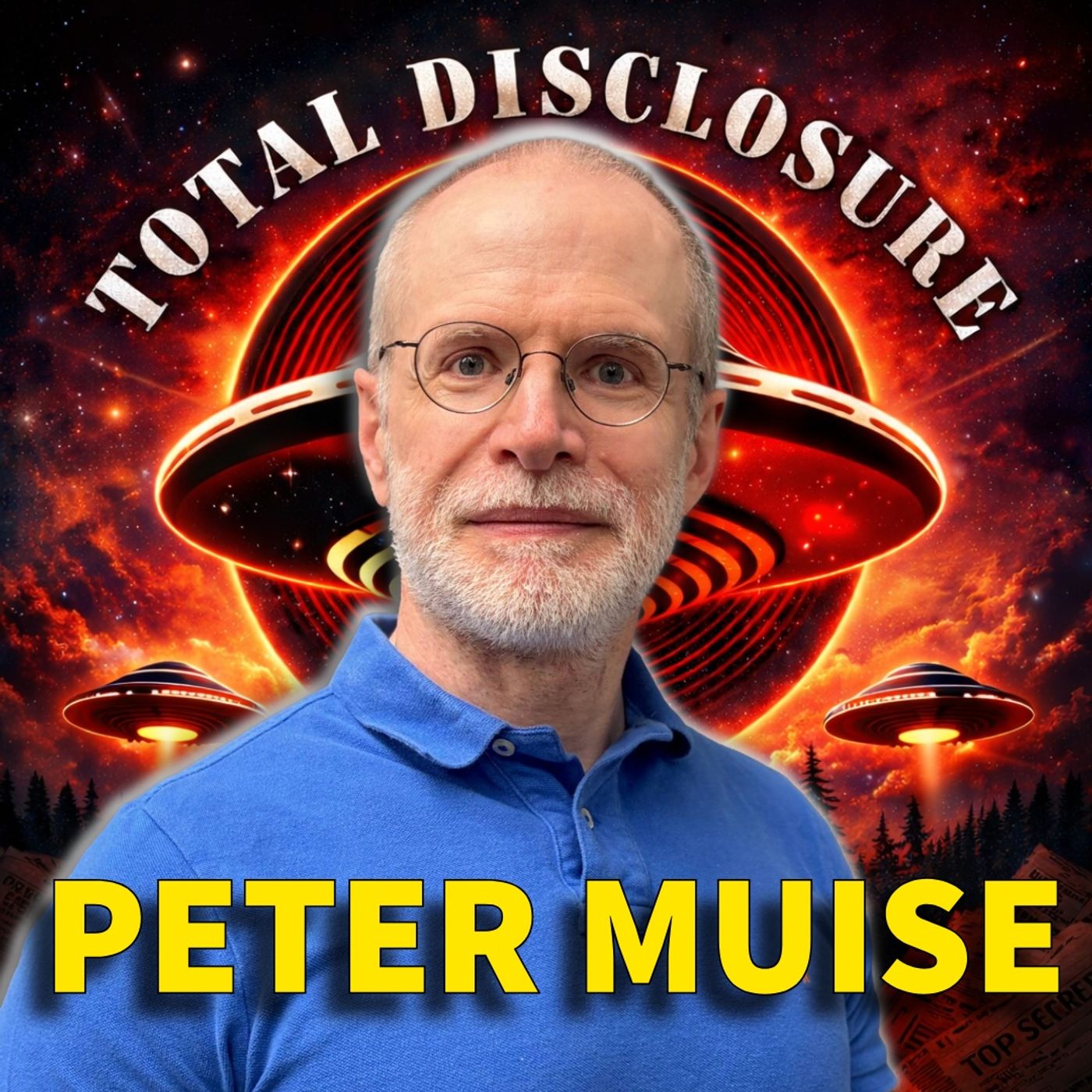
New England's Darkest Secrets: Cryptids, Haunted Roads, & The Bridgewater Triangle with Peter Muise
TDP Website: www.TotalDisclosure.Co
FOLLOW PETER MUISE' BLOG: https://newenglandfolklore.blogspot.com/
🛒 Good Feels Cannabis Seltzer Get 20% OFF with code: DISCLOSURE https://shop.getgoodfeels.com/discount/DISCLOSURE
🛒 Strong Coffee Company - Protein Coffee 💰 Get 20% OFF | Promo Code: DISCLOSURE https://strongcoffeecompany.com/discount/DISCLOSURE
🔗 All Links & Platforms: https://allmylinks.com/total-disclosure
📺 Subscribe on YouTube: https://www.youtube.com/@totaldisclosure
🔻 SUPPORT THE SHOW🔻
⭐ YouTube Membership: https://www.youtube.com/channel/UCy2Cra7aLAAMVxkA9rSYCxg/join
🔥 Patreon (Exclusive Content): https://www.patreon.com/Total_Disclosure
💰 Direct Support (No Fees – PayPal): https://www.paypal.me/TDPstudios767?locale.x=en_US
🔻 FOLLOW & CONNECT🔻
X (Twitter): https://x.com/DisclosurePod
Instagram: https://www.instagram.com/DisclosurePod
Facebook: https://facebook.com/@ty.totaldisclosure
Business Inquiries / Media Use: 📧 [email protected]
🔻 LISTEN TO THE PODCAST🔻
🎧 Spreaker: https://www.spreaker.com/show/total-disclosure-ufos-cover-ups-and-cons
🍎 Apple Podcasts: https://podcasts.apple.com/us/podcast/the-pop-culture-corner/id1544297063
🟢...
Speaker 1: What is it about stories? As humans? We are fundamentally driven by stories. Since the very first time that we gathered around a fire, we've been whispering about the shadows dancing just beyond the light, that right alongside the world of the living, there is a parallel reality, a world of non human entities and what we call unexplained phenomena. We want so desperately to believe that we aren't alone, but we're also terrified of that notion itself. Now. I grew up a stone's throw from Dudley Road in bill Reckam, Massachusetts.
Speaker 1: If you know that road, then you know it. It isn't just a street or an eerie corner. It feels like a boundary line between our everyday world and something else. Living in New England means living on top of centuries of ghost stories, cryptids, and the general unexplained. It's in our blood. But where does the myth end and terrifying reality begin. I've seen first hand that it's closer than you could ever possibly imagine.
Speaker 2: If UFOs are a thing, I don't think they're from another planet. I think it is more of a spiritual, psychic whatever thing. Their shape is very suggestive of like religious imagery. Right, the sphere, the orb, the halo, like all of it's very like religious. Look at Carly Jung talking about UFOs is a symbol of the soul. All these things. I will tell you. I once had a dream when I was I was an adult, when I had to stream where I was you like the stream. I was walking down the street and I was sucked up backwards.
Speaker 2: It's into this large cubical, cubic like structure floating in the sky. And I was sucked up into the bottom of into this giant room, and inside was like a large human, like a large muscular human, and then like sasquatch inside this flying object. And I walked up like wh On.
Speaker 1: This episode, join me as we tug on the thread between the known and the unknown. My guest is Peter Muse is an author, the creator of the long standing New England Folklore blog, and a man who has quite literally written the book on these mysteries, including incredible deep doves into regional legends. Let's map out dark from the bizarre high strangeness of the Bridgewater Triangle to the creeping dread of the Salem Witch Trials. Cryptids Haunted stretches of asphalt, and the very real possibility that the things that lurk in the shadows of night, well they might just be looking right back at us places like the Marianas Trench.
Speaker 1: So to say that we know it's not I think is very very It's what the humans love to do because we hate the fear of the unknown. This is total disclosure.
Speaker 3: M m H.
Speaker 1: Today, we welcome mister Peter muse. How you doing today, Peter.
Speaker 2: I'm happy to be here, Tyler. Very excited weird things with you today.
Speaker 1: Well, what I usually don't get to do often is talk about my own backyard, right, And I think we said I said this to the on the phone to you is that's what I was really excited about. Is you're not really like an You're not an experiencer per se. You're more of an investigator of researcher, historian into the stories that i've you know, my mythologized to England.
Speaker 2: Yeah, and I think to myself, maybe as a story collector, I like to collect the stories as many versions as I can, just tell all these different stories.
Speaker 3: Yeah.
Speaker 1: So I mean, first off, I got to ask what got you into this collecting these types of stories that are off the beaten path, or you know, local to this place, in this place, what sparked your interests there?
Speaker 2: I think, you know, it comes from a bunch of different places. When I was a kid, I grew up in the seventies. I was born in late sixties, grew up in the seventies. In the nineteen seventies, there was a lot of this resurgence or interest in paranormal things suddenly appeared. They didn't call it paranormal then, but things like the In Search of show with Leonard nimoy I came on. When I was a kid, there were movies like In Search of Bigfoot, in Search of Noah's Ark, which I saw, which is not a great movie, but I saw it as a kid.
Speaker 2: So that was sort of in the media at the time. Bigfoot started to appear a lot in TV shows like The Bionic Man had a bionic Bigfoot appear in one of the shows. So Bigfoot started to appear. And I had an older brother. I still have an older brother who was really into like UFOs and that sort of stuff, and so I absorbed some of it from him because he had like the books that I was maybe too young to buy. But he had like these creepy books by Arthur C. Clark, Abou Arthur C. Clarke, Mysterious, Universal this stuff.
Speaker 2: So that was one way it kind of came from, like just being a kid in the seventies Atlantis, the Bermuda Triangle. Like when I was a kid, everybody was very concerned about the Bermuda Triangle and somehow it's not a big thing these days, right, but the time, everyone was afraid, you're I would disappear. I was very afraid I would disappear into Bermuda Triangle somehow when I was a kid, though I never went to Bermuda, so that was one stream. I think. I also was really into like mythology and folklore as a kid, like mythology, Norse mythology, you know the mythology books for kids there out at the time, And so I sort of when I went to college, I got a degree in anthropology because it was really interested sort of that folklore mythology aspect of things.
Speaker 2: And it's only really when I was out of college and living in Boston did I realize that I didn't know much about the actual mythology and folklore of the place. I lived my whole life, right, you said, in our backyard. So I did not really know much about the mythology of the place I lived really since I was a kid. So I just started to investigate, like what stories could I find? And I've just been doing it ever since. I've been writing my blog for about I think it's eighteen years and I've writing that blog.
Speaker 2: And I started out doing it every week when I first started, and I'd do it maybe once a month. But it's been eighteen years.
Speaker 1: Wow, wow, And yeah, I have the link for I'll put that link for your blog in the description blow for anyone wants to check it out, because I think it's amazing. I grew up next to Dudley Road. Yeah yeah, right next to Bill Rica. Yeah. So you know, whether we want to say or we want to agree with what the story is, take that part out for now, whether whether it is true or not. I grew up right next to it, and it was something that was passed down like generationally right right, And it was almost like in a weird way, it was almost like Santa Claus.
Speaker 1: Like my parents would use it as like a don't be bad, right, don't be bad, or we'll take you to Deadly Road and leave you at the nuns and like that was enough, man, because it was. It freaked us out. But for people who don't know the Dudley Roads story, we'll probably get into that because yeah.
Speaker 2: I mean we might not tell it right now. It's a good story.
Speaker 1: Yeah. So, I mean I grew up right next to it. I grew up literally, like I could hit it with a stone from where I grew up. And the Dudley Road story, I mean, she would be the story telling.
Speaker 2: I mean, the Deadly Road story is that in sometime in the nineteenth century, these nuns who are in a convent near Dudley Road were kind of bored with being good Catholic nuns kind of decide to experiment with a little bit of Satanism and black magic and witchcraft, and so in particular, they would leave the convent at night and go to this particular house on Dadley Road where they would conduct their satanic rituals, and the neighbors could hear them chanting and all this stuff, and supposedly the house where they were doing their magic was slowly sinking into the earth because it's so weighted down with evil rights.
Speaker 2: Like you can see the house sinking to the earth. So the story goes on to say that the neighbors in that area were not happy about these satanic nuns. You know, they're intolerant, I guess or whatever, and so they I know, those nuns, so they hanged them from a tree. And the ghosts of the nuns supposedly haunt the road to this day and and other things let people see other ghostly figures there also, And so the story about the nuns is not true. I mean, no one was hanged nuns in bill Ricca in the nineteenth century.
Speaker 2: I mean, the convent is real. I think it's now just a religious retreat center, but it's there, and the that they supposed to be conducted their rituals in is there also. But it's really not a house that's sinking into there. It's just a house that was built with very low walls. It's sort of like a storage building. It's not a full house. But if you look at it quickly, you can see, oh, okay, it looks like it's going into the earth, but it's not really the case.
Speaker 1: On the surface. Like it's driving past it on a Halloween night, which is when most people travel to Dudley Roads. You know, it's a pretty and it's a pretty crappy road.
Speaker 2: It's not country road.
Speaker 1: It used to be dirt, but they've since paved it. But the paved they've paved it once. Yeah, and it's just like you go down it and you're like this the whole time and you're just rocking back and forth. But I've had some weird experiences down there. What I will say about the house that's sinking is you're right. It was built into a hill, like it was built into a The land was like wavy. It's it's very very suburban, you know, farm farmland, horses around there. So it was the way that they built house.
Speaker 1: And even as a kid, part of that story never fit to me because if I was a nun, and I think I said this to you on the phone, if I was a nun, you're married to God, right, what's the ultimate.
Speaker 2: Treason cheating on God?
Speaker 1: I get cheating on God, specifically with the devil right and black magic. And if I was doing that as a nun, I wouldn't go to a house that they could see from the retreat. I would disappear into the woods, right, and I would conduct to my witchcraft there, so the legend lives on, right right. I disagree a little bit with you. I don't think that it didn't happen. I think something happened something. I'm not quite sure exactly what it was. I think it involved none, but again, who you know. I've interviewed so many people.
Speaker 2: And also will say I think that the people who live on Dudley Road probably wouldn't even want us to talk about it because I think they sometimes they get tired of tourists.
Speaker 1: And people like I've had a gun pulled on me.
Speaker 2: Yes, clearly, Like I'm not telling people to go to Dudley Road.
Speaker 1: But yeah, don't go, don't go. H the gentleman pulled a gun on me the last times I was there. Yeah, he didn't pull it on me, but he showed it to me that he had it, and I was like, all right, dude, and we get it. Yeah. Looking into him, by the way, interesting interesting character, interesting character, that guy. But again I found things in the woods that quite don't quite make sense. I explored that area so heavily as a child, and that is what kind Dudley Road. And the reason I bring it up is that's part of a big part of why I do this, which I didn't really think about because I always thought it was just my UFO siding and my mom's death.
Speaker 1: Those are the two catalysts. But Dudley Rowe was a huge part. Me and my friends, we'd always be down there and we did see some weird stuff. I've interviewed people that have have no reason to lie, right, and they've seen weird stuff. So is it almost like we cursed the land by believing it's cursed.
Speaker 2: I've always worked. I always believe people's experiences, like people do have weird experiences all the time, Like, yeah, everyone has weird experience and everyone a lot of people are weird experiences and those experiences are true, Like you actually have these experiences. I guess where I have some skepticism. Sometimes it's just the explanation, Like you have these legends about these places, which you look into the history of the town, you'll see that's not quite true, right, Like no nuns were murdered, no nuns were hanged, nothing of that.
Speaker 2: The house was built that way. On record, we'll sound record, right, there's no proof, there's no physical proof.
Speaker 1: Right, but the house part is yeah.
Speaker 2: Undred percent, and so but still people go there will have this strange experience. So like, is it the something in the land that makes you have the experience? Is it just something in you that allows you to have its experience, something in your mind or whatever, and you're open suddenly to like whatever.
Speaker 1: I think there's a huge element to that. Have you ever heard of a tulpa? So it's something that's created by belief in it, right, So I think there might be an element there to that and to a lot of these places, at least hot spots where the paranormal, the otherworldly, the just the mystical seem to converge on these places. And I think there is an element to how people react or think about that place that does play a part in what they experience when they're there.
Speaker 2: And I think you could be right. And I also think often even just like suddenly that place has a reputation like suddenly, oh Deadley Roads on Hunt Place, more people go to Dudley Road, and then for more people to talk about Douadley Road, more people talk about the experiences they have, then more people go to Dudley Road. So kind of the snowballs. So you have certain places where all the attention gets focused, like Dudley Road, or of course like the Bridgewater Triangle here or those you know, various places.
Speaker 2: When I was a kid, was the Bermuda Triangle, you know what I mean. So it's like these certain places get all the attention, and the more attention you pay to the space, the more weird things you're gonna notice.
Speaker 1: So that story from your childhood, the one about the Bermuda Triangle, Yeah, I'm sure you looked into it. The Bermuda Triangle. I mean, it is a weird place.
Speaker 2: It's yeah, it's a weird place. I just don't think when we were younger, it would just really push like, oh, all the planes, all the boats that go through the Bermuda Triangle disappear, like a higher rate of disappearents there. There are movies about it, right, horror movies about the Bermuda Triangle, and I've seen something. They're actually kind of spooky. But I don't think the percentage of boats or plans that disappear there is actually any higher. Like someone somehow thought it was the case, but it didn't turn out to be the case.
Speaker 1: Right, I mean, when you're only focusing on missing ships, right, right, yeah, you're you're gonna find I mean, I see what you're saying, But I mean there are a lot of weird documented ships that have gone missing, planes that I've gone missing, that have gone through that area, which I do find in. Like again, maybe Bermuda Triangle is like overplaying it, but what is it about that area that has this happened in the first place? I mean, do you know how offhand how many ships actually have gone missing down I don't know, maybe someone can look it up.
Speaker 2: Just it was interesting me. That was very That was a really big topic when I was younger, and now it's not a big topic, Like no one talks about it as much to talk about others like oh, Skinwalker Ranch or Bridgewater Triangle or something like that, but not so much Bermuda Triangle.
Speaker 1: It's right, right, What do you think the difference between folklore and the like paranormal investigation is? Oh?
Speaker 2: Yeah, I mean folklore. Yeah, that's a hard word to define for me, but I will say it's like for me, like folkalos are the story that people tell about places, but they don't necessarily always have to believe the story, right Like you people may say, oh, yeah, Dudley Road is haunted, or they may say people say Dudley Road is haunted, right, right, but they don't necessarily go there to experience the haunting versus people now like the legend trippers or people want to go to a place to actually experience it themselves.
Speaker 2: A different thing, right, So it's sort of like, Oh, Dudley Road, my aunt says some nuns were hanged there and they come back as ghosts, versus, Oh, Dudley Road. I went there at midnight with my friends and we saw the ghost of a nun.
Speaker 1: Right.
Speaker 2: It's like somebody said it versus I'm trying to experience that ghost myself. Like that's the difference.
Speaker 1: I forgot that there was one thing about Dolly Road. I forgot to tell you. I don't think I've ever said this on camera.
Speaker 2: Yep.
Speaker 1: Oh there was one night, and I have several witnesses to this, several which I can call right now. I'm not sure if they answered, but I could call them. We were exploring the woods, ye random night, not Halloween, because we were there all year round and we were in the woods in it. I've been there since, and like the people that hike those woods, they'll tell you don't be in here after dark. The woods seem to turn your turn, play tricks on you, right, People get lost in the woods even though they're they know them like the back of their hands.
Speaker 1: Like trails seem to switch like a train track switches, you know, you know how a train track will like the go over to the other track. It's almost like that. And we were back there one night and I don't mean to point it to you, but something, Yeah, witchcraft, get them get We have another room for that. It's downstairs. But the dungeon. We were back there and we me and my friend and one other we came across this really dilapidated house and it was in the middle of the woods. It didn't seem like anything crazy, just like a shack.
Speaker 1: But once we left it, I've never since found it, and no one, nobody agrees with me that there's a house back there. Yeah, everyone who goes there or knows the woods is like, there's nothing. There's nothing like that. The only thing is the convent, right, And they were like, maybe you came across someone's shed and you just didn't know. But I know where I was that night. We were in the middle of the thicket. Right, and then a house was there, and then it wasn't right. So again, and I think preparing for this conversation has brought a lot of that those random nights out there, right, and I can never I've never found that house again.
Speaker 2: It's very weird. It's weird. It is weird. I will say that you go out in the woods around here, and for people who are not from Massachusetts, New England may not know this, but like right now Massachusetts like covered by like seventy percent tree covers something like, it's very heavily forested, Massachusetts, heavily populated. Most at heavily forest It's like either a house or it's a tree, right, pretty much. But in the past, this was all farmlands. All the cheese were chopped down, this is all rolling farmland whatever, until maybe mid nineteenth century, you mid eighteen hundreds, where people realized there was better farming elsewhere, so people started to go to New York, Ohio whatever.
Speaker 2: And also people start to move from the farms into the mill towns like Heyroll, Lawrence, Lowell, places like that, New Bedford whatever, right, and so these farms became abandoned. So if you go out in the woods now here you will find like cellar holes. Maybe you'll find the old walls everywhere, Maybe find old cemeteries just in the middle of the woods, because these used to be farms ville whatever that just now have been overtaken by the woods. You know you're telling me that story reminds me of this story that I had my book which is in Warlocks and Massachusetts, where it's about a woman named Caroline Howard King.
Speaker 2: It's from the nineteenth century. She was a wealthy woman from Salem. She wrote this great book called When We Lived in Salem. It's like her memories of her childhood. So her family lived in Salem at the time, and they decided to go. They used to vacation in Beverly, Massachusetts. That which it's not like you feel it now. It's like ten miles away, but at the time it was like imagine that you didn't have a car or anything. It's like it was a lot longer trips. They go from Salem to Beverly. Had this house in Beverly on the on the beach, and where they lived in Beverly was an area called Witches Woods.
Speaker 2: And all the neighbors who lived there said, oh, you know these woods are haunted. It is like they said there was a headless ghost, et cetera in these woods, which is woods, wood witch is woods. And they said there was a haunted farmhouse in these woods, the called the Homestead. And so one day Caroline Howard King and her cousin and their maid go for walking the woods. So they walking through the woods, are gonna go have a picnic whatever. They kind of get a little bit lost, and they find this abandoned farm.
Speaker 2: They find like a cellar hole and like the doorstep and like all these overgrown big lilac bushes and a like a un abandoned chimney. Now, and they think, oh, is this the homestead?
Speaker 1: Right?
Speaker 2: Is this the haunted farm? But there's nothing happening, So they wander on. They walk up to the top of this hill trying to find their way back to the beach where they're staying. They look down where they had just been, where the abandoned farm was, and they see a house and it's inhabited. It has a roof, there's smoke coming out of the chimneys, it has walls. They see a woman come out and she spreads like chicken feet on the front stoop and it has these little lilac bushes, and they're like, oh, this is a little freaky, right, this is a little freaky for us, And so the two girls stay up the top of the maid goes down to try to see, like, oh, maybe the woman of that house can tell us how to get back to the beach.
Speaker 2: Well, obviously, is it not gonna happen. She goes back down to the farmhouse and there's nobody there. It's abandoned farmhouse. Again. It's just like a cellar hole, a chimney, you know, the big giant lilac bushes, and that nobody's there, and so the maid is freaked out. She goes back to the top of the hills. She's like, you know, there's no farmhouse there, it's just a ruin. And they realize that this is the haunted farmhouse that they've heard about in witch Is Woods. And somehow it is if you want to think about it's like almost a drift in time somehow, right.
Speaker 2: It's like they're seeing the past, but it's not really there. And so they're all really freaked out, and they managed to finally find like a stream. They follow the streaming it leads to the ocean there go back home and so whoa and yeah, it's in her book and just in her membery. She just tossed it out there, like and here's something where that happened. I was like fourteen blah blah blah blah blah, and she just like, it's just a story in the Bostor in the book. Yeah. And so she was friends with the famous writer James Russell Lowell I think his name was, and he later wrote about this and claimed it had happened to him, but she's like, no, it didn't happen to him, it happened at me in her book.
Speaker 1: So essentially, if I'm getting this correct, they walk down, they come upon the homestead or the farmstead right, it's in ruins. They get back to the hill, they look back down and it's almost like they're seeing back into the past and there's this ripple this, you know, whatever, there's ripping. Let's I mean, if it's true. If it's true, it begs the question because I've heard this type of story before too. This is not an uncompion.
Speaker 2: I've heard people like farmhouse in Vermont somewhere to every well also just.
Speaker 1: People walking and then all of a sudden, they're they're they're like in the past, and then they're freaking out, and you know, then they walk you know there, whatever happens happens, and you know, eventually they hit a barrier and then they're back into their present time. But it it begs the question, we've been told that the world is black and white, yeap, what if there's a lot more gray than we've ever we can ever anticipate, right, And that maybe is it completely insane to think that they might have walked through space time or a rip in space time.
Speaker 2: It's interesting because since it's written in like the eighteen hundreds, she doesn't have any of these any of this terminology reference points. She's just like, oh, it was the haunted farm. I saw the haunted farm in which is woods, and this is what it was like. So for us, it's like, oh, it's a time warp or whatever you want to think about. For her, she's like, it was just a haunted farm and I saw it and I'm glad I go inside or whatever.
Speaker 1: But yeah, that's a wild story.
Speaker 2: It's a wild story. It's not really well known. It's just in her little book, which is a like her memoirs. Which is not widely available.
Speaker 1: Yeah, well this is why we got you here today because story for stories. I love this stuff and G and I, Geene and I are part of something that he created called Wicked Alien Radio and it's really like a New England focus. So I thought it was a perfect marriage of calving you here today for that kind of thing. So like, really, thank you. Someone actually asked me to bring this up to you, so I want to do it because if not, I'll probably forget. Can you tell me about He made me write it down as one of my coworkers, the Cape ann sighting, hundreds of people saw or he made Cape and Sea Serpent, the Sea Serpent.
Speaker 1: Yes, the it keeps turning on me.
Speaker 2: The Gloucester Sea Serpent, the Cape and Sea Serpent.
Speaker 1: Yeah, he made me write three dates, sixteen thirty nine, eighteen seventeen, eighteen nineteen. I'm not sure which is the right one.
Speaker 2: I mean, it's always been. It's been seen multiple times, right, Oh, so it's been. The Sea Serpent was seen up and down Cape and up and down really the Massachusetts coast for like couple of centuries. I think the first one, if we're talking about the sixteen hundreds. People see this sea serpent and they say it's like one hundred feet long and it's as big as a barrel around. It's like this big monstrous thing just lying on the beach, and they of course do not go near it because like, oh, that's a big sea serpent.
Speaker 2: We're sticking, We're keeping away from that giant sea serpent. So there are some stories in it that are kind of these older hearsay stories. Like there's also some stories about people like being attacked by mermaids and things like that, which you see early from the sixteen hundred and seventeen hundreds, right, So they around and you don't see a lot of mermaid attacks these days, but back then, I guess back then was something to be concerned about.
Speaker 1: But but sorry to interject here, Yeah, what if mermaid? Right? And I understand how they're depicted, but what if it just means being from the water.
Speaker 2: Right, it could be some other and human I don't know, from the deep or something.
Speaker 1: Well, I know like that right here. I don't know if you know this, but like Congressman Tim Burchett, people, I hate to say his name, but a velbe all these people right now have been talking about how they think that these extraterrestrials are coming from the water. So what if the vernacular has changed. Mermaid is the only reference pressure that they ad So I think it's important to say these things out loud because to preface the story before it's told. Because again, if you like Jacques vlais right, from fairies what they called fairies we now call you just switch a couple of words and now it's an extraterrestrial or an alien?
Speaker 1: Right, So is could that be what we're dealing with?
Speaker 2: And sorry, oh, so you know, I think it's an interesting question. We'll get back to the sea serpent shortly. But I feel like I understand what you're saying, and you do hear these stories about like mermaids, triton, whatever you want to call, Mike, humanoid creatures that live in the ocean going back century century centuries, like the Greeks had it, the Babylonians had these creatures called like Coolulu, right, and if you think of that name is a little bit like Clulu, which is extra creepy to people, right, all this stuff, Like I think these very old mermaid like beings are seen even in like the Anuma Elish, which is one of the oldest stories written.
Speaker 2: So then people thought talk about Dagon and all this sort of stuff, right, so it's sort of like what is it? And you know, there's never been no one's ever found a body of a mermaid or a triton or anything like that. So that's what I always come back to, like this no physical thing.
Speaker 1: But if they're looking for the wrong thing, may looking for the wrong thing.
Speaker 2: But maybe it's a spiritual thing you're having as well. Right, maybe you're like experiencing the spirit of the water or the energy of the water, and this is how you're man it's you're manifesting it, or it's you're seeing it, you know what I mean. I think of like if you don't know, if you know. The horror author HP Lovecraft from Rhode Island, right talked about the Deep Ones, which in his stories, which he says he always says his stories are fiction, right, That's always important. HP Lovecraft always says his stories are fiction.
Speaker 2: You know. He talked about these humanoids that live in the ocean and they're very like amorously interested in humans and all this sort of stuff. Sot of like mermaids were also interested in humans. But then after he died, some occultists sort of thought, you know, maybe HPO Lovecraft was right, maybe this stuff is real. And so there have been people who have done rituals around deep ones, trying to summon them. Some people say successfully, some people say unsuccessfully. But sort of this more of a spiritual approach to a mermaid or a sentient humanoid in the ocean versus a more physical one.
Speaker 2: Right, So I feel like to me sometimes that's another lens to put on when you look at these stories, like do you want to how literally do you want to take the story versus how like spiritually do you want to take the story versus how much of it is just like a hoax or a misidentification. I think those are four different ways of like it's a hoax, someone just outright lying, it's a misidentify vacation. Maybe someone saw a seal, right and think of that. Look at that thing, it's a it's a mermaid. It was a little bit of seal versus a spiritual thing, Like I saw a mermaid in a vision that I had while I was on the beach.
Speaker 2: Verstas there was a physical being that has the body of a human and the legs of a fish that is in the ocean right at this moment. Right, So, so different lenses to take. I think we're talking about.
Speaker 1: These spores, right, So back to the serpent.
Speaker 2: Sea serpent.
Speaker 1: Yeah, so this was prolific through So it.
Speaker 2: Was seen, you know, in the sixteen hundreds other places, but in the eighteen hundreds, I don't remember the exact dates. It was around the Civil War era. I think a sea serpent is seen in Gloucester Harbor and it is seen many, many times by multiple people. So and it was written up in the newspapers. It was well documented, like respectable citizens saw this sea serpent. People on boats saw the sea serpent. Women on sar and with telescope saw the sea serpent right and they saw it. Said it was like very long, I had had humps, it had a head like a horse, all these things.
Speaker 2: So they see it and what is it? No one was quite sure. Somebody, someone at the time, a sea captain says, I've captured everyone comes see my sea serpent. And people go and see it's as a giant fish. This is not the sea serpent we were promised. They were happy.
Speaker 1: Oh I'm glad to know there was grifters back then.
Speaker 2: Yeah, there always been grifters, always grifters some And then also at the same time, this little boy in Gloucester finds a black snake on the beach and has these big lumps on its body similar to what they had seen in the ocean of the giant sea serpent. So this group of Boston naturalists, like scientists studying you know animals, are very excited thinking, oh, this is a baby sea serpent. Right, We've found a baby sea serpent. We found a new species. This is gonna be amazing, And so they stake their reputation kind of on this thing.
Speaker 2: And then when they investigate, it's just a regular black snake that had been effective with some sort of like virus or something of fungus. I'm sorry, it's not a sea serpent either.
Speaker 1: Yeah. God, there's so many gene will know, there's so many parallels into these stories as to what's like going on now. It's like the hoaxes of like Ivy I don't want to say his name, but like the mummies down in South America. Oh, like they sold tickets and they were like, come see our aliens. And it's like the same story of like, come see our sea service.
Speaker 2: And it was just not it was Yeah, I mean there's it's always been happening. There was some I love it. So the sea serpent kind of disappeared after while, but no one ever figured out what it was. So it shows up again in other times too. I think one of the last times it seems like nineteen sixty three or something like that.
Speaker 1: Do you find it a little odd that it's not just seen in New England? Of course, locked nests right all over the world. This idea of a creature and I don't even like using that word because I think it connotates like a monster. But this thing that was very large, larger than they'd ever seen before, which could capsize boats and you know, if it wanted to. I don't even know if friendly is the word. Indifferent could have been what it really was, just like a whale is indifferent right until you encroach, then you know it it will need to do what it needs to do.
Speaker 1: But these things have been talked about for as long as humans could right story like right and keep record right from the vikings all the way to right right even earlier. And that's what I find interesting. Could it have just been giant squid. I probably that's one of the things, right, But we know more.
Speaker 2: About the loom something swimming together how to say, Right, you see something undulating? Is that one thing? It looks like one thing. Maybe it's a whole school of whales or porpoises or whatever or something.
Speaker 1: Right, And what I was getting to is it's it is hard right with no physical evidence to like get But we know more about the surface of the Moon than we do what's in at the deepest parts of our ocean. So and they've evolved as what is it invertebrate is when it doesn't but when the pressure won't affect it right, right, so they don't have like skeletons that would just be pressure, you know, destroyed just like that the capsule that went down, Right, Like, it's it's easier to get to the Moon than it is to get to the bottom of our ocean because the pressure.
Speaker 3: Is so.
Speaker 1: It's so intense that it just crushes things. But there are animals that or creep beings in the ocean that have adapted and evolved to be able to live under there with no light no, because the light from the sun doesn't even reach down there. In like places like the Marianas Trench. So to say that we know it's not, I think is very very It's what the humans love to do because we hate the fear of the unknown, right, we need to know everything. No, there possibly couldn't be a sea serpent down there, but then we find a giant squid and they're like, oh Jesus, that's big, right, that thing could do some damage if it wanted.
Speaker 1: So your thoughts on the sea sarpent as you probably mis identified, but could be some truth.
Speaker 2: Thing you've probably misidentified. But who knows, right, I guess I feel like there are things in the ocean we haven't seen. But are there giant snake like monsters down there? Or is it just variants of things that already exist? Like we know what a squid is like, so is it just another Like a giant squid is not that different from our regular squid, it's just much bigger versus we don't There are no gigantic scaly monsters swiming around there, like, no giant snake like monsters in the ocean, right DC.
Speaker 2: So they may have been in the past, but there are now.
Speaker 1: In the right right, So what is moving into kind of like the greatest hits of New England folklore. If someone had never heard of a single New England legend before, what are the first, say five stories that you you tell them.
Speaker 2: Well, the first one is probably just like Salem witch trials is like for massaters. That's the thing, right, witchcraft is like the big thing here, hundreds of stories about which is here Selmwich trials the most famous, right sixteen ninety two, nineteen people executed, one person crushed to death during torture, and then several other people died in jail. So that was the biggest witch trial in North America. And that sort of was the end of the witch trials also because I think when that happened, even I as it was going on, there were people like, this does not seem right to us, and then by the time it was over, people like, oh, this is really not right.
Speaker 2: Like there was a lot of skepticism always about it, but when it was over, it was people were really turned against the whole concept of accusing people of witchcraft in court. They didn't stop be living in witchcraft necessarily, they just realized you couldn't prove it in court. And so even after the Sem witch Trials are over. You do see these stories about witches appearing throughout New England for hundreds of years, so it'd say Sem witch trials is like a biggie like that's one of the big ones, right, and all the sort of legends and stories that kind of circulate around that, like ghosts that haunt places associated with Selm witches and all that stuff.
Speaker 2: It's huge.
Speaker 1: I assume you've been to Salem.
Speaker 2: Yeah many times.
Speaker 1: Yeah, people report that when they enter Salem it feels like they've entered like once they cross into Salem, it's like a bubble that they enter into. Have you ever heard this before? Just how many times have we heard it?
Speaker 2: Quite a bit, so who knows, maybe more witchy and something like I'm just I'm coming home.
Speaker 1: Like producer producer Producer Jean says that he feels like he's walking into a tourist trap. And you know what, isn't it ironic that these days if you go to Salem there it's witch shop after which, and I don't like every time I'm there, You're right, Gene, I'm almost like I don't know if this is right, like practice, like everyone's practicing quote unquote witch the holistic witchcraft at the place where a bunch of people were accused of witchcraft falsely for greed, power, land grabs and other petty, petty differences between your neighbors, right, and now they like celebrate witchcraft and every like.
Speaker 2: Is that disrespectful, here's my opinion. So one thing, it's been going on there since eighteen fifty one. In eighteen fifty one, Nathaniel Hawthorne wrote The House of Seven Gables, who was a huge national best seller and the country wasn't as big in eighteen fifty one, but was still a big best seller set. And it's about the Salem witch trials and all this stuff. It's a huge hit. And so people started to come to Salem to see the places he had written about. From around the country. They would go to Soem like, we want to see the House of seven Gables.
Speaker 2: Oh, we want to see the graveyards. Oh, we want to see all these things. And so eighteen fifty one people in Salem started to like say, oh, this is really cool. We can make some money off these tourists. And so they started to like market to tourist even in eighteen fifty one, like eighteen ninety two was a two hundred year anniversary right of the witch trails, and the town like produced a map of local sites to see about the witch trials.
Speaker 1: Oh my god, they waited two people. They waited two people until they started monetizing it.
Speaker 2: Two centuries. Two centuries.
Speaker 1: Yeah, two people. Yeah, let's just say the average person, right, one hundred years. Yeah, they waited two people before they.
Speaker 2: They had a you know, Pep Parker Brothers put out a game called the Witchcraft Game. People would sell soap, witch soap. So it's not new, it's been going on for a long time.
Speaker 1: You know what I find fascinating about Salem is we went there. We have a good relationship with a shop called Pentagram.
Speaker 2: Oh that's a great store, and they're.
Speaker 1: Right next to the memorial. What a lot of people don't realize is that memorial is not where they're buried.
Speaker 2: Some of them. So they're not No one knows where they're buried, right, Their bodies were thrown in some unmarked.
Speaker 1: Gray of something. Yeah, so do you have an idea of where they're buried, of where the actual hangings took place?
Speaker 2: Oh, yeah, it's Gallows. It's Gallows Hill is marked. Now there it was only the last ten or fifteen years. I think. I can't remember when they figured out where it was. And it's how do they think the walmreens. It's just like they sort of knew the neighborhood always they were, and then they started to read people's diaries from the time, and someone was saying, oh, I could see you know, I saw the wagons carrying the people go by my house and the and they figured out where the house was that this person lived in.
Speaker 1: So it's like a friend's like deep, yeah.
Speaker 2: Yeah, very deep, very very detailed where it is so that it is a park. Now I think there's a small park there, but they're not. Really, it's not in downtown. It's further out. It was behind the shopping plaza.
Speaker 1: And no one actually goes there. No, it's most people don't.
Speaker 2: Go, but it's further it's a longer walk.
Speaker 1: Yes, so they go to this memorial.
Speaker 2: Yeah, that is. I mean.
Speaker 1: It's a tourist thing.
Speaker 2: It's it's a will say it's put it this way right, Yes, it's memorial. It's memorial.
Speaker 1: It's become a tourist thing.
Speaker 2: It's become a tourist thing. But you can think at it this way, like the town that town executed. You know, these nineteen people killed one through torture, et cetera, et cetera, et cetera. Right, did terrible Giles, Corey Giles Cory Terrible things happened to these people? So is this just kind of karmic payback that this town is now like which city, which capital? And they embraced the witch for ass like saying we're going to kill the witches, Like have they just learned a lesson? Like Okay, hey, witchcraft is cool.
Speaker 2: We're just gonna like.
Speaker 1: But what about the people now say go surreal, yea, let's let's suspend our you know what I mean. I'm not even sure because we've had some weird shit happened in here too, and uh, you know, at this point, I just let's say it, like, let's say it's all it's all there, right, and you were crushed to death, crushed, you weren't even hung, you didn't get that liberty, You got crushed, and then you come back as a ghost and a couple hundred years later they're like it's witch shitty and they're celebrating witchcraft and you do you the reason you're a ghost is because right, Like do you think that maybe like maybe some of those people resent to the idea.
Speaker 2: Or are they excited to be remembered? Right?
Speaker 1: You know what's good?
Speaker 2: Excited to be remembered and celebrated or are you sad to be monetized that is a good pay for our ghost? Maybe like psych everyone remembers what.
Speaker 1: Does everybody want? Legacy? I mean, it's at your legacies. He got crushed to death.
Speaker 2: But Giles Corey is an interesting person, Like everyone remembers that he was crushed to death, which is a terrible way to die. He was a rough character, like if you read about him, he had beaten one of his servants to death, unfamiliar and so he was not convicted. But everyone in Salem was like, Giles Corey is trouble, Like we want to get rid of Giles Corey if we can, and so that yeah, so I think that was in people's minds that they accused him, like, oh, this is a he's a violent birds person and he so people don't know this story.
Speaker 2: He was his wife had been accused of a witchcraft, and he's like, oh, yeah, she's a witch. She's totally a witch. And then he was accused of being which is like a crap, I'm you know. He suddenly the finger was pointing at him. Uh, and he I suppose he realized that the whole thing was a scam at this point because he knows he's not a witch. Because he's not a witch, and so he is interrogated ask these questions. He refuses to answer, and people suspect it was because he if he had answered, he would have been convicted or whatever, and then they would have confiscated his property, and they were leaving the property to their children, right, And so he didn't respond to any questions.
Speaker 2: And according to Massachusetts law at that time, if you didn't answer questions while being interrogated, they were allowed to torture you by putting a board on you and compiling rocks onto your body until you spoke. And so they stretched him out in a field, tied him to the ground, put a board on him, and dispiled on these rocks until they hoped he would speak. And they kept saying, Giles Corey, do you have anything to say, Giles Corey, do you have anything to say? As they put them more and more rocks, and they put on these rocks and finally these only words were add more weight, and they put them more weights and he died.
Speaker 2: So he was he was hardcore or he was hardcore. He was a murderer, but he was hardcore murderer again, but he.
Speaker 1: Took the punish, Yeah, he took punishment.
Speaker 2: The place where he was killed is now a cemetery. It's Howard Street Cemetery, which is kind of a little bit off the beaten track. Be you can go, which just in the residential neighborhood. People say his ghost can be seen there if you want to go look for his ghosts there.
Speaker 1: Yeah, it smoked a joint.
Speaker 2: Did you see his ghosts?
Speaker 1: I didn't see his ghosts, but I mean the joint could have impaired me that thy Yeah, I'm not sure.
Speaker 2: And people all say his ghost has appeared in Salem when something bad is going to happen. So there was a big, big an omen. So there's a big fire in nineteen eleven which burned down a lot of the business district, and his ghost appeared before that. And people are like, oh, if you see draws Krey's ghost and Salem, that's bad news for the city.
Speaker 1: Interest He's like.
Speaker 2: An omen of bad things. Happening.
Speaker 1: So moving past Salem witch trials. You know, one last thing I'll say about this is a lot of a lot of people I've talked to when I asked them, hey, how many how many people do you think died in the witch trials in Salem? Specifically, they think thousands? Can you just again reiterate?
Speaker 2: So it was nineteen were executed, one was died through torture, and then several died in prison.
Speaker 1: Okay, it is not thousands. Guys, might be thousands worldwide.
Speaker 2: I don't The numbers of people who died in witch trials is a topic of a lot of scholarly discussions. Say it's hundreds of thousands, probably right across Europe. Someplace in Europe there were huge witch trial like Germany and France had these massive witch trials. I think those are the biggest witch trials are in Germany and France.
Speaker 1: Probably, Yes, I just I wanted to address that.
Speaker 2: It was nineteen people executed, one died of torture, and then people died in prison. There were hundreds of people were accused, and there was a weird fluke of their of how the system was set up, like normally in the Puritan era, if you wanted to bring charges against somebody, you had to pay to do it. You had to pay a fee. And this was to prevent nuisance lawsuits. You couldn't just.
Speaker 1: Accuse him, bring back.
Speaker 2: You had to pay to do it.
Speaker 1: We should bring that back, we should, right.
Speaker 2: But the judges in the film, which I was like, no, we're gonna wave that because we want to get as many witches as we can. So that was one thing they did which is not good. Uh. They also accepted what they called spectral evidence. So spectral evidence this idea that witches can send their souls out to cause trouble and the only people can see these souls of the people they're attacking. So like your audience right now can't see that my soul is attacking Tyler, but Tyler can see it. And Tyler's like, Peter's a witch.
Speaker 2: His soul is attacking me, right, spectral evidence. You have to listen to Tyler and believe him even though there's absolutely no proof my souls leave my body.
Speaker 1: He's a witch.
Speaker 2: Yeah, I'm a witch.
Speaker 1: Hang them, yeah, and that I might have to edit that out. I just said, hang him anyway.
Speaker 2: Is that bad for you too?
Speaker 1: Yeah? Oh if i'm even though it's a joke, it's a joke. Yeah, that's fine, we'll just keep it up. He's a witch, a witch.
Speaker 2: So and the last thing these judges did also was if you pled guilty to being a witch and named names, they let you live. But if you pled innocent and did not name names, that executed you. Oh, so there was an incentive if you were accused of being a witch and name say witches, I'm a witch, and know who else is the witch? Tyler and Gina witch is too? Their witches also. Then they'd bring you in and you'd be like, yeah, I'm a witch, and also's my mother, and so's my sister, and says my neighbor, they're witches too.
Speaker 2: They bring them and they accuse people. So just would grow and grow and grow. So the only people who are executed are the people who said they were innocent. People said I am not a witch were not hanged, where the people said I am not a witch were the only people who were hanged. Wow, So they became this weird dichotomy or screwed up system where you were this incentive to lie and say you're a witch and name names. Otherwise you were going to be executed.
Speaker 3: Wow.
Speaker 2: So that's why so many people were accused, like one hundred and fifty people were accused. But that's why so few people were killed, because because everyone was lying to say and said they were witches, so they would live.
Speaker 1: You almost have a little bit more respect for the people that say, no, I won't conform, I will not say I'm a witch. Yeah that's interesting. Yeah, so what's the next.
Speaker 2: Boy, So we're talking top five, top five? Yeah, top five. I guess. Let's say Bridgewater Triangle is really popular these days. People like to hear about that from the nineteen eighties. That shut up, Like nineteen eighty one. I think Lauren Coleman, famous cryptozoologist. He actually founded the word cryptozoology, which is amazing. Like, yeah, here's a weird story. I was in my neighborhood. There was a drag show around gay Pride and it was called Cryptid Night. So the drag queen's a dressed like cryptids.
Speaker 2: And I thought Lauren Coleman started this in nineteen in the eighties, Like somehow these people are like, yes, the term cryptid has become so embedded in society, and Lauren Coleman started that, right, So anyway, it's crazy, right, right. So Lauren Coleman sort of noticed that there was a lot of reports of strange things in this area in Massachusetts, southeastern Massachusett, the Bridgewater Triangle and oh, he's still love. I think he's turning eighty.
Speaker 1: We gotta find him.
Speaker 2: He's in Bangor, Maine.
Speaker 1: We're gonna find him.
Speaker 2: And so he dubbed this area in southeastern Massachusetts the Bridgewater Triangle, like the Bermuda Triangle, but in Bridgewater.
Speaker 1: Uh.
Speaker 2: And since then, I think because once you name something, people kind of focus in on it. The more people look at it, the more they see. As we've mentioned, right, so people are seeing like bigfoot, UFOs, giant birds, giant snakes, ghosts, paquaji's all these things in the Bridgewater Triangle, which you see those things everywhere in New England, but particular in the Bridgewater Triangle. People like, oh, it's in the Bridgewater Triangle. It's centered on a big swamp, the Hackamock Swamp.
Speaker 1: Which I find interesting because what does hawka mock mean?
Speaker 2: People say it means place of spirits, but I don't know if that's the right answer. There's some ideas that's a mistranslation. It made me like hook shaped swamp also or something like that. So it could mean place of spirits. It could not mean place of spirits.
Speaker 1: Well if it why I mean, and.
Speaker 2: I think also there's intro it's there's a possibility people got Hawk contrued with Hobamock. And Hobomock was sort of the local indigenous deity of swamps, snakes, disease, and darkness, so he was like an important ally for Shamans, like if you want to cure disease, you gotta be friends with Hobamock because he is the god who controls diseases, right, that gods. So hobam Hackamocks is kind of like a little confusion. But there was the King Phillips War that engulfed southeast Cape cod southeastern mass everywhere, right all of Massachusetts, right.
Speaker 1: Right all up the up the the the coast there, and there's this belt, this this swamp and the belt.
Speaker 2: Yeah, swamp and belt.
Speaker 1: I think right, that was taken. And again I'm not as familiar with the story, but the the from what I've gathered, and we went down there, we spent we spent how many nights, we spent about four nights in the middle of the Bridgewater time, and we stayed in one of the oldest houses, the oldest house in Easton, which is also haunted. We went to the Random Dog Track.
Speaker 2: Have been by the Random Dog Track that night.
Speaker 1: I will admit, I will admit this. The investigators we were there with I'm gonna I'm gonna give a real big exclusive kind of probably shouldn't say this here, but I'm going to. We went to the Random Dog Track that night was in credible, in credible, probably the closest brush I've ever had with what you could call the quote unquote paranormal, where I felt something on almost trying to take me over, Like something came up the base of my spine and like I could feel it. It was almost like it was trying to take me and it was like I had to fight.
Speaker 1: And I know it sounds crazy, I really do. Jess was there, there was other people there, and I felt I just felt super uncomfortable and I felt like not myself. And it was interesting because we weren't even gonna go out that night. They came to the front door and it was like eleven or twelve already. No, it was like it was like ten or eleven already and they were like, we're gonna go to the rain dog Track. Do you guys want to come? And my first set I literally said no.
Speaker 2: And then something, you want to go to the haunted dog Track.
Speaker 1: No.
Speaker 2: The answer should always be no when someone says that, right, But.
Speaker 1: The moon caught my eye because we were at the front steps, so they were outside on the steps. I was inside with Jess and we were kind of wrapping up and just getting gearing up for what we were going to do the next day. Something told me when I saw that moon, I need to go. So I was like, Jess, get your stuff, let's go. We're going. And we went out and it was probably the best night, full brightest full moon hanging in over the horizon, and you know when the moon's just extra bag.
Speaker 2: It was a.
Speaker 1: Super And the first night we were there, right and we're walking through the dog track and just things are it was just eerie. And then the whole time, the whole time after that, I was trying to recapture that first night, right, and it just never lived up to it. And even to the point we're one of the investigators. I'm not going to name them or her tried to get me to fake something for the documentary, and that's where the documentary got killed. Was when he did that. They did When he or she did that, that's when I was like, you know what I was like, and I believe Jess was right there.
Speaker 1: I was like, no, I'm not doing no, like I'm not That's not what I'm here for.
Speaker 2: Yeah, I've been through Random.
Speaker 1: I'll admit it's a creepy place.
Speaker 2: And we were going to a friend's birthday party at a Chinese restaurant down the street from the dog Track or something, and we're driving down the road whatever that road is just like fog blowing across the road like it was a horror movie, Like, oh this is wild, Like this low fog like blowing blown like this is really I can see why people are spooked by this area.
Speaker 1: And again I got that feeling. Yeah, when I went into the Bridgewater Triangle, Yep, that that like bubble feeling again, right, And the only places I've had that are Salem, Bridgewater and Dudley. Okay, so what is it about? And that's why I set out to make that documentary about what connects these places? And we found tons of through lines to each of them. We're gonna actually I'm not gonna say this doesn't matter, but we are going to revive that documentary. But we're just gonna leave some people out, if you know what I mean.
Speaker 2: I've been Have you been to the Freetown State Forest, which is yeah, we went down there, right, So this is my this is my big Bridgewater Triangle story. My husband and I went to Freetown State Forest. We're gonna find the assonet ledge, right, a soannt ledge and I used to think it was ass in it, but no, it's not. It's a sonic, not ass on it. It's a sonnet. And so we drove down there to Freetown the State Forest. We park and the entrance we parked near was near a gun range, right, So we got out of the car.
Speaker 2: Immediately we hear gunshots, which is always like a soothing thing to hear when you're in someone shooting. So like, okay, this is not great. I hear gunshots. As a city person, I hear gunshots. It makes me nervous. Right, So we hear gunshots walking down this road and all the trees are dead. It's like pine trees. They've all been killed by pine borer beetles. So we're walking down a road with gunshots and dead trees around. It's like, okay, this is a good creepy start to the experience. Right, We're walking, walking, walking through these woods.
Speaker 2: I think we had a map of some kind, and the landscape is really odd in that forest, Like the paths were really sunken into the ground low, like I guess because it's very sandy or soft, right, So you're kind of walking knee deep in the ground right with these little troughs, which was weird to me. And it was early March. All the trees were leafless, but they're still They were blowing against each other in squeaking.
Speaker 1: So it was like squeak, squeaks, squeak.
Speaker 2: I was walking like, oh my god, this isn't right. It can creepier and creepier. We haven't seen anybody for like an hour, and then suddenly we see these teenagers wearing hoodies who were all like high out of their minds in the middle of the was like this is always good too, like a bunch of high teenagers. I'm like, okay, should we just turn the horror? Right? When do we just turn back? When do we just turn back, and finally we get to this pond and on the other side of the pond is the Assnet ledge.
Speaker 2: We go to the top of the ledge, which is supposed to be this and the ledge is a place where supposedly people see ghosts and also supposed to wear a puck wedge. Will talk about puck wedges in a bit, will push you off the ledge, right, So it's a spooky, spooky place. We get to the top of ledge and they were like school children having a picnic up there, right, So all the spooking is just like evaporates, Like, here are a bunch of kids playing games, having a picnic on this ledge by the water, having great time.
Speaker 2: So it's like spooky, spooky, spooky, spook oh children having a picnic the end, right, So I can see how the spooking is started. But we luckily didn't come to spooky conclusion for us.
Speaker 1: Yeah, we visited that ledge as well. Yeah, I attest to what you what you experience. Yeah, you know it's creepy, but again, it was like broad daylight when we were there, right. So then when we got up there, there was like dirt bikers up there. Yeah, exactly, I was like, oh, okay, that held the mood right right right.
Speaker 2: Not everyone knows it's supposed to be a beautiful view.
Speaker 1: They have a great view, but they say the lady in white or a page like try to like get you to and I will admit, and I think this happens. I think this is like a cuman a human thing because it doesn't just happen there. But people like when they're up on something high, they get this like have you ever had that gene where you're up on something eye and you're just like, what if I just jumped?
Speaker 2: No, No, I don't either. I stand back a phenomenon that people do that.
Speaker 1: But you've never had it. And when I was you're smarting.
Speaker 4: And things like that in the military, I would get nowhere near the ledge unless I was tied off to something. If I'm scared of anything is I have a horrible fear of heights when I'm not.
Speaker 1: Secure, secure, right, I could be there, a.
Speaker 4: Good good there.
Speaker 1: I got up to that ledge, looked over and sure as shit, sure as shit, this washed over feeling came over me to jump. I don't know what it was. Again, I'm not giving credence to it. I think it is because I've had that other places too, where I'm like, you know, what if I just drove off this bridge and then I know that sounds like a psycho thing, but I know the other it's it's intrusive thoughts, right.
Speaker 2: Like kind of little OCD, A little ancient.
Speaker 1: Yeah, anyone who knows me knows all the above.
Speaker 2: So interesting, like the assnic ledge. There is a legend that like a Native American ghost are seen like that people they would throw themselves off there. But it's relatively recent. Apparently that pond is a quarry used to be a quarry, so it's not that old really, it's a relatively from like nineteen hundred nineteenth century. So up, oh boy, I got it.
Speaker 1: So how is Loo he been a top three? And then we'll move on.
Speaker 2: Let's talk about we can talk about a puck Wedgies. I guess yeah, yeah, like that's something.
Speaker 1: By the way, I want to I want to preface this. I just put out it. We did an interview with Bill Russo, Oh he's great.
Speaker 2: Yeah, I got his story. But I watch you and all that stuff.
Speaker 1: Yeah, watch it's very right, and so we just put that one out. I just put that one out because that one stuck with me.
Speaker 2: It's a great story.
Speaker 1: And he won't say it's a puckwadgie, but he said that matches the description. Yeah, right, So what is a puckwadgie?
Speaker 2: Well, it's I just I think it's interesting for us that Bill doesn't say it's not doesn't say it's a puck wadgi because people have experiences. If we said, right, people have all these weird experiences and then later you can try to put them into the categories. So he had that experience and now everybody else tries to put it in this category, and he's like, I don't know if that's the category it should be in, which I can totally understand. Right. And in when you and I talked in the phone, I think we talked about the woman Mona Kempka.
Speaker 2: I think her name was who Oh. She was a nurse who lived in Framingham, Massachusetts. She since passed away, and I first saw her on a UFO show like America's Weirdest UFO Stories or something like that. She lived in Framingham and one night she's in her bedroom and she sees this mysterious pink light appear in her bedroom, like a pink orb appears inside and there's a pink myst around it too, and inside of it, she sees this gigantic muscle bound lizard, like a humanoid muscle bound lizard monster.
Speaker 2: And she just sees it, and she's freaked out, obviously, and then it disappears, and so she goes in this UFO show it says, you know, I think it was a reptilian alien. It was a reptoid. It was whatever. I don't know why is my bedroom, but that's what it was. But then a few years later she's online another place she says, no, it wasn't a reptoid al, and I think it was a demon. It was Zozo the weed demon, right, who is a specific demon you see kind of showing up with the two thousands people seeing this Wuigi demon.
Speaker 2: And so I guess the question is, like, she has this experience, she sees a giant musclebound lizard monster in her bedroom, but then how do you explain it? So she's trying to explain it different ways, right, she got these different is either was it a repertoid alien, was a Wuigi demon? And if she still was with us, would he even later maybe think it was something else, trying to figure out what the heck was this that I saw? Like, how do I explain what I saw?
Speaker 1: Right, she's throwing different lenses on d.
Speaker 2: And where's Bill Russo? You can see like he has his experience and he's not going to put the lens on it, like he just had the experience and he has the experience, and this is what it was, right.
Speaker 1: And it's a remarkable because that guy wants nothing to do with Like he doesn't want money, he doesn't want anything. He lives in Florida, like or maybe I shouldn't even say that, but he lives in he lives in the South, like he just wants to retire, like live his life. Yeah, right, but he does like telling the story right, and these things but they mimicked language, right, you know in ways that they were a little off right, like he want you right, we want you right. It was almost like mimicking.
Speaker 1: And I always asked him if he didn't have his dog with him that day, Granted, he probably wouldn't have been out there, he wouldn't be walking his dog because he was walking his dog. He did it every day. Arguably he wouldn't have been out there, but let's just say, and I asked him this point blank is, let's just say you were out there without the dog and you saw this. The dog kept him away because the dog was having a very visceral like I need to get away from this thing. If the dog wasn't there, what would you have done?
Speaker 1: And he said I would have walked right up to it. And he's like, I don't know if I would have been here today, I can't say that, but it was it was a pot lead cute like stuffed animal guy saying you want you and he's like, I was curious. But his dog, Stephanie, was like, no, dude, we got to get the out of here, right like thee. So he had that bio sensor his dog, and he trusted that dog enough to be like, Okay, let's get away. And who God they say say they lure you in. That's the lure, right, they lure you in, and then once you cross the threshold, no nobody knows what happens, right, So I find that interesting.
Speaker 1: It's like, what would have happened had Stephanie not been there? Samantha, Sorry, step not thank you dog? Right? So sorry Bill? Because he loves that dog.
Speaker 2: So if like, you know, the Puckwajies. It's interesting because you can trace where the term came from. It's not a local New England term. Originally, it's from the Ojibwa people, which is Native American group in the Upper Midwest, and it appears in their mythology and folklore, and it was that their folklore was kind of written about in the nineteenth century and Henry Wadsworth Longfellow, the poet, he wrote a song of Hiawatha. It's an epic poem. And this is in nineteenth century people like poetry more than they do now.
Speaker 2: So he wrote this poem about Ojibwa legends and the hero Hiawatha. It was super popular. And in the poem there's a section about Puckwadgies where puckwages, you know, kind of destroy this hero. They kill him and things like this. They not Hiawatha, but it's another character. They kill him, these little mischievous fairy like beings called Puckwadgies from ojib from the Ogibal lore. So Wadsworth Longfell lives in Cambridge, Massachusetts. He writes this poem. It's very popular. Later, probably the early twentieth century, or so somebody in southeastern Massachusetts.
Speaker 2: I remember it's Norton, in which town it is, writes a history of Norton, Massachusetts, and he takes the part of the song of Hiawatha about puckwadgies and he sets it in southeastern Massachusetts. Said, oh, this happened here in Norton, Massachusetts, even Norton or East in one of those towns. Right, he takes it and puts it there, said, there were puck wedgies here in Norton, Massachusetts, and they did this thing. It's really really he was just plagiarizing Longfellow's poem, but he puts it in there so that it becomes history in that area.
Speaker 2: In the nineteen thirties, then a woman named Elizabeth Renard. She's a writer. She's collecting folklore on Cape Cod. She collecting Cape Cod folklore. She talks with these wampanogh men to get some of their legends. They tell her stories about puckwadges and puckwadges and the giants right the most shop, who is this giant kind of demigogue figure who creates landscape features and things like this, And the little puquagis kill him and they don't well, they kill his children. Then he leaves the area, and so that's how kind of puquadgis kind of get to Massachusetts.
Speaker 2: There's a popular book called The Good Giant and the Bad puckwagis the children's book that came out in the eighties, and so from there kind of really spreads around the area. So that's how the term gets here. But if you look at like Native American legends from New England, there are lots of stories about little hairy creatures that live in the woods. They aren't called puckwagies because that's not that's the term is not from this area originally, but they have names like the makiawasag and things like this, which are hard terms for me to say, but generally they're like short covered, long hair, don't like to be seen, they'll steal things from you, they don't like to be spoken about, things like that.
Speaker 2: And on Cape Cod they have a leader of the woman figure who leads them with a woman named Granny Squat Granny squantt and that name actually comes from a very old Algonquin term for like the woman's goddess squat unit or something like that. She was the goddess of women. Uh so that name you can see has kind of come into the folklore. Also, Granny Squants is basically this goddess figure who's now kind of like a fairy figure kind of associated with Puck Wedgies a little bit, and she's the wife of mo Shop in some stories.
Speaker 2: Also. Wow, So it kind of it's it's old and I'm new at the same time. It's a mix of old, new native and kind of more traditional local American stuff all kind.
Speaker 1: Of right, It's like a blender of all.
Speaker 2: Yeah, and so people do see Puck Wedgies, right, so what are they seeing? I guess is always the question, Well, have you heard of like the Dennis Ovans, Yeah, the early it's a it's a small, small cre like Commonida. And it's like, is it crazy to think that something evolved, you know, in that way, and like do we just you know.
Speaker 1: It coexists. And then then the reason I bring up was just because like these are seen across the globe, right, and whatever word you want to use for paquaji this, whatever that word was, I can't pronounce that.
Speaker 2: Something like that.
Speaker 1: Yeah, it's like abomina almost snowman yetti Bigfoot. It's they're the same thing, it's just a different name and a different culture, right, So I just find it interesting that that people do see these things across the globe and throughout a lot of our ancient cultures are where these beings kind of originate from, and it's disseminated through and it the legends persist. What do you think We'll take by one more question, then we'll take a break, finish out, and then we'll do the members only section.
Speaker 1: But what do you think it says about the people of New England that we've allowed these legends to thrive?
Speaker 2: Oh?
Speaker 1: Like, what does it say about people?
Speaker 2: What the story in New England? Like that they live someplace old? Right? I think people are kind of proud of some of the weirder stories, right, Like people in the Bridgewater Triangle are excited to live in the Bridgewater trying, but they will definitely tell you it's a spooky place to live and they love it, right, they love it. You people in Salem are excited to live in Salem, which city?
Speaker 1: They like it except on Halloween, except on Halloween.
Speaker 2: And I have friends, I have friends who even like it on Halloween. Uh, you know, it's New England has a reputation for weird things, right, like this idea, is New England weirder than other parts of the country. It's hard to like, how do you kind of quantify weirdness? But I do like to think that the three most prominent horror writers all came from New England. Edgar Allan Poe was born in Boston.
Speaker 1: HB.
Speaker 2: Lovecraft is born in Rhode Island. Stephen King's from Maine, right, And they're all from New England, and they all kind of like why do they all grow up here and have the weird experiences? I don't know, but they.
Speaker 1: Did, right, Well, I've never thought about that.
Speaker 2: Yeah, Poe didn't like Boston. He left when he was young, but he grew up here and was served in the military. Heroes he was on.
Speaker 1: Wow, I never thought about it.
Speaker 2: That I think is a station.
Speaker 1: You are absolutely right.
Speaker 2: Someone else wrote that and I have just remembered it. But yeah, so it's an interesting fact.
Speaker 1: That is a really interesting yeah, And.
Speaker 2: So I think that's what And I don't know if you. I think that's why kind of in a lot of the media, like New England towns are spooky, right, like like if you're watching the show Widow's Bay which is on right now.
Speaker 1: I didn't know if I could should bring this up to you.
Speaker 2: Yeah, it's good, I mean not. I have only watched three episodes, so I haven't watched the whole show. But it's good. I like it is a main very interesting show. The fog rolling in and the sea hag and all this stuff and the curses and.
Speaker 1: The yeah death. Let's keep this for the members only section because I think Gene might have a hard out time today. But but do like a rapid fire, so say like it's such a good job.
Speaker 2: People in New England are I think, proud of the weirdness if it exists. They're proud of it, and they like the history. Some people like the history. Some people like the weird history. I think.
Speaker 1: So, why do you think people have such a hard time with the notion of beings from another planet UFOs? If the same civilism or the same society that when you're in court you have to swear on a Bible, right, which I find odd because the tradition, right, but you swear on a bible in the Bible they talk about, you know, all of these deity, the deity the angels and demon. You know, I think demon is an act. We mention isn't semantics at this point. But the ideas that come from the Bible, right, just inherently right, and these these these books of of of religion.
Speaker 1: We that holds like a certain weight. But once you start talking about life outside of earth or a UFO or Bigfoot or Puquadji, everyone's like, oh no, no, no, no, no, no, you're crazy, You're you're one of those, You're a conspiracy. Why is it that we embrace it in one way and then completely stigmatize it in another.
Speaker 2: That's a good question. I don't know if I have an answer, but I will say that I think religion has like our.
Speaker 1: The world.
Speaker 2: Religions have like thousands of years of history behind them, right, and all this institutional structure behind them as well, right, And they are organized and they have certain goals like you know, morality, raising children certain way, raising families certain ways, and you may or may not agree with it, but that's what they have, right. So they're like organized and structured and they have this and they'll tell you how to live your life. Whereas I think UFOs, Bigfoot, Puquadgies are kind of random experiences people have which aren't folded into an overarching worldview.
Speaker 2: Maybe necessarily so that's just off the top of my head, but it's not as if. And a lot of some churches probably try to incorporate some them some don't you know, in some that they are just not concerned to one of them. I feel like the Catholic Church's like, you know, we're not really that concerned about aliens right now, that's not there. They're not okay concerned about it. You know, some churches maybe are more concerned about it.
Speaker 1: Right, But like I mean, are you a religious person?
Speaker 2: Yeah, I suppose in certain ways.
Speaker 1: Yeah, do you believe in a and you don't have the answer if you don't want to, Do you believe in a supreme being?
Speaker 2: Probably? Yeah? Probably, Yeah, I don't know. Let's yeah, team forces, let's say.
Speaker 1: But there's something, there is something, And do you think that people that may have grown out of that notion and are purely scientific and what they can see touch, right, do you think those are the people that have maybe lost touch with you know, how big and vast the universe is, how magical it is just and I.
Speaker 2: Don't know, I don't I think science is really important and really valid, and I think you should always take science into a company making important decisions. Actually, yeah, so I feel like that's my baseline of science.
Speaker 1: But it's either one or the other for people. Most of the time, it's either one or the other. You can be spiritual, but you can't, you know, it can't be bold. There's a marriage.
Speaker 2: I think there are scientists who believe in God certainly, and who go to churches and things like that, and certainly doctors, which is a very logical, science based thing. Many of them are religious. I don't think there's necessarily where you're talking about Jesuits, for instance, that whole branch of the Catholic Church is really like logic focus. We're looking at logic right where. And they're great, important teachers and academics. So I don't know. I don't think that dichotomy is as big as people say.
Speaker 2: I don't like to think of it as being a war between the two. Some people do, and I know sometimes I think people in sort of the paranormal community get upset when scientists like this is all you need more proof, You need more proof, And I think, you know, right, that's where some of that comes from they and the scientists do they just they have different standards of proof than other people, which is good.
Speaker 1: And then again it is good, but you also need to be able to work with these very very you know, not everything's exactly repeatable with these things, right, So you also have to give and take, right, It's a give and take. It can't be just one or the other, you know. I understand that the scientific method exists, right, but is it the end all be all for how science should be conducted. I think it should be evolved, it should continue to evolve, and I just think we need to leave open that some things aren't repeatable necessarily, right, right.
Speaker 2: And I would say for me, I think if I do think, like, I am more likely to listen to somebody who says that they saw Like if someone said, oh, I encountered a demon, They're like, oh, maybe they did encounter a demon, Versus someone who said, I encountered a physical alien being in a metallic spacesuit in my backyard. I mean, like, did you or me? Maybe that was something more spiritual? Like I think I think a lot of people, there's some people maybe are having spiritual experiences. Couch in the language of science right, they're seeing In the past, you would say that divine Being was an angel, and now I'm seeing it as a UFO.
Speaker 2: But I think that's more of a spiritual experience maybe than a physical, scientifically provable experience.
Speaker 1: To me, I agree, Yeah, I agree, because I've been in that situation where I felt that it was for just me right, where times slowed down right like time. Have you ever had have you ever had an experience like over experience?
Speaker 2: I think I told you when I was a kid, I told maybe told you a story on the phone that when I was a kid. I don't know how I was little. I was probably like five or six or something like that, very small, and I was playing in the backyard of my brother and my friend Wayne, who lived behind us. This was Harol in the seventies, and it's the summer outside, it's late at night, it's dark, and something bright comes down from the sky and it was like, I don't know what it was. We were terrified because we're like, oh my god, it's a UFO.
Speaker 2: It was like a big bright light came down behind a hill or something, and we were just like freaked out. So we ran inside the house. We were like, mah, we saw a UFO. We saw yf Like did you see a UFO? Like yes, we thought we did. But I mean it was definitely a feeling like oh wow, like holy crap, like here's this.
Speaker 1: How big was the light?
Speaker 2: It was big?
Speaker 1: Well, okay, give me could you block it out with your fist?
Speaker 2: I don't think so. I mean I had a small fist. I was a little kid back then, so right, but uh yeah, and you.
Speaker 1: Said it descended upon behind behind a hill, behind a hill. How close was that hill from you?
Speaker 2: I know, it's probably half a mile away or something. It's very hilly area. Haveril is what color was light white?
Speaker 1: It was a bright white.
Speaker 2: Bright white light. Yeah, so it could have been many things, but that's as a kid, we thought was UFO. And I was like so freaked out by it. I remember being quite scared, so fear enveloped. You, yes, because I was six years old and we had been watching all these spooky alien things in the seventies, you.
Speaker 1: Know, right. So it's hard to say whether media informed your decision to be scared or it was something that was caused externally by the experience itself.
Speaker 2: Right, And even my interpretation as a UFO was different caused by the media, right, and my brother and our friend, because that's what we thought would come down. If you see a bright thing coming down from the sky, it was.
Speaker 1: A UFO, right. So I had almost a completely opposite experience, whereas I saw mine in broad daylight, and when I ran into my mother, I said, I don't know what I just saw. She didn't put a box on it. She called it a UFO. She didn't say I saw God, she didn't say I didn't say anything at all. She believed me, and she said, you saw UFO. So she let me know that we didn't have all the answers. I think that was one of the best gifts she ever gave me. And we'll talk a little bit about her a little probably a little bit later, but there was one more experience where I was in the room and you know, she's watching and she's around.
Speaker 1: So but she really was a catalyst for you know, one of the things she always told me. I told you on the phone was you have to find your question, the question you want answered, and then you got to go get it right. Then that's happiness is you got to know what you want and you got to go get it. I always find it a little odd that she used the wording like that that I needed my question.
Speaker 2: Not an answer, but a question, and.
Speaker 1: To chase the answer right. She almost almost like she knew that what I was going to be chasing didn't have an exact answer right. So I always find that to be interesting. But yeah, she was a delightful woman and just didn't put a box on things. So when I ran into her, she was like, you saw UFO. She trusted me about eleven or twelve. So, and I didn't watch I was terrified of like X Files, all that stuff. I watched Disney. I can't even admit it. I believe I'm admitting this on camera. I watched Nickelodeon and Disney up until the year before I entered high school because I didn't like that kind of stuff on at nighttime.
Speaker 1: So I wasn't watching X File. My mom would watch it, but I had no real reference point. And when I saw what I saw, it was tree top level and it was oscillating. It was a classic silver disc came right over my head from the from south to north, you know, it might have been east to west, depending on what direction it really was. Coming, but for me, it was you know, relative to me. It came from the back of my head over me, so I caught it right about here and then it just it was oscillating and moved over me, and I just was locked.
Speaker 1: And I remember seeing the ball that I had just thrown because my eyes were facing up because I threw the ball up onto the top of the roof for it to come back down, so my eyes were already to the sky. And then this thing, just a glint caught my eye and then I was locked, and I remember hearing the ball go boom boom pass me and I just couldn't move, and it was like I was that experience was for me only. I've never seen any I've never I've tried to find people who say they saw something around that time, you know, twenty years ago, to do you anyone see anything in bill Ricca Handsome Air Force Base is right there, Dudley Rhodes right there, and there was also a raytheon the weapons development lab right there.
Speaker 1: So I just don't know, but it set me off. And I think these experiences, you either get to this community one way or another, trust in someone else's experiences, or you have your own right,
Speaker 1: But we'll take a break here. When we come back, we'll finish off. We'll finish off with the last hour, going through a lot of these really great stories, definitely having I'm having so much fun, so we can. I just want to say thank you to everyone who has been helping the show. The listening numbers are just fantastic on the YouTube and the video side. It's it's a steady growth. It's one that we're tackling. We're taking more seriously, you know, doing these in studio shows, which are absolutely amazing.
Speaker 1: I just feel electricity in the room. It's so much better than the remote stuff better and I get to hang out with Gene and uh the whole team behind the behind the cameras. So thank you to the to the legends behind the keys, Gene and Jess, to Peter here for for being here. You live in Brookline, Yeah, so you're still in mass Judas. Okay, Yeah, well i'd love we'd love to keep you know, we'll talk about this off here, but uh, thank you to everyone like share subscribe. We're gonna go to a quick break from the sponsors and then we'll be right back.
Speaker 1: All right, we're here, back from the break, I'm sitting with Peter muse Uh who is an author of multiple books and uh the New England Folklore blog, which I will have the links in the discrepe for all of it. Again, make sure to like, share, subscribe. It really is the best way you can help the show grow and get seen by a broader audience. That way, we can literally keep the lights on. And if you want to go a step further, please become a member or consider becoming a member. It's pay what you want.
Speaker 1: Everyone gets the same thing, early access, ad, free shows and bonus content with guests that we have here in studio, and you can also submit questions. All you have to do is email me and get the guest list for the month. So with that being said, let's jump back into the episode. Peter again, I've been having such a fun discussion with you so far. Your amazing wealth of knowledge, so I really want to start tapping into that. Okay, okay, I'm going to start here. What do you think is the most underrated New England legend?
Speaker 2: Oh? Wow, underrated New England Legend? These are tough questions.
Speaker 2: I really like the pig Man of Northfield, Vermont. See I see your face. You don't even know this one. The pig Man. He's amazing, right. This story I first learned about from a guy named Joseph Cicro. Joseph Citral lives in Vermont. He writes really good folklore books. He's been writing them for years, and so in nineteen ninety nine he was traveling around Vermont. He was in Northfield. He was giving a presentation and he said, oh, does anybody in this audience have any weird stories they can share?
Speaker 2: And this guy named Jeff Hatch stood up and said, I have a story about the pig Man. Everyone the audience was like, oh, yeah, the pig Man. Joseph Sitro was like, what the hell is the pig Man. So Jeff Hatch tells the story how in the seventies he's at a high school dance and these kids come running in from there into the gymnasm. They're out back smoke and said, oh my god, we're smoking out back by the sand pit, and we saw this hideous creature. It had a human body and it had like a pig what And so Jeff Hash and the other kids right outside try to find it.
Speaker 2: They don't see the pig man. They see it looks like the bushes have been knocked down by something that was like running away into the trees, so they freaked out. So anyway, other people in the audience also tell stories about the pig Man as well, and so there were a few different specific legends about the pig Man, like he said to live in a place called the Devil's wash Bowl, which Tony, my husband, and I have been to visit.
Speaker 1: Uh.
Speaker 2: So you go up to Northfield, Vermont, and then there is this road called the Devil's Washbowl Road, which when we went at the sign had been stolen, because obviously that's a cool sign you want to have in your dorm or whatever if you're a student. So you drive on this road and it's very rural, and I asked her sister, how will you know when you hear the Devil's Washball. He's like, oh, you'll know. So at first you pass the little bits of wild I'm gonna say, oh, is this the Devil's Washbowl? No, because Devil's Washball is like a huge rocky waterfall cascading down to this like bowl like space bound down at the bottom of the road spelled the pig Man lives down there.
Speaker 2: In a cave, and I was tempted to go down into the washbowl myself, but it was like a long climb and there's a lot of poison ivy and either I end up with a broken leg or poison ivy, so I didn't do it. But we were up there and it was very quiet. There's nobody up there, and we noticed this big piece of animal scat on the road suddenly, like a big piece of animal poop basically on the road, Like, okay, either it's a bear or it's the pig Man, and either way, we don't want to see what it made it. So we got in the car and we left.
Speaker 2: So the pig Man supposed to lives in the Devil's wash Bowl, but there are various legends about his origin. So some people say that the Pigment is like the offspring of a lonely pig farmer and a pig, which, of course, scientifically we know that's not how nature works, right, right, that's probably not true. There's a story that he was a kid named Sam Harris, and he went out the night before Halloween to cause mischief in Northfield and never came home. He didn't come home for like two years, and then when he finally does come home, like two years later, the night before Halloween, his mother is at home like, oh, poor Sam, we haven't seen him in two years.
Speaker 2: She hears this noise and she thinks, like a raccoon is in the garbage can. So she goes out to look. But it's not a raccoon. It's her son. He's naked, he's covered her hair, and he's eating like garbage and he has these insane, flaming red eyes. She is freaked out, and according Glennen, she later kills herself because she's so distarts seeing her son in this best she'll state, right, So she has a good story. It's very good story. And so some people say, this kid Sam Harris has become the pig Man.
Speaker 2: He's now like out there in the woods doing his thing because maybe that night before Halloween he did some sort of ritual or something and is now possessed by whatever spirit. There's also stories about people going camping near the Devil's wash bowl and being attacked by the pig Man and things like this. Now these are all stories, probably, but they're great stories, right, And with a pig's head, who's a monster living in the woods terrorizing people is just like that is like folklore gold, Like that's really gold, really really good, really really good.
Speaker 2: So if you ever go to the Devil's wa Washbawl, I will say it is in the middle of the woods. It's a little spooky and like, you don't want to climb down those rocks. It doesn't look safe to me. But I'm a city person that I've said, so I must you'll probably get ticks on you.
Speaker 1: But yeah, that's a crazy one. Yeah, yeah, that's a crazy one. Yeah. What do you think The strangest story that you've ever researched is?
Speaker 2: Oh, oh, you know this one? I haven't researched, but I found it in a book and unfortunately I don't remember the name of the book, and I don't you remember the name of the author. But it's a bigfoot story from Connecticut. It's really good. Uh. A woman is in her backyard hanging up laundry on her clothes line. Right, she's hanging up for laundry. It's a beautiful day's hanging up for laundry, totally dry, and suddenly a black helicopter appears above her house, treads flying, flying, flying. It comes down and who comes out of the helicopter but Bigfoot, and Bigfoot comes the clothesline, pulls her clothes off the clothesline, throws them on the ground.
Speaker 2: The ones like, what are you doing? Leave my clothes alone. Then Bigfoot gets back in the black helicopter and flies away, like what that's one of my favorite crazy stories, Like that is an insane story. Well, and I don't know why Bigfoot's in the helicopter, why you cared about her laundry, But that's the story.
Speaker 1: Well, I might say this, Yes, gentlemen that were or pilots, pilots specifically that were flying black ops technology at the time. It was like the SR seventy one Blackbird, if they were passing a commercial airliner. Yeah, in this classified, you know, under development or secretive government plane, they would put a gorilla mask because then anyone in the commercial airline or in the you know, in the two seater airplane that spotted them. Oh I saw this futuristic.
Speaker 2: Gorilla and people like, no, you're crazy, that can't be true.
Speaker 1: Right, So my my first inkling is to jump there. Right. However,
Speaker 1: what Bigfoot in a helicopter?
Speaker 2: It's good. I wish I can remember the name of the book and the author. That's a weird So.
Speaker 1: Bigfoot just came down, attacked her laundry and then went repelled up.
Speaker 2: Yeah, he flew back into the helicopter.
Speaker 1: God, he really was pissed off. She used a certain brand.
Speaker 2: I guess maybe it was allergic to it.
Speaker 1: I don't know. Yeah, yeah, that's that's a weird one. But yeah, pilots of like the SR seventy one Blackbird and and the other classified like Lockheed like things they would put gorilla mass on to discredit anyone who saw them. So interesting thought. Interesting thought, is at story that you can't believe that isn't more famous than New England given what is famous? Like, is there a story from this area that you think maybe doesn't get as much merit?
Speaker 2: Oh that is not what was widely known or something.
Speaker 1: Yeah, it's not widely known that maybe should be.
Speaker 2: I like that Pigment's story. I like some of the witchcraft stories from the like nineteenth century. Like if you look in nineteenth century town histories and things, often they have a chapter of like, these are the weird things our ancestors believe, right, the weird things that were done in this town? In the past, and usually you'll find some witch stories, some ghost stories. And I found in the town of Westerly, Rhode Island, there's a great story about these two young women. It's like are staying at this house in the summertime.
Speaker 2: It's them an older woman who owns the house or in the house, and the two young women board. It's the summer. It's like eighteen whatever, fifty five. They don't have anything to do. So the two young women like, oh, let's do a little magic to try to laura husband right. And so there's certain spell you see in old folklore books where usually women take a ball of yarn, they throw it over their shoulder, and usually they throw it into a well or down into a cellar, right, and then they pull the yarn up and as they pull the on up and say, wind, unwind, unwind, my true love to find, Unwind, unwind, my true love to find, unwind, unwind, my true love to find.
Speaker 2: Right. So you do this little spell, and then your husband or the person you're gonna marry is supposed to show up, right, So it's sort of like a way to find out who you're gonna marry. You throw this ball of yarn over. You're surely to do this little spell, and your husband's supposed to do it. You're supposed to appear at some point. So these two women at this big house in western Lee, Rhode Island, are board. They go out, they throw the ball of yarn down the well and they pull it up, and you know, I wind I wind my love to find.
Speaker 2: I wind I whind my true love to find. Right, that's the correct word. I wind I wind my true love to find. So doing this, nothing happens, like, Okay, this is just a fun game whatever. So then as they're going into the house, they see something coming out of the woods towards them, and it's just like this big humanoid thing with claws on its hands and like a big head with flaming eyes and giant fangs. And the women are terrified, like, oh my god, what did we do. We're messing around with magic and accident, we've summoned a demon.
Speaker 2: And so they run into the house and they lock the doors, and the demon or whatever it is is pounding the door has to come and get ah me in type of thing that two women are terrified. The owner of the house, who's the like married to the older woman. Finally he's coming up and he sees the demon pounding there, and he says a prayer, and the demon runs off into the woods, and the older woman in the house is so tart trauma that she actually has a heart attack and perishes, according to the story, right by these two girls playing with magic.
Speaker 2: So that's that's the story. There's a little bit of a sequel where a neighbor a sequel, A little bit of a sequel where a neighbor says, you know what, he comes up with a story like fifty years later when he's much always says, you know, I was playing a prank on those two women. I knew what they were doing. And I put like a pumpkin on my head, and I had like a bare skin on me, and I was pretending to be a demon. And I didn't realize it would be so traumatic and terrifying for everybody, But I was the actual demon.
Speaker 2: Right That's that's in the history of Westerly Rhode Island. I found another version of that story in a book of a Native American folklore from Massachusetts called Spirit of the New England Tribes. I can't remember the name of the author. He's an anthropologist wrote it, so you collect all these Native American stories. So it's a Wampanog story from Martha's vineyard where there's a Wampanogg minister. He's a you know Christian ministers.
Speaker 1: Are you seeing a theme by the way, I am.
Speaker 2: Well, well, let me finish the story the thing to see what theme is. So he he has three young daughters. He's like, I have to go in business. You just stay in the house and don't get in any trouble. The girl's like, sure, dad, well won't get into any trouble at all. So he goes away for his business. And there's three young girls like, okay, now, let's do a little magic see who our husband will be. And their magic somehow doesn't involve with the yarn, but involved like hanging their undergarments by the fireplace or something very racy for the eighteen hundreds, right, So they do their little magic spell and then the same thing happens, like they have this demon appear, which is pounding.
Speaker 2: They'll try to gain ack like, oh no, we've someone a demon by a mistake with our magic. And their father comes home. He's like, he says, the Lord's prayer and the demon runs away. And in this case there's no sequel where a neighbor says like, oh, it was really me in this case, really it just was a demon outright, Like this was just a demon. So it's like the same story two versions. One of them has sort of a rationalization like, oh, it's just a neighbor in a disguise. In one version where there's no rational relation, No, it was just a demon trying to get these And then you can see like their warnings like young women, do not mess around with magic.
Speaker 2: Magic is bad for you, don't play with it type of thing.
Speaker 1: I was almost going to say, because that's one of the themes I picked up on, is this cautionary tail, right of trying to either glimpse your future.
Speaker 2: Or influence influence it.
Speaker 1: But the also the other thing is coastal towns.
Speaker 2: Well, so much coastal towns in New England.
Speaker 1: Right right, But water, that water is always there. And that's the thing that we see in the UFO community. In these UFO cases, a lot of either proximy proximity to either nuclear or water or both.
Speaker 2: Have you looked into this water.
Speaker 1: Well, they need cooling, just like these data centers are going to need cooling with water. So I'm wondering, you know what we might see there because.
Speaker 2: That oh yeah, yeah, yeah right. So George's Islands if people don't know, Yeah, So George's Island, So if people don't know, is a island out in Boston Harbor which has a large fort on it, a large fort which like a five sided fort or something, Fort Warren, and you can go there. You take a ferry out. It's great. You can have a picnic, and it's got tunnels and things. It's very cool. If you've never been to Georgia's Island, I highly recommend it. And a lot of legends about George's Island. There's an interesting one.
Speaker 2: We'll get to the White Lady in a second, but there's one I love about. You know, in then, like eighteen hundred or seventeen hundred people are stationed out there. Soldiers are stationed out there in that fort, and one of them goes into Boston to get a hair cut. So he gets his hair all styled up and they put like this greasy stuff that smells really sweet in his hair, like you know, like a gel or something. Whenever you would have in the seventeen hundred. They gell his hair back with all this sweet smelling stuff.
Speaker 2: He goes back to the fort on George's Island. He falls asleep and then he wakes up and all his hair has been eaten off by rats who are attracted by the smell of the greasy stuff that, oh, this smell is really good, We're gonna eat it. So I don't think that story is true, which is a good story. So the White Lady, though, was a ghost who haunts George's Island. I've also heard that she's sometimes a lady in black there. But she
Speaker 2: supposedly her husband was a Civil War prisoner, like he was a Confederate soldier. He is brought to that island as a prisoner because they were keeping prisoners there, and she decides that she's gonna try to break him free, and so she ghosts the island and you know, tries to break him free. She doesn't succeed, I don't think, and she's hanged and he's hanged, right, and so her ghost still haunts the island. Some people say it's a man disguised as a woman that tried to do it and was hanged and still haunts, but I guess is in drag or something like that.
Speaker 2: So but ghost and drag, why not? But supposely there is a ghost there. White ladies are interesting because that's a common form of ghosts to see a white lady, woman in white, women in white, and you know, people are often like, is it a ghost or is a woman in white something else? Entirely. I was just reading about like Walnut Cemetery in Havel where I grew up, which is haunted by a woman in white, but no one knows exactly who the woman in white is, Like she's there, but whose ghost is she? Is she even a ghost?
Speaker 2: Or she just like the guardian spirit of this particular cemetery or something like that, And so was the woman in white maybe like the guardian spirit of Georgia's Island.
Speaker 1: It's hard to say, right, right.
Speaker 2: Because women in white show up all over the world.
Speaker 1: Back to widows. Yeah, right, it's just it's interesting, Yeah, it really is interesting. And Bridgewater Triangle has a yeah the lady in white. Lots of places, lots of towns have that has a variation on that, right, So definitely something that's very very interesting. But yeah, I mean I know that maybe UFO isn't really like something you focus on super like yeah, in trick it ly in, But
Speaker 1: do you have any UFO stories that you like from this area.
Speaker 2: Betty and Barney Hill is interesting to me, Like that UFO story is a classic.
Speaker 1: Tell it.
Speaker 2: I won't do a great job at it. I'll get the dates wrong. But Betty and Barney Hill are a mixed race couple, right. Betty is white, Barney is black. They're both involved in the Civil rights movement. They lived in Portsmouth, New Hampshire, early nineteen sixties. They're driving back from Niagara Falls, Canada someplace yep, and they're driving south down Route ninety three in New Hampshire and they see a light in the sky and at first I think it maybe it's a star or an airplane, but the light keeps following them, and finally it lands in front of them and it is a craft.
Speaker 2: And then they lose all memory and the next thing you know, they're driving further south and they've missed like several hours of time. They're kind of haunted by this image that they've seen of this craft, also by the amount of time they've lost, and they go to a hypnotherapist who helps them to remember what happened to them, and they remember being brought up into this craft and the things that happened to them, examinations, things like that, and so it's sort of the first real UFO abductee narrative, I think you get.
Speaker 2: And so they're very famous for.
Speaker 1: That, especially being an interracial couple right during the Civil rights it's like, why bring that attention on, right, Why you don't want a spotlight.
Speaker 2: On And they would tell it, and they were telling the story in like churches and places like that, and no one's really giving it much credence until it was written up I think in the Boston Herald.
Speaker 1: Yes, it was that. It was never supposed to make the paper, right, They wanted to keep it on the down low, right, right, They didn't want to put that spotlight on themselves. And then the story gets leaked to a reporter, then it runs in one of the papers, and then it explodes.
Speaker 2: It's a book and it's a movie. Yeah, this stuff.
Speaker 1: I actually know that they. I know they're Kathleen Martin. I know their their ancestor who was a kid at the time and remembers because she's now older, herself and the so Barney. Barney was always quite reserved with what he was willing to say, right, but as as it drew near and near to the end, he opened up a little bit and he.
Speaker 2: Died quite he quite pretty young versus Betty, he'll live for much long.
Speaker 3: Like for.
Speaker 2: I don't know if you watched American Horror Story that show, but the second season is set in an insane asylum in Massachusetts and one of the inmates is a white man whose black wife. They both experience a UFO experience, and so it's sort of like an inverse of Betty and Barney Hill, but they put it in this show. So it's really interesting in that I thought that they were kind of drawing on that a little bit there.
Speaker 1: Yeah, I actually love that's when they do that kind of stuff. Yeah, when they pull from real world lore and either put a spin on it, or it seems like they did. I'll be honest. They probably did that to for IP because because there are movies being made about it. Obama's making a Betty and Barney Hill movie documentary and there's another one being worked on. So there was probably some contractual like thing where they had to, like it's almost like whatever.
Speaker 2: And ben Betty Hill, interestingly, I mean she saw the star map.
Speaker 1: Yes, she saw this star map. So while in the craft after regression, she talks about this star map that she saw, and they showed her where they were from, and then she drew it out. She drew the star map later on after you know, after regression and all this, and an astronomer worked to verify if there was any known constantly starr and they found a perfect match. What was it? Do you remember? The star system was Ata Reticuli. It was Zeta Reticuli. Was an exist the way she drew it, And there's no way at this time she would have knowledge of astronomy like that of deep astronomy like that, because it wasn't until years later that they were able to use the technology to like pinpoint like put her drawing on top of it and it matched every single thing that they showed her.
Speaker 2: I was going to say that she after you know, Barney died and she sort of became like a somewhat low key celebrity and like paranormal UFO experience world right, Yes, and she there's a really weird book called The Psychic Sasquatch by Jack Laprositis Psychic Sasquatch, where it's about people who have like psychic connection to sasquatch and talk to them and things like that. But there's a big section in it where it's a Betty Hill tells Bigfoot stories from Massachusetts, which is wild, Like these are stories that people came to Betty Hill because they knew who she was and they knew that she'd be a sympathetic ear to their weird stories.
Speaker 2: And so people were telling her these big foot stories that took place in Massachusetts. And Betty Hill then tells them to Jack Lapprisiitis and he puts them in his book Psychic Sasquatch. So if you ever see a copy of that, it's not it hasn't been in print for a long time. But that's always an interesting and weird book.
Speaker 1: Interesting.
Speaker 2: And so she talks about like there was like a you know, a woman sees footprints behind her house. A lot of it takes place near Springfield, Massachusetts. I can't remember the exact time, and agon woman plays like that button near Springfield, a woman sees like a big a UFO landing site in the woods behind her house. Uh So she's like the whatever like the big burned area or something on the ground. And then she's one gigantic big footprint outside the UFO, like Bigfoot put one foot out. It was like, oh, it's too cold or something getting back in the UFO, right, And so she sees this
Speaker 2: and she wants to get get she sees it, She goes back company thinks, oh, that's weird. I want to get a plaster cast. She goes to take a plaster cast and she's a black helicopter and she freaks out and goes home. Right, Like that's that type of story, like weird paranoid things or like that touches on so much too, it does, right.
Speaker 1: Because so the association between Bigfoot and UFOs and UFOs and then some sort of shadowy government.
Speaker 2: Right something something something right.
Speaker 1: Which is really like, are you seeing what's happening in the news right now?
Speaker 2: The UFO, oh release stuff?
Speaker 1: Yeah, and people on record like no, no, no, I don't want to like commit you to it, right, I don't believe everything they tell me either. Right, These are all d D approved sentiments, right right. This all went through dd pre publication. It's it's a controlled disclosure. It seems I'm not putting taken with a grain of salt, But are you at least like watching it and going, this is crazy that this is happening.
Speaker 2: I think it's uh. I feel like the government puts these things up because people want them, right the government, the American citizens, like, we want information about UFOs. The Government's like, here's what we have. I honestly don't think they have any secrets. I really don't. I think they have these videos that they're sharing with us, which are always very inconclusive. Right, here's some lights, here's something flying over the water. I don't, personally, I don't think the government has any big secrets with UFOs.
Speaker 2: I really don't. I feel like that's your genuine thing thought. Yeah, I don't think they do. I think there's just as puzzled anybody else by it.
Speaker 1: I respect that.
Speaker 2: Yeah, I think they just are like, we don't know either. Hope somebody figures it out.
Speaker 1: But yeah, I'll say I respectfully disagree, right of course, respectfully. Yeah, Well, no one can disagree anymore without having to be enemies. This is a crazy, weird world right now. But I but I respect that because it's make you know, I see why that would why that might be something that someone believes and I can empathize that situation. Do you think there is a connection between Bigfoot and UFOs. Some people have said that we live on like a prison planet, or that you know these UFOs, like the Bigfoot is almost like the security right, yeah, right.
Speaker 2: Got rough us up or something. I guess. I always go back to people have weird experiences.
Speaker 1: So.
Speaker 2: You know, people see bigfoots, people see UFOs, people see ghosts. It all blurs right, like what I think. There's a big, murky like weird stuff you experienced and then you're trying to parse it out like what it is. So it doesn't surprise me that people associate bigfoot with UFOs. I and I if UFOs are a thing, I don't think they're from another planet. I think it is more of a spiritual, psychic whatever thing. Their shape is very suggestive of like religious imagery, right, the sphere, the orb the halo, like all of it's very like religious, ok At Carl Jung talking about UFOs is a symbol of the soul, all these things.
Speaker 2: I will tell you I once had a dream when I was I was an adult, when I had to stream where I was you like this stream. I was walking down the street and I was sucked up backwards into this large cubical, cubic like structure floating in the sky, and I was sucked up into the bottom of it, into this giant room, and inside was like a large human, like a large muscular human, and then like sasquatch inside this flying object. And I walked up like what, like, really that was wild?
Speaker 1: Yeah, you got sucked backwards into.
Speaker 2: A cute like a big flying like it was like a big flying UFO type thing.
Speaker 1: Yeah, but it was rectangular or cube like a like a big Walmart in the sky exactly right.
Speaker 2: But the sasquatch was in there, like oh there he was at like the control panel. I was like, Jesus, So.
Speaker 1: Do you ever think that that could be more than a dream?
Speaker 2: I don't know, maybe, but I don't think it's a physical thing that happened to me, I would say, hopefully.
Speaker 1: Right. You talked earlier about human initiated contact. Yep, yeah, you're it was off camera, off camera. But consciousness is a very interesting thing, right, right. Do you believe that if it is some sort of spiritual encounter, that maybe the way to see it through is to see it through inside, to go inside sure to connect with whatever it is.
Speaker 2: Yeah, I would say I think like our conscious mind is a very small part of our mind, right, and there's a lot going on behind the scenes that you're just incapable of seeing. Right. The eye cannot look at itself, that whole idea. You can't actually see your own consciousness because you are consciousness. And so what's going on behind the scenes is a big mystery, I think. And so I mean, you know, things can kind of pop up out of there and just surprise you all the time, whether you're asleep or you're having a half awake hypnagogue thing or whatever, sleep paralysis, or even just during the daytime.
Speaker 2: I think like things suddenly will pop out of and be like, oh, I didn't know that was in there. But sometimes it may seem like it's coming from up there or out through the woods or whatever. But I often think it's coming from like whatever is going on behind your eyes, Like there's a lot going on back there.
Speaker 1: As my approach, right, I mean, we know that we only I mean, we've evolved. If you're if you believe in evolution or creation or whatever, it's again semantics, it's just insert word here, insert lens here. But we only see like twenty percent of the light spectrum right right, We've evolved to see what we need to to survive. There's all this other stuff around us that we can't see, Signals all around this room right now, that we don't need to see, right. So I just I find it weird that we pretend that we have all the answers and that we know every single like facet of reality.
Speaker 1: And again part of me, you know these stories. What what do you think? Why do you think people like telling? Why why do you think people love a good story?
Speaker 2: Oh, that's a good question. Like use definitely was a phase when I, like family and friends would tell me their weird stories, right like, oh, Peter, you love this story about the time I was working in the cancer ward and blah blah, and I saw a ghost or whatever it was happening. Like those sorts of stories that I would hear from people.
Speaker 1: Well, it's almost just like the Betty Betty, Yeah, like they know.
Speaker 2: I would listen sympathetic, Like I had a coworker who lived in an old house in when she was growing up, an old house in southeastern Massachusetts. Uh And there was like an old graveyard in the woods behind her house, and she and her brothers would go out there and play in the graveyard and whatever. And once they went out there and they like knocked over a gravestone, and that night she said that they saw like a what looked like a Civil War soldier in their bedroom. They were freaked out. And I don't blame her, like that would be freaky too, you know.
Speaker 2: So uh so, but so so people like to tell those stories that I'm not sure, Like that's a good question. Why do I like these stories? I think you know, our lives or most of the time we spend doing very like normal day to day things, which as it should be, like you're feeding your family, you're doing your job, you're paying the mortgage, you're like going the doctor, all the stuff you should do to have a normal functional life. And then I think these add a little hint that there's more to life than that, right, a little like whisper, like, hey, there might be more here.
Speaker 1: Right, Remember when you were a kid and the world seemed a little bit more magical.
Speaker 2: Because you didn't have a job then, right, yeah, right.
Speaker 1: The world seemed a little bit more magical. Nothing. There was so much to learn still, right, right, I think that's what these stories give us as adults, is they give us that magic back.
Speaker 2: Yeah, right right, They re enchanting the world people talk about a little bit, right.
Speaker 1: Right, Well, hear me out on this, right. As a kid, you're told, depending on where you live, of course, culturally, you're told all these mythical creatures exist, right, Santa Claus, the Easter Bunny, all these lies that your parents tell you for the greater good, they say. But I think it's something something else, maybe to make money for the corporations. Right, maybe it started off a different way. But anyway, we lie to our kids essentially, and I'm boiling it down of course, right, but we lie to our kids for the first six to ten years of their lives.
Speaker 1: We pull the rug out. Eventually, somehow the rug gets pulled out. You learn Santa Claus is bullshit, the Easter Buddies bullshit. All of it's bullshit except Jesus. Jesus is real. All of it's faith.
Speaker 2: I will say that I still leave up cookies for Santa and I'm like fifty nine, so.
Speaker 1: Like the Santa Claus isn't real? But Jesus. But son, trust me on this. We're still going to church. Jesus is real. The Santa Claus thing I was telling you is bullshit, but Jesus is real. Right. You see how a kid might be like, wait, fuck you, fuck you. Jesus is real, Santa Claus isn't real. You told me all of it, like.
Speaker 2: And then or you could take the opposite approacha, it's all real, right right?
Speaker 1: Okay, what fifty year old do you know that believes in Santa.
Speaker 2: Sam still leave out the cookies form every Christmas so you never know.
Speaker 1: You guys are all lying. No, you might leave out cookies, but you do it for your kids. You do that whatever. Okay, but you see what I'm saying though, Like we pull the magic away from kids, we insert it, we pull it away. Yeah, and then we wonder why we get stuck in this black and white world. No one's willing to go outside the box, where if you do go outside the box, you're laughed at, you're ridiculed. You're the guy in your family where oh you'll like this story because you're crazy, because that's what they're really thinking.
Speaker 2: Well, maybe they do think him crazy, but that's okay, but not.
Speaker 1: You because you haven't really diven into it. But I mean you haven't, like I said, I believe it all. You leave a healthy skepticism there. But most people still the stigma is fading away. But it's kind of fading away for like the UFO stuff. They're not having hearings about Bigfoot or ghosts.
Speaker 2: Or I want to go to that. I want to go to the Bigfoot hearing.
Speaker 1: I think, I don't think it's ever happened about it. But if we knock down this UFO, one sky's the limit. So that's there, and then there's this intercommunity, like the Bigfoot people don't want to be associated with the UFO people. It's like crazy to me, and it's but but it's something that I've struggled with, is that notion of having this black and white world right and not being able to look at the gray because we're too busy. What work in a nine to five job that we hate, that we despise going to paying paying bills that we like.
Speaker 2: And I like my job.
Speaker 1: Okay, there are exceptions to the rule, of course. I like my job too, I do, But you see what I'm saying. Most people get caught in this just day to day where it's like they I just don't they lose that spark because there's there are other things happening, and then they're weighted down by the news and all the bad stuff that's happening around us that how can you even start to think about these stories? But I do think that's why people like him is because it gives them like a release.
Speaker 2: And I think, uh, you know, you have people who go to the places you have, those legend trippers or experiences, who want to go and actually have that experience. And even if you don't have an experience, like even going there is an experience. Right. You get in your car with your friend, it's dark, You go to the road, the haunted road or whatever haunted road you're going through. There are so many of them. You drive around, you try to see a monster. Maybe you don't see it, maybe you see something.
Speaker 2: It's exciting, it's fun, right. I remember when I was in high school, I want my friend Christine and this guy named Sazar, we went to see a Nightmare on Elm Street when it first came out.
Speaker 1: I am we saw in.
Speaker 2: The theater the first time, so we see the scary movie about teenagers being ripped apart, like, oh, let's keep up the scares. We want to go to. We went to this haunted place in our town called the Countess's grave, and it was this is Havel Messages and so in Rocks Village in Hayble, to the little neighbor rural neighborhood up by the river, there was this tombstone surrounded by an iron cage. And of course, as teenagers, we're like, oh, they keep her that, there's a cagere on that grave, to keep her in right, to keep her inside that grave.
Speaker 2: And I knew kids who had grown up in that neighborhood, and they said, like, at Halloween night everyone gathered to try to see if she would come out of her grave and stuff like this. This countess, and she actually was a countess. She had married a French nobleman and they lived in Havel of all places in the seventeen hundredth then she died. So there's this grave of this countess. So we drive there in my friend Christine's car. We're driving to this cemetery and it's dark and it's spooky, and suddenly we hear this noise in the roof like someone scratching, scratching, scratching the roof and we stopped, like, what the hell is that?
Speaker 2: I don't know. We drive close to the grave. We're here to dance. Scratching, scratching, scratching, and then we hear Seesar laughing in the back seat because he was like, you know, we slp, you know whatever, God damn it, right, So you know how but it was just fun and it's memorable. Right, We were scared and then we weren't scared and were after they went home. So I think that's part of it. It's like a fun thing to do. It turned out we didn't know this history, but the Countess's grave had a iron cage around it because in the nineteenth century, this poet John Greenleaf Whittier had written a poem about the countess and it was a very popular poem about like that her love for her husband, how she died tragically and all this stuff, and so people used to come to her grave and they would chip pieces off it as a souvenir in the nineteenth century, so they put this cage around it to keep tourists from chipping away to her gravestone.
Speaker 2: Oh that was long forgotten by the time we were there. So we thought the cage was to keep her in, right, and you hear Countess and your kid, You think count count Dracula, right, you think.
Speaker 1: Of any word association story.
Speaker 2: Now it's just totally gone. I think they've taken her tombs and put inside a building.
Speaker 1: So wow, do you think that there's a story that could that deserves a movie? Oh?
Speaker 2: Boy, huh, that's interesting.
Speaker 1: A movie? A movie? A movie.
Speaker 2: I had heard they're supposed to be a Bridgewater Triangle TV show. I don't think that is happening like a fiction show, right. I thought Noah Hawley or something like that was gonna do it. There's a good movie filmed in the Danvers State Hospital. Have you ever seen Session nine about the Haunted Insane Aslium filmed in a real haunted in.
Speaker 1: I was I got a chance to go in there.
Speaker 2: Yeah, you're lucky with it?
Speaker 1: Yeah? Before Oh yeah, So I tell you a story.
Speaker 1: We were in there and there was this ball, but it wasn't a ball, like I don't really not explain it. It was it was like it seemed like something maybe someone would have to like squeeze, like if they were like getting electro shocks or something. So it wasn't a ball, so to say, but it like had weight to it. It wasn't it didn't roll, it wasn't like a circle. It was like more like oblonged and blocked, but like almost like anyway, we're walking down this hallway and someone picked it up and just went, oh, that's interesting and kind of just threw it.
Speaker 1: I can't remember if they threw it forward or threw it into a room or whatever, but like three minutes later we were walking down the same so we had curled around and then wait and made our way back to that same spot where the staircase was, and we started going down the staircase and all of a sudden, this ball just and there wasn't a ball again. It started rolling down the stairs with us as we're walking down. Three minutes had passed since we had thrown it, and then it just started rolling. Like I remember looking next to me and seeing it roll down the stairs and being my and I looked up at my cousin Nick and Paul Mollett, who was there with us, and I went someone fucking with me, and they were like they had this ghost white look on their face and they just tailed it down the stairs, so I've you know, I tailed it back right, But I had all this stuff on camera at one point on camera because that was how I love filming.
Speaker 1: From when I picked up a camera, I started filming haunted places like Dogtown.
Speaker 2: Yeah, Dogtown is great.
Speaker 1: Talk to me about Dogtown, Okay.
Speaker 2: Dogtown is a rocky plateau between Rockport and Gloucester on Cape Ann in the north shore, right, and Dogtown was settled. I am going to get the daytrong. I always do set them like seventeen nineteen or something. It's so Gloucester at the time was all by the harbor because that's where the fishing was, That's where the boats would come in. Gloucester was a fishing town. It's still as kind of it's still as a fishing town. Yeah, And so they wanted to get more people to settle there, so they opened up this rocky plateau for settlement and they called it the Common Settlement at the time.
Speaker 2: And so it wasn't it was bad land for farming. You couldn't farm up there, it was too rocky. But like blacksmiths would live up there, barrel makers like craftsmen would live up there. And so craftsmen were living up there. Everybody was happy for quite a while. But then there were some changes, like the Revolutionary War came, a lot of men were drafted away from the common settlement. And then also Gloucester moved its church. And if at that time like church was super important and so ground well also it was like the community center, right, and so people in the common Settlement needed to go to church on Sunday.
Speaker 2: But the church moved like four or five miles away or whatever, and I'm like, oh boy, now we have like twice as far to go to church. Why did they move to church? So this neighborhood became incredibly undesirable because it was far away from the center of activity. Now, so it became a bandon. Basically, there were very few men there. People could live closer to the church or closer the town, move closer to town, and so Dogtown then just became basically a lot of elderly widows lived up there and their dogs.
Speaker 2: People say that's how they got it his name the dog. It's a lot of name dog Town. There are other places named Dogtown also around the country. I feel like Dogtown just means like kind of a bad place rh But these widows who lived up there, many of them decided to make their living as calling themselfs witches basically, so they would, you know, they would read your fortune using tea leaves. They would concoct the herbal cures and things like this, and some of them, the scarier looking ones, would curse people right there was They were like a woman named Tammy Younger lived near you do know this one.
Speaker 2: She lived near a road in this old house, and if she heard a wagon coming, she would like opened the shutters. She was like very people said she was really really ugly, and she like cursed the wagon, like you are cursed. Everyone in your wagon will die unlast you pay me. And of course people would pay her, and so that's how she made her mind. He was like cursing people in collecting payment to reverse the curse, as we say here in Boston, And so that works on two levels.
Speaker 1: Good job.
Speaker 2: And so this went on for quite a while until those women died.
Speaker 1: Imagine getting cursed by some hag and then having a payer.
Speaker 2: Well, better that than risk the crist I guess so right, And other people live in dog I mean, the witches are the most famous, but they like freed slaves would live up there.
Speaker 1: So it ends up becoming abandoned, abandoned, right though.
Speaker 2: Everyone dies and the last person lived there was a guy named Cornelius Finsen.
Speaker 1: Imagine being the last person.
Speaker 2: Yeah, and he was a freed slave and he they found him in a cellar of somebody's house trying to find buried treasure which was not there. And then they brought him back into Gloster and he froze to death. He died.
Speaker 1: I think he just froze today.
Speaker 2: He was freezing. Definitely, brought him to Gloucester and then he died. Oh, okay, die.
Speaker 1: God just threw the guy in the ocean and he froze to a block.
Speaker 2: He was freezing when they found him in doctor Oh, then he died. I had the order rung. So then it becomes it becomes abandoned like Dogtown becomes completely abandoned.
Speaker 1: And nature starts to tach over.
Speaker 2: Nature starts to take over, but in a weird way, in a weird way.
Speaker 1: Quick.
Speaker 2: And this guy named Roger Babson, who was a financier, very wealthy person in Gloucester. He predicted the Great Depression. He founded Babson College. He hires Stonemasons to carve motivational slogans into boulders in the middle of this abandoned village known for witches. But he thought, like he didn't like the witch stories, Like people shouldn't remember this for witchcraft. They should remember it for those original craftsmen who lived here in Seven Night seventeen nineteen.
Speaker 1: So they're like he was trying to like reclaim it.
Speaker 2: Yes're like they're thirty bolder. I don't remember the guy number. Like a lot of boulders scattered through those woods that say things like beyond time, work hard, you know, just like invest your money. They have all these like really just work hard type of motivational things.
Speaker 1: It's like almost like rock like advertising. Yes, like like it's like, you know, it's a billboard essentially, And it's.
Speaker 2: Really weird because nature basically has reclaimed that whole air and now it's really dense forest and you're wandering fund this dense forest. Certainly come up big bullets as like obey your mother.
Speaker 1: You're like what is You're like, what the fuck because it's all like mossy and you're like, obey my mother, What the fuck are you talking to you?
Speaker 2: It's a really strange.
Speaker 1: Place, super strange. I will say, out of all the places that I've been to, that one gave me the most uncomfortable feeling. It's a weird uncomfortable just like I never saw anything, nothing ever spooked me. We filmed there just so many times that it almost became like second nature, like to be there because we were going to places like the abandoned uh mansion and Wakefield on one on Mansion Drive we were going to we were just hitting all these places all the time, so it just became almost second nature.
Speaker 1: I wasn't scared anymore. It was more like we're searching, right. But I always every time we went to Dogtown, I would have this really weird like uncomfortability.
Speaker 2: It's a weird landscape too. It is a weird landscape. It's very you can see why it was not the first place people wanted to live in.
Speaker 1: Gloucester because no, it's it's very not convenient.
Speaker 2: It's hard to walk on some places like tiny sharp rocks and your big boulders. Like it's a weird landscape.
Speaker 1: And yeah, so yeah, I again, I lost a lot of that footage most actually all of it.
Speaker 2: Have you been there, I've been there a few times.
Speaker 1: Yeah, yeah, okay, all right, after all these years, as we wind down for the main episode here because I'd love to have you back as well. You're so this is fantastic. After all these years researching ghosts, witches, monsters and fairy fog, haunted places, strange encounters, You've wrote two critically acclaimed books.
Speaker 2: The two books, I don't have crity claimed, but I wrote two books.
Speaker 1: As far as New England, it's pretty pretty.
Speaker 2: They got got some good reviews in Amazon.
Speaker 1: Yeah. After all that, is there any story that still bothers you you can't quite figure out?
Speaker 3: Oh?
Speaker 2: You know, there's stories I always want to go back to, like that I write about over and over for some reason, like that, I always write about the pig Man. I'm like, I've written about the Pigman like four or five times. I just really like that story. Something about it just resonates in my brain. I like some of the classic witch stories. Like witch stories are very repetitive from the nineteenth century. It's always like, you know, farmer Smith noticed that his pig was acting strangely, then he cut his pig's ear off, and then the old lady down the road was suddenly walked down the road.
Speaker 2: You know, she had a bandage on her ear, so therefore he knew she was the witch. And that story is repeated like a hundred times, like you see it over and over and over.
Speaker 1: And I'm sure the guy who cut the pig's ear off isn't the witch.
Speaker 2: No, No, the people are really cruel to animals, that's one thing you learned, Like people are really mean to their animals. Like, but it's over and over, like, oh, farmer Jones noticed that his cow was acting strangely, so he you know, cut its tail off, and then a few days later he knows old the old lady down the road was walking down she had a big bandage on her butt because she you know, because she was the witch and she had been bewitching his cow. Like it's the same story over and over and over.
Speaker 2: It's kind of amazing to me that and the stories like we read it now was like, oh, it's a story about a witch, which it is, but it's also was an instructional story for people to figure out to tell who a witch was, Like you're trying to people would tell the stories. Tell like kids, if you're you think your cow is bewitched. This is how you figure out who the witch is, Like, cut its ear off, yeah, or cut off its hurt it. If you hurt your animal, which we don't do these days, that pain will be transmitted to the witch who was bewitching your cow.
Speaker 1: Well, if I find out that little Timmy is hurting his his pig, I'm gonna have to pay little Timmy of is this and it's not gonna be pleasant.
Speaker 2: But do not hurt that goddamn for humans, right, for humans, you couldn't. Like, let's say we think we think Tyler's bewitch. Right, you're twitching around your foaming at them out, you're barking like a dog. Ord like, oh, Tyler's bewitch. We're not gonna cut Tyler's ear off, right, We're not gonna do that. But what we might do is this will be gross. We would take some of Tyler's urine and put it into a jar. And in that jar we would put like all sorts of sharp things, like nails in particular, and so like, the witch is connected to your body and also the products of your body.
Speaker 2: Yeah, and so therefore when we put those nails in that jar, you're that which is gonna feel pain, right, and they're going to show up at the house where you are and be like, oh, Hi, what's happening with Tyler? I'm here Hello, And they really just want to see, like where's that jar with the nails? And they want to get that jar with the nails. So once we do that, we'll know who the witch is.
Speaker 3: That is it?
Speaker 1: That's a very fun uh like the home craft.
Speaker 2: Project, you can do yeah, right, And sometimes like in the worst case, they like would put that jar full of urine and nails into the fireplace and heat it up till it exploded if you really wanted to get the witch bad like you right, right, So imagine the market.
Speaker 1: You here at the market and your head's blown off. You're like that the got you got?
Speaker 2: You fascinated by those stories a little bit, Like they just come up over and there's very repetitive.
Speaker 1: Is there any story that you can't explain away?
Speaker 2: Oh I don't even know, Like I don't always try to explain the story. Sometimes just tell the story and let it be.
Speaker 3: Let it be.
Speaker 2: Yeah, yeah, like you know, okay, I'm not a debunker. Yeah yeah, I don't like to, but just I know, I'd also I'm not.
Speaker 1: A but you leave room for skepticism, right, I get that. I get that. Do you find it like the ancient Native cultures? Are there any stories you can tell me from like stories that they had, because you know, it's when I think about the Native cultures and cultures that came before even like a look at all the distractions around us, right, we've only continued to have more distraction, and it seems we've gotten further away from like being one with the earth, right, knowing what she needs.
Speaker 2: Right.
Speaker 1: The Natives didn't, like a lot of ancient cultures, they only took what they needed, right, they or it's not that they just took what they needed, but they didn't have really the means to take everything. Now we take everything from the earth and we don't give a lot back.
Speaker 2: Right, it's not gonna end well if it keeps going on, if it keeps.
Speaker 1: This way up. Right, do you think that like our our natives or ancient cultures were more in tune with the world around them and these phenomena because they were closer with it because they had less distraction.
Speaker 2: That's a good question. And I you know, I'm not Native Americans, so anything I say take with a big grain of salt, right, Like, I'm not a Native American person, and there are still like still plenty of Wampa Nogu people on Cape Cod Martha's vineyard, So there there's still living cultures.
Speaker 1: Like experience met a lot.
Speaker 2: I don't know. I suppose they were closer to the land right when the English came. They brought animals that were not native to this area, of pigs, cows, horses, like chickens.
Speaker 1: All these bugs like mosquitoes.
Speaker 2: Yeah, all the stuff they brought. The worms we see now or not the original worms that were here even right, all this stuff, the honey bees were never originally here, so they kind of and they basically changed the land to try to make it like the place they were from. So I think we have that disconnect inherently. Like you walk around, the weeds we see are not the weeds that were here when, like dandelions, all these things were not local, right, they were brought here to.
Speaker 1: Oh my god, that's I've never thought about that part of it. Yeah, Like they even changed the species.
Speaker 2: I know that they do not, maybe not even on purpose, but they did, right, Yeah.
Speaker 1: But they introduced things that weren't natively here they did change they and maybe that's where things like this starts, right, you start changing things around and digging and doing things like altering the land, right, and then you rile something up. Maybe maybe maybe, but yeah, I've I've always found that interesting like that, I mean, are all of our ancient cultures they talk about beings that descended from the sky or came from the earth inside the earth and taught them the ways of civilization, you know, from agriculture to mathematics, to science, to alchemy, well alchemy being the predecessor to modern day science, but more morality, all these things.
Speaker 1: Then they leave, but vowed to return. We see this across all civilizations. They all have the same sort of architecture, right, these pyramids that they build that are mathematically astrology astrologically or astronomically i should say, per so precise and done with such precision. And whether those those monolithic structures outlast everything.
Speaker 2: Yeah, I went to Egypt years ago, which is a great trip. Like it was amazing to see and you can see like how the pyramid evolved, like as you do the tours, Like here's like the original Mastaba, which is like this single platform but then you see like two mastabas on top of each other three and it kind of becomes this slowly looks like a step pyramid. They smoothed it up, becomes like the pyramids that we know. And then when they made those pyramids, it like it was like a beacon for grave rubbers, like this giant stone structure.
Speaker 2: All the good stuff's buried in there. So they they made the pyramids and like, you know what, we have to start hiding our tombs and they can move to the Valley of the Kings and like much more subtle tomb structures after that. So it's interesting to see. And they even we go to the they showed us a quarry where you could see they had carved out some of the obelisk, but they had broken or hadn't finished them. So it's really fascinating see this stuff.
Speaker 1: Yeah, because once there was an imperfection, they couldn't use it, so they were just willing to leave it there.
Speaker 2: Yeah, it's amazing.
Speaker 1: Why would they just be willing to leave it there. I don't know, because it was broken.
Speaker 3: I don't know.
Speaker 1: I think it's because they could maybe they could they could make something that breaks and being like yeah, that took us twenty years to make, but we'll just abandon it. No, I think that abundance and technological advancement allowed them to just make those kind of choices.
Speaker 2: But I will say, I don't know where we're going with this, but I will say I don't think aliens to taught people to do this. I feel like it's all like humans are super smart. We just don't realize how smart people can be across the world.
Speaker 1: But we're taught in we're taught in school that none of these cultures ever had any any communication with each other, right, but yet they all didn't. Some did, some didn't, most didn't.
Speaker 1: That that that is what we're taught.
Speaker 2: Like, yeah, so if you're talking about lake, but.
Speaker 1: They all yet they build the sale almost.
Speaker 2: In Africa, and then we got the like the Mayans, the tull Text pyramids.
Speaker 1: But on every continent. There are pyramids, every single continent.
Speaker 2: But I think if you look at how you if you just pile stones on top of each other, they make a certain shape, and people like, let's how do you build up before you can build a skyscraper, it's going to be a pyramid, right, all right, Okay, I'm saying.
Speaker 1: Agree to disagree. I'm not saying aliens came down and showed them how to do it. But I'm thinking, you know, what if these are What if this was some sort of like we talk about Tesla, how we wanted to like warning Cliffe Tower and that this idea of pulling from the ether. What if these are some sort of evidence of a global a global civilization that was around at one point, and then the predynastic Egyptian they inherit the great Pyramids and then they try to replicate them, but they can't. They don't get them perfectly right, right, That's why the bent Pyramid and all that, all those ones they never they never They're not as precise.
Speaker 1: Why are the Why are the newer pyramids shittier than the oldest pyramids? It doesn't make sense.
Speaker 2: Like why are our new houses not as nice as our old houses?
Speaker 4: Here?
Speaker 2: Like you live in a Victoria now, is it's amazing, like beautiful woodwork, beautiful stonework. Then you buy a house built in like the nineteen fifties, like it's not so great. House in the nineties and the seventies, like it's not so Like I get it. There's craftsmanship exists in certain cultures for certain reasons, then it fades away. I think, you know, I don't want to short change our Egyptian in our mind access I feel like they did a great job. And if you like, if you even go to like a museum of Fine arts or something like.
Speaker 2: Okay, here's a weird example. There was an exhibit at the Beast Boston College Museum of artifacts from the fringes of the Roman Empire. Right, these are like Syria, North Africa, places that were not the central part of the Roman Empire, with the fringes of the Roman Empire. And they had fabric things like clothing which had survived in these places because it's so dry, like Siria's really dry. So they had this vest which had been they said, had been made for child and the craftsmanship was wild, like it looked like it was made of firb was actually made of flax.
Speaker 2: Wow, And you could see it had tied every single strand of flax this tiny net like.
Speaker 1: Amazing.
Speaker 2: And no one's gonna be able to make it these days because they we don't have the time. But they had like just they had time, and they had bodies and they had hands like people you're making that vest let's go, right, So it's kind of fascinating to see like what people in the past could do that to us and now were like how did they do it? But they just knew like they just knew how to do these Well.
Speaker 1: That's my original point is I think they were well, they were more connected to like their surroundings, and they were able to manipulate their surround like to what we would call it technology today, right what if you know what I mean? I just think they probably had something more that we don't understand, Like have you ever seen like the Baghdad battery.
Speaker 2: Yeah, I've heard of.
Speaker 1: Yeah, very interesting. I'd look into that. But listen, where can people find the blog? We're gonna end the main episode here, We'll do a quick ten minute.
Speaker 2: New England Folklore. It's New England Folklore dot blogspot dot com. I've been doing it for like eighteen years, so there's a lot of stuff on there. If you know, in a horror movie someone opens up that old dusty book, my blog is like, but it's a blog. It's an old dusty blog, so you can find weird stuff in there for eighteen.
Speaker 1: Years, so I love it. And then you have two books.
Speaker 2: I have two books, Legends and Lore of the North Shore, which is stories from the North Store of Massachusetts, so from the towns between, like Revere and New Hampshire. Then I have Witches and Warlocks of Massachusetts, which is just someone of witchcraft stories, like sixty or seventy different witchcraft stories from across different towns in Massachusetts.
Speaker 1: Wow, amazing. All the links for that guy's will be in the description below. I want to say again, thank you so much. Peter. Definitely would love to have you back for another another one, and we'll get to the Patreon segment, the YouTube member segment. Uh, then we'll get you off on your way back to Brookline, which I love Brookline. The convenience, it's amazing. I was a summer I lived in Somerville for a while.
Speaker 2: Yeah, and.
Speaker 1: I love it. I love the convenience of like the subway and you know, you can drive if you want, but you don't have to, And it's just I love being able to just get up and just be like, you know what, I just want to go downtown today, Like I love it. So it's a little different being a little further away, but I still love it. Massachusetts you know, every time I leave, it's weird because we always like hate our hometown and then we grow older we love it, right.
Speaker 2: But it's only when we leave, Yeah, you realize what you had.
Speaker 1: That that we realize how beautiful it is here, how how storied because there's not just the paranormal stories, but there's like America formed here, So there there, I mean, this is just a storied, storied part of the land. It's it's where the modern United States began, right, it's where it all started. And you know, look left or right and you're gonna see something historic. So we need to keep preserving that. And you know, doing what you do is as modern day. It's keeping record of legend and passing it off.
Speaker 1: So I really respect what you do, my friend, and I've been paying attention for years, So keep doing what you're doing. Yeh, everyone, thank you so much. This has been total disclosure in the Thank you Jane, Thank you Jeff for for doing everything behind the scenes, behind the keys. Uh couldn't ask for a better group of people. We are over and outstay humble, stay kind, and most importantly, stay vigilant. We'll see it next time.
Speaker 3: Mtend pretend to detect the h
 Apple Podcasts
 Castbox
 Castro
 Goodpods
 Moon FM
 Overcast
 Pocket Casts
 Podbean
 Podcast Addict
 Podcast Republic
 Spotify