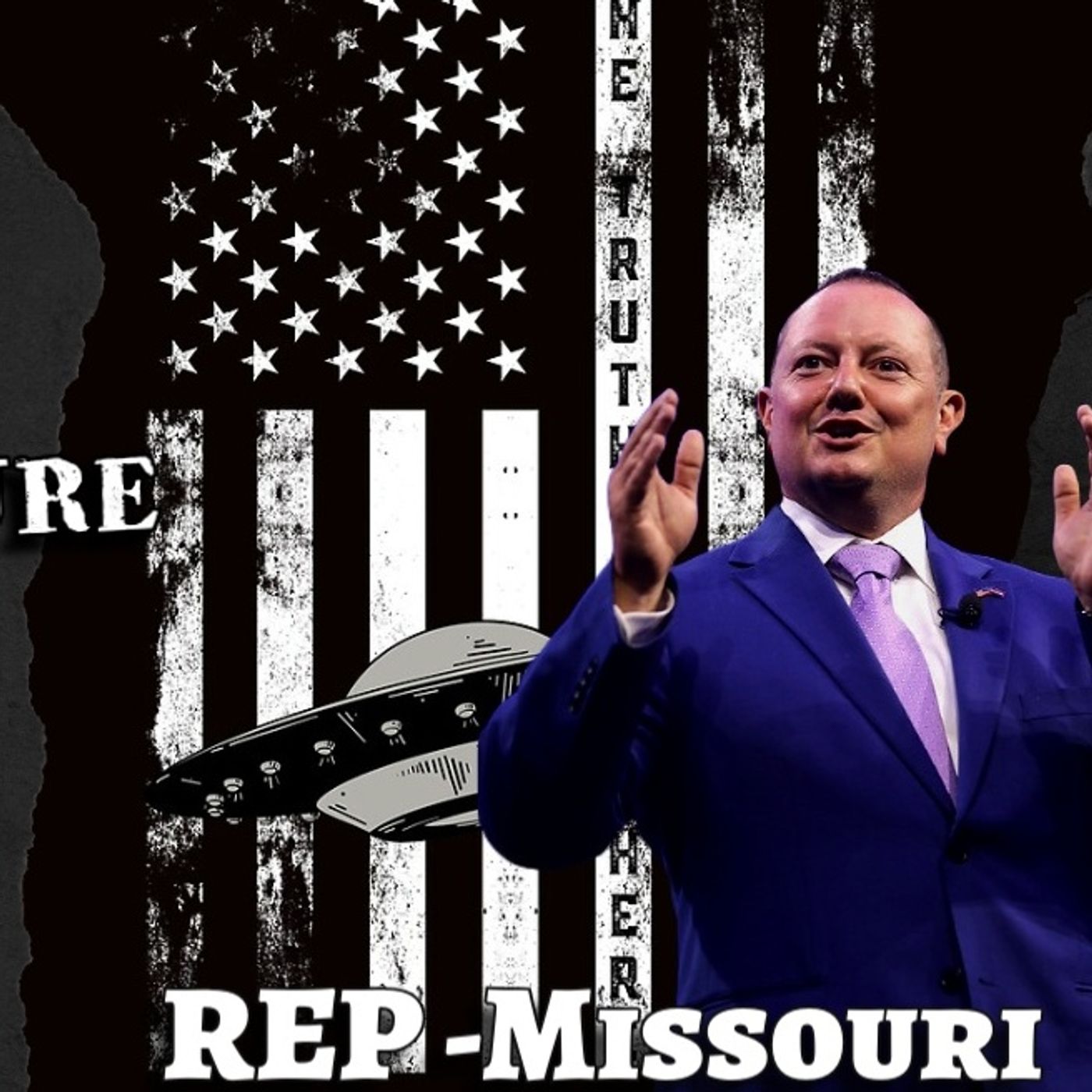
What's REALLY Going on with UFOS & NATIONAL SECURITY? Featuring CONGRESSMAN BURLISON
www.youtube.com/@TotalDisclosure/subscribe
Support TDP directly: https://www.paypal.me/TDPstudios767?locale.x=en_US
Be A Member On The Audio Feed (Limited Perks: Early Access/Ad Free Content) https://www.spreaker.com/podcast/total-disclosure-ufos-coverups-conspiracy--5975113/support
YOUTUBE https://www.youtube.com/@TotalDisclosure/join
PATREON https://www.patreon.com/Total_Disclosure?fan_landing=true&view_as=public
GET YOUR TOTAL DISCLOSURE: UFO/ALIEN INSPIRED MERCH, OR A GIFT FOR YOUR FAMILY MEMBER, FRIEND, OR TREAT YOURSELF! : https://pop-culture-corner-store.creator-spring.com/?
CONTACT TDP DIRECTLY For Collaboration, Use of Segments/clips, or any other media produced by “TDP” —[email protected]
Special Thank you to all of our PODCAST/YouTube Channel Members for your continued support, and dedication to seeking the truth, together. We can’t do this WITHOUT YOU!
-COPYRIGHT-2020-
Copyright Disclaimer: Under Section 107 of the Copyright Act 1976, allowance is made for "fair use" for purposes such as criticism, commenting, news reporting, teaching, scholarship, and research. Fair use is a use permitted by copyright statute that might otherwise be infringing. Non-profit, educational or personal use tips the balance in favor of fair use. Total Disclosure Podcast Copyright 2020 and … segments, early access to interviews, and a yearly gift autographed by yours truly!thank you in advance now, Let's explore the unknown together!
Speaker 1: Gait on all the many.
Speaker 2: I occasionally think how quickly our difference is worldwide would vanish if we were facing an alien threat from outside this work. And yet I ask you, it's not an alien force already amongst We must guard against.
Speaker 3: The acquisition of unwarranted influence, whether sought or unsought by the military industrial contact. The potential or the disastrous rise or misplaced power exists and will persist.
Speaker 1: Now I am becoming bad or world.
Speaker 2: In my association with Pricing Group, they're definitely withheld information.
Speaker 2: We have a look on all going against.
Speaker 3: You shall be twere or firm the testomony or a barking game of the truth, the whole truth and helping the truth.
Speaker 2: So help me, guy, do you believe that our government is in possession of the agents?
Speaker 1: Absolutely? All right, welcome back to Total Disclosure. I am your host, tie and I am the creator of the program. Today we have an absolutely wonderful treat to kick off literally kick off twenty twenty five. Today we are joined by Congressman Eric Burlison. Congressman Burlison is a sixth generation Missourian with twenty years of private sector experience as an investment advisor, and software consultants ninety five. Graduate from Parkview High School in Springfield and received a Bachelor of Arts in philosophy and a Master of Business Administration from Missouri State University.
Speaker 1: He was elected to represent Missouri's seventh congressional district in twenty twenty two. He is an important person in our field of you know, UFOs, especially lately with the renewed energy that the topic is bringing not just to mainstream media, but it's made its way all the way in to government. And we've had three four multiple hearings, two of which with you know, witnesses on the stand, Eric being part of both of those. So and he's also part of the House Oversight Committee. So with that being said, we want to welcome mister Congressman Berylson.
Speaker 1: All right, Congressman, thank you for joining us today. Good to be on time, So so thankful for what you've done in not just you, but what you've what the government is doing, holding these hearings, getting more involved with this subject and tap trying to shed away some of this stigma and lieu of the scientific effort to kind of understand more about what's happening in our skies and our reality in general. So again, I just want to say thank you for joining us today. And as a member of the House Oversight Committee, how did your interest in the topic of UFOs and non human intelligence begin?
Speaker 4: I was, I was watching the news whenever David Grush kind of came out as a whistleblower. He went on national news, and it was making an appeal to Congress. He was, you know, you know, making an assertion that that based on his that he's you know, leaving public office or leaving the government in order to blow the whistle and draw attention to members of Congress that the laws being violated and that there are special access programs that are not briefing members of Congress. And that alarmed me, and so being on the Oversight Committee, I reached out to I reached out to David Grush through the media and was able to get a contact, had a conversation with him, and felt like there was enough merit to continue to do the investigation, and so did Tim Burchett and others who then reached out to Chairman Comer.
Speaker 4: Now when this happened, I was a brand new you know, still wept behind the ears freshmen. I had been in office for just a few months, so I didn't even know where to begin when it came to investigating. But I'm glad that I'm on the committee, the Oversight Committee, because it's it's the exact committee that's designed for this exactly.
Speaker 1: I got a chance after the hearing to speak with Nancy Mace and I kind of took a knee and brought Robert Sallas in with me, and he was able to talk to her about the event that happened to him in nineteen sixty seven at Malbomstrom Air Force Base where ten nuclear missiles were taken offline, and it had been mentioned previously by a representative Gallagher and the I don't know if you remember the.
Speaker 4: First Year hearing twenty twenty one, I can't remember which.
Speaker 1: Yeah it was. It was the one where they had Scott Bray and Ronald Moultrie testifying to Congress. It was kind of what kicked us off. So he had mentioned the incident and it had it kept coming up, and I was like, okay, you guys, you know you keep hearing about it. Why is no one reached out to Bob yit like he's the one who can who can tell you the whole the entire story. So it was really fun to get to do that. And I'd love to talk about Bob a little bit later, but it's exactly we need more people like you in Congress that are dedicated to trying to figure this out.
Speaker 1: And you're not afraid of the stigma does it? Does it ever? Like, are you afraid that you know people at home are going to call you a kook or anything like that?
Speaker 4: Yeah, I mean absolutely. It's one of those things. You don't want this to be the thing that you're labeled as or that you're known for, because you know, I can't. I have a long history. I was a state legislator, of state house member and state senator. Passed a lot of very substantive bills, things that had tremendous impact in Missouri. You know, for example, I I did passed a medical malpractice tort reform. I passed a right to work laws, labor labor related laws that really had significant impact.
Speaker 4: Passed a lot of Second Amendment laws in Missouri giving giving citizens back their rights, very substantive, massive changes to the federal code. And when you look at the bevy of work that I have on the federal level, there's a lot of significant bills that I'm sponsoring. Many of them are business related, and so I you know, and yet you do all of those things and then the one thing that you start getting labeled as is the UFO guy. And I think that that's a little bit frustrating, but it certainly is something that piques a lot of interest.
Speaker 4: And so for me, I feel like we have a responsibility. It's you know, we have a responsibility. There's a lot of money being spent, there's you know, we have a national security potential threat that I think we need to investigate and determine exactly what's going on. And so I think that we owe it to the American people to continue to investigate it.
Speaker 1: Right because now, even if now I kind of want to start with this whole drone thing that's going on, obviously it's not in your district, I mean, not that I know of.
Speaker 4: It might be.
Speaker 1: I mean, it seems like it's everywhere.
Speaker 4: In my district. I have a lot of cousins in Rednecks that would shoot down any drone in.
Speaker 1: That's amazing. That's why they won't fly over this southern this other area.
Speaker 4: Right.
Speaker 1: They know they're gonna get thinken out, But this this drone thing in New Jersey is really really sparking people's interests. It's it's in the media every single day. These things are are seemingly breaching our most sensitive air space and we don't know where they're coming from. We don't know who's flying them. These things are supposed to be you know, some of them are alleged to be s u V sizes. I mean, what is what's going on, Congressman, If you can share your insight.
Speaker 4: I don't know, but I do know, like, we do have drones, even in commercial use, that are pretty large. I mean, I was at a at a demonstration to see the instead of having planes do crop dusting, there are drones that are that are big enough and large enough to actually fulfill that role. And I've seen them firsthand and they're pretty large. So I think that we underestimate how far the private sector has gone when it comes to these drones. But I will say the fact that that these things are appearing in the sky with the same bleaking lights that a drone has is probably the first clue that they're that it's not something that's extraterrestrial.
Speaker 1: I agree, and and a lot of the I think a lot of it. You'll you'll notice that anytime something like this happens, everyone starts looking to the sky and then they just start, you know, reporting everything they see. Ninety nine percent misidentification or prosaic explanation. However, there is that remaining one percent right and over the East Coast. I mean, at least the drones that I know of, that there's a function that's built into these things usually that if it does hit a restricted airspace and either lands right there or returns to sender.
Speaker 1: So I guess, I guess what where we're armed going with it? Is? How seriously does the government view these incidents in terms of national security threats that they're able to fly over you know, sensitive facilities? Is the White House in the Pentagon? They say they don't know what they are, but they're not a threat.
Speaker 4: Yeah, I don't know. I'm not on the committees that would be able to get access to that information whether or not they are a threat, but they I've not been briefed by I'm not an Armed Services Committee or Intel. So I think that the information that I have is the same information that the public has, right and so I think that and I think it's just you know, common sense that these are probably it's it's either private commercial use where they're going awry. The most nefarious case would be that it's it's espionage.
Speaker 4: I do think that China. Some of the briefings I've been in have indicated that the level of espionage that China's involved in in the United States, everything from you know, drones to you know, they're they're embedding, you know, students in our universities, or to steal intellectual property. There's a there's a level that I would say, when people ask me, what, what's surprised to you in the two years you've been in office? That's probably one of my biggest surprises is the level and the extent at which China is involved in espionage in the United States.
Speaker 1: Right, and now, can I ask you something like this is going to get a little political. I can't believe I just asked if I could ask you something on a podcast, but I'm super redundant. But if if we if the United States tried to buy land in China or farm you know, farms in China, it wouldn't happen. But to put it simply, how come is it weird to you that like countries like Saudi Arabia and China are continuing to buy up land in the United States.
Speaker 4: It is it's very disturbing and I think, like, for example, one of the one of the things that the Biden family that with what they were investigated for was them working to create shell companies so that China or others can can purchase either land or other infrastructure, other or other energy related companies in the United States without anyone knowing about it. So you know, there's there's we investigated that. I think that there's no disputing that that that was the case. I think Tony Babolenski admitted that.
Speaker 4: But basically, there are loopholes that are being exploited that allow for foreign individuals and foreign governments to purchase things in America, and it's something that we need to put a stop to.
Speaker 1: I couldn't agree more. It's it's it's athenine and not to mention, I mean China's Belt in Road initiative that they're employing in the South America, Africa and other undeveloped you know, third world countries. Uh, they're essentially, you know, dealing with people that the US has said, okay, you know you're not reliable or you have a dictator in charge. You know, we can't do business with you. And China's like, we will, you know, and then they they they build highways, and you know, all they ask is that you know, one day we might need to use them, we might need to land some some planes here and take it over as a military base.
Speaker 1: Uh. It's it's frightening how close it's getting. And then of course our southern border unfortunately. So do you do you think that do you do you think that the United States has handicapped themselves in certain capacities in dealing with other countries and to help developing nations.
Speaker 4: That's a good question. I think that our trade policies have handicapped US. You know, we go back all the way to the Marshall Plan after World War Two that allowed for countries like Japan to have trade policies where you know, US car makers can't sell into Japan, but yet they can sell in the United States and as well as Germany. You know, you're not seeing American vehicles being sold in Europe, but yet they're selling their cars here in America. There are structural things that I think that this that you know, the Trump administration, whether you're a Republican or Democrat, I think that it should be bipartisan in agreement that we need to readdress, reevaluate our trade policies and agreements with these foreign countries and determine what's good for the United States.
Speaker 1: As absolutely, and I couldn't have said it better myself. Switching gears. You you've had a lot of You've done a lot of work in the private sector that led you to, inevitably, I assume, running for office. Can you talk about what you did prior to becoming the congressman.
Speaker 4: Yeah, I worked in the private sector. First, I was a software engineer. I paid my way through college by building websites back in the early and late nineties, and then just was like studying philosophy and then eventually studying finance in college. And so I graduated and got a job immediately working in a hospital system, developing one of the very first patient portals in the country. So this was, honestly, there were very few, if any patient portals that existed. It was a brand new field, and so we were carving new territory.
Speaker 4: And so we built that and I was the lead programmer and after it was completed, then we won a national award our hospital system did for the patient portal. A lot of companies ended up using a lot of the intellectual property that we had developed in that and so it gave me tremendous job security. And I continue to consult in healthcare it for twenty years. And then I along the way, I've you know, got my my my license to be an investment advisor and then became became a you know, independent investment advisor.
Speaker 1: Awesome, awesome. So you so you were part of the you know, the big airnet boom if you, if you will,
Speaker 1: back in the late eighties early nineties.
Speaker 4: Yeah, I was a low man on the tonal pool.
Speaker 1: I wasn't Yeah you heard Elon Musk, right, I get it right.
Speaker 4: My big mistake was that I didn't I was being paid to program that that application, and it had I done it independently and then sold it, I wouldn't a lot more money.
Speaker 1: So you you you work in the private secture for two years? You then what makes you decide to run for office?
Speaker 4: Yeah, that's my personal faith that really kind of drove that. I was a born again Christian and I see that our First Amendment rights are right to worship is really kind of slowly being eroded. And so I really paid attention to who was running for office and wanted to, you know, back people that wanted to protect those rights. And then as I started paying attention to politics, learned that I really think that what's unique about America is that we're a country that was that's based on this bottom up idea that our rights are given to us by you know, either natural law or by our creator, and that government is created by the people.
Speaker 4: It's not our rights don't come from government. And so that kind of is what really drives me, is to retain what is I think a very precious thing that is a different way of doing things with the United States of America that no country has ever done before. And I want to continue to retain that. And so originally I would just back elected officials or people that were running for office that held those values. I would donate to their campaigns, or I would build them a free website, stuff envelopes, put up signs, whatever I could do.
Speaker 4: I just was trying to help good people get elected. And then at one point somebody tapped me on the shoulder in the community and said that I have enough credibility that I would make it for a good candidate, and it just kind of worked out in my life. It was the right timing, and so I ran for state representative and won. And the rest is history.
Speaker 1: I suppose, right, Yeah, the rest now it is literal history. So okay, you come in now you're in office at a pretty pretty tumultuous time, to say the least, and you start going through UH and you know, these hearings are sprung with with the UFO topic u AP topic.
Speaker 1: How did you first feel about taking part in said hearings and said conversation, given your born again faith, your your Christianity.
Speaker 4: Yeah, I mean, I think that the Christian community, there's there's a lot of people that have concerns about how it's going to affect their worldview. And I think that the more that you, I think, the more confidence that you have in your faith, and the more that you actually study the Bible, that it's not really contradictory to our worldview at all. In fact, it underscores quite a bit of the especially the stories that happen in the Old Testament. And so I don't and I could go into greater detail about that.
Speaker 4: But I just I think that there's some people that it would challenge their faith, and so because of that they shy away from the discussion or they immediately have a mental block about it. That's not my perspective. I mean, I'm I'm willing to be open to the idea of you know, aliens from another planet or or you know, extra dimensions things like that. I'm willing to be open to them. But I but I continue to remain that we need to be skeptical until we are until we can validate things, because I think that one of the mistakes that we get involved with, you know, scientifically, in you know, humanity has made a lot of mistakes in asserting things that there was no scientific validity for, you know, like the Earth is the center of the Solar system, the you know, the Earth, that the Sun is the center of the universe, or the Earth is the center of universe before validating that scientifically or being open to what what new science is going to reveal to us.
Speaker 4: So I just think that having a level set, you know, a healthy perspective on things and understanding that we don't know everything but until we until we can validate things. It's uh, it's not really smart to make a bold statements.
Speaker 1: Right, like like absolute statements that you know, I know this right? Is it ever? But because I've asked Tim Birch at this as well, do you ever fear that there's faction in government that is maybe a little bit too Maybe they they put the religious lens on this too hard, and they think that, you know, if if we start talking about it, then we're talking about or or invoking demons and you know stuff like that. Does that ever worry you that the line between religion and government is blurring?
Speaker 4: I I've heard that claim. I'm not so sure that that's the case. I think that I think it's more about, you know, there's power in having access to things that other people do not have access to. And so to me that that power is something that is what there's a lot of the you know, special access programs or individuals that do have access, they don't want to give that up. The moment that they do, than they than they lose power. And there's one thing that is a commodity in Washington, d C. And that is power.
Speaker 1: Yes, I uh, that is saying it lately with you with the with Grush specifically, I want to I want to kind of talk about what happened with Grush, you guys, not you guys, but you know what I mean. You had the hearing, there was a lot that he could not talk about publicly, and then you guys were alleged or trying to get him inside a skiff. Yeah, ultimately that has not happened to date as so far as we know, why has that happened or how did that happen? And what are we trying to do to fix or remedy that situation.
Speaker 4: That's a good question. I've tried a lot of things. So one of the things I explored is is trying to bring Grush on as a staff of my team. So and I think David is willing to make nearly nothing if it works. When we explored that, it still wouldn't give us the ability to get him into a skiff and and provide information that we that we needed. So that was kind of, you know, a dead end there. I think that one of the things that I've explored or tried to I've presented to the Speaker and to the Chairman, to Chairman Comber and Chairman Comer is open to it.
Speaker 4: I haven't heard anything, you know, positive or negative from the Speaker, but to try to create a special subcommittee that has jurisdiction over the UAP topic because and given a need to know, because that's what's necessary in order to get a lot of these clearances. Is that, well, you might, we might. I mean, every member of Congress has the ability to have a clearance that goes all the way to the top. The question is do you have the need to know?
Speaker 1: Right?
Speaker 4: And so if we give that, if the Speaker could create a committee and give it the ability to have the need to know, and then then we then I think that we should hire people like David Grush or loue Ela Zondo, people who are former formerly worked in the institutions that know where the bodies are buried, if you you know, either figura figuratively or literally, and and be able to bring them in so that they know where to go to get about the information.
Speaker 1: Do you ever do you ever wonder or do you ever not wonder that I guess that would be the wrong word for it, But do you ever think that
Speaker 1: you're tipping your hands like you're for instance, by getting Grush in a skiff ultimately he would be able to give you locations. And you know, people hostile or not. Do you think that they are now onto that fact and they're kind of shell gaming it?
Speaker 4: Yeah? And I think that they probably are already onto it.
Speaker 1: I was.
Speaker 4: I've been told that even if the moment, that already the any objects that that did exist in a facility or probably already moved by this point, just based on the you know, all of the different hearings that we've had in the conversations that they're aware of. Right, So we've and we've been given some facility locations that are potential sites. And and the the irony is I walk out of the out of a skiff, thinking, here's a couple of locations that we need to look at, and yet just the names or the locations are top secret.
Speaker 4: So how do I even begin to go about investigating that when when that those facilities, those locations, those names are top secret, I can't even tell my staff.
Speaker 1: Right, and that what to look into. And that's that's a that's a real blow, that's a real blockade. And then there's also people, I don't want to say the names, but there are do you think that there are efforts in Congress by your colleagues, not you know, your colleagues as in Congressman. Do you think that there are there are efforts in on the inside to block essentially any advancement on this.
Speaker 4: Yeah, no, I don't think I know. I mean, we had language that we've tried to get into into the National Defense Authorization Act. Tim Burchett had language, then Chuck Schumer had language to his benefit. I mean, I don't agree with Chuck Schumer on nearly anything, but I do agree on his efforts to try to provide disclosure and and sadly all of that was blocked by Mike Turner and some other members of the intelligence community and the House of all places. Somehow they had enough clout to stop the President of the Senate or the or Chuck Schumer and the Speaker and or you know, other other members of the House from from getting the language that we're trying to get past.
Speaker 1: Right.
Speaker 4: Yes, absolutely, we do have people within our that are elected officials that are trying to stop this information from getting out.
Speaker 1: Do you think it's at all coincidence that Mike Turner is backed by or or has major contributions from private aerospace and is the person that represents the district that right, Patterson is where many of these things in UFO lore are are considered to be. You know, that's like the home of them.
Speaker 4: I'm not going to draw any conclusions there. I'm going to give, you know, a colleague the benefit of the doubt. He may he probably has a strongly held belief that there's a that there's a fundamental reason why that shouldn't be publicly disclosed. Uh, I don't want to. I don't want to cast dispersions. You know, No, I understand. So you know, he's somebody I work with. He's probably has his his perspective, and I can't really speak for him and why he's why he doesn't he doesn't agree with some of the amendments that Chuck Schumer or Tim Burds should have tried to put forward.
Speaker 1: Understood, So I asked Twitter, well, I guess this acts now. I can't get used to that. But I asked if anyone wanted to submit question that I'd pick a couple. There's at the Friar. Eli asked a really good question, and he said, during the most recent UFO hearing, Eric Burla sent you quoted the Liberation Times regarding the alleged trans of a retrieved craft of unknown origin to the aws AP program For Anie who doesn't know that's the Advanced Aerospace Weapons Systems Application Program, so unknown origin to us APP from Lockheed Martin.
Speaker 1: Has he spoken to sources behind the scenes to confirm the legitimacy of this claim? Sorry, it goes on here. Additionally, what are his and his colleagues plans to follow up on that revelation? Thank you?
Speaker 4: Yeah, that's a good question. I submitted some questions to lou Elizondo. I'm gonna grab those real quick, please, And these are not I mean, this is not classified information. His responses to the to the emails that I sent in essence verified that there was an attempt to transfer material from Lockheed Martin, who's in possession of some some materials, to Bigelow Airspace and that ASAP was the was the agency that was going to was coordinating that right. There was I think I believe it was twenty two million dollars that was put that was budgeted, that was was going towards a facility in Nevada that Bigelow Airspace was building.
Speaker 4: And so the fact that there was money dedicated for a facility and work was underway to transfer material, and and that it is it was they testified that the CIA did step in and stop that transfer. It suggests that there that there is probably something that you know, whether it whether it's extraterrestrial or or not, like whatever it is. Yeah, right, there some material that Lockheed Martin is in possession of that the CIA blocked from being transferred over to Bigelow Airspace.
Speaker 1: Now that is I I have you heard the name Jim Lekatski, I.
Speaker 4: Believe so you may have to refresh my memory.
Speaker 1: So he is he was the essentially the top dog of as APP. So he ran as APP. And in an episode of Weaponized, when he was speaking to George Knapp and Jeremy Corbel, he had said that as APP in fact did have a craft and they were able to preach the whole. He later goes on to say that he he would lie to Congress under oath in order to protect national security. So maybe that's something that you can look into.
Speaker 4: Yeah, we'll have to reach out to him, see if he's willing to talk.
Speaker 1: I would assume that that that is someone that that so him how put off and Eric Davis, what is stopping the House Oversight Committee or anybody from bringing them in and essentially saying, tell me what you know.
Speaker 4: And Eric Davis is the one that wrote that ye after interviewing a colonel was it or someone?
Speaker 1: Yes, Tom Admiral Thomas Wilson.
Speaker 4: Okay, And I, as far as I know, he's not verified that that report did belong to him or that that was that was accurate? Is that right correct?
Speaker 1: But even in the document he says that if you betray my trust and this gets out, I will deny that this meeting ever happened. I will not acknowledge it. Yet, you know, assumingly unless he was brought in and like you know, told you know you need to tell us, but you know, YadA YadA.
Speaker 4: Yeah. My view is that we need to have an ongoing series of hearings that would be open to the public, whether it's done through a sub committee or done independently. You know, members of Congress can hold their own hearings. Now when people come into those hearings, you cannot you cannot subpoena them. They can they cannot be under oath so that they don't have the level of credibility that a that an oversight hearing would have, but it is possible, and it's it's just my view that when you're in these hearings and you only have five minutes to ask questions, it's not enough time and it's not enough time to really break apart the conversation.
Speaker 4: So I wish that, for example, the five minutes I had, I really wanted that five minutes with lou Alizonda just to be an hour and we could really probably get to a lot of you know, answers. Now, that's why I submitted a lot of questions after the hearing, hoping to get some. But you know, for every question you ask, and just to give your listeners, you know, a perspective of what it's life, what it's like to be in my shoes is imagine you've built up to that moment, like you've you and your team have worked on different questions that you're going to ask, and then you get into that hearing, and especially if you're a freshman like me, you're one of the last people to get to ask questions.
Speaker 4: So your questions have already been asked, most of the questions have already been asked, and then when you do get a chance to ask questions. It's like writing a bull like in a rodeo. So the gates, you ask one question and the topic the answer could go take you in a different direction than you thought you might be going down, and if you don't catch what the person is saying, then you may miss something. Right. So you've got a list of questions in front of you. You're trying to get through your list.
Speaker 4: But the truth is, after the hearing, there's there's so many moments where where you think to yourself, oh, I wish I had followed up with this question right or asked it in a different way. And so it's it's just really a frustrating endeavor. You try to do the best that you can. But what's frustrating is is that five minute block that that is I don't know, some arbitrary number. The way in which Congress does it. You know in the state legislatures they do not do that. They they in the Missouri House, at least in the Missouri Senate.
Speaker 4: You let members ask questions as they think of the question. Right. You certainly could begin with like an order of seniority, but after the seniority it's just you know, as people start saying that, witnesses start saying things. It will prompt questions that people had not thought of before, and so and you can ask you know, you can ask one question. You don't have to ask five minutes of questions. You could just ask the one that you want to ask at that moment and then and then move on. I like the state model a lot better.
Speaker 4: I think it gets to the bottom of the truth of things. I think that the model that we have in Congress is designed for political theater. That's it. It's designed for theater. It's designed so that you get your five minutes that is clipped so that you can so you can throw it on YouTube or social media and you got your five minute clip. Oh my god, that's what it's designed for.
Speaker 1: Oh my god. I you just blew my mind. You're absolutely right. It's set up for mainstream media clips. It's the five minute right now. So do you think is there a way to chant?
Speaker 4: God?
Speaker 1: I didn't even think. That's why. I think conversations like this ultimately are going to be the way forward, These long form conversations. I mean, you look at at Rogan and Donald Trump, right, and then the fact not to go on this, you know, kind of tie rade right now. But he was asked to do Trump was asked to do the show. Did it three hours at his age at you know, seventy something years old, didn't didn't even by the hour three. That's when you really get to know somebody, because you know that that's when the barriers start coming down, right and the talking points start to fall away.
Speaker 1: And Trump was just on it, on it, on it, the guy is just a machine. And then the fact that the whole fiasco with with with Harris, how she wanted to bring Rogan out to this location, you only do it for an hour under controlled environment. It just clearly said something to the world, to the nation that these are two different people and which one do you want to run the And I think overwhelming at least foke, but that that's just a clear demonstration visually that like the mainstream media, that they're just not what people want anymore.
Speaker 1: They don't want these sound bites that can be manipulated.
Speaker 4: Mm hmm.
Speaker 1: Yeah.
Speaker 4: I learned a lot from the Joe Rogan interviews with with Grush and Alessando. I learned a lot, especially researching before the hearings, and you you know, they were able to delve into a lot of these topics a lot better than we are in these hearings, for sure.
Speaker 1: So so just to just to make sure I heard that right, you watched the the Grush episode of Rogan and Alessandro's before their hearings, respectively.
Speaker 4: I don't know if the Grush hearing, the one with Grush happened after our hearing. I think it happened after it.
Speaker 1: Did it did? You're right? But you listened to the preparation.
Speaker 4: Yeah, I listened to. I try to devour as much as I possibly can. Well, that's amazing anytime that Yeah.
Speaker 1: That that just will you don't know how far that will go to people in the community, uh, that you're actually listening and doing your homework, because I think aside from the thet there's there's a couple of complaints with the hearings, and you know, this is just feedback for me to from the community, see you a congressman, is people really hate hearing? Oh I can't talk about that in an open session, you know, and I think there's no way to get around it. You know, it's it's a complaint, it is what it is.
Speaker 1: But the second thing is that they feel that not not enough of the members actually do their whole work. But it's that's not the case with you, and that I find out to be very refreshing because that's birch it as well, Luna and and and Gallagher in that first one when he brought up the sixty seven Malmstroam case, you knew that this guy knew what he was talking about.
Speaker 5: And it's I watched that hearing as well, and I think Gallagher's line of questions about the gap, the historical gap between Project Blue Book and.
Speaker 4: And the you know, a tip or the offset program, I think it was pretty telling. I think that that's that's an area that the fact that the federal government, I mean, you cannot tell me that they were that there was not some agencies that were involved in investigating these this phenomenon and in that what was it like a forty year period of time or yes, uh, that that nothing was going on. I don't believe that whatsoever. And so, but that seems to be the narrative that they try to spindles. Gall's line question on that was pretty good, right.
Speaker 1: I know, everyone in the community was like baffled that just because up until that point, it had been kind of like a nothing burger. It was just, you know, no one was asking the right questions, and then all of a sudden he came out just hammering them, and it was like and they both I remember them both looking at each other at one point like, have you heard about the dell Wood Davis Wilson notes they kept saying it wrong.
Speaker 4: They were so overcurt those guys are so over compartmentalized, they wouldn't know that's fine. One of the things that I think that we've concluded, or I've concluded, is that the it's really an over arching special access program, and it may be called immaculate constellation. That may be what it's called. I don't know, but that certainly was what we heard in the latest hearing, and that it's embedded in the White House. So it's it's under what is the National Security Advisor currently, Jake Sullivan under his authority and uh and and so all of the under outside of that umbrella, they're compartmentalizing all the information or all the you know, whether it's propulsion or other technology, they're they're compartmentalizing it in a different special access programs within different agencies.
Speaker 4: Of the federal governments, from the Department of Energy to Department of Defense and Department of Intelligence. So you've got any intelligence community, so you've got different you know, you know, they're they're slicing it up and compartmentalizing it. So when you ask a question of these individuals from the Air Force, they're going to know some information, but they're not going to know the overall or overarching information. It gives them plausible deniability.
Speaker 1: Absolutely, So speaking of that, Uh, this is another question. So, given given the secrecy often associated with UAP investigations, how difficult is it to oversee organizations like the Department of Defense or intelligence agen agencies on this.
Speaker 4: Matter, how difficult is it to I'm sorry.
Speaker 1: Oversee organizations like the d O D.
Speaker 4: So, for example, you've got for all of these agencies, you have offices of inspector General. So you have the Department of Defense Office of Inspector General, you have the intelligence communities Office of Inspector General. And they they both
Speaker 4: they both validated Grush's claim that there's over compartmentalization and that they are not disclosing what they're what they're doing to Congress. Congress has has a right to have access to the information. I think that the fact that they are holding the over arching information in the in the executive branch, which is, you know, the second Article two of the Constitution under the President, I think that that protects them or gives them some distance from Congress. But at the end of the day, when they're working with government agencies that we fund, Congress has, you know, and so we basically have to work backwards unless we get direct information from the White House.
Speaker 1: And that that sucks.
Speaker 4: It does. And the other thing is, like all of these hearings, in order to get these witnesses, especially the ones that have clearance, you have to get approval from I believe they called the four corners of each committee. So when you bring in someone from UH, you have to get the approval of the House Armed Services Committee, you have to get both the rank both the chairman and the ranking member have to prove it. On the House side and on the Senate side, you have to get approval from the Intel Community or committee uhairman and the ranking member before you can even bring these witnesses forward.
Speaker 4: So that that is another obstacle that you have to You have to go through these hoops just to get bring forward witnesses to testify.
Speaker 1: Well speak that is actually really good. Uh seg So another user asked, and I'm not at j oh A oh c A R and then a bunch of numbers. Uh. George Knapp claims that testimony from whistleblowers who claim to have first hand knowledge the last hearing was not allowed. Was were you aware of this incident? If so, why was the partition of these alleged complaints not authorized.
Speaker 4: I was not. I'm not aware of that that there was information that was not allowed in the hearing. I know that there was a little bit of a controversy as far as the document that was released that there was a missing page. Oh, I think that, And I've heard rumors about what that was about, from from what and some of those rumors are that basically is just trying to not put into the public record something that would promote an individual or their social media And so that was the that was the extent of that.
Speaker 4: But I don't know, I don't know all the details there.
Speaker 1: So Corbell, and I hate to say this, but because I like Corbell, I met him that day. I think he's a good guy. But he seemed to have access that no one else had. He was coming in and out of the the where the witnesses came in, where you guys were coming in this I mean, if there was a page that was submitted and lost. Now he he's throwing shade at Congress and saying that that that you guys weren't telling the truth. I hate to put you on the spot, but how does that make you feel?
Speaker 4: I don't know what the details were there, but I would say this is the same thing that is happening there is the same thing that's happening in the federal government where you have, as I mentioned before, people want to control the information. And if you can control the information, you have power. You know, in the federal government, that gives you power over agencies, power over contracts and other things in the in the private sector, if you if you're controlling access to the information, you get you can get book deals, you can get you know, documentaries, whatever it is.
Speaker 4: And I'm not trying to throw a cast dispersion. I'm just saying that there is always going to be an innate desire for people to hold that information and keep it under their own lock and key, right because it's it's a value the moment you the moment you provide that to the public and make it totally disclosed, you've lost all of your all of your value. And so I'm not I'm not saying ill of anybody. I'm just saying that that that's just that is a dynamic that we have to work with. Is that we know that a lot of the people that are coming forward or that are involved in this space have have, you know, self motivation involved, and that you know, I don't think that's an evil thing or a bad thing.
Speaker 4: It's just something that we have to keep in mind.
Speaker 1: Absolutely, I couldn't agree more. And a lot of a lot of people are going to be happy to hear you say that.
Speaker 4: I will.
Speaker 1: I can guarantee that because one of the things that I fear is circular reporting. Does that ever warry you that you know, some of this stuff that you think has been corroborated by or as being told to you by ford from people actually just came from the one source telling everybody you know that circular reporting style. Do you ever do you ever wonder if anything that you're hearing or getting is disinformation?
Speaker 4: Oh? Absolutely, I mean I even asked, I asked Lou Elizondo point blank, you know, I said, I asked him. I said, one of the theories out there is that this is a syop and that you're the you're part of it, that you know, you you worked in the intelligence community. Uh you you know, if if you want to control this information that's coming out, why not why not take control of it and and leak what you want or or one of the one of the and Lou's response to me was, I think if it gave me a little bit more comfort, But the end of the day, I still hold to what I said in that very first hearing, the very first statement I said to David Gresh and others, is that I don't I'm from Missouri, and I do not trust you.
Speaker 4: I don't trust anybody in this town. And so I cannot. I mean, I'm gonna listen, and I'm gonna and I'm gonna, you know, I'm gonna, you know, absorb. But at the end of the day, you cannot. You cannot be gullible or or and just rely on every what everybody is telling you as the as the gospel truth. And so you've got to you've got to have a little bit of skepticism going in.
Speaker 1: So there have been claims obviously of biological materials associated with you aps from your position, are there efforts to investigate the authenticity of these claims.
Speaker 4: I think we're certainly trying to verify these claims.
Speaker 1: Well.
Speaker 4: When whenever I was in the hearing and I asked the question of David Grush, I thought his answer was pretty interesting. Which these these these biologics were collected? He was, he was born, So that's pretty interesting. And the other thing that he's alluded to is that while maybe life it's it's in that there he said, keep in mind that there's forms of life that we may not find immediately recognizable, right, so different types of material that that is actually life. So you know, take that where you want to go with it.
Speaker 4: But it to me, it says that that what what's collected is not a carbon based biological you know, organic being, it's it's something something different. And so with that, if it's the case, you know, then the then it's it seems as though, based on his testimony, that it's something different than something organic or biological in that way.
Speaker 6: Right, right, wow, wow, Because that's that that's intriguing on so many levels because a lot of people.
Speaker 1: I'm sure you've heard, you know, from just so much testimony maybe that you've consumed, but that obviously, you know, the archetypal like little gray alien. Mm hm, Well, a lot of people think that they act or that they're very robotic in they like in their movements and YadA, YadA. So could it could it be such something like that that we've collected from you know, a crash uh crash retrieval program.
Speaker 7: That's very interesting and I don't you know, I don't know what he was referring to, but you know, I've also heard that that postulated that the gray that the that the documented gray aliens are a some kind of robot or a drone or an AI that they there, that they are very simplistically.
Speaker 4: Create or formed or created. Right, So I don't know, I I've never seen more than obviously, But that's the goal. I mean, at the end of the day, I want to get to a point where if these things do exist, that there's a reason why I say that is that that wasn't created by the federal government, by the United States, should be held in top secret and if it it doesn't belong to the federal government. It belongs to humanity, and if it does exist, we need to put it on display, you know, let let the public see it, feel it, you know, touch it.
Speaker 4: Right, So I write, that's that's what my ultimate goal is.
Speaker 1: That would be like if the federal government tried to say that snakes didn't exist, right, It's like, you can't do that. That's not that's not your knowledge to to to cover up. It's part of Ultimately, it's part of nature. It's part of reality. Uh. And I don't think listen and listen. I want to make myself like super clear. I understand that for the same reason we don't allow everyone to have nuclear weapons, that we wouldn't want everyone having access to some of these technologies that are you know, allegedly far superior to our own, and you know, potentially of dual use because with with technology, you know, you can use a hammer to make a house or to kill somebody, right, So I understand that.
Speaker 1: So, but there is there's gotta be a middle there's if these things are real, if non human intelligence exists, that is not a for profit industry.
Speaker 4: Right, and it doesn't belong to a particular government. It belongs I mean the discovery of anything you know, scientific doesn't belong to any particular government agency. It belongs to the people of the science behind it belongs to the public. It now weaponizing it and the way in which you do that, I can see how you'd want to make some of that classified. But for example, like nuclear physics is not classified, building a nuclear bomb is right, and there's a distinction.
Speaker 1: So, and speaking of that, a lot of people have talked lately about the Department of that we might be looking at the wrong thing, or not looking at the wrong thing, but searching in the wrong places, and that it's actually this falls under the guise of the Department of Energy classifications because these things but you know, under the the the Atomic Secrecy Act, anything that produces a radiological signature would therefore fall under that that secrecy. Is that something that you guys are aware of and potentially discussing.
Speaker 4: Yes, yeah, it's especially after this last hearing where we learned that the Immaculate Constellation program is basically an overarching program over multiple agencies, it including the Department of Energy. It's something that and i'd heard those rumors before. The Energy was one of the was was one that some of the being if this information is being kept, so it certainly is an area that we need to explore.
Speaker 1: I definitely agree if confirmed. Now this is obviously going into the future, but I mean, if confirmed evidence of a non human intelligence were revealed, what steps should the government take to prepare the public for such a disclosure.
Speaker 4: I think that I don't think that the government's responsibility is to try to prepare everyone's worldview. I mean, we're not living in a safe space, right, this is not I think that government is everyone's parents, so we at the end of the day, the government is owned by the people, which was one of the first things I said in this interview. And if you have that worldviews, as Americans should that we need to be constantly fighting to ensure that the government is reminded that that that we own them, they don't own us, and that they work for us.
Speaker 4: We're the parent and that and the federal government is the child that we created, and so we need to make sure that we're in control of that information. And you know, if the federal government is going to release it, they the fact that they have, So I don't think it's going I personally, you know, going back to my Christian world view. I one of the the reason one of the podcasts that i'm is that kind of got me down down the road of inquiring is a podcast called The Blurry Creatures and it it introduced me to a guy named timoth Mareno who I don't know if you're familiar with him, but he's got a very fascinating book and a and a theory about how this phenomenon fits in with the Christian biblical narrative and and really I think underscores a lot of the narrative in the Bible.
Speaker 4: So the fact that people, if you really think about the fact that people were documenting these things a thousand years ago is is pretty fascinating if that's the If that's.
Speaker 1: The case, yeah, it's something that obviously I've talked at length with Tim Tim about Burchet and you know, he talks about you know, Ezekiel and the wheel, and you know how these things have been essentially documented, uh since recorded history, So this is nothing new. So it sounds like that is one of your beliefs as well.
Speaker 4: I don't know what at this point until I see it again, I'm not I'm gonna I do believe that what I will say is what I strongly believe is that I don't I don't believe that we be created. There. To me, there's a lot of philosophical arguments that are well defined that, like the ontological argument, I think that we were. This universe is clearly has a design that from a creator that surpasses ournerstanding. And I think that when you look at the history of uh and the fact that you look through the the documents of the Old Testament and the New Testament, to me, it's a there's a very compelling case that the creator of the universe is trying to send a message to his creation, which is us, through the history and the events that happened to a particular people, the people of Israel.
Speaker 4: And so I when you when you when you pull all of those storylines together, the fact that they so beautifully weave the same narrative over a period of thousands of years is to me the most compelling argument for the existence of God that there is. And so that being said, I mean the Bible in its early chapters talks about beings from that are not from this world. So you know where it's Genesis six or from the beginning when it talks about the fall of one of the angels or the group of angels that fell.
Speaker 4: A third of the angels fell. Now, the question what Timothy would say, Timothy Alberino, is that angel is just a definition for a messenger of God. It's not a it's not a creature. It's not a speace or race, a moniker, or a title given to anything that's carrying a message from God. And so these messagres of God were that they came to earth and interacted with humanity in some cases caused disruption, cause havoc, and in other in other cases tried to convey messages from the Creator too to us. And I think that I mean that that does well some people would we call them angels, and we think of this ethereal, this spiritual thing that it Then whenever you talk about what are aliens from another planet or aliens from an interdimension, you talk about these other things, it's not you're you're speaking the same language in different you're speaking the same concepts in a different language.
Speaker 4: If that makes.
Speaker 1: Sense, No, it absolutely does.
Speaker 4: That's why I don't think that Christians should be worried about it. In fact, I think that we need Christians need to constantly re evaluating the scripture to determine how does you know? And questioning previously help beliefs that may not be congruent with scripture, right.
Speaker 1: I I I often think about that and the similarities, uh, the similarities from the Bible and other religious text. You know, I don't really fall under one, uh religion at this time. I definitely believe in in a god. I myself am sober, and you know for that to have happened, Uh, there's got to be some higher power. Uh. It's just like you said, you look around and from the micro all the way to the macro, there's intelligence. It's it's you look around, it's it's all. I don't know if you've seen this, but did you see the the the they find that you got a good picture of Like it was too I think it was too electra or photons entangled.
Speaker 1: Uh. And it looks almost identical to the yin and yang symbol. Oh interesting, yeah, crazy? Right. So it's like you got to wonder, like, did did our ancestors did do you think that there could be potentially an ancient civilization that that add technology.
Speaker 4: I think that we underestimate what ancient humans that the intelligence of ancient Yemans. I think that we kind of assume that they are Neanderthals, that they that they weren't as intelligent as us. But when you look at some of the megalithic sites, you know, whether it's Machu Pichu or Go Becky Tepley, like, they're just.
Speaker 1: The fact that you're saying this is blowing my mind.
Speaker 4: Yeah, I mean these places are ancient. And the fact that they that they carved these massive megatons you know, structures and lifted them up mountains. There's a technology that we I think that we are underestimating the the the intellect and the level of advancement of our of previous civilizations.
Speaker 1: I and a good bridge here is now we look at like something like go Beckley Tappy, right, And I mean I don't I think they've only really uncovered like a small portion of it, uh if I if I'm correct.
Speaker 4: I don't know.
Speaker 1: I don't have a Jamie right now to to just bring it up for me like Rogan. But we look at these these structures and uh other structures in Turkey, specifically lots of underground facilities that seemed like they were able to house the whole civilizations or whole societies for law, and they were they could sustain them for long periods of time, which got me thinking about what would be the best place to to shelter yourself from natural disaster from everything and that's underground. And something that's been coming up a lot in the UFO community is that our military has these things.
Speaker 1: UH has a lot of these deep underground military bases or dums. It's something that you mentioned to me before we start recording. UH. We know, we know that these facilities exist. It's to what degree they exist in and to what they're what they're using them for. Are are you aware of of of any of these installations.
Speaker 4: I have never been to one. I'm aware that they exist. I've been told that there's even some that are in my area Southwest Missouri. I haven't verified that. It has me actually pondering where which facilities that might that people might be talking about, But there's some that you know in Southwest we're known as the Cave State, and there's a lot of underground structure in our area, including a place called Springfield Underground, where it's almost an entire city that's underground. You can drive semi trucks down multiple lanes like in through roads in an underground structure that in that structure, you know, it's a place to house data centers, a lot of things that you may not want to be susceptible to a natural disaster or you want to controlled climate, you put it in an underground facility like that.
Speaker 4: There's also a place in Branson called the Mountain that's a very highly secure facility that has a lot of data centers in it and some other artifacts. I believe that that there's artifacts from the Titanic that are stored in this underground data center, so in of all places, So it certainly is possible. And I think that if you're going to try to avoid satellite imagery or avoid even really the potential risk of a natural disaster, what better place to you know, to store something than underground in Southwest Missouri.
Speaker 1: Oh my god, So entire like semi trucks are able to drive in and enter this secure facility.
Speaker 4: Yeah, it's a massive facility. It's called Springfield Underground. And actually a friend of mine owns the property of the enterprise. He made money mining mining it out and then is making money leasing the space in this massive underground structure. And so yeah, it's was the leasing it too to multiple businesses, multiple companies. Some of them are governments and some of it is most of it is private sector.
Speaker 1: Okay, Yeah, I don't want to really dig too much deep because there's also reports there's a woman and she was actually at the hearing in December, uh and in Arizona. Her name's Melinda Leslie, and she says that she found essentially an entrance to an underground facility is essentially and outside there's a Lockheed Martin sign and they they have the deed to property all around that area in Arizona. And it just it really begs the question, you know, because obviously we hear about these places like Area fifty one.
Speaker 1: I can almost guarantee that nothing that would be an extra terrestrial or non human is is there anymore? Too many people know about it. I mean, it's it's it's it's a cultural thing now, like everyone just assumes that area of fifty one, right, alien technology. So I mean the chances of it actually being in a facility like that anymore, I think are very slim. But these deep underground military bases, uh, that is a whole different story. I mean they say they they say that under right Patterson Air Force Base, there's you know, a whole other base essentially like essentially the same size, just underground.
Speaker 1: Twenty stories have has has anyone pointed these to any of these locations and said, you know, you know, probably should go look there.
Speaker 4: Not not a deep underground military base.
Speaker 1: No.
Speaker 4: I mean, I've not been told in any of these hearings, in our in our skiff meeting to go look at you know, what you call a dumb or what's been called a dumb We We've been given some locations that that to go look at. But I again, as I said before, just even talking about those would be violating the the security clearance that we had. So it's difficult. Yeah, now they weren't underground, and it's it's one of the they may there may be underground structures underneath these facilities. But what I do doubt is that, you know, lot, I doubt that Lockheed Martin is keeping the if if they do have objects, that they're keeping it under a building with the title Lockheed Martin, right, if it would, it would be more obvious.
Speaker 4: I mean, it'd be way too obvious. So I would I would imagine that they could. They would probably be some other shell company or other title that they could that they can put on the front of a building.
Speaker 1: Right. So what I know multiple people who have testified to a row and their cases involve a the shutdown of nuclear weapons, b the test the Atlas test missile that you know was being filmed. A UAP comes into frame, you know, kind of fires like a laser at it and does it all all like a three sixty round it shooting LASA. Then the thing comes tumbling out of the sky. So the those incidents are the Bob Jacobs, is Vandenberg, Robert Sallas Melstrom, then Dave Shindeli of my Not Air Force Base nineteen sixty seven where they turned the nuclear weapons on not off.
Speaker 6: Uh.
Speaker 1: And then someone like Mario Woods who was a security Police office security military police and was dispatched to a nuclear silo at oh god Ellsworth and the it was code named the launch site was code named November five. He was dispatched, They get there, they see a glowing this you know, school bus size glowing orb of red light is what he says. And then the atmosphere in the truck became so thick that they passed out when he woke up, their car was a mile away from the missile silo, and it was faced at a cliff.
Speaker 1: If there is something now on it on just a surface level, if you heard these stories you had any vested interest in national security, these would make your heart skip a beat. What Arrow has gotten this testimony and then released reports saying that they have no credible evidence to suggest that anything of any of these UAPs are a threat or have extraterrestrial origin. What's going on there?
Speaker 4: I don't know. I think that Arrow, if they don't have facts or things that they can continue to investigate, then often they end the investigation. So in that event, and I'm not sure, I'm not sure what the exact scenario is or what the case is, but I can imagine that if all they have to go on is testimony from an individual or that basically the word of mouth of someone, there's not a whole lot for them to go to continue. So when we spoke with them, they are there's about fifty or so events that they do have enough to continue investigating that they do not have an answer for.
Speaker 4: But you know, for them to be able to actually investigate, they have to have something to investigate. They have to have some kind of you know, some kind of facts that they can that are outside of a testimony right now.
Speaker 1: Would would you ever consider a hearing in which people like Bob Zallas, Bob Jacobs, these are I mean, Bob Salas was a captain in the US Air Force. Bob Jacobs. I'm not sure what rank he obtained, but very very high and credible. And his he he knows that. I mean, they filmed, he filmed this thing. He filmed it. They called him into the office the next day. The base commander was there and then private Eras so I can't remember where else, but they were there and showed him the footage. So we know the footage exists.
Speaker 1: It's just where is it? Where did it end up? And that is I guess what's frustrating. But would you, guys ever, you know, put people like that on the on the stand like you did with Alizondo?
Speaker 4: I would? I think that we need to continue to have hearings, and so I would be willing to put anybody that's a credible witness on the stand.
Speaker 1: Arrow deemed them credible enough to take their testimony. Uh, these guys, I mean Bob Saalas. If the president called and was to order a nuclear strike, he was one of the people that would turn the key, you know, one of the two people. This guy is the I mean, they have to report when they take ibuprofen. You know that they are they're held and entrusted with our are our most dangerous and you know, chaotic weapons. But ultimately, you know, if something can come shut those off just like that. I mean, wouldn't you take a guy like that at his word?
Speaker 4: Yeah. I think that we've had a lot of really credible witnesses come forward, you know, from Galadat to right, you know, to the to the pilots that were testifying
Speaker 4: in the in the frank Graves and and others. These are very credible witnesses, which is, you know, these are not people living in their van down by the river. These are people that have have got a great reputation. And so I think that whenever in my meeting was with Arrow, they acknowledge that the people that are coming forward are credible witnesses. They a lot of times they and when I asked some point like do you believe or do you believe anybody's been lying to you or do you believe that what you've been hearing is you know that the people you know that it's true.
Speaker 4: And what the response that was given to me is that they believe that that most everyone that's ever that's testified with them is being earnest and being honest and being truthful. That it doesn't necessarily mean that what they saw is what you think or what they think they saw right, right, And so that's kind of where they fall back on. And I can imagine like Arrow, who hasn't received all the information they need to complete some of these investigations. But when you when you invest again thousands upon thousands of reports, and and nearly every time you come to a conclusion you're able to disprove it, Eventually you become discouraged and you start to believe that there isn't that it doesn't exist, right, And so I can understand their worldview and their perspective and why they might be discouraged.
Speaker 4: And I think that the reality is that that the vast majority, I think almost all but maybe one or two events are and I'm still skeptical about those one or two events, but I think that they're they're vast majority of them are debunked and and are are not accurately are not truly a uh you know, an analogs some kind of phenomenon that we were not we can't explain. So I think that there's only been a handful of events that are truly unexplained that we can continue to investigate. And and it's there's a potential that of those handful of events that one of them might one or two that might be might be real.
Speaker 1: Yeah, well, all all that needs to only one needs to be real. That's right, that's it, right, just one. So what I mean, what do you I'm not going to keep you too much longer. You've given me, You've been so generous with your time today. What do you take of something like the Phoenix lights that essentially a whole city and even Governor five Simons and later came out and said he saw it as well, even though at the time he made a gag of it in the in the press conference.
Speaker 4: I'm not aware of what they were. And I've seen some large some large balloon structures that could have imitated what was seen over Phoenix. I've also I think that one of the things that people have to keep in mind, you know, these drones that we talked about in New Jersey. When you look at these light shows, we're now entering an era where we have where you know, people can send drones in the sky and create any potential object that you might that they might want to make make you see, right. So I think we're going to see a lot of prank and a lot of things that can be created that will make that will make you think it's the UFO, right.
Speaker 4: And so I think that we have got to be a lot more skeptical about the things that are coming out today. In fact, I think that the evidence, the documentation, the photos, the videos, or anything that's that we've collected prior to now is has more credibility than anything that we're gonna that's going to be new going forward, especially with AI. Right, AI is going can create something that looks looks real on their personal computer.
Speaker 1: That I said that I think in the literally the last episode, I said, I think some of the most of the documentation and the evidence collected to date is now going to be worth more going in going into the future because of what you just said. It'll become more valuable because the technology wasn't there to do it. Right to fake it. Actually, speaking of that, do you ever does it ever scare you to think about how fast AI is developing and how more likely a bad actor is to do something with it that, you know, like like a kind of like a false flag style operation carried out by a state actor.
Speaker 4: Yeah. I think that there's going to be there's going to be bad things that are going to happen, but we can't shy away from it. Right, So the Internet brought with it tremendous benefit to society, but also some harm. Right, people have been susceptible to fraud, that people have been hacked, there's been not everything that's happened on the Internet has been good for humanity. But by and large, I don't think anyone would say let's let's eliminate the Internet because it's because of all the harms.
Speaker 4: And I think the same thing will happen with AI. And I totally dismissed this concept that it's going to make humans of no value. Well, that that's like saying that the heart of the wheat harvester or the cotton gin made made humans of complete like not of no value. Whatsoever. Humanity finds a way to provide value and and as long as there are people there, there will be value, and there will be in the work in which they create. And I think that and and every and one of these innovations raises our standard of living and our lifestyle to the next level.
Speaker 4: So I'm glad that we have combines that harvest. My ancestors all worked on a farm, and I'm able to be in politics, and my family are all able to do other things because because we because we don't have to have to work hours and hours of a week just to produce the food that we need to eat.
Speaker 1: So right, right, and I can I can absolutely get behind behind that absolutely.
Speaker 4: But to your point, I think that there's going to be a point in which it's in which people say everything prior to now is of the pre AI era, whether it's music or movies, or books or or photos or whatever it is, it's going to be pre AI and then everything after this era is going to be the AI you know era, And so it's I think that it's going to change. It's going to change the way in which we look at things, and I think they will probably give more value to authentically made things.
Speaker 1: Right too, he like, because there's people always are going to want that human touch right right, and and and I I absolutely agree with you. So with that being said, uh, with with ai and and the leaps and bounds forward that we're about to take. Uh, Honestly, we have a new administration coming in obviously, Uh, this is you know, the administration, the Trump administration is seemingly trying to do things differently than before. And whether that's bringing in someone like Elon Musk to run a Department of Government efficiency.
Speaker 1: Should should the president take action and create something like that for UAP and maybe hire Elizondo Grush and get them in there and and and do what you've been talking about and and kind of bring the government from this geriatric age up into this new age that is changing almost on a daily basis.
Speaker 4: Yeah, Apparently under when Lou was involved with a TIP, there was a there was a decision that was made by the administration. They were reviewing whether or not to release to the public the information what the federal government knew about UAPs and the and eventually they decided that now is not the time. So I think that the Trump administration, he's talked about the JFK files, he's talked about releasing some some other information. I think that he wants to be the disclosure president, and so I think that we need to remind his administration, we need to make it top of mind that the public wants that.
Speaker 4: And I think Trump is he's a man of the people. He wants to he wants his legacy to be known as the as as someone who who represented the people and came in to d C. And that he's not part of the system, He's one of us. I think that because of that, we need to constantly be advocating to his administration and to anyone that he might that he might be listening to, that that that it's time for disclosure and that he could be the president that does it.
Speaker 1: In what other way? I mean not not that he will not be remembered already because of just the did the resilience and taking a bullet, and and then I mean what I don't like to get too political on the show, but that image of him after being shot where God and the only way it was the only way that that that photo is possible was because the Secret Service was so inept that day and had like a like someone my height defending him or being the body in front of him, but that picture of him, you know, fight if there was at that moment I said, I remember saying, he just walked into the white hose.
Speaker 1: I mean, this guy will be remembered. But what other way to solidify that then to just at least disclose what we know and what we can know. I think there's not an American here that will say national security should be jeopardized for disclosure. I don't think so. But there's a way to do both.
Speaker 4: Yeah, there is, and I think in David Grush and I've had conversations about this, and he's provided like a framework for how they how he and he worked with another individual for how they think that there's a responsible way to provide disclosure. And so I'm trying to get that in the hands of Mike Waltz, who's one of my colleagues. He sits next to me on the Oversight Committee. Yeah, and so at the end of the day, he and the Trump administration are gonna be the ones that make this decision, and so hopefully, so hopefully they'll embrace disclosure.
Speaker 1: Do you think so? Do you.
Speaker 5: Do you.
Speaker 1: In the next four years, do you think that we will see or we'll be having a radically different conversation based on your view of the Trump administration and what their goals seem to be. Are you hopeful for the next four years.
Speaker 4: I'm hopeful, but i'm but there's also a part of me that, you know, I've been disappointed by my colleagues. I think that Trump wants to do the big, bold things. There's a lot of my colleagues that don't. And so I'm tepidly hopeful.
Speaker 1: I think that's a good way to Yeah, I think that's a good way to do it. To look at it, I think just a lot of people right now, with tensions and the Middle East tensions and Russia and the Ukraine, I think there's a lot on his plate. There's a lot on his plate walking in and big shoes to fill. And that concerns me because I don't think, you know, you shouldn't have to inherit something like this. This is it's twenty We're in twenty twenty four. How is this something that we're you know, it feels primitive almost, Yeah.
Speaker 4: This is you know, I think that we're at a place where I think I think that things are moving very quickly, you know, to put it in the terms of Ferris Bueller. Yeah, and so I think it's only going to get quicker.
Speaker 1: And that's what I mean. Every day things are changing. So obviously would you you said it earlier. I'm just gonna ask it because the last question, but would you support more extensive hearings dedicated solely to UAPs in their implications for national security and science?
Speaker 4: Absolutely? Absolutely, all the hearings. I think the more that we are transparent with the public. Look, the public doesn't trust the government. I don't trust the government, So the more the information that we can have, the better.
Speaker 1: Right. I couldn't agree more. And you have done an excellent job. I really really enjoyed, enjoyed this conversation, and thank you so much for giving so much time of your day when you didn't have to. I really do appreciate that.
Speaker 4: Appreciate it. Ty, keep up the great work. You have a great podcast, and I look forward to continue to listen.
Speaker 1: Yeah, and I look forward to uh, you know, like like I said, I I want to keep the dialogue open, and you damn sure. I'll be at the next hearings, and I'm hoping that the next hearings really really you know, start the year and start this new administration with the bang.
Speaker 4: Well next time, next time, feel free to come by my office either before or after maybe.
Speaker 1: Oh my god, thank you so much that that means the world to me, my friend. So, uh, and we're uh, we're you're on X, You're on. Uh you have a website. How can people that are in your district and in in your district, how can they get a hold of you and and and follow what you're doing.
Speaker 4: I'm on all the socials. Name is Eric Burlison, so just look for burl spell with b U r l I s O N.
Speaker 1: So yeah, I'll put all the links in the description below as well. Uh for for everything that you got going and uh, thank you for everything and for your service to this country, my friend, and to everyone out there in the podcast sphere. You know what it is. Uh, we'll see you next time. Keep your eye to this guy, because you never know what might fly by.
 Apple Podcasts
 Castbox
 Castro
 Goodpods
 Moon FM
 Overcast
 Pocket Casts
 Podbean
 Podcast Addict
 Podcast Republic
 Spotify